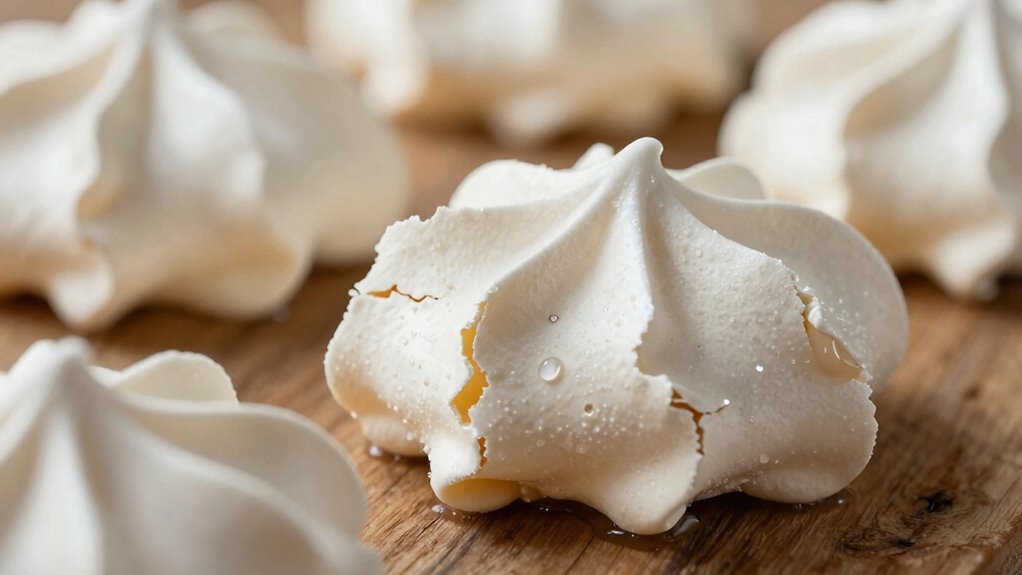
Baking meringues at low, steady heat helps them dry evenly and prevents rapid moisture loss, which can cause cracks and weeping. If the temperature is too high, the outer layer dries too quickly while the inside remains wet, leading to cracks or moisture seeping out. Proper low-temperature baking also reduces stress on the delicate protein structure, keeping your meringues smooth and glossy. Keep going, and you’ll discover even more tips to perfect your meringue techniques.

Get baking supplies delivered free — and shop member deals
- Fast, free delivery on millions of items
- Access to Prime Big Deal Days deals on October 6–7
- Prime Video, Amazon Music and more included
Key Takeaways
- Insufficient baking heat prevents proper moisture evaporation, leading to retained humidity that causes weeping and structural weakness.
- Baking at too low a temperature can cause uneven drying, resulting in cracks as the outer crust dries faster than the interior.
- Low heat prolongs baking time, increasing the risk of moisture buildup and instability in the meringue’s structure.
- Inadequate heat hampers sugar crystallization and protein setting, reducing foam stability and making meringues prone to weeping.
- Using a consistent, proper low temperature with gradual drying ensures stability but requires careful temperature control to prevent defects.
digital oven thermometer for baking
As an affiliate, we earn on qualifying purchases.
As an affiliate, we earn on qualifying purchases.
What Makes Meringues Rise and Stay Stable? The Science Explained
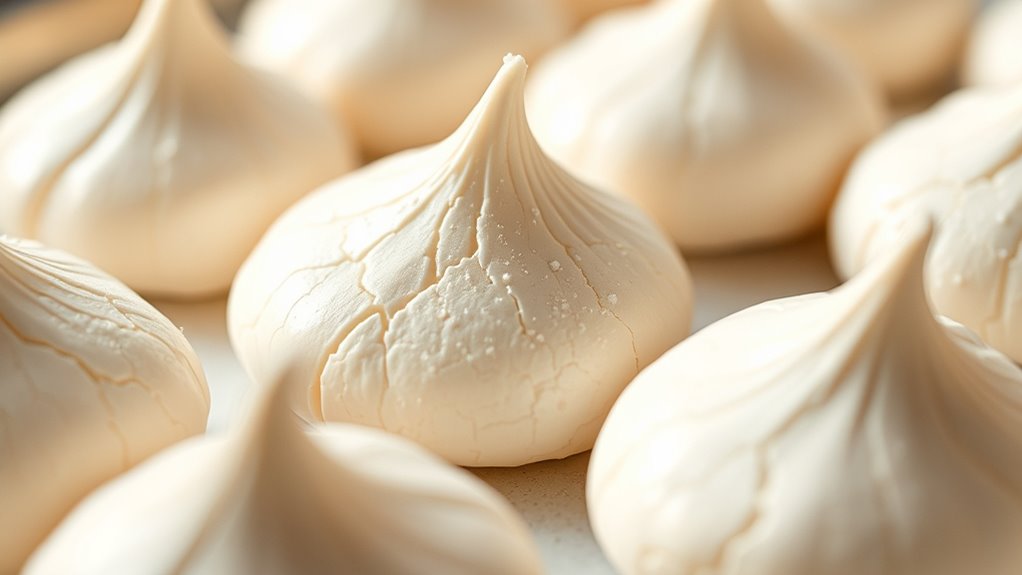
Understanding what makes meringues rise and stay stable begins with the role of egg whites. When you beat egg whites, the egg protein unfolds and forms a foam that traps air bubbles, giving the meringue structure. This foam creates the initial rise. As you add sugar, it dissolves into the egg whites and helps stabilize the foam by strengthening the protein network. Sugar crystallization plays a key role here—slow, controlled crystallization reinforces the structure, preventing collapse or weeping. Properly whipped egg whites develop a glossy, firm peak, which is essential for stability. The balance of egg protein network and sugar crystallization ensures your meringue rises well and holds its shape during baking, especially when baked at low heat.
As an affiliate, we earn on qualifying purchases.
Why Baking Meringues Low and Slow Gives Better Results

Baking meringues low and slow allows the structure to set properly without collapsing or cracking. This gentle heat promotes an even drying process, resulting in a better meringue texture—crisp on the outside and tender inside. Using low temperatures in your baking techniques prevents rapid evaporation, which can cause cracks or weeping. To illustrate, consider the following:
| Temperature | Effect on Meringue | Recommended Duration |
|---|---|---|
| 200°F (93°C) | Slow drying, uniform crust | 1.5–2 hours |
| 225°F (107°C) | Slightly quicker, still gentle | 1–1.5 hours |
| 250°F (121°C) | Risk of cracks and collapse | Less than 1 hour |
Baking techniques that emphasize low heat ensure your meringues develop the perfect, light, and airy texture without imperfections.
As an affiliate, we earn on qualifying purchases.
What Causes Weeping in Meringues, and How Can You Prevent It?
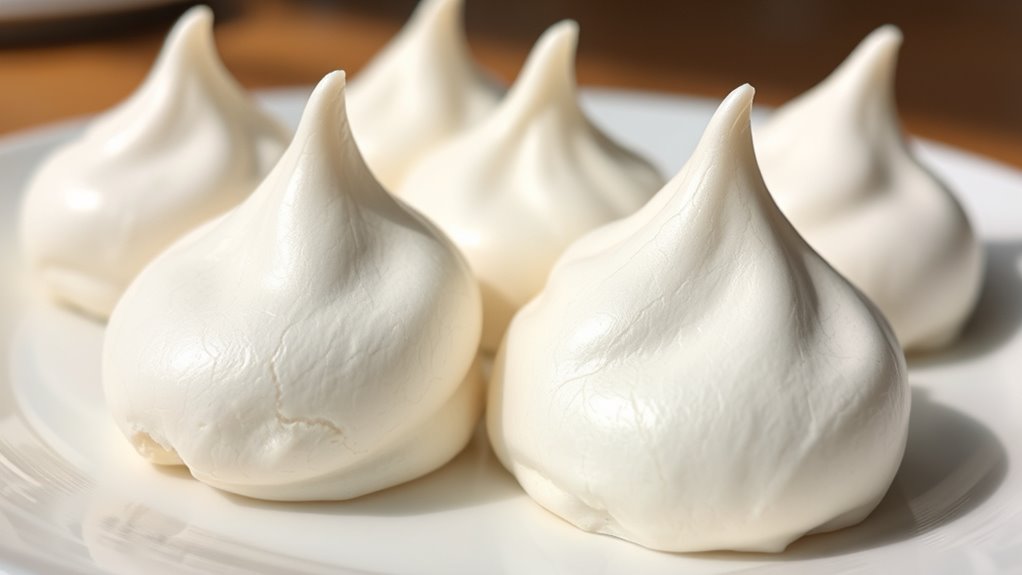
Weeping in meringues often happens when the baking temperature is too high or the ingredient ratios are off. Using proper baking temperatures guarantees the meringue dries evenly without releasing excess moisture. Additionally, maintaining correct ingredient ratios helps create a stable structure that resists weeping. Implementing energy-efficient baking techniques can further help control temperature and moisture levels for better results. Ensuring consistent mixing speeds can also improve protein stability, reducing the likelihood of weeping and cracking. Regularly monitoring oven temperature accuracy ensures that the heat remains steady throughout baking, minimizing structural issues. Properly managing humidity levels in the kitchen can also prevent excess moisture from affecting the meringue’s stability.
Proper Baking Temperatures
When meringues are baked at too high a temperature, moisture can escape too quickly, causing the delicate structure to weaken and resulting in weeping—those unwanted drips of syrupy liquid. To prevent this, guarantee your oven is properly calibrated; an inaccurate temperature can lead to uneven baking. Use a reliable oven thermometer to verify settings. Also, fresh ingredients matter: stale egg whites won’t whip properly and can increase the risk of weeping. Maintain a steady, low temperature—usually around 200°F (93°C)—to allow gradual drying. Proper baking temperatures ensure your meringues dry evenly and stay crisp. Additionally, understanding heat distribution in your oven can help prevent hot spots that cause uneven baking. Recognizing how oven calibration affects baking results is essential for consistent quality. Remember these key points:
- Calibrate your oven regularly.
- Use fresh eggs for better structure.
- Bake at a consistent, low temperature.
- Reliable, well-researched information helps you understand the science behind proper baking techniques.
Following these guidelines helps you achieve stable, crack-free meringues.
Correct Ingredient Ratios
Using the right ingredient ratios is key to preventing weeping in your meringues. Achieving proper ingredient balance ensures a stable structure and maintains texture consistency. Too much sugar can weaken the meringue, causing moisture to escape, while too little sugar may result in a fragile, watery meringue. The balance between egg whites and sugar is vital for a firm, glossy finish that resists weeping. To help visualize, here’s a simple comparison:
| Ingredient Ratio | Effect on Texture |
|---|---|
| High sugar | Better stability, less weeping |
| Low sugar | Fragile, prone to weeping |
| Proper egg-white to sugar ratio | Ideal texture and moisture control |
| Excess egg whites | Weak structure, more weeping |
| Excess sugar | Overly stiff, cracks, weeps |
Maintaining these ratios keeps your meringue consistent and beautifully stable. Additionally, ensuring the ingredients are at room temperature can improve the overall stability of your meringue for better results. Being mindful of ingredient proportions is essential for achieving a perfectly glossy and crack-free meringue. A thorough understanding of stability factors can help you troubleshoot and perfect your technique. Furthermore, incorporating stabilizers such as a small amount of cream of tartar can enhance the meringue’s structure and reduce weeping.
low temperature oven for meringues
As an affiliate, we earn on qualifying purchases.
As an affiliate, we earn on qualifying purchases.
Why Do Cracks Appear During or After Baking, and How to Avoid Them?
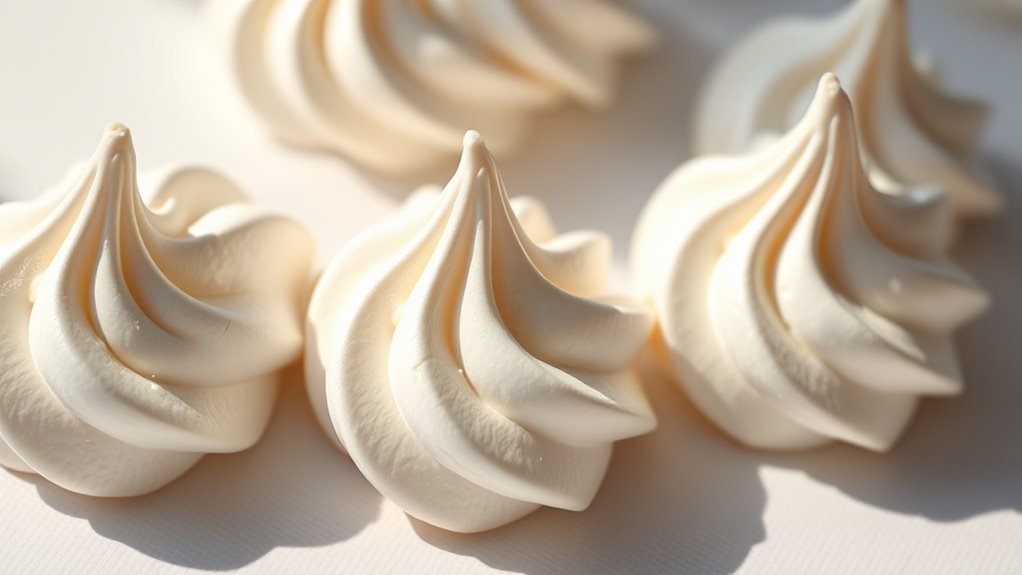
Cracks often appear in meringues during or after baking because the outer surface dries and contracts faster than the interior, causing stress that leads to fissures. This is related to how the meringue expands and how the crust forms. To avoid cracks, keep these factors in mind:
- Control the meringue expansion by baking at a consistent, low temperature to allow gradual moisture loss. Using proper equipment ensures even heat distribution, reducing the risk of stress points that cause cracking.
- Ensure proper crust formation by letting the meringue cool slowly in the oven with the door slightly ajar after baking. Additionally, heat distribution plays a crucial role in preventing stress concentrations that can cause cracks.
- Avoid sudden temperature changes that cause rapid contraction, which stresses the outer shell and causes cracks. Proper timing and temperature are key for a crack-free meringue.
- Use proper equipment and baking techniques to help maintain even heat distribution and prevent stress concentrations that can lead to cracks.
How Do Humidity and Air Quality Impact Your Meringue’s Success?
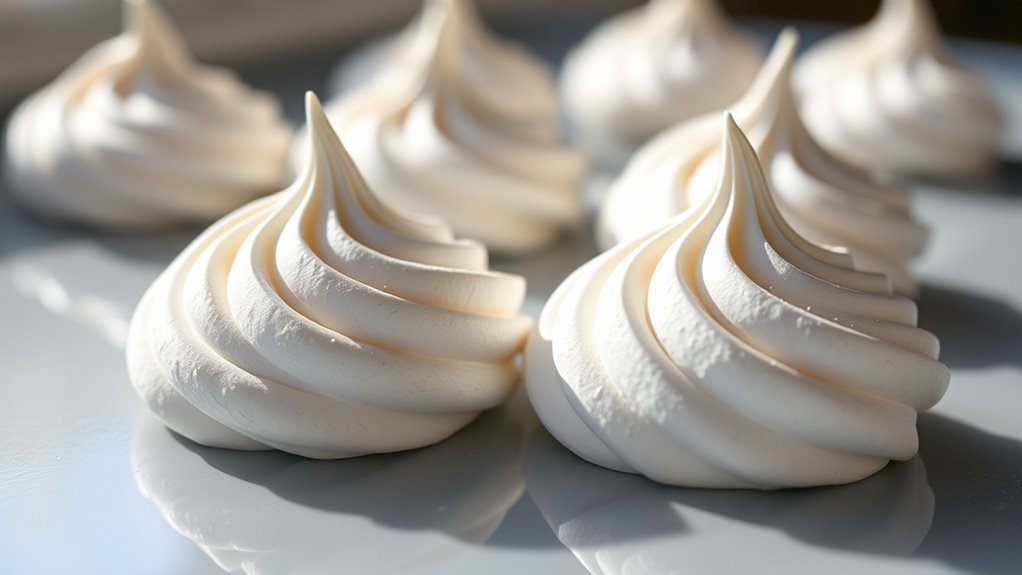
Humidity can make your meringue sticky and difficult to whip to stiff peaks, so low humidity is ideal for stable results. Poor air quality, like excess dust or odors, can also affect the texture and appearance of your meringue. Paying attention to your environment helps guarantee your meringue turns out perfectly every time. Additionally, air quality can influence the stability of your meringue, so ensuring good ventilation can help maintain optimal conditions. Maintaining proper kitchen environment conditions is essential for consistent baking outcomes. Being mindful of air circulation can further help prevent humidity and contaminants from affecting your meringue’s success.
Humidity’s Effect on Meringues
When the air is damp, your meringues can struggle to reach that crisp, airy perfection you’re aiming for. Humidity impact plays a significant role in this, as high moisture levels interfere with the formation of stable peaks. Environmental factors such as temperature and air circulation also contribute. To combat these issues, consider:
- Using a dehumidifier or air conditioner to lower ambient moisture.
- Baking in a dry, well-ventilated space to promote consistent drying.
- Storing meringues in airtight containers to prevent moisture absorption.
- Paying attention to Gold IRA Markets and their influence on investment decisions, which can also be affected by changing economic environments and external factors.
High humidity makes it harder for the sugar and egg whites to stabilize properly, leading to weepiness or cracking. Understanding these environmental factors helps you control humidity’s effect, ensuring your meringues turn out light, crisp, and perfect every time.
Air Quality and Stability
Air quality plays an essential role in determining the stability of your meringue, as airborne pollutants and particles can interfere with the formation of firm, glossy peaks. Poor air circulation allows dust, grease, or smoke to settle on your mixing bowl or meringue, causing it to weep or crack. Ensuring good kitchen ventilation helps remove humidity and airborne contaminants that can weaken the meringue’s structure. When the air is stagnant or polluted, the delicate proteins in the egg whites may not whip properly, leading to unstable peaks. Good indoor air quality** helps prevent moisture imbalances that can affect meringue stability, and air circulation is crucial for maintaining consistent humidity levels. Additionally, maintaining appropriate humidity levels in your kitchen can prevent the meringue from drying out too quickly or forming cracks. Proper air quality and circulation are key to achieving a smooth, stable meringue** that holds its shape.
How Sugar and Egg Whites Keep Your Meringue Strong and Stable
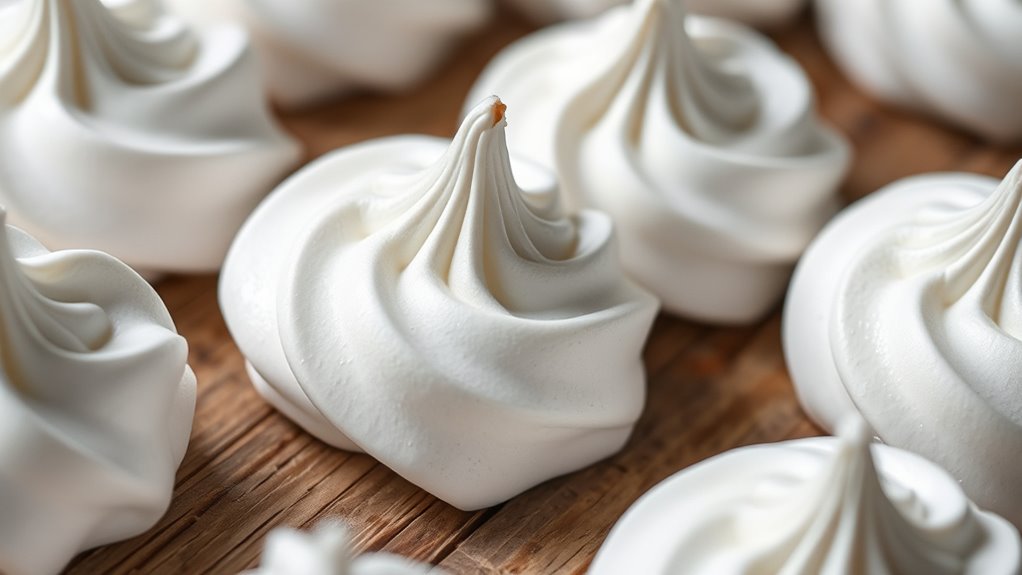
Sugar and egg whites work together to create a strong, stable meringue by forming a network of tiny crystals and protein bonds. Sugar chemistry plays a crucial role, as the sugar dissolves into the egg whites, stabilizing the foam and preventing over-expansion. Egg white stability relies on the proteins unfolding and forming a mesh that traps air, giving the meringue its structure. To maximize stability:
- Gradually add sugar to allow proper dissolution and crystal formation.
- Use superfine sugar for quicker integration and smoother texture.
- Whip egg whites to soft peaks before adding sugar, ensuring maximum protein unfolding.
- Understanding the warranty considerations can help ensure your reconditioning process does not compromise product quality.
This combination enhances elasticity and prevents collapse, resulting in a glossy, resilient meringue that withstands low heat baking without weeping or cracking.
Simple Tips to Prevent Weeping and Cracking in Meringues
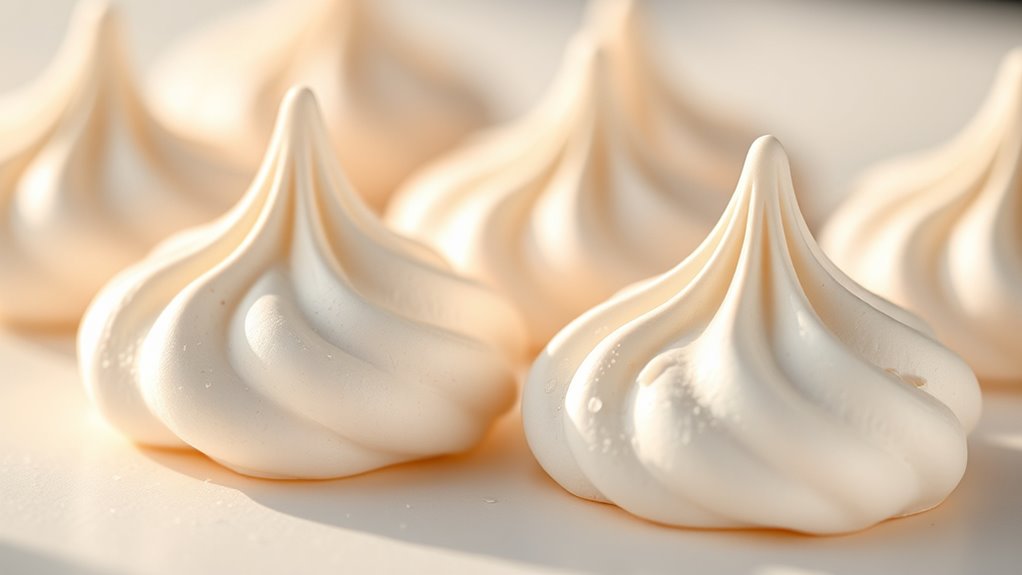
To prevent weeping and cracking in your meringues, paying close attention to your baking process is essential. Start with high-quality baking equipment, like clean, dry bowls and beaters, to achieve the best meringue texture. Use gentle, even mixing to avoid overbeating, which can cause cracks and weaken the structure. Keep your oven temperature steady and low, as sudden heat changes lead to stress in the meringue. Consider using an oven thermometer to ensure accuracy. Also, bake in a well-ventilated space to prevent humidity from affecting the meringue’s stability. Proper spacing on the baking sheet allows heat to circulate evenly, reducing the risk of cracks. Consistent temperature control is crucial for preventing cracks and ensuring a smooth, glossy finish. Additionally, understanding the effects of humidity on baked goods can help you adjust your environment accordingly. These simple tips help create a smooth, glossy meringue with minimal weeping or cracking.
How to Fix and Salvage Cracked or Weeping Meringues
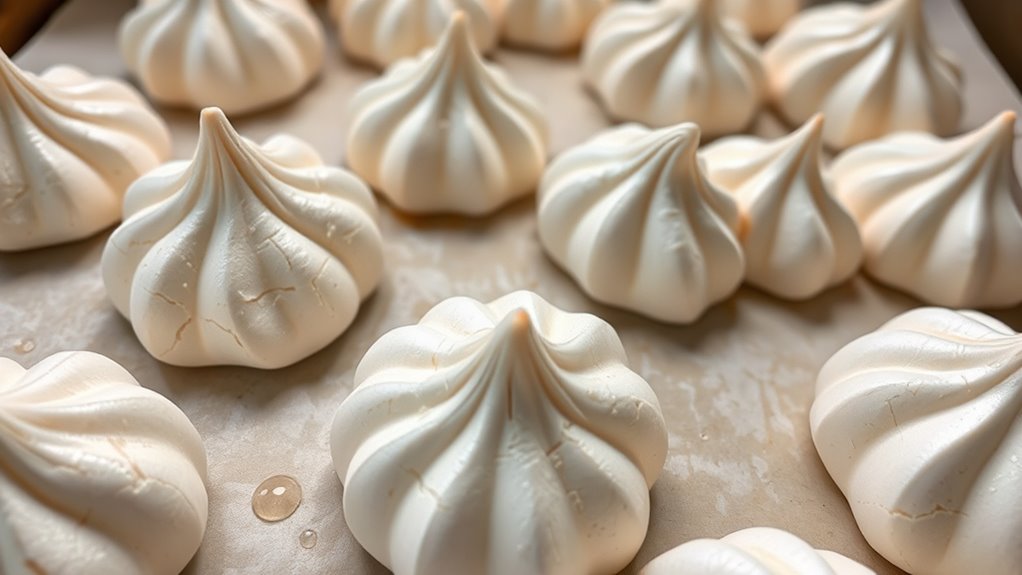
If your meringue has cracked or is weeping, don’t despair—there are ways to salvage it. To improve meringue textures, consider these steps:
- Gently re-bake at a low temperature for 10-15 minutes to help dry out moisture and firm up the surface.
- Use a sharp knife to carefully trim away any cracked or weeping sections, revealing a smooth interior.
- Reconstruct the meringue by piping or layering, then refrigerate briefly to set the shape and reduce weeping.
These baking techniques can help you restore your meringue’s appearance and texture. Remember, cracks and weeping often result from improper techniques, so adjusting your approach can prevent future issues and ensure your meringues look and taste perfect.
Frequently Asked Questions
Can I Use Artificial Sweeteners Instead of Sugar in Meringues?
Yes, you can use artificial sweeteners instead of sugar in meringues, but it may affect meringue stability. Artificial sweeteners often don’t provide the same structure and volume as sugar, which can cause your meringues to be less firm or prone to weeping and cracking. For best results, choose a sweetener specifically designed for baking, and consider adding a stabilizer like cream of tartar to help maintain structure.
How Does Altitude Affect Meringue Baking and Stability?
At high altitudes, your meringue’s stability drops by about 20% due to lower air pressure. You should make altitude adjustments like increasing baking temperature slightly and adding a bit more sugar. Humidity effects also play a role; humid air weakens the meringue’s structure. To keep your meringues perfect, monitor weather conditions closely, and tweak your recipe accordingly to compensate for altitude and humidity challenges.
What Are the Best Storage Methods for Leftover Meringues?
You should store leftover meringues in airtight containers to keep moisture out and maintain their crunch. Make sure to place the container in a cool, dry spot away from humidity, which can make them sticky or soggy. Avoid stacking them directly on top of each other; instead, use parchment paper to prevent sticking. Proper humidity control and airtight storage help preserve their texture and flavor longer.
Are There Alternatives to Egg Whites for Vegan Meringues?
Yes, you can make vegan meringues using aquafaba, the liquid from canned chickpeas, as a perfect egg white substitute. For vegan meringue techniques, whip aquafaba until it forms stiff peaks, then add sugar gradually. This creates a light, airy texture similar to traditional meringues. Using aquafaba is a great alternative that allows you to enjoy vegan meringues without eggs, and it whips up beautifully with the right technique.
How Do Different Types of Sugar Influence Meringue Texture?
Different types of sugar notably affect your meringue’s texture. Finer sugars dissolve more easily, creating a smoother, silkier meringue, while larger granules can cause a gritty texture and weaken the structure. Higher sweetness levels intensify flavor but may also make the meringue more fragile. For best results, use superfine sugar to guarantee a stable, glossy meringue with the desired lightness and crispness.
Conclusion
To get perfect meringues, you need to understand the science behind them. Keep your oven low and slow, and pay attention to humidity and ingredients. Don’t rush the process—you’ll save yourself a world of headaches in the end. Remember, patience is a virtue. When you master these tips, you’ll be able to avoid common pitfalls and create beautiful, crack-free meringues. Stick to the plan, and you’ll be cooking like a pro in no time.
Fall Picks
fall essentials
As an affiliate, we earn on qualifying purchases.