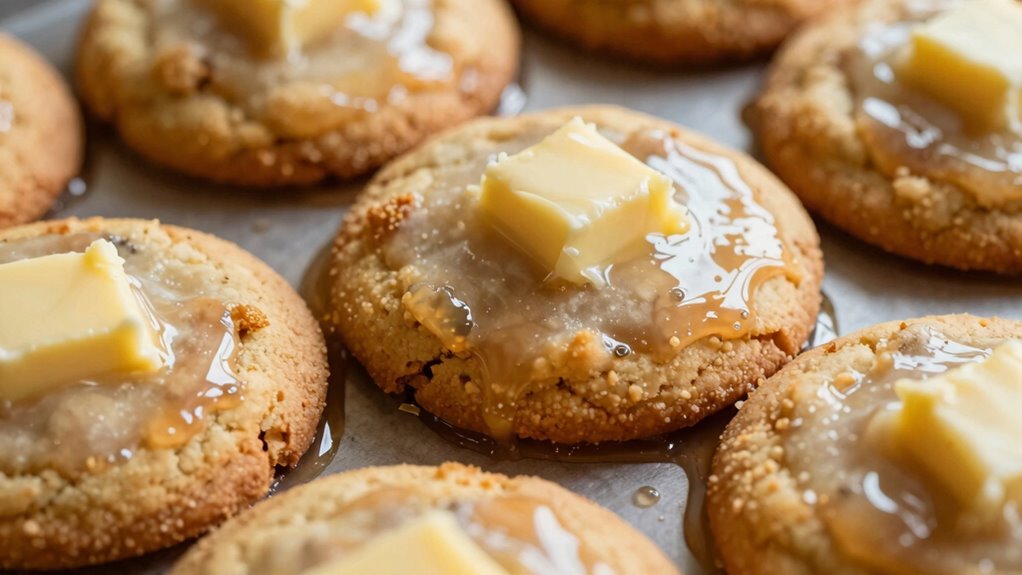

Greasy cookies often happen because too much butter melts during baking, making them flat and oily. Using cold butter or measuring carefully can help control spread and prevent greasiness. Also, proper mixing and ingredient handling matter. If you want cookies that aren’t greasy but still tender and flavorful, understanding how butter impacts texture helps. Keep exploring, and you’ll discover even better ways to achieve perfect cookies without excess fats.
Key Takeaways
- Using too much butter or unmeasured excess causes cookies to spread and develop a greasy, oily texture.
- Proper butter temperature and measurement ensure even mixing, preventing excess fat that leads to greasiness.
- Over-softened or warm butter can increase fat content, resulting in flatter, greasier cookies.
- Substituting butter with healthier or low-fat alternatives can reduce greasiness and improve texture.
- Correct storage and handling of butter preserve freshness and prevent unintended greasiness in baked cookies.
What Is Butter’s Role in Making Perfect Cookies?
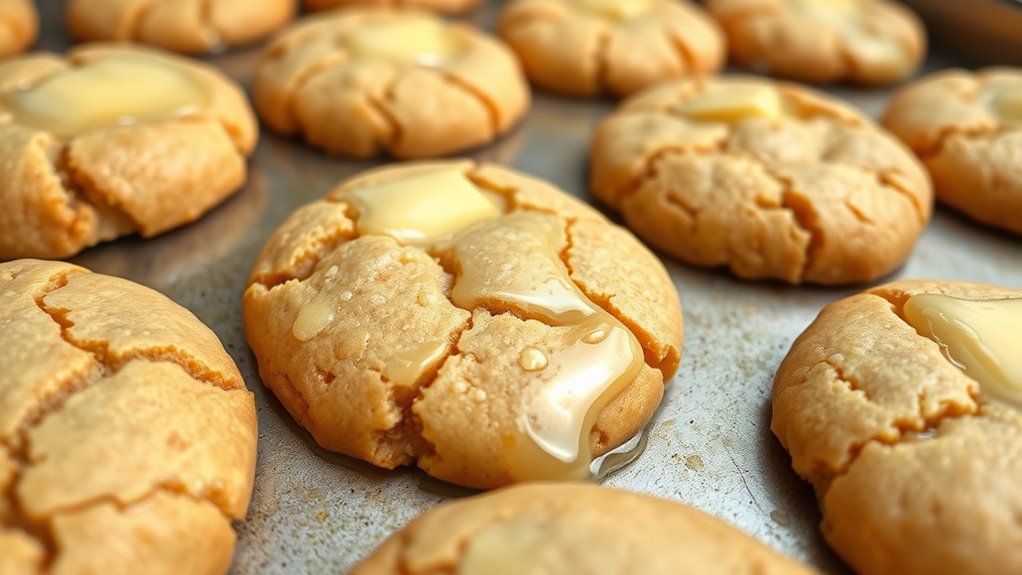
Have you ever wondered why butter is so essential for making perfect cookies? The answer lies in butter’s flavor and its influence on the overall taste. Butter adds a rich, creamy flavor that enhances the cookie’s depth, making each bite more satisfying. Its natural fats help create a tender, moist crumb, which is key to achieving the ideal cookie texture. Additionally, butter’s shelf life plays a role; fresh butter ensures the best flavor and consistency. When you choose good-quality butter and use it at its peak freshness, you reveal the full potential of your cookie recipe, ensuring a delicious, flavorful outcome every time. Proper temperature control during baking also impacts how the butter melts and interacts with other ingredients, further influencing the final texture. Moreover, understanding butter’s role in baking chemistry can help you troubleshoot common issues and perfect your cookie-making process. For example, the emulsification process that occurs when butter is creamed with sugar is crucial for achieving the right cookie structure. Additionally, the impact of fat content in butter can affect the spread and tenderness of your cookies, making it an important factor to consider in your recipes. Incorporating techniques like proper creaming can help you achieve a more consistent and desirable cookie texture.
Why Does Too Much Butter Lead to Greasy Cookies?
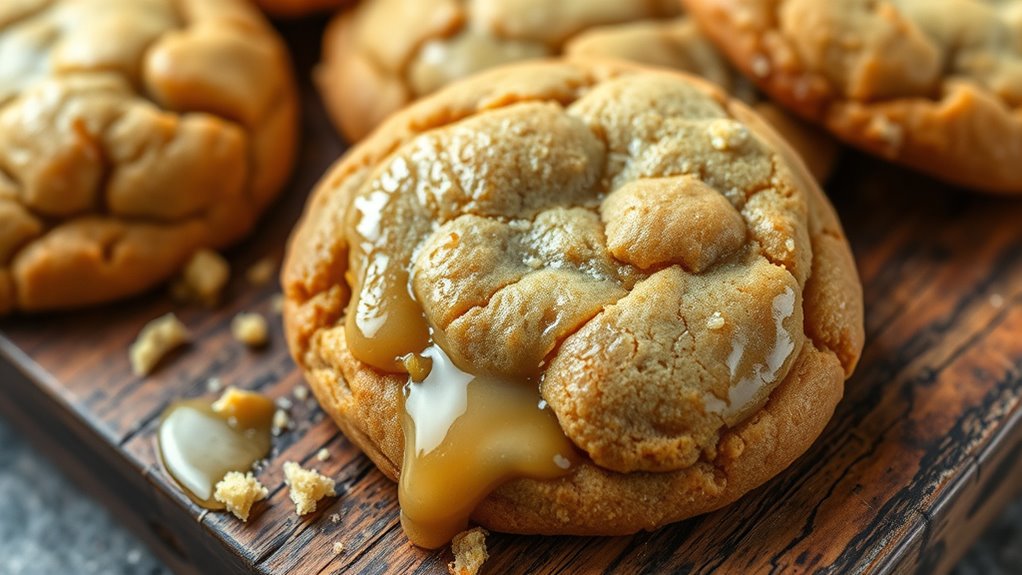
While the right amount of butter can elevate your cookies, adding too much can lead to a greasy outcome. Excess butter intensifies the butter flavor, making each bite overly rich and masking other ingredients’ subtlety. The surplus fat also causes the cookies to spread more during baking, resulting in a flat, greasy texture. Additionally, too much butter compromises shelf stability, causing cookies to become stale faster or develop an oily surface over time. This excess fat creates a barrier that prevents proper setting, leaving cookies limp and greasy. Overusing butter can also impact the piercing process if you plan to add decorative or functional piercings afterward. Using excessive butter may also lead to increased calorie count, which could be a concern for health-conscious bakers. To avoid this, measure your butter carefully and stick to the recipe’s recommended amount. Doing so ensures your cookies maintain a balanced flavor, good texture, and ideal shelf life without becoming overly greasy. Incorporating sustainable baking practices, such as using locally sourced ingredients and eco-friendly packaging, can further enhance your baking experience and reduce environmental impact. Proper ingredient measurement is essential for consistent results and optimal texture.
How Does Butter Temperature Affect Cookie Texture?
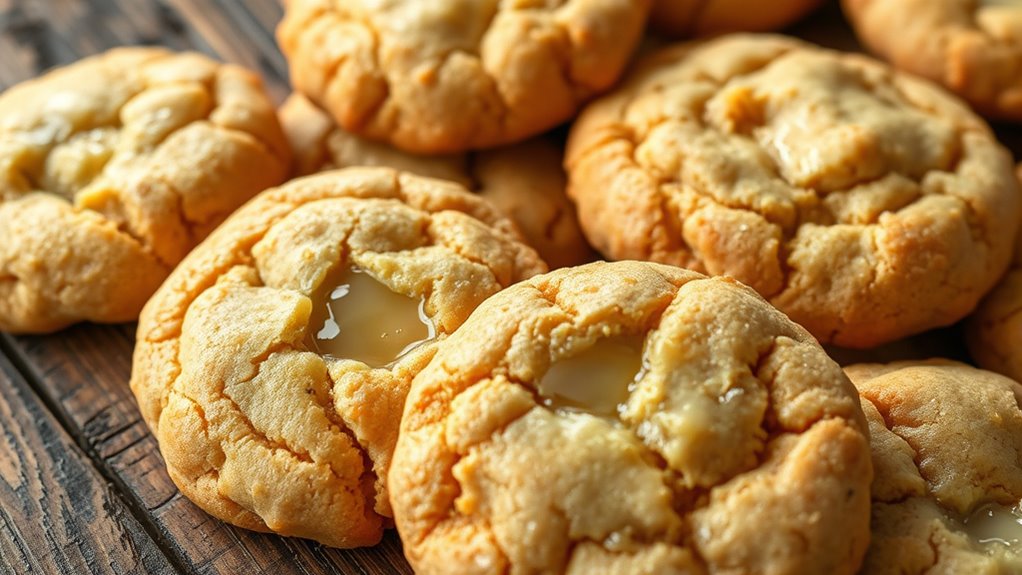
When you use softened or melted butter, it spreads more easily and creates a different cookie texture. Warmer butter causes the cookies to spread more during baking, resulting in a thinner, crisper edge. Conversely, colder butter keeps the cookies thicker and chewier, affecting overall texture and crispiness. Understanding butter temperature helps bakers control cookie outcomes and achieve the desired consistency, and paying attention to baking temperature can further influence the final result. Additionally, cookie spreading is influenced by the balance of ingredients and baking conditions, making precise control essential for perfect cookies.
Melting Point and Spread
The temperature of butter plays a crucial role in determining how cookies spread during baking. When butter is too warm, its melting behavior causes rapid spreading, leading to flatter, greasier cookies. Conversely, cold butter resists melting, resulting in thicker, more structured treats. Understanding butter crystallization helps explain this: well-crystallized butter melts more slowly, affecting spread. Proper butter temperature ensures consistent texture and appearance. Additionally, water content influences how butter behaves during baking, impacting cookie texture and spread. Recognizing the melting point of butter allows bakers to better control cookie outcomes. Temperature control also impacts emulsification, which influences the butter’s ability to incorporate air and affect final texture. Moreover, maintaining the correct butter temperature can minimize undesirable clumping during mixing, leading to a smoother dough.
Texture and Crispiness
Butter temperature not only influences how much cookies spread but also considerably impacts their texture and crispiness. When butter is cold, cookies tend to be denser and chewier, with a firmer bite. Warm butter creates a more tender, crispy edge because it melts quickly during baking. The butter flavor intensifies with warmer butter, enhancing overall taste. Additionally, cookie color varies; colder butter results in lighter cookies, while melted butter darkens the edges. Understanding these ingredient interactions can help bakers fine-tune their cookies for the perfect balance of texture and flavor. Recognizing how ingredient temperature affects baking outcomes can also lead to more consistent results. Moreover, odor changes related to ingredient handling can subtly influence the sensory qualities of baked goods, providing insights into freshness and quality. Incorporating traditional culinary practices can further optimize baking techniques and enhance texture.
Which Types of Butter Work Best for Baking Cookies?
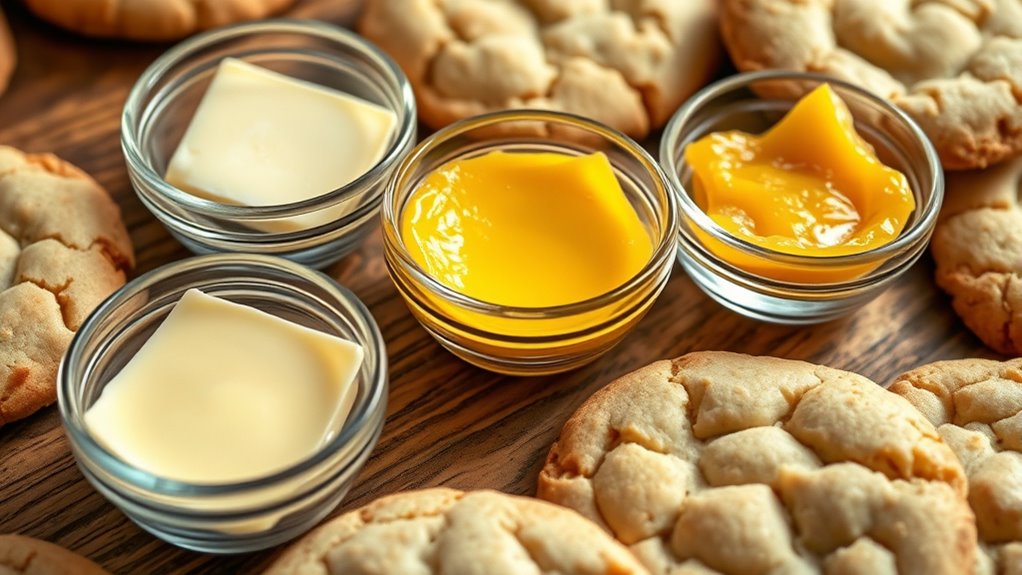
Ever wonder which type of butter gives your cookies the best flavor and texture? The answer depends on your desired outcome. For rich butter flavor, choose European-style butter with higher fat content. If you prefer a lighter texture, stick with standard unsalted butter. Proper butter storage is essential—keep it chilled to prevent it from becoming too soft or rancid, which can affect your cookies’ quality. Here are some tips:
Choosing the right butter enhances your cookies’ flavor and texture—go European-style for richness or standard unsalted for lightness.
- Use fresh butter for optimal flavor and consistency
- Opt for high-quality butter with a good butter flavor
- Store butter properly to maintain its freshness and prevent spoilage
- Selecting the right butter type can significantly influence the final baked product.
What Common Mistakes Cause Excess Butter in Recipes?
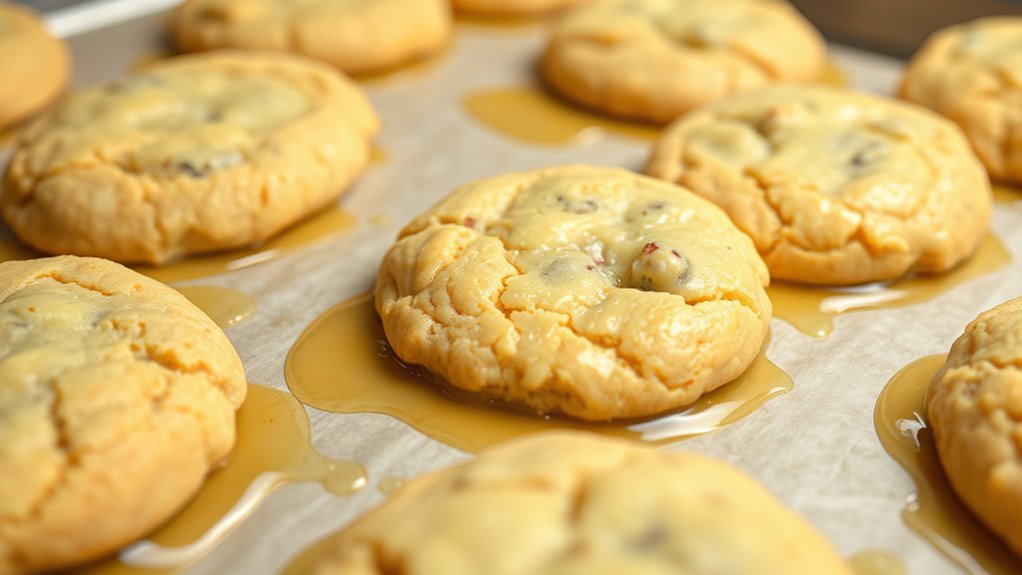
One common mistake that leads to excess butter in recipes is mismeasuring the ingredient, often by overestimating or using too much. When you substitute butter, it’s easy to add more than needed if you don’t adjust other ingredients accordingly, resulting in greasy cookies. Using butter substitution options like margarine or shortening without proper conversion can also cause excess fat. Additionally, improper storage tips, such as leaving butter out too long or storing it in warm environments, can soften it excessively, tempting you to use more. These missteps increase the risk of greasy texture. To avoid this, measure butter carefully, follow recommended substitution ratios, and store butter properly in the fridge or a cool, dark place. This helps maintain the right balance for perfect cookies.
How Can You Measure and Mix Butter Properly?

Accurate measurement and proper mixing of butter are key to achieving the right cookie texture. Start by softening butter to room temperature for easier mixing, ensuring consistency. Always use your kitchen scale for precise measurements—this helps prevent excess butter that can cause greasiness. When storing butter, keep it in a cool, dark place or the fridge; avoid warm spots that lead to spoilage. If you’re considering butter substitutes, choose solid options like margarine or coconut oil, and measure them carefully to maintain balance.
- Proper storage prevents butter from spoiling or becoming overly soft
- Precise measurement avoids adding too much fat
- Consistent mixing ensures even distribution, reducing greasiness
What Are Better Alternatives to Butter to Prevent Greasiness?
To prevent greasiness in your cookies, consider using healthier or more stable alternatives to butter. Butter substitutes, like applesauce, Greek yogurt, or avocado, can reduce excess oil and add moisture without the greasiness. These options contain healthier fats that promote a better texture and flavor. Here’s a quick comparison:
| Alternative | Benefits | Best Use |
|---|---|---|
| Applesauce | Low fat, adds moisture | Vegan baking, cookies |
| Greek yogurt | Protein-rich, tenderizes | Dense cookies, muffins |
| Avocado | Healthy fats, creamy texture | Moist, rich cookies |
Choosing the right substitute helps control greasiness, improves cookie structure, and boosts nutritional value with healthier fats.
Frequently Asked Questions
Can Using Margarine or Other Fats Prevent Greasiness in Cookies?
Using margarine or other alternative fats can help prevent greasiness in cookies. Margarine often has a different fat composition than butter, which can result in less greasy cookies when used correctly. You might also try oils or shortening, which tend to create a lighter, less greasy texture. Keep in mind, margarine vs butter will influence flavor, so choose your alternative fats based on your desired taste and texture for the best results.
Does the Type of Flour Influence How Greasy Cookies Become?
Think of flour as the silent architect of your cookies; it influences their greasiness more than you might realize. Different flours have varying absorption rates and gluten development, which affect how fats distribute and set. Using bread flour, with higher gluten, creates a sturdier structure that traps less grease, resulting in less greasiness. Conversely, cake flour’s delicate gluten allows more fat to seep, making cookies greasier.
How Does Humidity Affect Butter’s Impact on Cookie Greasiness?
Humidity substantially impacts how butter affects cookie greasiness. When humidity absorption occurs, it causes butter to melt faster, making cookies greasy. Higher humidity levels weaken the flour’s ability to absorb moisture, leading to more butter melting during baking. As a result, you’ll notice increased greasiness because the butter spreads more easily, creating a greasy texture. To prevent this, keep ingredients dry and consider reducing butter slightly in humid conditions.
Are There Specific Baking Techniques to Reduce Excess Butter?
Ever wonder how to keep your cookies from turning greasy? You can try reducing the amount of butter or using a butter substitution like applesauce or Greek yogurt. Adjust your baking temperature slightly lower to prevent excess melting. Mixing techniques, like creaming butter carefully and not overmixing, also help. These steps can minimize greasiness and improve texture, ensuring your cookies are perfectly balanced without sacrificing flavor.
Can Storing Cookies Improperly Increase Perceived Greasiness?
Yes, storing cookies improperly can increase greasiness perception. When you leave cookies in a warm or humid environment, the butter melts and seeps out, making them feel greasy. To prevent this, store your cookies in an airtight container in a cool, dry place. Proper cookie storage helps maintain their texture and reduces the likelihood of them appearing overly greasy, ensuring they stay fresh and enjoyable longer.
Conclusion
Now that you’ve learned how butter influences your cookies, you can avoid ending up with greasy, disappointing treats. Remember, measuring carefully and choosing the right butter makes all the difference—don’t let a medieval baker’s mistake ruin your batch. With a bit of precision and patience, your cookies will turn out perfect every time, even if you’re baking in your modern kitchen or a castle’s pantry. Happy baking!