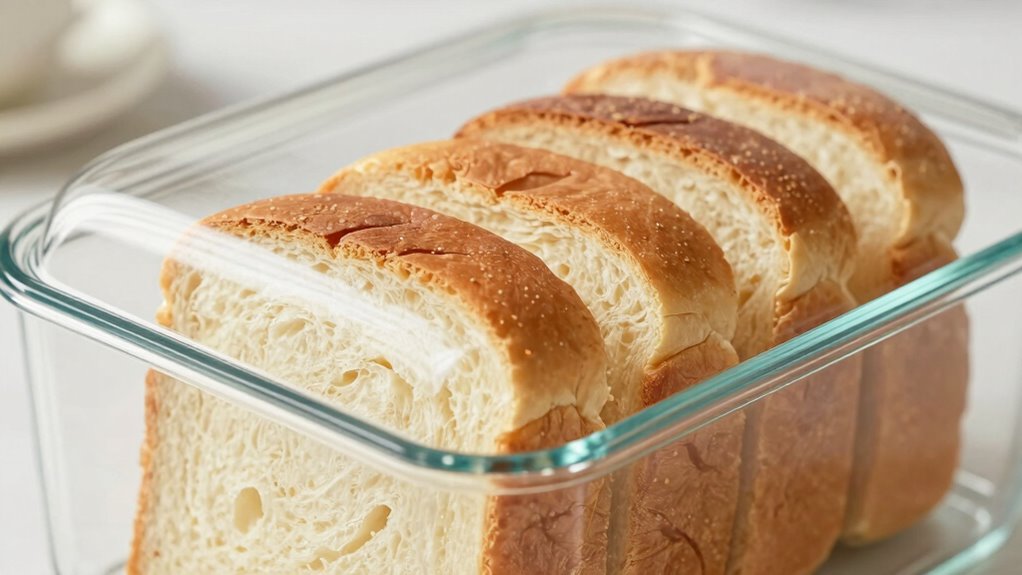
To keep sliced bread soft and mold-free, store it in airtight containers or resealable bags to trap moisture and prevent mold growth. You can also use bread boxes with proper airflow to maintain freshness longer. Wrapping slices tightly and freezing any leftovers helps extend shelf life. Regularly inspect for mold and use natural methods like storing in paper bags or adding apple slices to prevent spoilage. If you want to learn more, keep exploring your options.

Get baking supplies delivered free — and shop member deals
- Fast, free delivery on millions of items
- Access to Prime Big Deal Days deals on October 6–7
- Prime Video, Amazon Music and more included
Key Takeaways
- Store sliced bread in airtight containers or resealable bags to retain moisture and prevent mold growth.
- Use bread boxes with proper airflow to preserve softness and reduce humidity buildup.
- Freeze bread in tightly wrapped slices for long-term storage, then thaw or toast as needed.
- Keep bread in a cool, dark place away from heat and direct sunlight to slow mold development.
- Regularly inspect for mold, and discard bread immediately if mold appears to ensure safety.
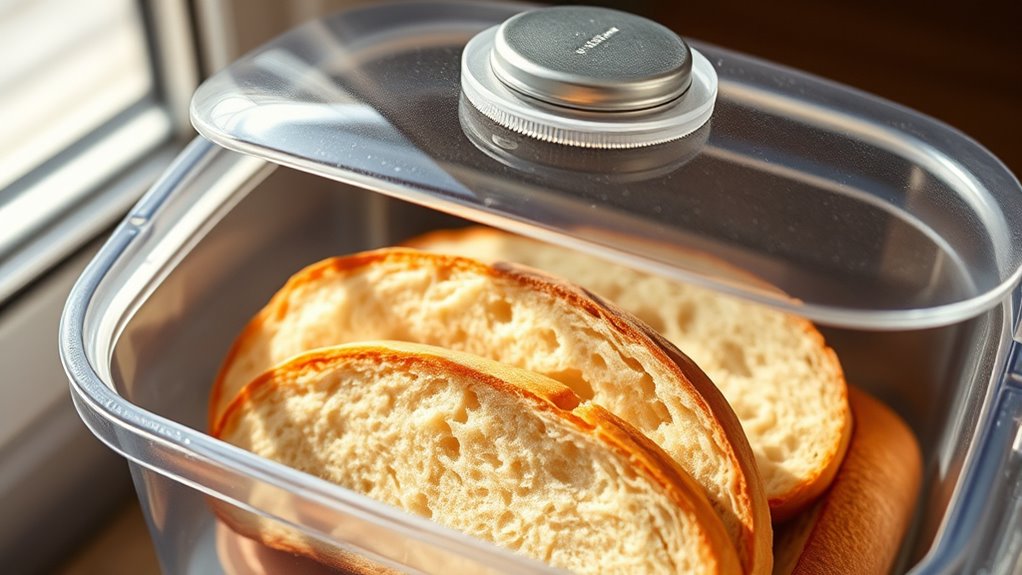
airtight bread storage container
As an affiliate, we earn on qualifying purchases.
As an affiliate, we earn on qualifying purchases.
What Are the Main Challenges in Storing Sliced Bread?
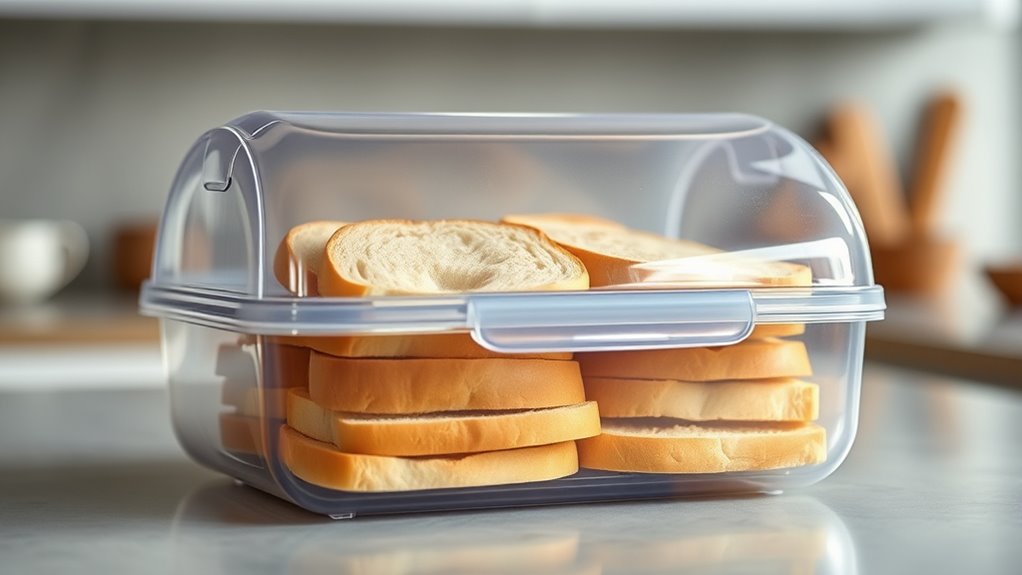
Storing sliced bread presents several challenges, primarily because it is highly prone to staling and mold growth. As bread loses moisture, its bread aroma diminishes, and the crust texture becomes hard and tough. The longer bread sits exposed to air, the faster it stales, making the crust dry and brittle. Mold spores thrive in warm, humid environments, quickly settling on the surface and spoiling the bread. Managing these issues requires balancing moisture retention with air exposure. If you seal bread tightly, moisture may cause mold, but too little air can accelerate staling. Conversely, leaving it open speeds up mold growth and causes the crust to become stale faster. Proper storage methods, which include controlling moisture levels, are essential to keep bread fresh, soft, and flavorful for longer periods. Additionally, understanding storage techniques can help prevent mold growth while maintaining bread softness. Using appropriate storage containers can help maintain optimal humidity and reduce exposure to mold spores. Ensuring the right storage environment is key to prolonging freshness and preventing spoilage. Implementing airtight containers with proper ventilation can also help strike the right balance between moisture and air exposure.
As an affiliate, we earn on qualifying purchases.
How Do You Choose the Best Container for Bread?

When selecting a container for your bread, consider the material to guarantee it keeps your slices fresh without trapping too much moisture. The size should fit your loaf comfortably, preventing unnecessary air exposure, while good ventilation helps maintain the right environment. Additionally, choosing containers with proper airflow design can help prevent mold growth and staleness by balancing humidity levels inside. Incorporating energy-efficient containers can further enhance freshness by reducing temperature fluctuations that cause spoilage. Using humidity control features within storage options allows for better regulation of moisture levels, extending the bread’s freshness. To optimize storage, understanding whole-home backup power principles can help you select reliable and safe solutions for your household, ensuring your food preservation methods are consistently effective. By balancing these factors, you can keep your bread fresh longer and avoid mold or staleness.
Material Matters for Bread
Choosing the right container for your sliced bread depends largely on the material it’s made from, as different materials offer varying benefits and drawbacks. Your choice of bread material influences how well the bread stays fresh and soft. For example, paper or cardboard packaging materials are breathable, helping prevent mold by allowing moisture to escape, but they may not keep bread as soft. Plastic containers or bags create a sealed environment that retains moisture, keeping bread soft longer; however, they can trap humidity and promote mold if not properly ventilated. Glass or ceramic containers are durable options that prevent absorption of odors and mold growth. Additionally, selecting containers with ventilation features can improve airflow and help in maintaining freshness. Consider how each packaging material interacts with your bread’s material to maintain freshness without sacrificing quality. Proper storage techniques also include ventilating bread containers, which can significantly reduce the risk of mold while maintaining softness. Ensuring proper airflow management within storage containers is essential for preventing excess moisture buildup and prolonging bread freshness.
Size and Ventilation
Selecting the right container size is essential to keeping your bread fresh and easy to access. Too large, and the bread may become stale or moldy; too small, and slices get crushed or squished. Choose a storage size that matches your loaf’s dimensions and your consumption rate. Proper ventilation is equally important to prevent excess moisture, which can lead to mold. A container with small holes or vents helps maintain the ideal bread texture—soft inside with a slight crust—without trapping humidity. Here’s a quick guide:
| Storage Size | Ventilation Type | Best For |
|---|---|---|
| Slightly larger | Small vents | Longer freshness |
| Exact fit | No vents | Short-term storage |
| Larger | Adjustable vents | Bulk storage |
| Compact | No vents | Sliced bread on the go |
| Wide | Large vents | Crusty bread varieties |
As an affiliate, we earn on qualifying purchases.
Are Bread Boxes Worth Using? Pros and Cons Explained

Using a bread box can keep your sliced bread fresh longer and prevent mold from forming. It also helps save space and adds a nice touch to your kitchen’s look. But are the benefits worth it compared to other storage options? Additionally, some food safety considerations should be kept in mind to ensure your bread remains safe and tasty. Proper ventilation inside the bread box can further reduce mold growth and maintain bread quality over time. Ensuring the right material for the bread box can also impact airflow and moisture levels, influencing freshness. Research indicates that storage methods can significantly affect the shelf life and safety of baked goods, making it important to choose wisely. Being aware of credit card security measures can help protect your financial information when purchasing storage solutions online.
Preserves Bread Freshness
Bread boxes are designed to keep your bread fresh longer by creating a controlled environment that reduces moisture loss and slows mold growth. They help preserve the softness and flavor of bread by maintaining the right level of humidity, unlike plastic bags that can trap excess moisture or cause bread to become soggy. If you prefer bread slicing at home, a bread box can prevent the bread from drying out quickly, keeping each slice tender and fresh. Proper bread packaging, like wrapping or using a bread box, assure your bread stays soft while avoiding staleness. Using a bread box is especially beneficial for those who buy bread in bulk or bake regularly, as it helps extend freshness without sacrificing texture or taste. Additionally, some bread boxes are designed with ventilation systems to optimize airflow and further enhance bread preservation, aligning with modern farmhouse decor aesthetics that emphasize both function and charm. Incorporating proper storage techniques can make a significant difference in maintaining bread quality and reducing waste, especially when combined with effective moisture control.
Prevents Mold Growth
While a bread box helps keep bread fresh by controlling humidity, it also plays a key role in preventing mold growth. Proper bread storage reduces moisture buildup, which mold needs to thrive. Using a bread box creates a stable environment that discourages mold development. To maximize mold prevention, consider these factors:
- Maintain consistent humidity levels inside the box to avoid excess moisture.
- Keep the bread dry by removing any crumbs or moisture before storage.
- Ensure good airflow without exposing bread to drafts or high humidity areas.
- Incorporating smart‑home integrations such as humidity sensors can help monitor and maintain optimal conditions inside your bread storage. Additionally, understanding proper storage techniques can further enhance freshness and safety, especially when combined with monitoring tools for real-time condition tracking.
Space and Aesthetics
Deciding whether a bread box is worth it often comes down to balancing space efficiency and aesthetic appeal. If you value kitchen decor, a stylish bread box can enhance your space while offering convenient storage. It keeps sliced bread accessible without cluttering countertops. However, consider the size and design; bulky or mismatched styles can detract from your storage aesthetics. Here’s a quick comparison:
| Pros | Cons |
|---|---|
| Adds charm to kitchen decor | Takes up counter space |
| Keeps bread accessible | May not fit all kitchen styles |
| Enhances storage aesthetics | Cleaning can be tricky |
Ultimately, a bread box blends form and function, but weigh your space and style needs before choosing.
As an affiliate, we earn on qualifying purchases.
When and How Should You Store Bread in the Fridge?

Storing bread in the fridge can be helpful when you want to extend its freshness, especially in humid or warm environments. Proper refrigeration timing prevents mold without sacrificing texture. Keep bread in the fridge if you plan to consume it within a few days, but avoid keeping it too long. Use effective freezing techniques if you need to store it longer.
Storing bread in the fridge extends freshness and prevents mold in warm, humid environments.
- Refrigeration timing: Store sliced bread in an airtight container or resealable bag, ideally within 2-3 days of purchase.
- Freezing techniques: Wrap bread tightly in plastic wrap or foil before placing it in the freezer, removing excess air.
- Thawing: When ready to eat, thaw slices at room temperature or toast directly from the freezer.
How to Freeze Sliced Bread to Keep It Fresh Longer
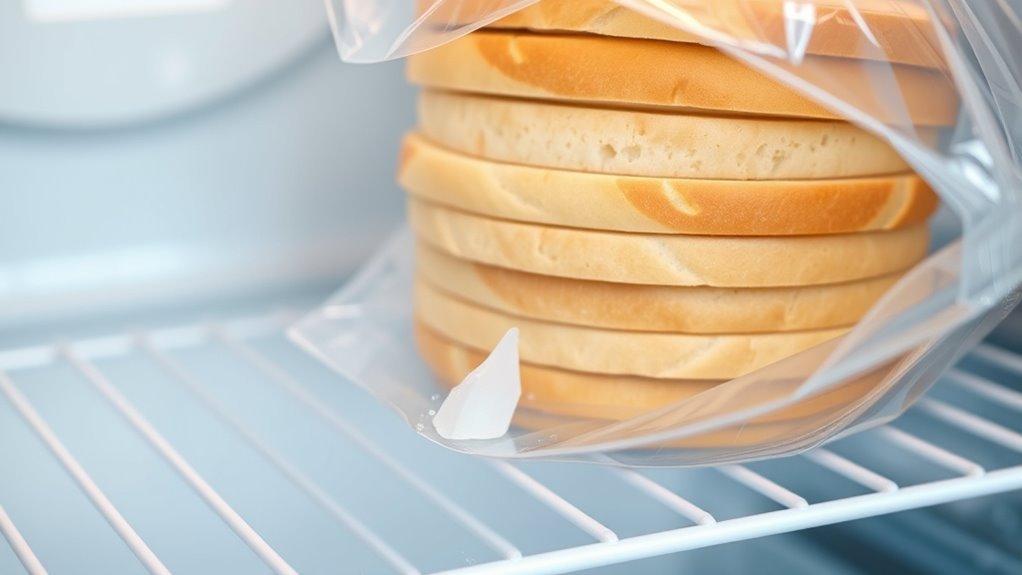
Freezing sliced bread is one of the most effective ways to preserve its freshness for longer periods. To do this, start by bread slicing your loaf if it isn’t already pre-sliced, making it easier to grab only what you need later. Wrap each slice or a handful tightly in plastic wrap or foil, or place them in a resealable freezer bag, removing excess air. Label the bag with the bread branding or purchase date to keep track of freshness. For quick access, consider dividing slices into smaller portions before freezing. When you’re ready to enjoy a slice, simply remove what you need and let it thaw at room temperature or toast directly from the freezer. Proper freezing keeps your bread soft and prevents mold growth.
What Are the Best Ways to Wrap and Pack Your Bread?
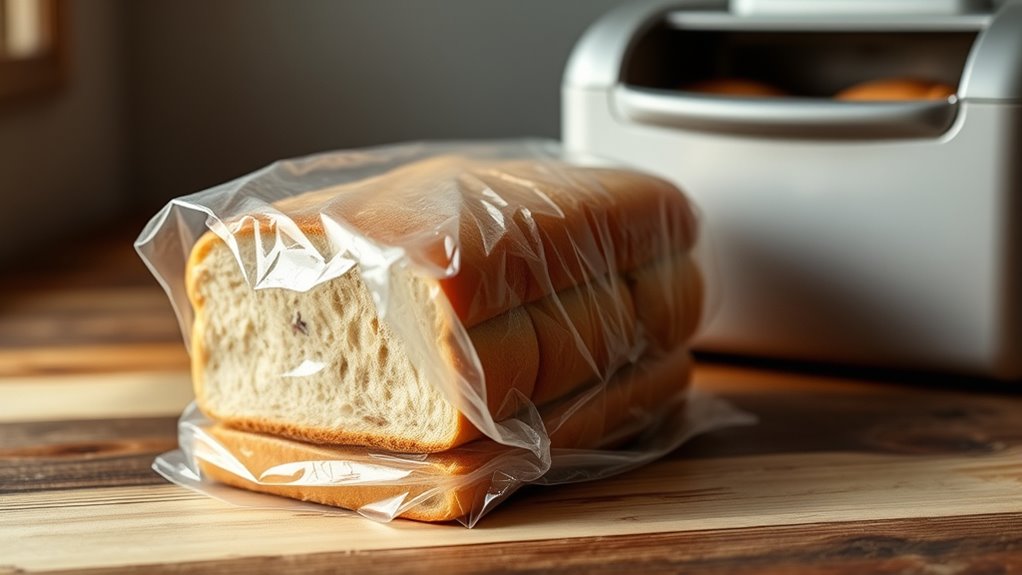
Choosing the right wrapping and packaging methods can make a big difference in keeping your bread fresh and preventing spoilage. Proper packaging techniques help preserve bread freshness and block out air and moisture that cause mold. To maximize effectiveness:
- Use a resealable plastic bag or bread box that allows some airflow but keeps out excess moisture.
- Wrap slices tightly in plastic wrap or aluminum foil before placing them in a bag, reducing exposure to air.
- Store bread in a cool, dark place away from direct sunlight, which can accelerate staling and mold growth.
These packaging techniques help maintain the bread’s soft texture and prevent mold, ensuring your bread stays fresh longer while minimizing waste.
How Can You Keep Bread Soft and Mold-Free? Tips & Tricks

To keep bread soft and mold-free, you need to control moisture and prevent mold spores from taking hold. When bread is sliced, it exposes more surface area, which can speed up drying or mold growth. To maintain softness, store sliced bread in an airtight container or resealable bag that traps humidity without trapping excess moisture. Avoid exposing bread to direct air or heat sources, which can dry out the crust and make the bread stale faster. Proper crust preservation is key; keep the crust soft by maintaining consistent humidity levels and avoiding excessive drying. If you notice the crust hardening, consider wrapping the bread lightly with a clean cloth or paper towel to help retain moisture. These tips help keep your bread soft and mold-free longer.
Which Natural and DIY Methods Help Preserve Bread?
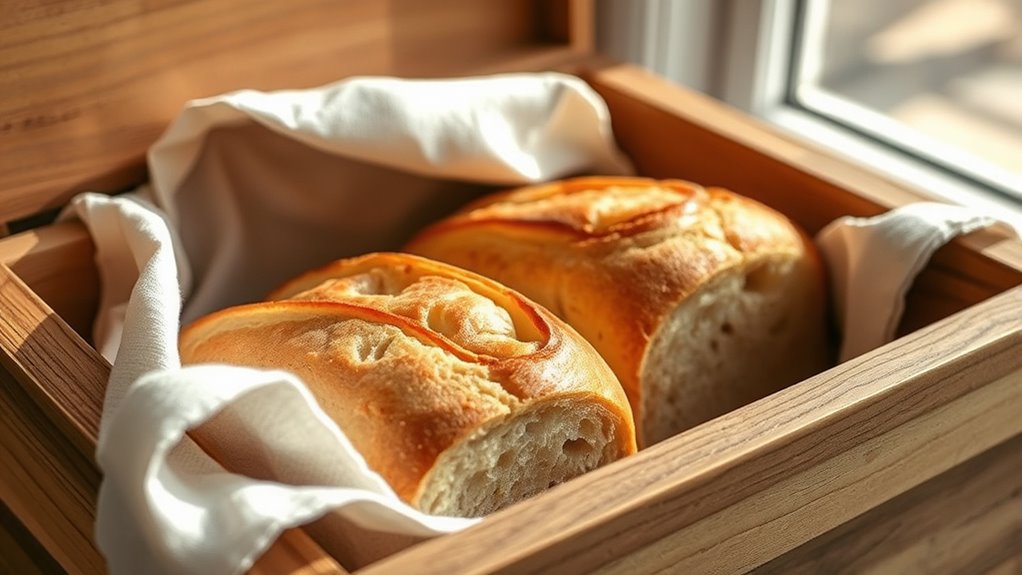
Ever wonder how natural and DIY methods can help keep your bread fresh longer? Using these approaches can maintain bread’s texture and flavor while preserving its nutrition and gluten content. First, store bread in a paper bag or cloth wrap instead of plastic; this allows airflow, reducing moisture buildup that promotes mold. Second, consider using natural preservatives like a slice of apple or a few drops of apple cider vinegar inside the storage container; these can slow mold growth without affecting bread nutrition. Third, you can freeze bread in airtight bags, which halts mold development and preserves gluten integrity. These methods help keep your bread soft, fresh, and safe to enjoy longer, all while respecting its natural qualities.
How to Spot Mold and Know When to Toss Your Bread
While natural storage methods can extend your bread’s freshness, it’s equally important to know how to identify mold when it appears. Mold indicators often include fuzzy spots, usually green, blue, or white, with a slimy or cottony texture. These signs show that your bread has gone beyond its bread expiry and is no longer safe to eat. Always inspect your loaf carefully, especially around the edges and seams. Even if mold is visible in small patches, it’s best to discard the entire slice or loaf, as mold roots can penetrate deeper than surface spots. Trust your senses—if your bread smells off or looks questionable, it’s safer to toss it. Prioritizing mold detection helps prevent health risks and ensures you enjoy fresh, safe bread.
Frequently Asked Questions
Can Storing Bread in Plastic Cause Mold Growth?
Storing bread in plastic can cause mold growth because it traps moisture and creates a humid environment. Plastic storage is convenient for mold prevention, but if the bread is damp or not fully cooled, mold can develop quickly. To keep your sliced bread soft without mold, use breathable bags or containers, and make certain the bread is dry before storage. This helps prevent mold while maintaining freshness.
What Are the Signs Bread Is No Longer Safe to Eat?
You’ll know bread isn’t safe to eat when you see mold, which appears as green, blue, or white fuzzy spots. Additionally, if it develops a sour or off smell or feels unusually sticky or dry, it’s time to discard it. Proper bread preservation prevents mold growth and keeps your bread fresh longer. Always check for signs of spoilage to make sure you enjoy safe, tasty bread without risking mold.
How Does Humidity Affect Bread Storage?
Humidity affects bread storage by influencing moisture levels, which can cause mold or staleness. If humidity is high, bread absorbs excess moisture, making it moldy faster. Conversely, low humidity dries out the bread, leading to staleness. To keep your bread soft and fresh, use humidity control methods like airtight containers or bread boxes with ventilation. Maintaining ideal humidity levels helps preserve its texture and prevents mold growth.
Are There Eco-Friendly Options for Storing Bread?
Yes, you can choose eco-friendly options like biodegradable packaging or reusable storage containers to keep your bread fresh. Using cloth bread bags or glass containers not only reduces waste but also helps maintain the bread’s softness by allowing airflow. These sustainable choices are practical, reduce environmental impact, and keep your bread fresh longer. Switch to eco-friendly storage solutions and enjoy fresh bread while caring for the planet.
Can Storing Bread in a Paper Bag Extend Freshness?
Did you know that storing bread in a paper bag can extend its freshness? It’s an effective method for bread preservation because paper allows just enough airflow to prevent mold while keeping the bread soft. Unlike plastic, paper packaging materials help maintain the bread’s crust and texture. So, next time, opt for a paper bag to keep your sliced bread fresh longer without sacrificing its quality or using eco-friendly options.
Conclusion
To keep your sliced bread soft without mold, choose the right storage method and stay vigilant. While some might think freezing affects texture, proper wrapping preserves freshness without sacrificing softness. So, don’t be afraid to try different methods—whether using a bread box or freezing in slices. With these tips, you’ll enjoy soft, mold-free bread longer, saving money and reducing waste. Your perfect loaf is just a smart storage solution away!
Halloween Picks
halloween
As an affiliate, we earn on qualifying purchases.