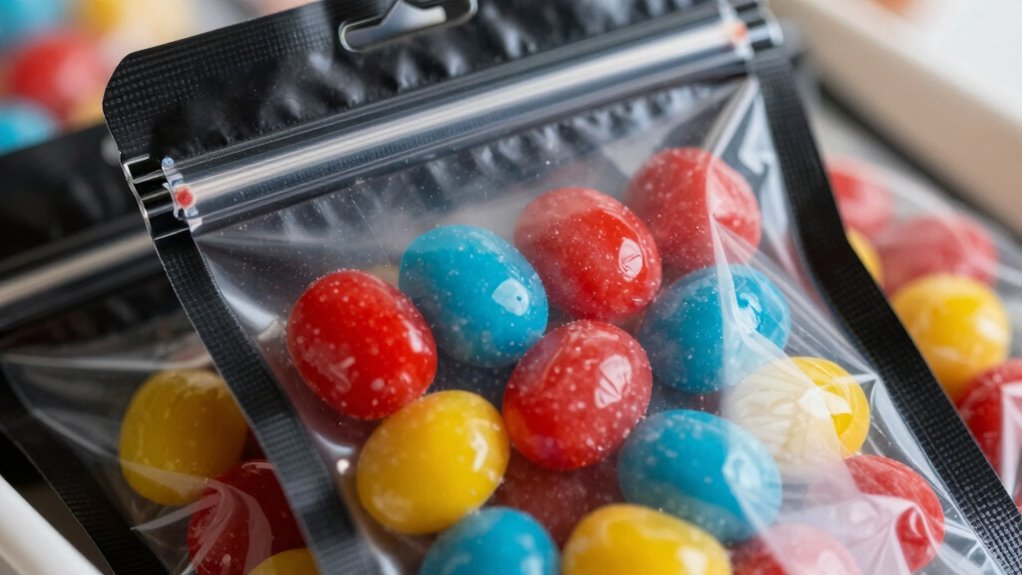
To store candy effectively, use airtight containers or resealable bags made from moisture-resistant materials like Mylar or foil pouches, which block humidity and light. Add silica gel packs or desiccants inside to absorb excess moisture, especially in humid environments. Keep the storage area cool and dry, and make certain seals are tight to prevent air and moisture from entering. For more tips on keeping your candies fresh, discover how to optimize your storage setup.
Key Takeaways
- Use airtight containers or resealable bags with moisture-resistant materials like Mylar or foil for effective barrier protection.
- Incorporate silica gel packs or desiccants inside storage containers to absorb excess humidity.
- Seal candies tightly, removing all excess air, and ensure lids or seals are secure to prevent moisture entry.
- Store candies in cool, dry environments away from heat, light, and strong odors to maintain quality.
- Regularly monitor and replace desiccants and check container seals to sustain optimal moisture control.
Why Moisture Barriers Matter for Candy Freshness
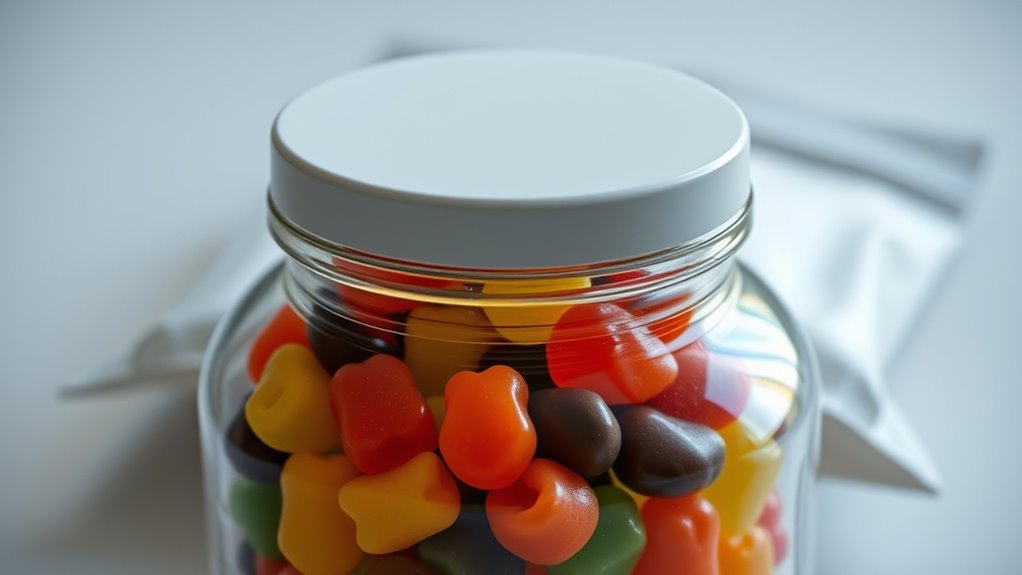
Moisture barriers are vital for keeping candy fresh because they prevent humidity from reaching the sweets. When moisture seeps in, it can cause candies to become sticky or lose their firm texture, ruining the candy’s original candy texture. By blocking humidity, moisture barriers help maintain the desired consistency, whether that’s chewy, crispy, or smooth. They also play an indispensable role in flavor preservation, preventing the candy from becoming stale or developing unwanted tastes due to moisture exposure. Without proper barriers, candies are more likely to absorb moisture, leading to spoilage and compromised quality. Using effective moisture barriers ensures your candy stays as fresh and flavorful as when you first bought it, preserving both its texture and taste for longer periods. Additionally, selecting the right storage materials can significantly enhance the effectiveness of moisture barriers, especially those that are designed for food storage. Proper storage methods are essential for maximizing candy freshness and quality over time.
Choosing the Best Moisture Barriers for Your Candy
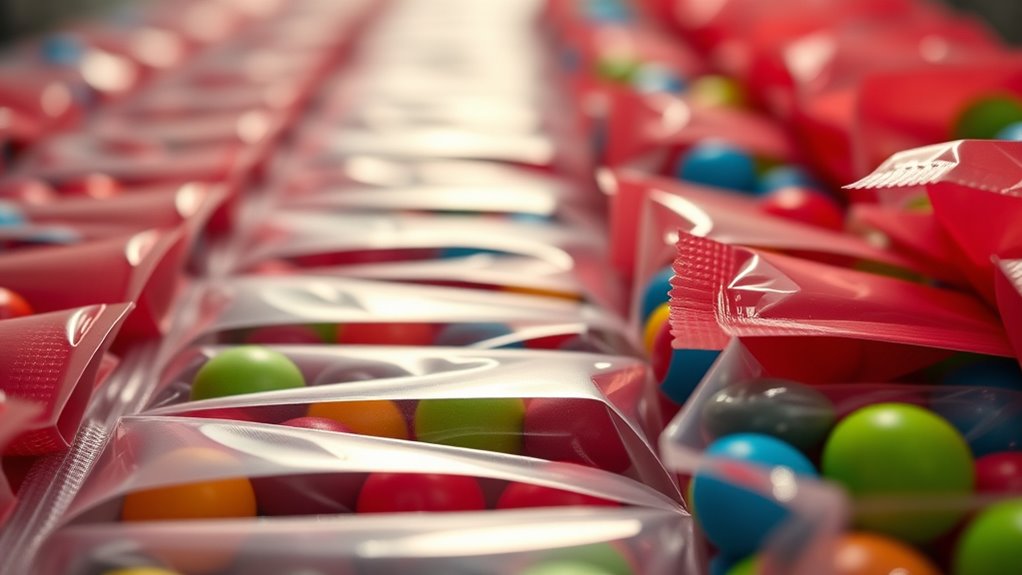
When selecting moisture barriers, make certain the material is compatible with your candy to prevent any reactions or damage. You also want to guarantee you seal everything properly to keep moisture out effectively. Paying attention to these tips will help you keep your candy fresh and delicious for longer. Additionally, choosing a barrier with a high moisture resistance rating can provide extra protection against humidity and environmental factors. Using barriers that are specifically designed for food storage can also help prevent contamination and spoilage, ensuring your candy stays safe and tasty. Incorporating proper sealing techniques is essential to maximize the barrier’s effectiveness and maintain optimal freshness. To ensure optimal protection, consider barriers that are specifically designed for food storage, which can offer additional safety and reliability.
Material Compatibility Tips
Choosing the right moisture barrier is vital for preserving your candy’s quality and texture. You need to take into account ingredient compatibility to prevent reactions that could spoil your treat. The storage environment also plays an important role; high humidity or temperature fluctuations can compromise your barrier’s effectiveness. Here are three tips to guarantee compatibility:
- Match barrier materials with ingredient sensitivities to prevent chemical reactions.
- Select barriers suited for your storage environment, such as moisture-resistant films for humid areas.
- Avoid materials that could cause condensation or chemical transfer, which might alter flavor or texture.
- Consider Vetted moisture barriers that have been tested for effectiveness in various storage conditions to ensure your candy stays fresh. Incorporating European cloud innovation can also help monitor and optimize storage conditions remotely for maximum preservation.
Proper Sealing Techniques
Proper sealing techniques are essential to keep your candy fresh and prevent moisture from compromising its quality. To achieve this, confirm you use airtight sealing methods that eliminate air exposure, which can lead to moisture infiltration. Choose containers or packaging that are specifically designed for moisture proofing, such as vacuum-sealed bags or airtight jars. When sealing, press out any excess air to maximize freshness and minimize the risk of moisture entering. Make sure lids are tightly secured and seals are intact before storing. Regularly monitor storage conditions to detect and prevent any potential moisture issues. Consistently verifying the integrity of your packaging helps maintain ideal moisture control. Proper sealing not only preserves the texture and flavor of your candy but also extends its shelf life, making airtight sealing an essential step in effective storage.
How Airtight Containers Keep Candy Crisp

Airtight containers are essential for keeping candy crisp because they prevent moisture from entering and softening the treats. By sealing out humidity, they help preserve the candy’s vibrant color and fresh flavor. When moisture seeps in, candies can become dull or sticky, losing their visual appeal and taste integrity. To maximize their effectiveness, consider these key points: 1. Use containers with tight-fitting lids to block air exchange. 2. Choose materials that don’t transfer odors, keeping flavors pure. 3. Store in a cool, dry place to enhance color preservation and flavor retention. Additionally, employing smart‑home solutions like humidity sensors can help monitor and maintain optimal storage conditions for your candies, reducing the risk of moisture-related deterioration.
Are Mylar Bags and Foil Pouches Good for Long-Term Candy Storage?
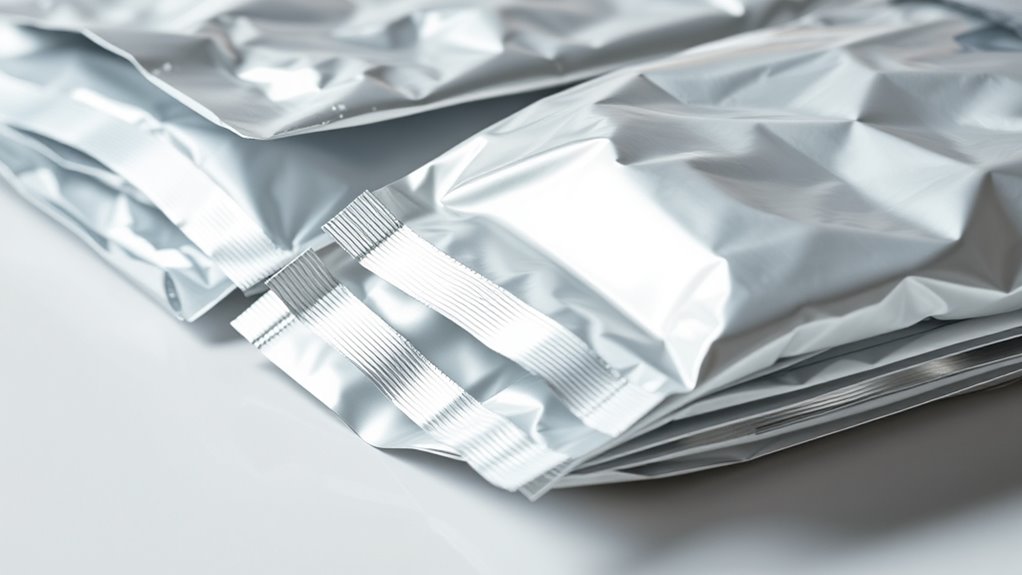
Mylar bags and foil pouches are excellent options for long-term candy storage because they provide a strong barrier against light, moisture, and oxygen. This protection helps preserve the candy’s vibrant color, preventing fading over time, and maintains flavor retention by blocking elements that cause staleness or spoilage. Their durability ensures that candies stay fresh without exposure to environmental factors that could compromise quality. Plus, they’re lightweight, easy to seal, and can be stored in various locations. Using these pouches means you’re effectively extending the life of your candies, keeping them looking appealing and tasting as good as when you first stored them. Proper storage techniques are essential to maximize their effectiveness and ensure your candies remain in optimal condition for as long as possible. Additionally, the barrier properties of Mylar and foil pouches make them a reliable choice for preserving freshness over extended periods. For added protection, incorporating desiccants inside the pouches can further reduce moisture and prevent candy from becoming sticky or moldy. Employing proper sealing methods can also significantly enhance the shelf life of your stored candies. Furthermore, selecting high-quality pouches can help avoid material degradation that might compromise the barrier. Overall, Mylar bags and foil pouches are reliable, cost-effective options for maintaining your candies’ appearance and flavor over the long haul.
Using Silica Gel Packs and Desiccants to Stop Humidity
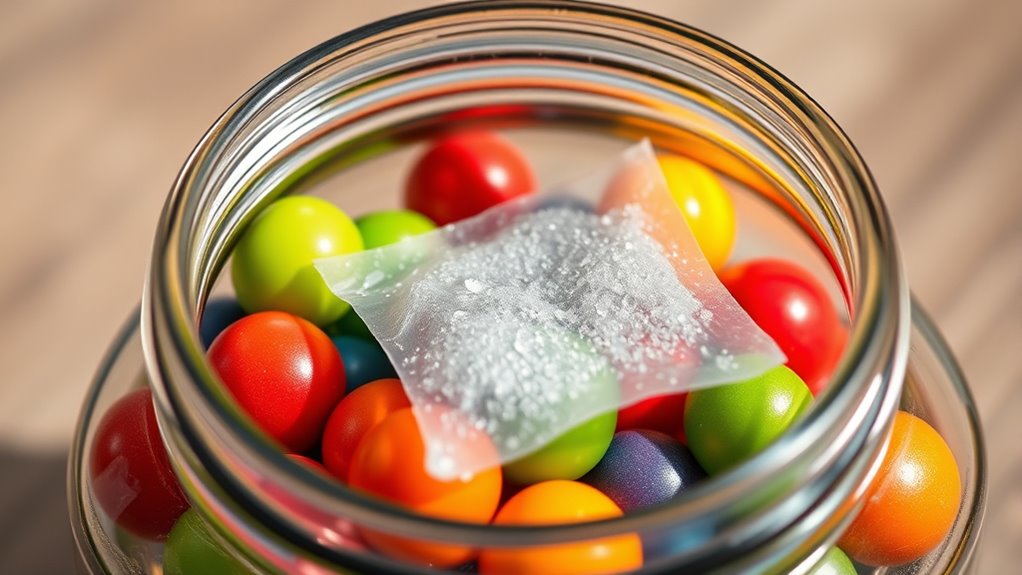
Silica gel packs are highly effective at absorbing moisture and keeping your candy dry. To work best, make sure you place them properly in your storage container and check them regularly. Remember to replace or recycle the packs when they become saturated to maintain ideal protection. Using proper storage practices can further enhance the effectiveness of your moisture barriers. Additionally, choosing durable and suitable containers can prevent moisture ingress and prolong your candy’s freshness. Regular inspection of your moisture barriers will ensure they continue to provide optimal protection against humidity. Incorporating appropriate container materials can also help in maintaining a consistently dry environment for your candy. Understanding the horsepower of electric dirt bikes can help you select the right performance level for your off-road adventures.
Effectiveness of Silica Gel
Silica gel packs are highly effective at controlling moisture and preventing candy from becoming sticky or moldy. Their ability to absorb humidity makes them essential in storage. To maximize silica gel effectiveness, ensure you use fresh packs and replace them regularly. Keep in mind that while silica gel is safe when used properly, desiccant safety precautions are important—avoid ingestion and keep packs away from children. Here are three key points:
- Use multiple small packs instead of one large one for even moisture control.
- Store silica gel in airtight containers to prevent moisture leakage.
- Check and replace silica gel packs periodically to maintain ideal dryness.
- Incorporating lifestyle products like silica gel can improve the overall quality and safety of your candy storage.
Proper Desiccant Placement
To effectively prevent humidity from damaging your candy, you need to place desiccant packs, like silica gel, in strategic locations within your storage containers. Proper desiccant placement is essential to maintaining moisture barrier integrity and guaranteeing even absorption of excess moisture. Position the packs away from direct contact with the candy to avoid contamination, ideally in the corners or along the sides where humidity tends to accumulate. Avoid overcrowding the container, which can hinder airflow and reduce the desiccant’s effectiveness. Regularly check and replace silica gel packs to keep moisture levels low. By carefully considering desiccant placement, you ensure your candy stays dry and fresh, protecting it from humidity-induced spoilage and maintaining ideal storage conditions.
Replacing and Recycling Packs
Once you’ve placed your desiccant packs correctly, it’s important to regularly check their condition and replace them when they become saturated. Saturated silica gel packs lose their moisture absorption ability, risking candy packaging integrity. Properly recycling or replacing packs ensures your candy stays fresh and prevents clumping or spoilage. Consider these steps:
- Inspect packs frequently to detect signs of saturation, like color change or moisture buildup.
- Recycle silica gel packs when possible; many are reusable after drying out.
- Replace saturated packs promptly to maintain ideal moisture control and preserve candy quality.
Packaging Tricks to Keep Candy Dry and Tasty

Proper packaging is essential to keep candy dry and maintain its freshness. Use airtight containers or resealable bags to prevent moisture from seeping in. When selecting packaging, choose materials that block humidity and light, which can cause color fading and flavor loss. For example, opaque or foil-lined containers help with color preservation by shielding candy from light exposure. Verify the packaging is vacuum-sealed or tightly closed to retain flavor and prevent air from degrading the taste. Adding a moisture-absorbing packet inside your storage container further enhances protection. Avoid leaving candy exposed to air or sunlight, which accelerates spoilage. By using the right packaging tricks, you’ll keep your candy tasting fresh, vibrant, and delicious for longer periods.
What Conditions Keep Your Candy Fresh in Storage?
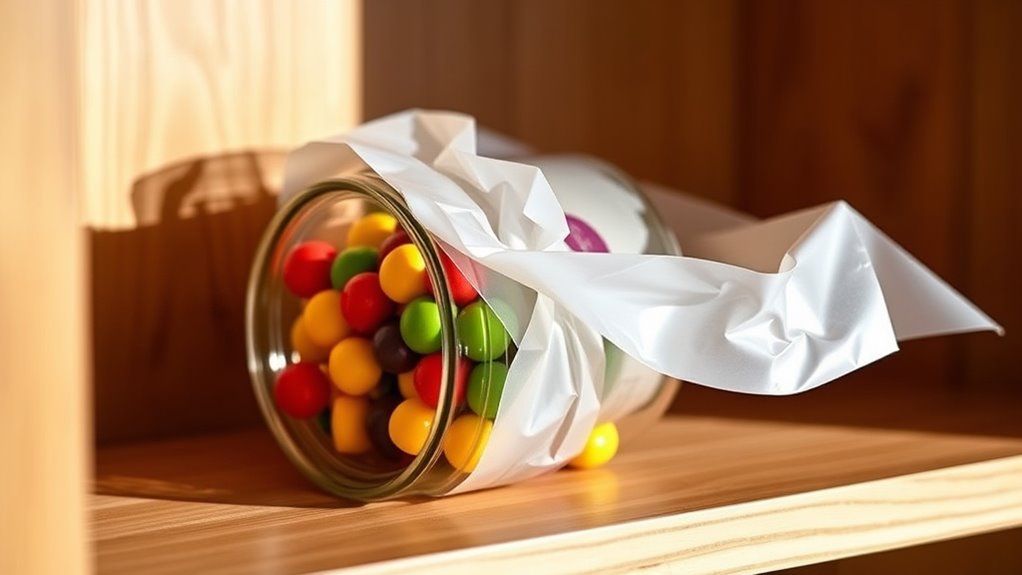
Keeping your candy fresh in storage depends on maintaining the right environmental conditions. Humidity and temperature control are key to preventing sugar crystallization, which can ruin texture and taste. To preserve flavor retention, keep candies in a cool, dry place away from direct sunlight.
Here are three essential tips:
- Maintain a consistent temperature, ideally between 60-70°F, to prevent moisture buildup.
- Use airtight containers to block humidity and reduce sugar crystallization.
- Store candies away from strong odors, which can affect flavor retention.
Frequently Asked Questions
How Do Moisture Barriers Affect Candy Shelf Life?
Moisture barriers considerably extend your candy’s shelf life by protecting it from humidity. When you use the right packaging materials, such as airtight containers or resealable bags, you effectively control humidity levels around your candy. This prevents moisture absorption, which can cause melting, texture changes, or spoilage. By maintaining proper humidity control, you keep your candy fresh, appealing, and safe for longer periods.
Can Moisture Barriers Be Reused or Recycled?
Did you know that over 300 million tons of plastic waste are produced globally each year? Moisture barriers are often single-use, but some can be reused or recycled. Check recycling options like drop-off centers or specialized programs; reuse potential depends on material type. While not all moisture barriers are recyclable, choosing eco-friendly options helps reduce waste. Recycling and reusing moisture barriers make a positive impact on the environment and cut down on unnecessary trash.
Are There Any Candies That Don’t Require Moisture Protection?
Certain candies like dairy candies and fruit chews don’t require moisture protection because they have low moisture content or natural preservatives. Dairy candies, such as caramel or fudge, stay fresh without extra barriers if kept in a cool, dry place. Similarly, fruit chews are less sensitive to moisture. You should still store them properly to prevent spoilage, but they generally don’t need special moisture barriers to stay fresh and tasty.
What Are the Cost Differences Between Various Moisture Barriers?
The cost comparison between moisture barriers varies widely, impacting barrier affordability. Basic options like zip-top bags are budget-friendly, often costing just a few cents per use. More advanced barriers, such as vacuum-seal systems or specialized packaging materials, tend to be pricier upfront but offer better protection and long-term savings. You’ll find that investing in higher-quality barriers can reduce spoilage, making them more cost-effective over time.
How Do Environmental Conditions Influence the Effectiveness of Moisture Barriers?
Environmental conditions, like humidity impact and storage temperature, directly affect moisture barrier effectiveness. High humidity can cause condensation and moisture buildup, reducing barrier performance, while low humidity helps maintain candy dryness. Similarly, warm temperatures may cause moisture transfer through barriers, whereas cooler storage helps preserve candy quality. You should choose barriers suited for your environment, and control storage conditions to prevent moisture from compromising your candy’s freshness and texture.
Conclusion
Remember, a stitch in time saves nine—taking steps now to protect your candy guarantees it stays fresh and delicious longer. By choosing the right moisture barriers, using airtight containers, and managing humidity with desiccants, you’re setting yourself up for sweet success. Don’t leave your treats to chance; a little effort now means your candy stays just as tasty as the day you stored it. Keep moisture out, and enjoy every bite!