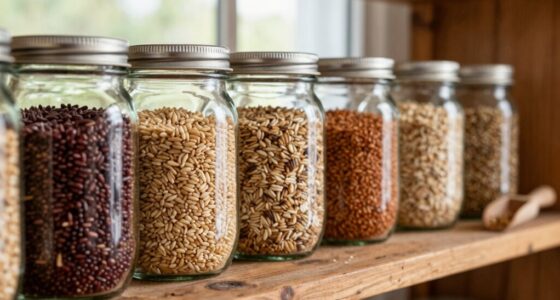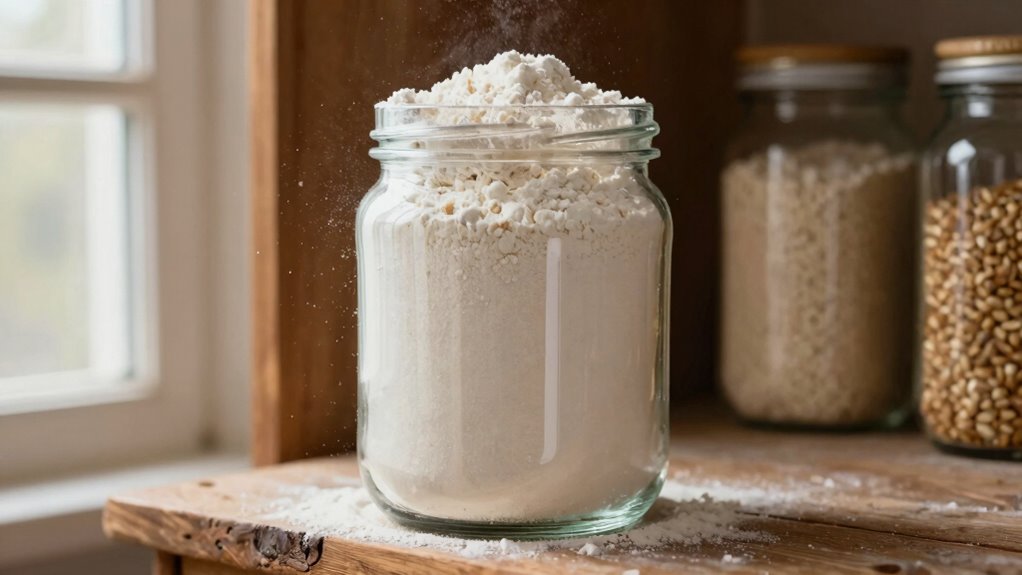

Storing flour in warm, humid, or light-exposed conditions makes it go stale and develop an off taste faster. When you keep flour near heat, sunlight, or in a moist environment, it speeds up chemical reactions and oxidation, degrading its flavor and quality. Avoid these habits to prolong freshness. Keeping flour in cool, dry, airtight, and opaque containers is key. If you’re curious about more ways to keep your flour fresh longer, there’s plenty to discover below.

Get baking supplies delivered free with Prime
- Fast, free delivery on millions of items
- Prime Video, Amazon Music and more included
- Member-only deals all year
Key Takeaways
- Storing flour in open or unsealed containers exposes it to air, accelerating oxidation and flavor deterioration.
- Keeping flour in warm environments speeds up chemical reactions, causing it to taste stale sooner.
- Exposing flour to light, especially in transparent containers, triggers oxidation and color fading.
- Placing flour near humidity sources like sinks or windows encourages moisture absorption and mold growth.
- Leaving flour in regular pantry conditions without proper airtight, opaque containers shortens its freshness lifespan.
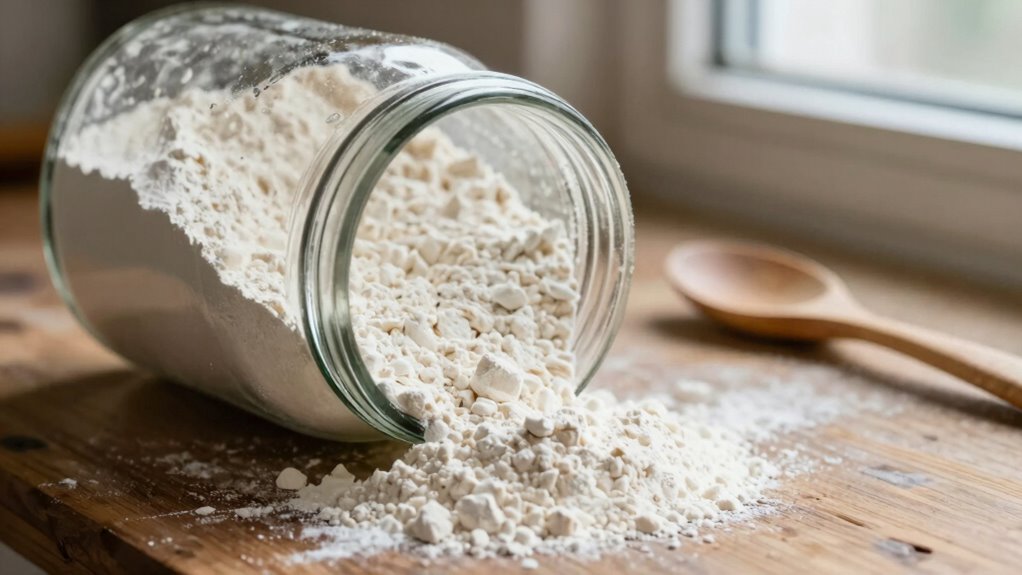
If you store flour improperly, it can develop a stale or off taste much faster than it should. The key factors influencing how long your flour stays fresh are shelf life and temperature control. When you leave flour exposed to heat, humidity, or light, it accelerates spoilage, causing it to lose its fresh flavor and texture. Understanding how these elements affect shelf life can help you keep your flour tasting its best for longer periods.
Temperature control is essential to maintaining flour’s quality. Flour is best stored in a cool, dry place, ideally below 70°F (21°C). When you store flour in warm environments, the fats within it start to go rancid more quickly, leading to that unpleasant, stale smell and flavor. Heat speeds up chemical reactions, so even if the flour appears fine visually, it may have already begun to degrade. Conversely, storing flour in a cold environment, such as a refrigerator or freezer, can considerably extend its shelf life. Just be sure to keep it in an airtight container to prevent moisture and odors from seeping in.
Store flour below 70°F in airtight containers to prevent rancidity and preserve freshness.
Your choice of storage container also impacts how long your flour remains fresh. Airtight, opaque containers shield flour from light and air, both of which can cause it to spoil faster. Light exposure doesn’t just fade the color; it can also trigger oxidation that affects flavor. Moisture is another enemy; even a small amount can cause clumping or mold growth. Always opt for containers that seal tightly, and avoid keeping flour near sinks or windows where humidity levels fluctuate. Proper storage conditions, including controlling humidity levels, are crucial to prevent spoilage. Additionally, using airtight containers helps maintain optimal freshness by limiting exposure to environmental factors.
Another habit that shortens shelf life is leaving flour out in the open or in unsealed packaging. If you buy flour in bulk, transfer it into a sealed container immediately. This step minimizes its exposure to air and humidity, both of which can speed up spoilage. If you live in a humid climate, consider storing flour in the refrigerator or freezer to preserve its freshness even longer. Just remember to bring it back to room temperature before baking, to guarantee it mixes properly.
airtight flour storage container
As an affiliate, we earn on qualifying purchases.
As an affiliate, we earn on qualifying purchases.
Frequently Asked Questions
Can Storing Flour Near Strong-Smelling Foods Affect Its Taste?
Storing flour near strong-smelling foods can definitely affect its taste through aroma transfer. You might notice your flour absorbing flavors from nearby items, leading to flavor absorption that alters its original taste. This happens because flour is porous and easily takes on surrounding scents. To keep your flour fresh and neutral in flavor, store it in an airtight container away from pungent foods and strong aromas.
Does the Type of Container Impact Flour’s Freshness Over Time?
Your flour’s freshness is like a delicate butterfly, easily harmed by the wrong environment. Using the right container material and an airtight seal keeps it secure from moisture and odors, preserving its flavor and texture. Plastic or glass containers with tight lids create a protective fortress around your flour, preventing it from going stale or absorbing unwanted smells. So, choose your container wisely to keep your flour fresh and baking perfect.
How Does Humidity Influence Flour’s Shelf Life?
High humidity levels can substantially shorten your flour’s shelf life because flour readily absorbs moisture from the air. When moisture absorption occurs, it creates a breeding ground for mold and bacteria, which spoil the flour faster. To keep it fresh longer, store your flour in an airtight container in a cool, dry place, especially if you live in a humid climate. Controlling humidity levels helps maintain its quality and prevents spoilage.
Is It Better to Store Flour in the Freezer or Pantry?
Imagine you’re a flour knight, battling spoilage for flavor preservation. Storing flour in the freezer is your best bet, especially for long-term storage, as it slows down the deterioration process. Use proper storage techniques—airtight containers prevent moisture and odors from spoiling your flour. While pantry storage works fine short-term, freezing keeps your flour fresh longer, ensuring your baked goods taste just as good as the day you bought it.
Can Exposing Flour to Sunlight Cause It to Spoil Faster?
Yes, exposing flour to sunlight can cause it to spoil faster. Sunlight degradation accelerates oxidation effects, which break down fats and proteins in the flour. This process can lead to off-flavors and a stale taste. To keep your flour fresh longer, store it in a cool, dark place away from direct sunlight. This prevents oxidation effects, preserves quality, and guarantees your flour stays fresh for as long as possible.
As an affiliate, we earn on qualifying purchases.
Conclusion
To keep your flour fresh longer, avoid storing it in warm or humid places, as this accelerates its aging process. Did you know that improperly stored flour can lose its freshness in just a month? By using airtight containers and keeping flour in a cool, dark spot, you’ll preserve its quality and flavor. Small changes in your storage habits can make a big difference—so stick to these tips to enjoy fresh-tasting baked goods every time.
flour storage canister with seal
As an affiliate, we earn on qualifying purchases.
As an affiliate, we earn on qualifying purchases.
reusable airtight flour container
As an affiliate, we earn on qualifying purchases.
As an affiliate, we earn on qualifying purchases.
Columbus Day / Indigenous Peoples' Day Picks
long weekend sales
As an affiliate, we earn on qualifying purchases.