
TL;DR

Get baking supplies delivered free with Prime
- Fast, free delivery on millions of items
- Prime Video, Amazon Music and more included
- Member-only deals all year
A Good Housekeeping report based on interviews with kitchen and interior designers identifies five trends gaining attention for 2027: darker colors, layered finishes, long-lasting materials, cooking technology integrated into the kitchen, and home plans organized around the kitchen. These are expert observations, not survey results or proof that the trends are widespread; costs, adoption rates and specific product launches are not established.
A Good Housekeeping report based on interviews with design professionals identifies five kitchen directions gaining attention for 2027: bolder colors, more layered materials, durable craftsmanship, technology built into cooking, and home layouts planned around the kitchen. The report offers designers’ observations rather than market data, so it does not establish how widely homeowners are adopting the ideas.
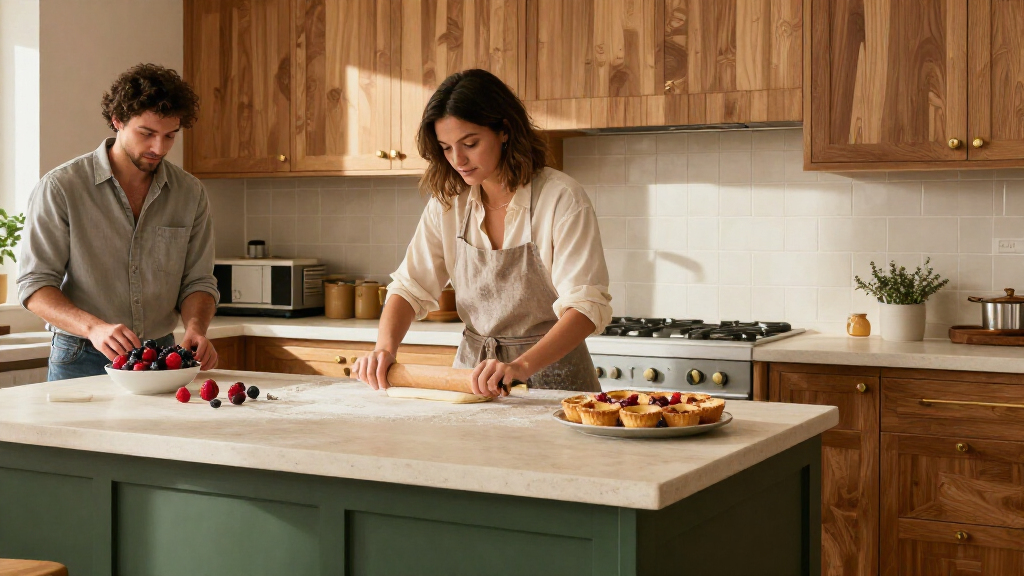
The first two trends concern how kitchens look and work day to day, including kitchen color trends for 2027. Designers describe a move away from stark white kitchens toward darker or more customized color palettes, alongside a preference for layered combinations rather than matching every finish. That can mean mixing cabinet finishes and pairing warm wood with stone and metal, while using cabinet organizers to keep storage practical.
Leyden Lewis, founder of Leyden Lewis Design Studio and a Miele Master, told Good Housekeeping that clients are asking for practical features such as built-in cutting boards and workstation sinks. He said these elements are expected to be useful while also fitting a personalized, inviting room. The source does not give sales figures or examples showing how common these requests are.
The other three directions extend beyond surface style. Interior designer Mick De Giulio said homeowners are considering authentic materials and enduring craftsmanship, including stone and wood that can develop a patina, as well as appliances selected for performance. Lewis described cooking technology such as oven cameras, guided recipes and combination steam and speed ovens. De Giulio also said the kitchen increasingly informs decisions about a home’s materials, layout, circulation and nearby rooms, particularly in open-plan homes.
Design Choices Reach Beyond Cabinets
The five directions suggest that kitchen planning is being discussed as a combination of appearance, cooking function and whole-home layout, rather than as a choice of cabinets and counters alone. For people planning a renovation, the ideas offer a framework for weighing color and finishes alongside workflow, appliances and how the kitchen connects to adjoining spaces.
The emphasis on materials intended to last also has a practical financial dimension. De Giulio said such choices may require a higher upfront investment, with the expectation that craftsmanship and durable finishes will remain useful and visually relevant longer. The report does not provide cost comparisons, lifespan data or evidence that these investments produce savings. Technology may add another trade-off: its features could support cooking, while designers also want the equipment to blend into a warm, human-looking room.
Products Worth Considering

Cuisinart Custom Classic Toaster Oven Broiler, TOB-40NNAS

Traeger Pro 22 Wood Pellet Grill and Smoker, 572 sq. in.

Ninja SP151 Flip Toaster Oven and Air Fryer
As an affiliate, we earn on qualifying purchases.
Five Ideas From Designer Interviews
The source is a Good Housekeeping trend report built around interviews with design professionals, including Lewis and De Giulio, as well as Kristin Harrison, founder of Georgia & Hunt Design House and a Miele Master. Its claims are attributed design perspectives, not results from a consumer poll, building-industry survey or forecast supported by measured adoption figures.
Harrison described changing expectations around neutral colors. “The safe bet has always been white or cream, but there is a yearning for something that looks much more customized now,” she told the publication. Lewis’s comments connect layered styling with kitchens that can accommodate cooking activity, while De Giulio’s remarks frame long-term material choices and kitchen-led planning as parts of a broader design approach. Together, the interviews explain the report’s five categories, but do not establish a ranking among them.
““The safe bet has always been white or cream, but there is a yearning for something that looks much more customized now.””
— Kristin Harrison, founder of Georgia & Hunt Design House and a Miele Master, as quoted by Good Housekeeping
Adoption and Costs Remain Unmeasured
The report does not specify how many homeowners are choosing these designs, how quickly adoption is changing, or which trend is most common. It offers no survey methodology, market statistics, price ranges or comparisons between products. The source also does not identify particular new appliance releases or establish that the described features will be standard in 2027.
Several statements describe designers’ expectations or client requests, not independently verified outcomes. Whether stone, wood or handcrafted features last longer in a particular kitchen depends on materials, use and care; no lifespan evidence is provided. Likewise, the report does not measure whether cooking technology improves results or hosting. The supplied material gives no publication date, so the timing of the report’s release cannot be stated more precisely.
Renovation Plans Put Ideas to Test
The source does not announce a product launch, formal forecast update or next reporting milestone. For homeowners and designers, the practical next step is to test these ideas against budget, cooking habits, maintenance and the home’s existing layout. Decisions about connected appliances may also require checking which functions a particular model supports, while material selections call for product-specific information on care and durability.
Whether the five directions become broadly adopted trends will require evidence beyond the interviews in this report, such as later consumer surveys, renovation data or sales figures. Until then, they are best understood as designers’ outlook for 2027, not a measured account of what most households are doing.
Key Questions
What are the five kitchen trends in the report?
They are darker, bolder colors; layered finishes and materials; long-lasting materials and craftsmanship; technology integrated into cooking; and planning the wider home around the kitchen.
Does the report show that most homeowners are adopting these trends?
No. It is based on interviews with design professionals and supplies no survey results, adoption rates or sales data. It describes what the interviewed experts say they are seeing or expect.
What does layered kitchen design mean?
In the report, it means combining finishes rather than matching everything. Lewis gives examples such as different cabinet finishes and pairings of warm wood, stone and metal, alongside useful features such as workstation sinks.
What cooking technology does the report mention?
Lewis points to ovens with interior cameras, guided or automated recipes, and combination steam and speed ovens. The report does not name specific products or compare their performance.
Do durable materials cost less over time?
De Giulio says choosing authentic materials and craftsmanship may involve a higher upfront investment and describes the aim of lasting relevance. The report provides no cost or lifespan data to show whether these choices save money over time.
Source: goodhousekeeping.com