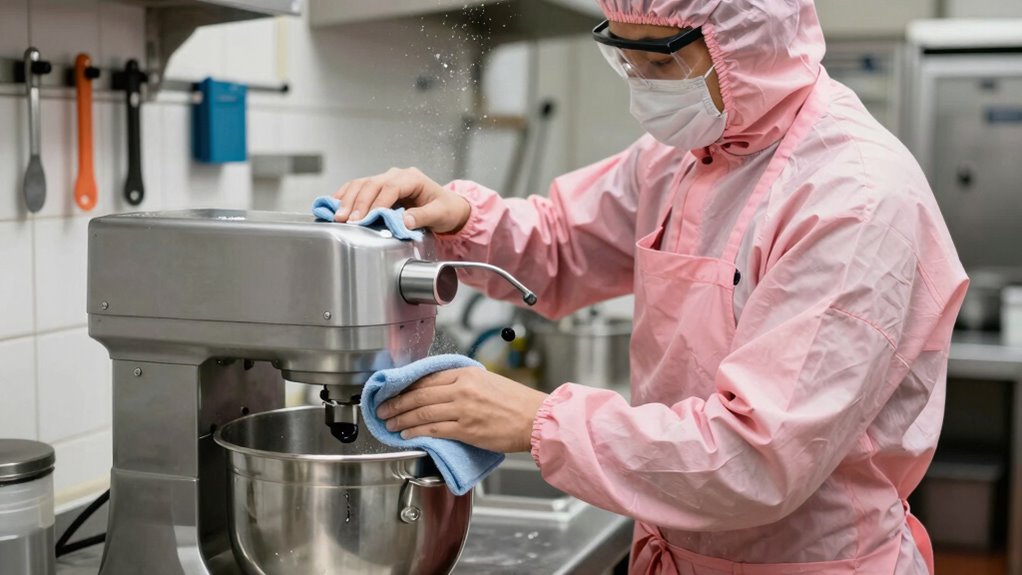

To clean flour dust and grease safely from your mixer, you should unplug the equipment, wear protective gear, and gather soft brushes, cloths, and food-safe cleaners. Carefully remove flour dust with a vacuum or brush before wiping down greasy areas with appropriate degreasers. Make sure to dry all parts thoroughly to prevent rust, and avoid harsh tools or excessive force. If you keep these tips in mind, you’ll maintain a safe, efficient mixer—plus, you’ll discover more essential maintenance steps ahead.
Key Takeaways
- Always disconnect power and follow lockout procedures before cleaning to ensure safety.
- Wear PPE like gloves, goggles, and masks to protect against dust, grease, and sharp parts.
- Use soft brushes, microfiber cloths, and food-safe cleaners for gentle, effective cleaning of mixer components.
- Conduct thorough cleaning after each use, focusing on vents, seams, and grease-prone areas to prevent buildup.
- Regularly inspect and maintain parts, avoiding harsh tools or excessive force, and seek professional help for complex issues.
Why Regularly Cleaning Your Mixer Matters
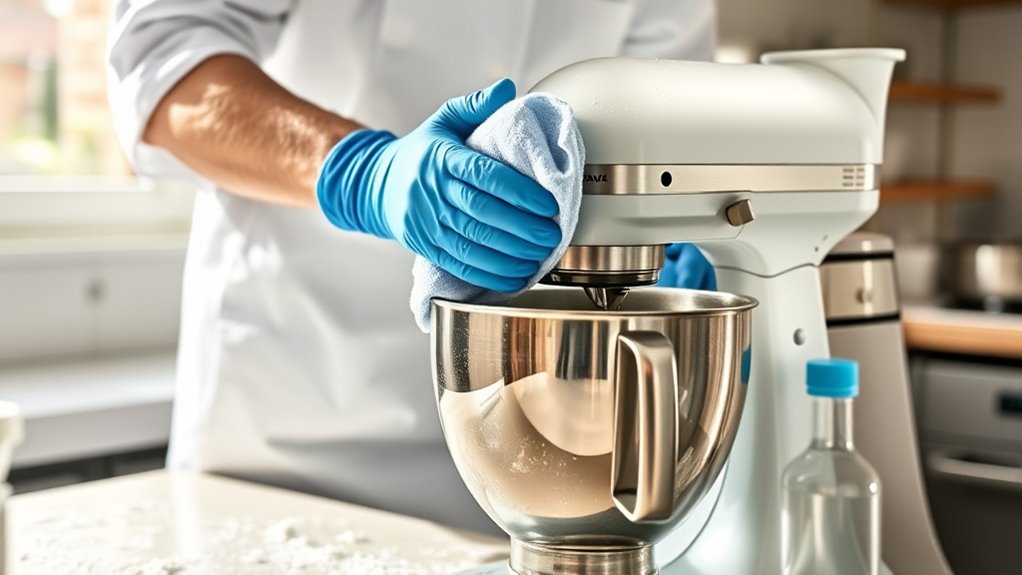
Regularly cleaning your mixer is essential because flour dust and grease can quickly build up, affecting both the machine’s performance and the quality of your baked goods. Proper mixer maintenance guarantees that all parts function smoothly and last longer. Neglecting regular cleaning can cause components to seize or become less efficient, leading to costly repairs or replacements. Additionally, buildup of flour dust and grease can pose safety hazards, such as fire risks or contamination. Following safety protocols during cleaning helps you avoid accidents and protects your health. Consistent maintenance also prevents cross-contamination and maintains hygiene standards in your kitchen. By making cleaning a routine part of your mixer maintenance, you ensure peak performance, safety, and the best results for every batch you bake. Regular upkeep also preserves the longevity of your equipment, ensuring it remains in optimal condition over time. Incorporating proper cleaning techniques helps prevent the accumulation of dirt and debris, which can impact the efficiency of your mixer. Using appropriate cleaning methods can also help you avoid damage to sensitive components, such as filters or internal parts, which can be costly to replace. Additionally, understanding the importance of routine maintenance can help you develop a consistent cleaning schedule that keeps your mixer functioning at its best. Incorporating safe cleaning practices also minimizes the risk of injury and damage during maintenance.
What Safety Precautions Should You Take Before Maintenance?
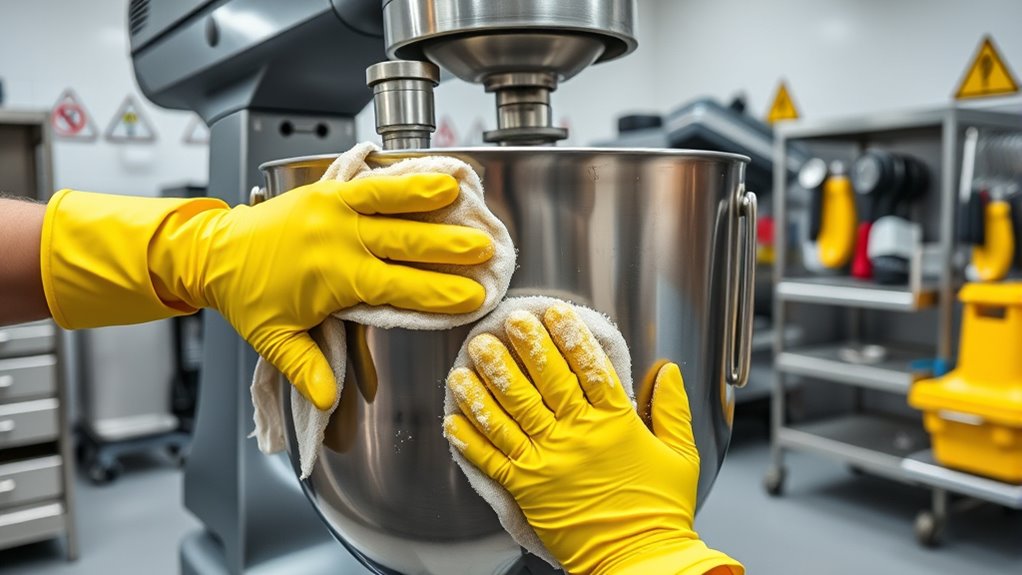
Before starting any maintenance on your mixer, it’s crucial to prioritize safety by unplugging the machine and ensuring it’s completely powered off. Always follow lockout procedures to prevent accidental activation during work. Wear appropriate protective clothing, such as gloves and eye protection, to shield yourself from flour dust, grease, and sharp components. Confirm that all energy sources are disconnected, and lock the switch in the off position to prevent re-energizing. Clear the area of unnecessary tools or debris, and inform others that maintenance is underway. Taking these precautions minimizes the risk of injury or accidents. Additionally, understanding proper water safety measures can help prevent slips or falls around wet or greasy areas. Remember, safety isn’t just about compliance; it’s about protecting yourself and ensuring a smooth, safe maintenance process. Incorporating safety protocols aligned with industry standards further enhances your protection during maintenance activities. Being familiar with hazard identification techniques can also help you recognize potential risks before starting work. Implementing proper equipment maintenance procedures ensures longevity and safe operation of your mixer. Being aware of free floating hazards in your workspace can also prevent unexpected accidents during maintenance.
How to Gather the Right Supplies for Mixer Cleaning
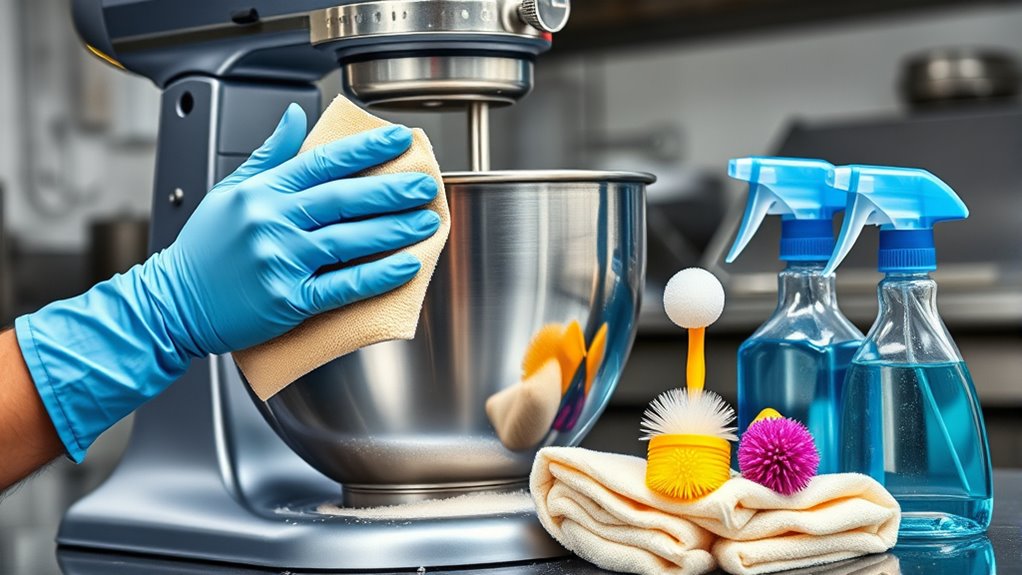
To clean your mixer safely, you need to gather the right supplies first. Make sure you have essential cleaning tools, appropriate protective gear, and secure storage solutions for your supplies. Having everything ready guarantees your cleaning process is efficient and safe. Incorporating visual and auditory cues can also enhance your understanding of proper cleaning techniques. Additionally, ensuring your workspace is organized with proper tool storage minimizes clutter and reduces the risk of accidents during cleaning. Referencing ventilation considerations from your setup can help prevent inhalation of dust and fumes during maintenance. Paying attention to equipment maintenance schedules ensures your mixer remains in optimal condition and prolongs its lifespan.
Essential Cleaning Supplies
Gathering the right cleaning supplies is essential for safe and effective mixer maintenance. To guarantee kitchen safety, choose supplies that are appropriate for handling flour dust and grease without causing harm. Stock up on soft brushes, microfiber cloths, and non-abrasive sponges to prevent damage to your equipment. Use food-safe cleaning solutions like mild detergents or specialized degreasers that won’t leave harmful residues. Keep a spray bottle for quick cleaning and a bucket for rinsing. Remember to follow your cleaning schedule, so supplies are always ready when needed. Organize your tools in an accessible spot to streamline routine maintenance. Having the proper supplies on hand reduces risks and keeps your mixer in top shape, supporting a safe and efficient kitchen environment.
Protective Gear Selection
Choosing the right protective gear is key to keeping yourself safe during mixer cleaning. Your safety equipment selection should include personal protective gear like gloves, goggles, and a mask to shield against flour dust and grease. Gloves protect your skin from irritants and chemicals, while goggles prevent debris from entering your eyes. A mask helps avoid inhaling fine flour dust or grease vapors that can be harmful over time. Make certain your safety equipment fits well and is suitable for the task at hand. Investing in high-quality personal protective gear reduces the risk of accidents and exposure. Always inspect your safety equipment before use, replacing any damaged items. Proper safety gear is a vital part of effective mixer maintenance, helping you work safely and confidently. Personal protective equipment is also essential to manage potential hazards from dust and vapors effectively.
Proper Storage Solutions
Before starting your mixer cleaning, assembling the right storage solutions guarantees all supplies stay organized and easily accessible. Good storage organization helps you quickly find cleaning tools, protective gear, and cleaning agents when needed. Consider container options like labeled plastic bins, spray bottles, or small drawers to keep supplies sorted by task or frequency of use. Use clear containers so you can see contents at a glance, reducing searching time. Stackable containers save space and improve efficiency. Make sure your storage setup is near your work area, minimizing movement during cleaning. Durable, leak-proof containers prevent spills and contamination. Incorporating effective storage techniques can further enhance your overall maintenance routine and keep your workspace clutter-free. Additionally, implementing proper labeling practices ensures that each item is easy to identify, saving time and preventing cross-contamination. To optimize your system, consider organized storage strategies that align with your workflow and cleaning schedule. Employing storage best practices can help maintain a clean and safe environment for your mixer maintenance routine.
How to Safely Remove Flour Dust and Grease Buildup
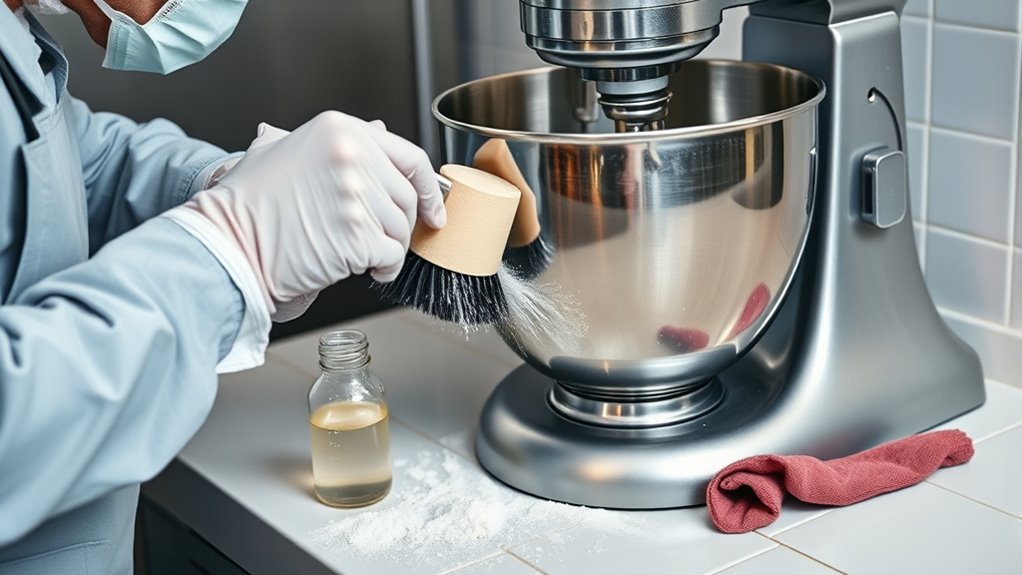
Removing flour dust and grease buildup safely is essential to prevent fire hazards and maintain a clean workspace. Dust accumulation from flour can ignite if left unchecked, while grease buildup can cause equipment malfunctions. To start, wear protective gloves and a dust mask to avoid inhaling particles. Use a vacuum or a soft brush to gently remove loose flour dust from surfaces. For grease removal, apply a degreasing cleaner suitable for your equipment, following the manufacturer’s instructions. Scrub stubborn grease with a non-abrasive pad, ensuring you don’t damage machine parts. Wipe everything down with a clean, damp cloth afterward. Always ensure the area is well-ventilated during cleaning, and never utilize harsh chemicals that could damage your equipment or create health risks. Proper cleaning techniques help prevent accumulation and maintain the longevity of your machinery.
How to Clean Different Parts of Your Mixer Step by Step
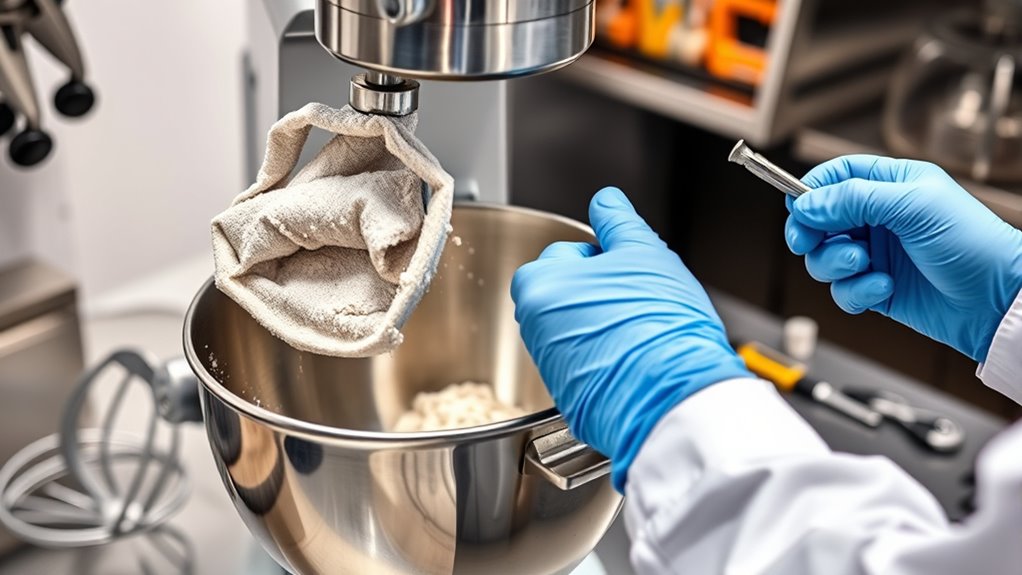
Now that you’ve learned how to safely remove flour dust and grease buildup, it’s important to know how to clean each part of your mixer properly. Follow these steps:
- Remove and wash the mixer blade carefully, applying proper mixer blade maintenance techniques to prevent damage. Be sure to inspect the blade for any signs of wear or corrosion, which can affect performance and safety. Using appropriate cleaning methods helps preserve the blade’s integrity. Additionally, regularly inspecting the blade for wear or corrosion ensures safe operation. Incorporating proper cleaning techniques for blades can also prevent the buildup of residue that might compromise safety.
- Wipe down the mixing bowl and exterior with a damp cloth, ensuring no residue remains.
- Inspect the gear housing using gear inspection techniques to spot wear or buildup, then clean it thoroughly. Regularly checking the gear housing helps prevent mechanical issues that could compromise safety.
- Clean the motor and control panel with a soft, damp cloth, avoiding moisture intrusion. Proper electrical component care is essential for safe operation and longevity.
- Regularly check and maintain the outdoor kitchen surroundings to ensure safety and longevity of your equipment.
Regular cleaning maintains ideal performance and safety. Always dry parts completely before reassembling. Properly maintaining each component helps extend your mixer’s lifespan and ensures consistent results.
Tips to Prevent Dust and Grease Buildup in Your Mixer
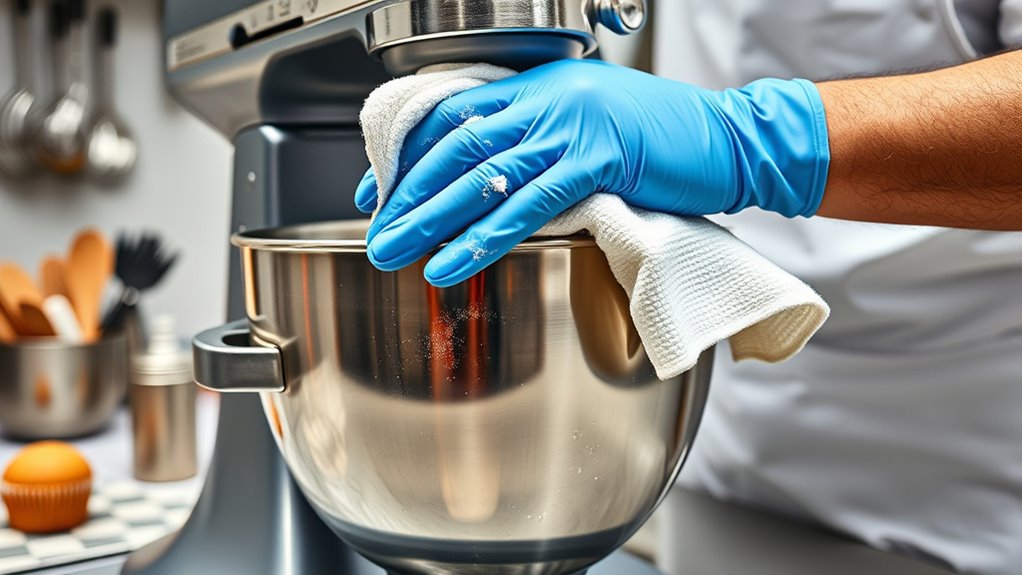
To prevent dust and grease buildup in your mixer, regular maintenance and mindful usage are essential. Start by practicing dust prevention through thorough cleaning after each use, especially around vents and seams where flour dust tends to settle. Use compressed air or a soft brush to remove loose dust before it accumulates. Effective grease management is also key; regularly inspect and lubricate moving parts, but avoid over-lubricating, which can attract dust. Keep surfaces dry and wipe away any grease spills immediately to prevent buildup. Establish a routine cleaning schedule, focusing on areas prone to dust and grease accumulation. By staying proactive with dust prevention and grease management, you’ll extend your mixer’s lifespan and ensure it operates smoothly and safely.
Mistakes to Avoid When Cleaning Your Mixer
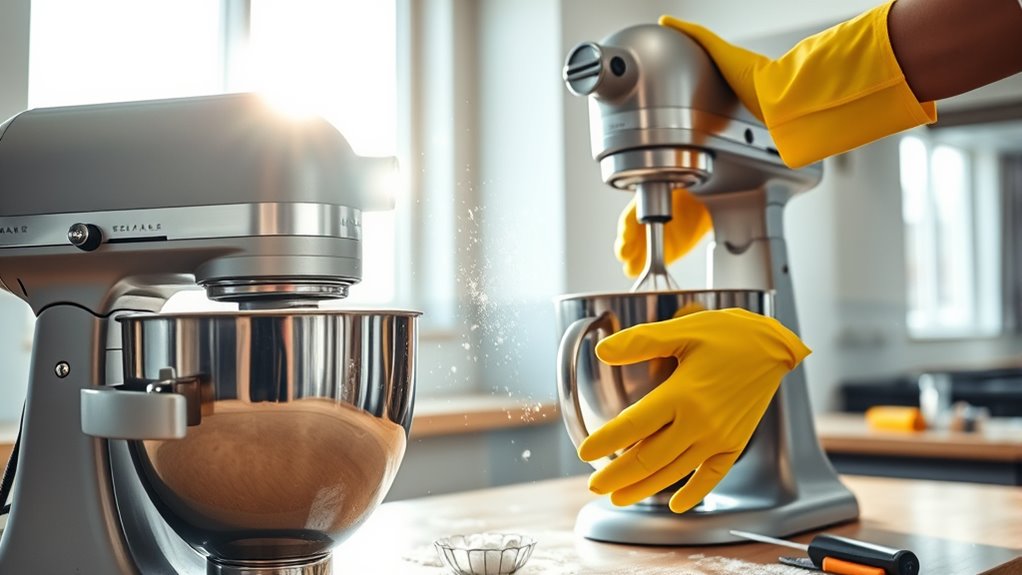
One common mistake to avoid when cleaning your mixer is using harsh or abrasive cleaning tools that can scratch or damage its surfaces. This not only compromises the equipment’s look but also creates safety pitfalls by exposing sharp edges or weakening parts. To prevent these issues, steer clear of these common cleaning mistakes:
Avoid harsh cleaning tools to protect your mixer’s surface and safety.
- Using steel wool or metal brushes on delicate areas
- Applying excessive force when scrubbing
- Skipping thorough drying, which can cause rust
- Using unapproved cleaning agents that may corrode surfaces
When to Call a Professional for Deep Cleaning or Repairs
If you notice your mixer making strange noises or struggling to operate, it’s time to call a professional. Persistent performance issues or safety concerns, like sparks or unusual smells, shouldn’t be ignored. Addressing these signs early can prevent further damage and keep your workspace safe.
Signs of Mechanical Issues
Mechanical issues in your cleaning equipment often reveal themselves through noticeable signs that shouldn’t be overlooked. If you notice unusual behavior, it’s time to assess whether professional help is needed. Here are four key signs:
- Excessive vibration or noise, indicating vibration issues or misaligned parts.
- Uneven or inconsistent mixing, which may point to machine alignment problems.
- Difficulty in operating the equipment smoothly or frequent jamming.
- Visible wear or damage on belts, gears, or other components.
These signs suggest underlying mechanical problems that could worsen if left unaddressed. Ignoring them can lead to costly repairs or safety hazards. When you spot these issues, calling a professional for deep cleaning or repairs ensures your equipment stays safe and functional.
Persistent Performance Problems
Persistent issues with your cleaning equipment’s performance often point to deeper problems that simple troubleshooting can’t fix. Dust accumulation inside the motor or on moving parts can hinder operation, causing inconsistent mixing or overheating. Grease residue buildup on gears or bearings can impair smooth movement, leading to sluggish performance or strange noises. If cleaning and basic maintenance don’t resolve these issues, it’s time to call a professional. Deep cleaning might be necessary to remove stubborn dust or grease deposits that can’t be reached with routine methods. Additionally, worn or damaged components may require expert repair to restore proper function. Ignoring these signs can lead to more severe damage or safety risks, so don’t hesitate to seek professional help when your equipment continues to underperform despite your efforts.
Safety Concerns and Hazards
Deep cleaning or repairs can pose safety risks if you’re not experienced or properly equipped. Handling chemicals for cleaning flour dust or grease can expose you to chemical hazards if not used correctly. Additionally, working on mixers involves ergonomic safety risks, such as strains or injuries from awkward postures or heavy parts. To stay safe, consider calling a professional when:
- You encounter complex electrical or mechanical issues.
- There’s a risk of chemical exposure from cleaning agents.
- The task requires handling heavy or awkward components.
- You’re unsure how to prevent ergonomic injuries during maintenance.
Leaving these tasks to trained technicians guarantees proper, safe deep cleaning and repairs, reducing the risk of accidents and chemical hazards while protecting your health.
Frequently Asked Questions
How Often Should I Clean My Mixer to Prevent Dust and Grease Buildup?
You should clean your mixer at least weekly to follow the frequency guidelines and prevent dust accumulation and grease buildup. After each use, wipe down surfaces to keep dust and grease from settling. Regular cleaning helps maintain peak performance and hygiene, reducing the risk of contamination. If you use your mixer more frequently or handle dry powders like flour, consider cleaning more often to stay ahead of dust accumulation.
Are There Specific Cleaning Products Recommended for Mixer Maintenance?
You should use an all-purpose cleaner for routine cleaning and a degreasing solution for heavy grease buildup. These products effectively remove flour dust and grease without damaging your mixer. Always follow the manufacturer’s instructions for safe use. Apply the cleaner or degreaser with a soft cloth or brush, then rinse with water and dry thoroughly. Regular use keeps your mixer clean, safe, and running smoothly.
Can Improper Cleaning Damage My Mixer’s Electrical Components?
Yes, improper cleaning can damage your mixer’s electrical components. If you use excessive water or harsh cleaners, you risk short-circuiting or corroding sensitive parts. Always prioritize electrical safety by disconnecting the power before cleaning and avoid spraying water directly on electrical elements. Using gentle, appropriate cleaning products helps prevent component deterioration and guarantees your mixer remains safe and functional for long-term use.
What Are Signs That My Mixer Needs Professional Servicing?
If you notice signs of wear like frayed cords or worn gears, or hear unusual noises such as grinding or squealing, your mixer likely needs professional servicing. These issues can indicate internal problems or parts that need repair. Don’t ignore these signs—they can lead to further damage or safety hazards. Schedule a professional checkup promptly to keep your mixer running smoothly and safely.
How Do I Dispose of Cleaning Waste Safely and Environmentally?
You should dispose of cleaning waste by following eco-friendly disposal practices. Avoid dumping hazardous waste like grease or flour dust down drains, as they can harm the environment. Instead, collect the waste in designated containers and take it to a recycling center or hazardous waste facility. Always check local regulations for proper disposal methods, ensuring you’re environmentally responsible and safe while maintaining your mixer.
Conclusion
Keeping your mixer clean is like giving it a spa day—it stays healthier, lasts longer, and works better for you. Regular maintenance prevents messy build-ups from turning into costly repairs. Just remember to follow safety steps and use the right supplies. By staying vigilant, you’ll keep your mixer running smoothly, avoiding pitfalls like stubborn grease or flour dust. Treat your appliance well, and it’ll be your loyal kitchen companion for years to come.