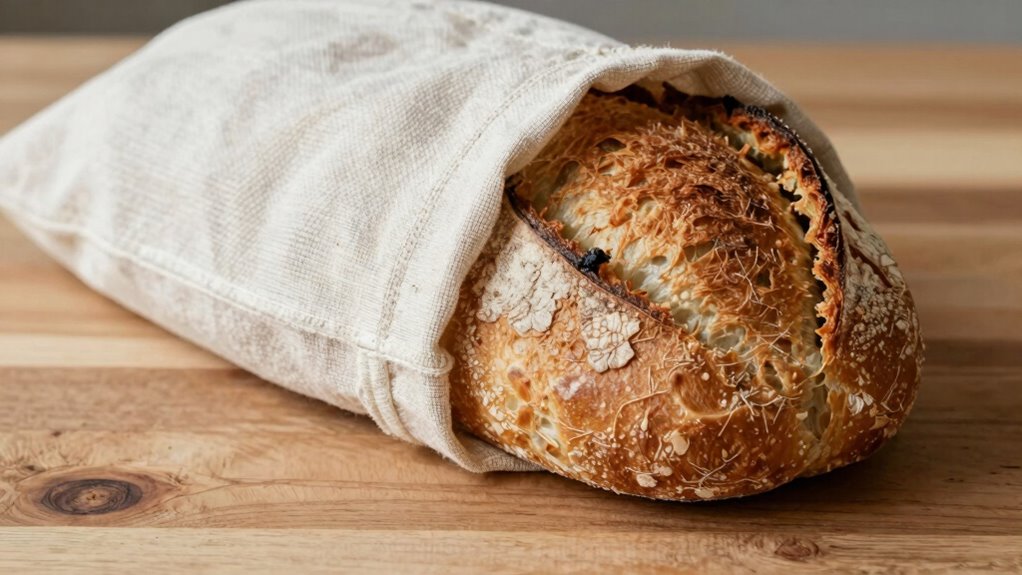

To keep bread soft without ruining the crust, store soft breads like sandwich loaves in plastic bags or airtight containers to retain moisture, while crusty breads like baguettes or artisan loaves are best kept in paper bags or bread boxes that allow airflow. If you want softness without sacrificing the crust, consider wrapping the bread loosely in a cloth or paper towel overnight and reheating briefly in the oven. For more tips, keep exploring how to perfect your storage methods.
Key Takeaways
- Store soft bread in plastic bags or airtight containers to retain moisture without compromising the crust.
- Keep bread at room temperature in a cool, dry place, avoiding refrigeration which accelerates staling.
- Wrap bread loosely in a cloth or paper towel before placing in a plastic bag to balance moisture retention and crust integrity.
- Reheat the bread briefly in a low-temperature oven to revive softness without softening the crust excessively.
- Freeze sliced bread in airtight packaging for longer storage, then thaw at room temperature and reheat gently to maintain softness.
How Do Different Types of Bread Need to Be Stored?
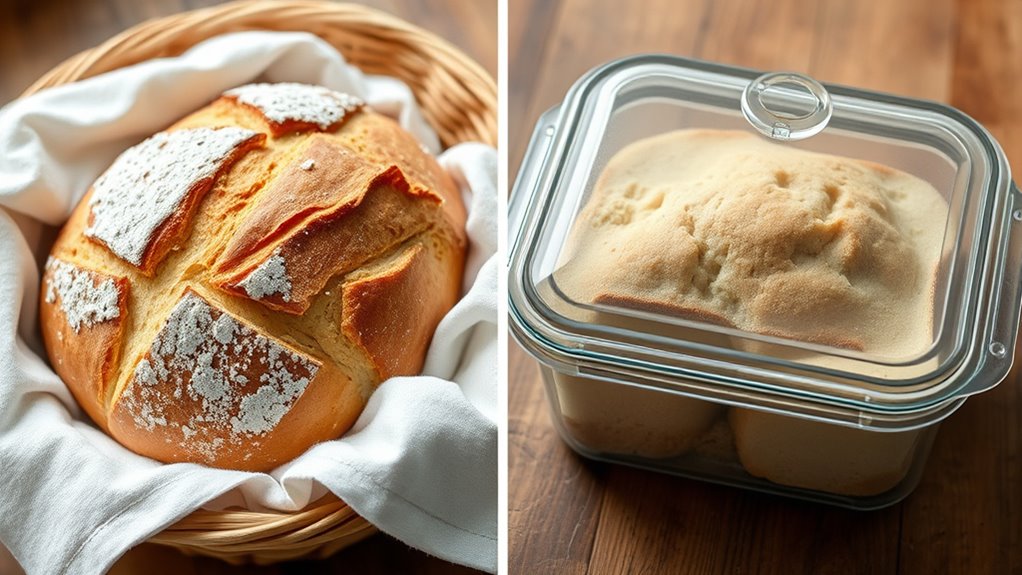
Different types of bread require different storage methods to maintain freshness and prevent spoilage. For crusty breads like baguettes or artisan loaves, it’s best to keep them in paper bags or bread boxes that allow airflow, helping preserve the crust’s crispness. Avoid plastic, which traps moisture and makes the crust soggy. Soft breads, such as sandwich loaves or brioche, should be stored in plastic bags or airtight containers to prevent drying out. This method helps retain moisture, keeping the bread soft longer. When storing bread, consider how the crust will be affected—crust preservation is key to maintaining texture. Understanding the specific needs of each bread type ensures you choose the best method for keeping your bread fresh and delicious. Additionally, exploring bread preservation techniques can offer further insights into extending freshness without compromising texture, including methods like proper storage containers that are designed to maintain optimal humidity levels. Properly understanding exposure to humidity is essential for choosing the right storage method for different bread types.
What Are the Best Ways to Keep Your Bread Fresh?
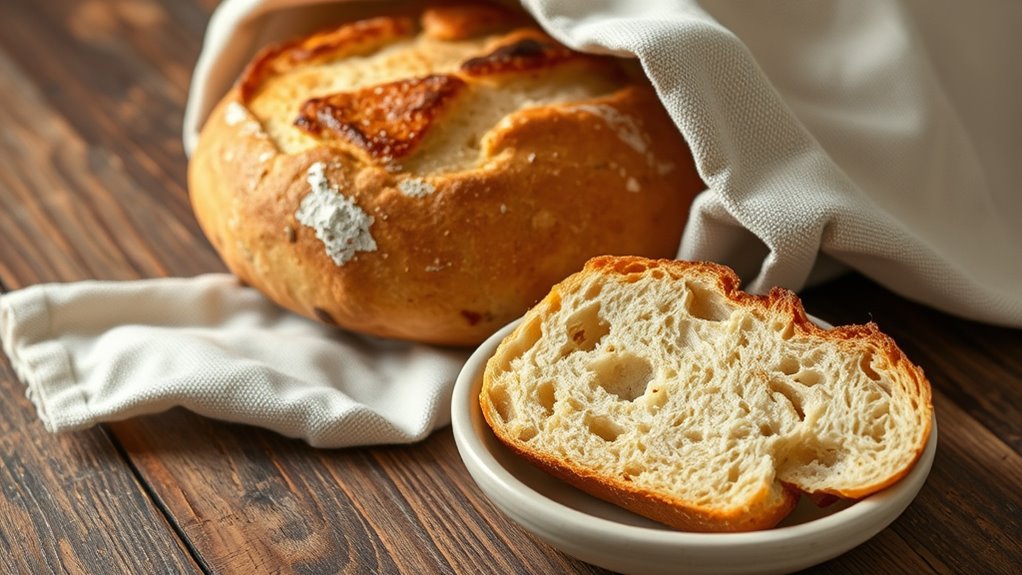
To keep your bread fresh for as long as possible, choosing the right storage method is key. Proper bread storage helps maintain the bread’s moisture and flavor while protecting the crust. The best way to do this depends on how quickly you’ll consume it. For short-term storage, keep bread in a paper bag or bread box to preserve crust quality and prevent mold. If you plan to keep it longer, consider storing it in a plastic bag with a loose seal to retain moisture, but avoid airtight containers that trap humidity and soften the crust. For added crust preservation, avoid refrigeration, which accelerates staling. Instead, keep bread at room temperature in a cool, dry place. These methods help maximize freshness while keeping the crust intact.
How Can You Keep Bread Soft While Preserving Its Crust?
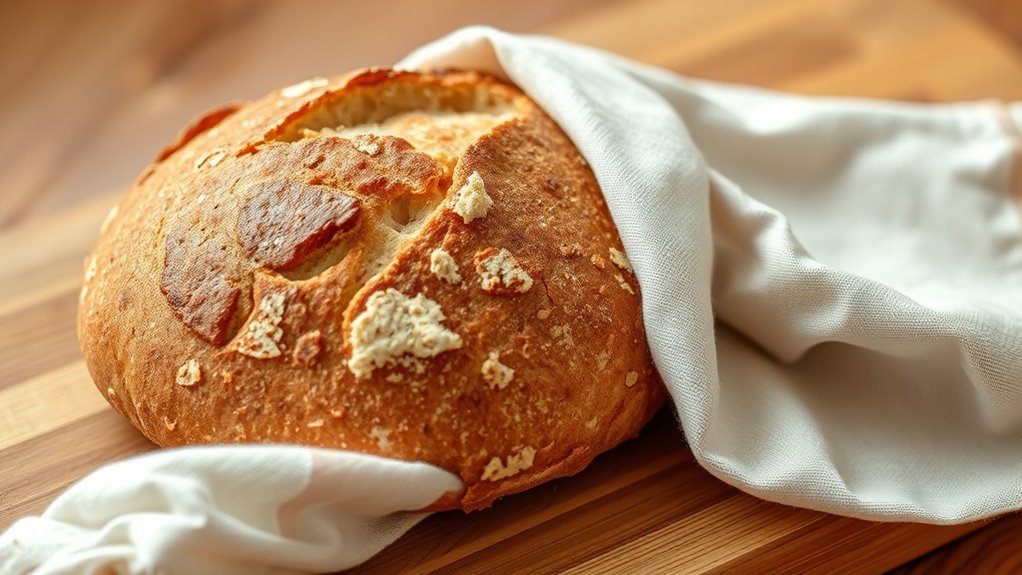
Keeping bread soft while preserving its crust can be tricky, but with the right approach, you can enjoy tender bread without sacrificing its crisp exterior. To achieve this balance, consider these tips:
- Store bread in a paper bag or bread box to maintain the bread crust’s crispness while preventing it from becoming too hard.
- Keep bread at room temperature in a breathable container, avoiding plastic that traps moisture and softens the crust.
- If the bread starts to lose its soft texture, reheat it briefly in the oven to restore freshness without softening the crust too much.
- For longer storage, wrap the bread loosely in a cloth or paper towel before placing it in a storage container, helping preserve the crust while maintaining a soft interior.
- Proper storage methods in your storage techniques can influence how well the crust stays crisp and the interior remains soft, especially in varying lighting conditions.
- Being aware of the auditory cues during storage can help you determine the ideal environment for maintaining bread freshness. Additionally, understanding the moisture balance is crucial for preventing the crust from becoming too soft or too hard over time.
- Using airtight containers occasionally can help control moisture levels, but should be used carefully to avoid trapping too much humidity that softens the crust.
When and How Should You Freeze Bread to Keep It Fresh?
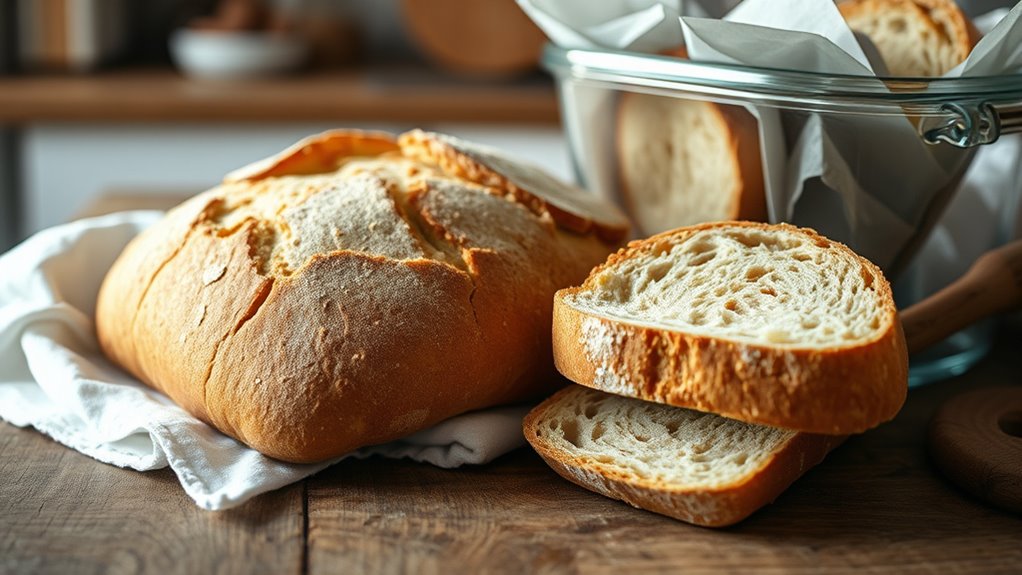
Knowing the right time to freeze bread helps maintain its freshness longer. Proper wrapping keeps moisture in and prevents freezer burn, while effective thawing and reheating restore its texture. Using energy-efficient cloud solutions to manage storage data can also optimize your kitchen appliance usage, reducing energy waste and ensuring your bread stays fresh longer. Let’s explore how to freeze bread at the right moments and get the best results.
Optimal Freezing Timing
Freezing bread at the right time guarantees it stays fresh and retains its flavor. Knowing the ideal preservation window helps prevent staleness and freezer burn. To get the best results, consider these tips:
- Freeze bread within 1-2 days of purchase or baking for maximum freshness.
- Avoid freezing bread that’s already begun to stale or go moldy.
- For homemade bread, freeze it as soon as it cools completely.
- Use airtight packaging to prevent moisture loss and freezer odors.
Timing is essential; the sooner you freeze, the better the preservation. Proper freezing timing ensures your bread remains soft on the inside and crusty on the outside when thawed. Following these guidelines helps keep your bread tasting fresh longer.
Proper Wrapping Techniques
To preserve bread’s freshness effectively, it’s essential to wrap it properly before freezing. First, choose an airtight container if you’re storing sliced bread or want extra protection from freezer burn. For whole loaves, wrapping them tightly in paper helps maintain the crust’s texture. If you prefer, combine paper wrapping with a plastic bag or foil for added security. Be sure to squeeze out excess air to prevent freezer burn and moisture loss. Avoid using only plastic wrap, as it can trap moisture and compromise the crust. Proper wrapping techniques ensure the bread stays fresh longer and retains its soft interior without sacrificing the crust’s crispness. Remember, well-wrapped bread is the key to maintaining quality during freezing. Additionally, understanding curiosity benefits can inspire you to explore new bread storage methods and improve your baking habits.
Thawing and Reheating Tips
When you want to keep bread fresh for an extended period, timing and method are key. Proper thawing and reheating guarantee your bread stays soft without sacrificing crust quality. Here are four tips to help:
- For quick reheating, use the microwave on a low setting for 20-30 seconds to avoid sogginess.
- To thaw bread evenly, leave it at room temperature for about an hour.
- For crispy crusts, use the oven on a low heat (around 350°F) to gently thaw and reheat the bread.
- Avoid microwaving bread directly from the freezer for too long, as it can become rubbery.
Following these steps preserves both softness and crust, so your bread tastes fresh whenever you want to enjoy it.
What Common Mistakes Should You Avoid When Storing Bread?

Avoid storing bread in plastic bags for long periods, as it can trap moisture and promote mold. Don’t keep bread in the refrigerator, because cold temperatures speed up staling. Instead, use proper storage methods to keep your bread fresh and avoid these common mistakes. Incorporating proper storage techniques and creative storytelling into your storage solutions can make the process more engaging and memorable. Additionally, understanding credit card security measures can help you protect your financial data when purchasing bread or other essentials. Recognizing the importance of cultural heritage preservation can also inspire more mindful and respectful approaches to storing traditional foods like bread.
Avoid Plastic Bags Long-Term
Storing bread in plastic bags for the long term can lead to mold growth and staling because plastic traps moisture and prevents proper airflow. To maintain good bread storage and preserve the crust, avoid this mistake. Instead, consider alternatives that allow the bread to breathe. Using the right storage method can also help prevent exposure to airborne pollutants, which can accelerate spoilage. Incorporating connected home tech solutions, such as smart storage containers, can help monitor humidity levels and keep bread fresher longer. Additionally, choosing proper storage materials that promote airflow can significantly extend the bread’s freshness and texture, especially when they are designed to regulate humidity levels. Understanding effective storage techniques can make a notable difference in maintaining bread quality over time.
Keep Away From Refrigeration
Refrigeration may seem like a good way to extend bread’s freshness, but it often backfires. Many believe refrigeration myths that it helps keep bread longer, but it actually accelerates staling and dries out the crust. When you refrigerate bread, the cold temperature causes the starch molecules to recrystallize, making the bread tougher and less enjoyable. This process harms crust preservation, leading to a dry, hard crust rather than a soft, fresh one. Instead, store bread at room temperature in a paper bag or bread box to maintain its texture. If you won’t eat it within a few days, freezing is a better option. Avoid the misconception that refrigeration is always the best choice; it usually ruins the bread’s natural softness and crust quality. Proper storage methods help preserve the bread’s moisture and prevent the recrystallization process that causes staling. Additionally, understanding the exfoliation process can help you appreciate how proper storage preserves the bread’s delicate structure. Using appropriate storage containers can further protect the bread from environmental factors that accelerate spoilage. Be mindful of humidity levels, as excess moisture can also lead to mold growth and spoilage.
Are There Special Storage Tips for Different Types of Bread?
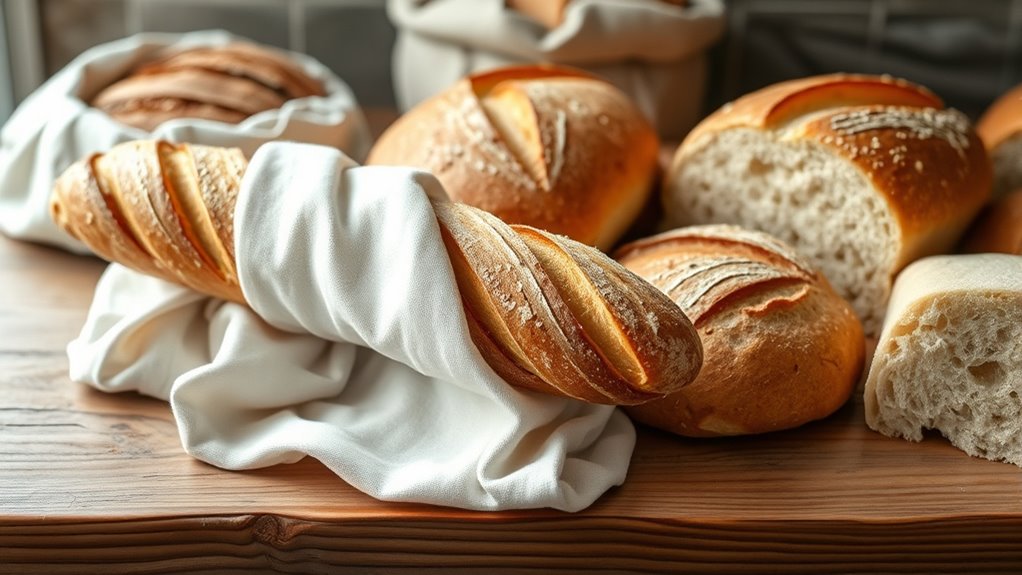
Different types of bread require specific storage methods to maintain freshness and prevent spoilage. For example, crusty artisan bread benefits from a paper bag or cloth to preserve its crust during bread baking. Soft sandwich bread stays fresh longer when stored in a plastic bag, which helps retain moisture. Sourdough and rye bread often do better in a bread box, balancing crust preservation with softness. Additionally, baguettes should be kept in a paper bag to prevent sogginess while maintaining their crust. Here are some tips to follow:
- Use a bread box for crusty and artisan loaves.
- Store soft bread in breathable bags to avoid mold.
- Avoid refrigerating baguettes to keep the crust crisp.
- For longer storage, freeze bread and toast slices as needed.
Frequently Asked Questions
Can Storing Bread in the Fridge Extend Its Freshness?
Storing bread in the fridge can extend its freshness, but it’s not ideal for bread preservation because it can cause the bread to dry out or become stale faster. To prevent mold, make sure you store bread in an airtight container or bag. If you won’t eat it quickly, consider freezing it instead. This method better maintains the bread’s texture and flavor while preventing mold growth.
How Do Humidity Levels Affect Bread Preservation?
Humidity levels play a vital role in bread preservation by affecting humidity control and moisture retention. If the air’s too dry, your bread can turn stale quickly; if it’s too humid, it may become moldy. To keep your bread fresh, store it in a cool, dry place, and consider using a bread box with proper humidity control. This balances moisture retention, helping your bread stay soft and crusty longer.
Is It Better to Store Bread Sliced or Whole?
Think of your bread as a treasure chest—storing it whole keeps the lid sealed tight, locking in moisture and preserving crust quality. When you slice it, it’s like opening the chest, exposing the treasure to air and dryness. For crust preservation, keep bread in a bread bag or wrapped whole to maintain its softness and crust. Sliced bread should be stored in an airtight container or resealable bag to prevent staling.
What Are Eco-Friendly Options for Bread Storage?
You can choose eco-friendly bread storage by using compostable bags or reusable cloth wraps. Compostable bags break down naturally, reducing waste, while reusable cloth allows your bread to breathe, keeping it fresh longer. Avoid plastic whenever possible. Store your bread in a cool, dry place, and switch to these sustainable options to cut down on plastic waste, making your bread storage greener and more environmentally friendly.
How Long Can Bread Stay Soft at Room Temperature?
You can keep bread soft at room temperature for about 2 to 3 days. To maintain its bread crust and moisture control, store it in a paper bag or cloth bread box, which allows some air circulation while preventing excessive drying. Avoid plastic bags for long periods, as they trap moisture and can make the bread soggy. Consume the bread within this timeframe for the best taste and texture.
Conclusion
Now that you know the secrets to storing bread perfectly, you can confidently keep crusts crispy and insides irresistibly soft. By balancing breathable bags with clever freezing, you prevent pesky mold and stale surprises. Remember, proper preservation promotes freshness, flavor, and a fantastic bread experience. So, stay savvy, store smartly, and savor your bread’s best bite—bringing beauty, balance, and bliss to every bakery-bought or baked-at-home loaf.