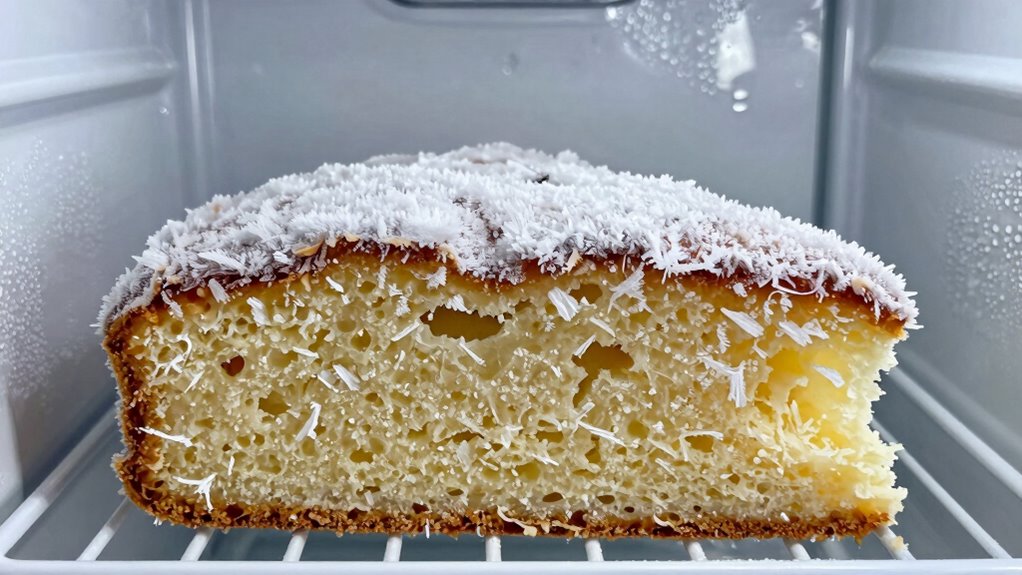
Freezer burn happens when air hits your cake or improper wrapping allows moisture to escape, causing dehydration and ice crystal formation. These tiny ice crystals puncture cell walls, leading to dryness, off-flavors, and a leathery surface. If you keep your cake in the freezer too long or don’t seal it well, it will taste like the freezer itself. Stay with us to discover simple tips to prevent freezer burn and keep your treats fresh.

Get baking supplies delivered free with Prime
- Fast, free delivery on millions of items
- Prime Video, Amazon Music and more included
- Member-only deals all year
Key Takeaways
- Freezer burn occurs when moisture evaporates from the cake’s surface, causing dryness and off-flavor.
- Improper wrapping allows air contact, leading to ice crystal formation and dehydration of the cake.
- Ice crystals puncture cake cell walls, resulting in tough texture and loss of freshness.
- Extended storage and poor packaging increase the likelihood of freezer burn, making the cake taste stale.
- Proper sealing and consistent freezing at 0°F (-18°C) help prevent freezer burn and preserve cake quality.
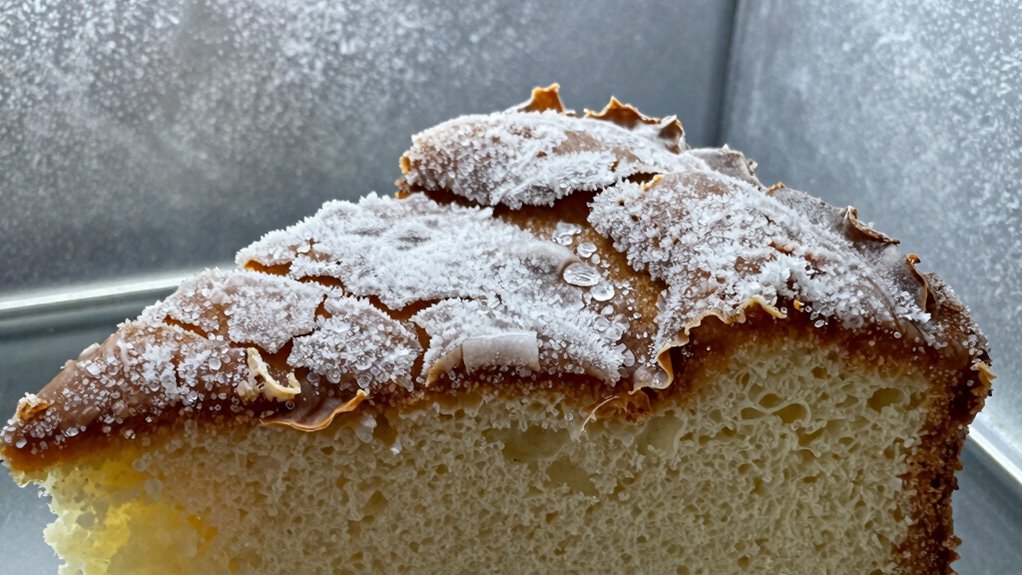
Freezer burn occurs when food is exposed to air in the freezer, causing moisture to evaporate from its surface. When this happens, your food loses its natural moisture, leading to dryness and a tough texture. The key process behind freezer burn is moisture loss, which happens because the moisture on the surface of your food escapes into the freezer’s dry environment. As this moisture evaporates, it leaves behind areas that are dehydrated and less appealing to eat. You might notice that the surface of your frozen items looks leathery or discolored, which are telltale signs of freezer burn.
One of the main causes of freezer burn is ice crystal formation. When food is frozen, water inside it turns into ice. If the food isn’t properly wrapped or sealed, the moisture from inside can migrate to the surface. As the freezer continues to operate, tiny ice crystals form on the surface of the food, especially around the edges. These ice crystals grow larger over time, puncturing the cell walls of the food and causing further moisture loss when the ice melts during thawing. This cycle of ice crystal formation and melting damages the texture and flavor of your food, making it taste stale or freezer-burned.
The problem worsens when air reaches the food, because air speeds up moisture loss. Even a small gap in your storage container allows air to come into contact with the food, accelerating ice crystal formation and dehydration. That’s why proper packaging is essential: vacuum-sealing or tightly wrapping your food minimizes exposure to air and helps prevent freezer burn. When moisture escapes from the food, it creates a dry, leathery surface that’s not appealing and can ruin the overall quality.
Understanding these processes helps you avoid freezer burn altogether. Keep your freezer at a consistent temperature of 0°F (-18°C), and always store food in airtight containers or freezer bags. Removing excess air from packaging reduces the chances of moisture loss and ice crystal formation, preserving the texture and flavor of your food longer. Additionally, color accuracy in your packaging and storage methods can help maintain the visual quality of your frozen items. Removing excess air from packaging reduces the chances of moisture loss and ice crystal formation, preserving the texture and flavor of your food longer. Remember, the longer food stays in the freezer, the higher its risk of freezer burn, especially if improperly stored. By controlling moisture loss and preventing ice crystal formation, you can keep your frozen foods tasting fresh and flavorful, preventing that unpleasant freezer taste that can ruin a perfectly good cake or other treats.
Products Worth Considering
Vitamix 5200 Professional-Grade Blender, 64 oz. Container, Black

Vitamix Propel Series 750 Professional-Grade Blender, 4 Programs, Black
Vitamix Ascent X3 Professional-Grade Blender, 3 Programs, Shadow Black
As an affiliate, we earn on qualifying purchases.
Frequently Asked Questions
Can Freezer Burn Affect the Nutritional Value of My Cake?
Freezer burn can cause some nutritional degradation in your cake, but it’s usually minimal. More noticeably, it leads to flavor loss and texture changes, making your cake less enjoyable. The exposed surface areas lose moisture and nutrients, but overall, the nutritional impact isn’t significant enough to be a health concern. To keep your cake fresh and flavorful, wrap it tightly and store it properly in the freezer.
How Long Can I Store Cake Before Freezer Burn Develops?
You can store your cake for up to 2-3 months before freezer burn develops. To prevent freezer burn, follow proper storage duration, wrap your cake tightly, and use airtight containers. Keep an eye on the clock, and remember that longer storage increases the risk of freezer burn, which can compromise texture and flavor. By monitoring storage duration and sealing your cake well, you keep it fresh and delicious longer.
Is It Safe to Eat Freezer-Burned Cake?
Yes, it’s safe to eat freezer-burned cake, but be aware of texture change and flavor deterioration. Freezer burn doesn’t make food unsafe, but it can cause dryness and off-flavors. You might find the cake less enjoyable, with a tougher or rubbery texture. If it looks and smells okay, you can still eat it, but for the best taste and texture, consider trimming off the affected areas or reheating it thoroughly.
Can I Reverse Freezer Burn on My Cake?
You can’t reverse freezer burn on your cake, but you can improve its texture. For example, if you notice freezer burn after storing your cake, try wrapping it tightly and using proper freezer techniques to prevent further damage. To preserve your cake better, guarantee airtight packaging and consistent freezing temperatures. While the freezer burn isn’t reversible, these steps help with cake preservation, minimizing future freezer burn and maintaining flavor quality.
Does Wrapping or Packaging Prevent Freezer Burn Effectively?
Wrapping or packaging does prevent freezer burn effectively when you use airtight sealing and proper packaging. You should make certain your cake is tightly wrapped with plastic wrap or stored in an airtight container to minimize air exposure. Proper packaging keeps moisture in and prevents freezer burn, preserving the cake’s texture and flavor. Always double-check that your packaging is sealed tightly before placing your cake in the freezer for maximum protection.
Conclusion
Now that you understand freezer burn, you can avoid it like a pro. Think of your cake as a delicate treasure, and the freezer as a harsh winter wind. When exposed too long, it dries out and loses its moisture, just like a leaf withering in the cold. By wrapping your cake tightly and using proper storage, you’ll keep its fresh, moist texture intact. Don’t let freezer burn turn your treat into a frozen, flavorless shadow of itself.