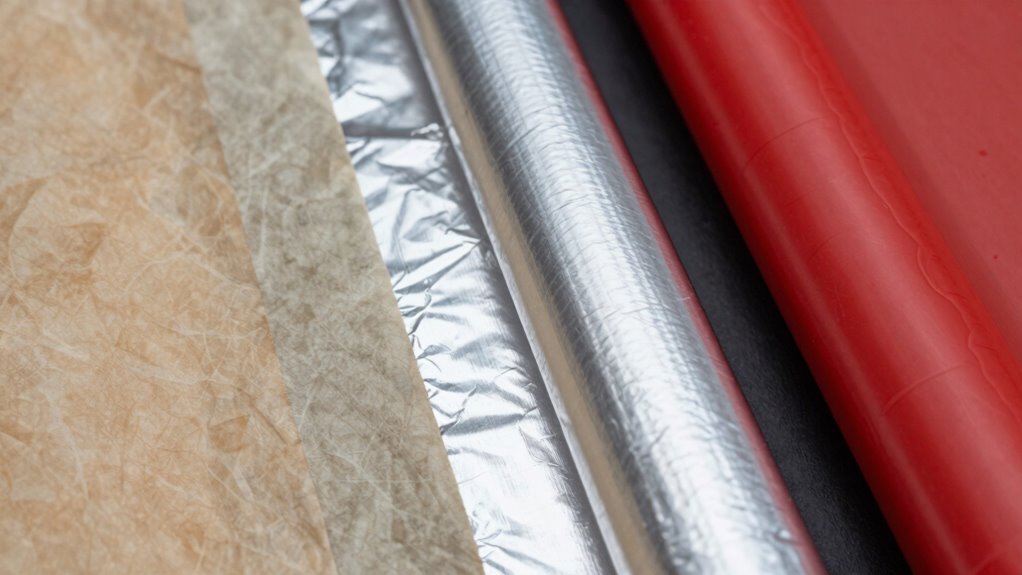
When choosing a pan lining method, consider parchment, foil, and silicone mats. Parchment offers a non-stick, eco-friendly option ideal for delicate baking and easy cleanup, but it’s single-use. Foil handles high heat well, is versatile for roasting, but less eco-friendly if disposed of often. Silicone mats are reusable, durable, and eco-conscious, great for frequent use. To find out which suits your needs best, explore the details behind each and their unique benefits.

Get baking supplies delivered free with Prime
- Fast, free delivery on millions of items
- Prime Video, Amazon Music and more included
- Member-only deals all year
Key Takeaways
- Parchment paper is ideal for delicate baking and easy cleanup, but it is single-use and biodegradable.
- Foil withstands higher temperatures and is versatile for roasting, but may react with acidic foods and is less eco-friendly.
- Silicone liners are reusable, durable, and excellent for frequent baking, offering non-stick performance and environmental benefits.
- Parchment is heat-resistant up to 420°F, foil up to 1200°F, and silicone around 480°F, influencing their suitability for different tasks.
- Silicone offers long-term cost savings and waste reduction, while parchment and foil are low-cost but generate more waste.
parchment baking paper non-stick
As an affiliate, we earn on qualifying purchases.
As an affiliate, we earn on qualifying purchases.
What Are the Main Pan Lining Options? Parchment, Foil, and Silicone
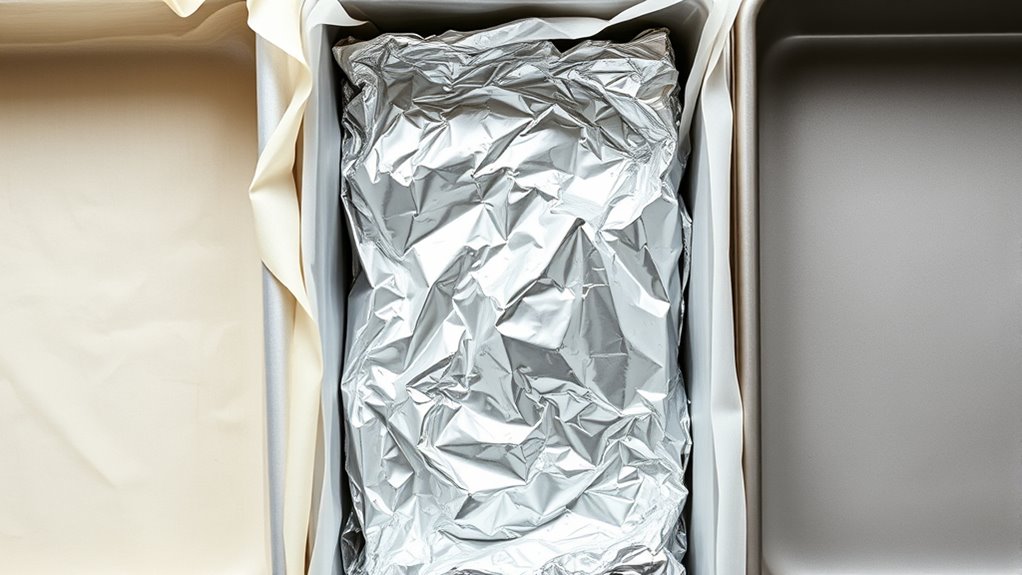
When it comes to lining your baking pans, three options stand out: parchment, foil, and silicone. Understanding the baking science behind each helps you choose the right one for your needs. Parchment paper provides a non-stick surface, reducing the risk of food sticking and making cleanup safer. Foil offers a sturdy, heat-resistant barrier, ideal for high-temperature baking but requires careful handling to avoid burns. Silicone liners are flexible and reusable, making them eco-friendly and safe for oven use. Prioritizing kitchen safety means selecting materials that won’t leach chemicals or cause accidents. Each option has its advantages and specific uses, so knowing the baking science behind how they interact with heat and food helps you make informed choices, ensuring safe and effective pan lining every time. Additionally, choosing the right safety features can help prevent accidents and ensure your baking experience remains both enjoyable and secure. Understanding material compatibility with various recipes is essential for optimal results and safety. Being aware of the material’s heat resistance can help prevent warping or melting during high-temperature baking. Recognizing the chemical composition of these materials is important for ensuring they are food-grade and safe for use in the oven. Being informed about potential chemical leaching helps you select safer options for your health and safety.
As an affiliate, we earn on qualifying purchases.
Why Choose Parchment Paper? Features and Benefits
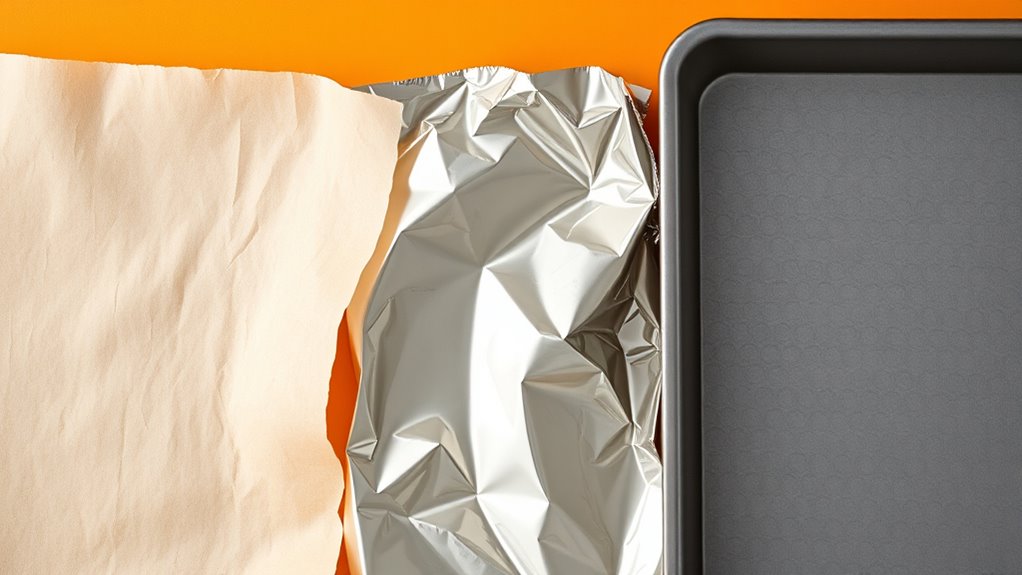
Have you ever wondered why many bakers prefer parchment paper? It’s because it offers a combination of features and benefits that make baking easier and cleaner. Parchment is a versatile, non-toxic material that provides a reliable non-stick surface, preventing baked goods from sticking without the need for extra fats or sprays. It’s also an eco-friendly alternative to single-use foils, especially when you choose biodegradable options. Parchment paper can withstand high temperatures, making it ideal for a variety of baking tasks. Its environmentally conscious design means you can enjoy baking while reducing waste. Additionally, energy-efficient manufacturing processes contribute to its sustainability, aligning with eco-friendly baking practices. Plus, it simplifies cleanup and ensures even cooking. Biodegradable options are increasingly popular among eco-conscious bakers. Overall, parchment paper’s convenience, safety, and eco-friendly qualities make it a top choice for home bakers and professionals alike.
aluminum foil for high heat baking
As an affiliate, we earn on qualifying purchases.
As an affiliate, we earn on qualifying purchases.
When and Why Use Foil as a Pan Liner?
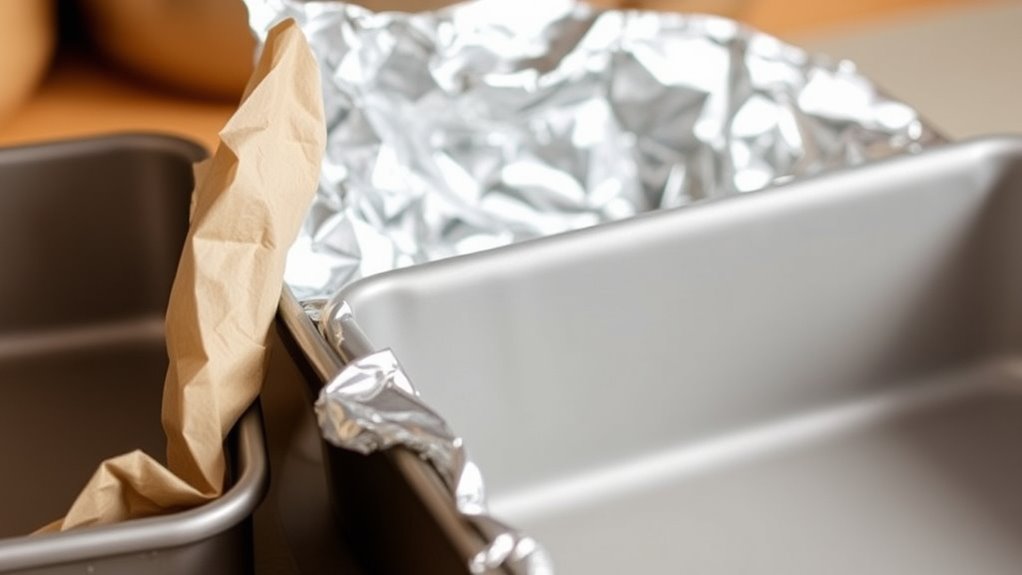
Foil is an excellent choice as a pan liner when you need to protect your cookware from spills, messes, or stubborn residues. It’s especially useful when you want to maximize cooking versatility and keep flavors intact. Here are three key reasons to choose foil:
Foil protects cookware, simplifies cleanup, and preserves flavors during versatile cooking.
- High Heat Tolerance: Foil withstands high temperatures, making it perfect for roasting and broiling without damaging the pan.
- Easy Cleanup: It catches drips and spills, reducing scrubbing time and preventing flavor transfer between dishes. Its heat conduction is efficient, contributing to better cooking performance.
- Versatile Uses: Foil is great for covering leftovers, creating makeshift baking vessels, or lining pans for messy recipes, all while maintaining flavor preservation.
- Consistent Performance: Properly used foil can provide a uniform barrier that helps maintain color accuracy and prevent uneven cooking. Additionally, foil’s ability to conduct heat efficiently enhances cooking performance, ensuring more consistent results.
Use foil when you need durability, enhanced cooking options, and to keep flavors locked in while protecting your cookware.
Are Silicone Baking Mats a Good Eco-Friendly Alternative?
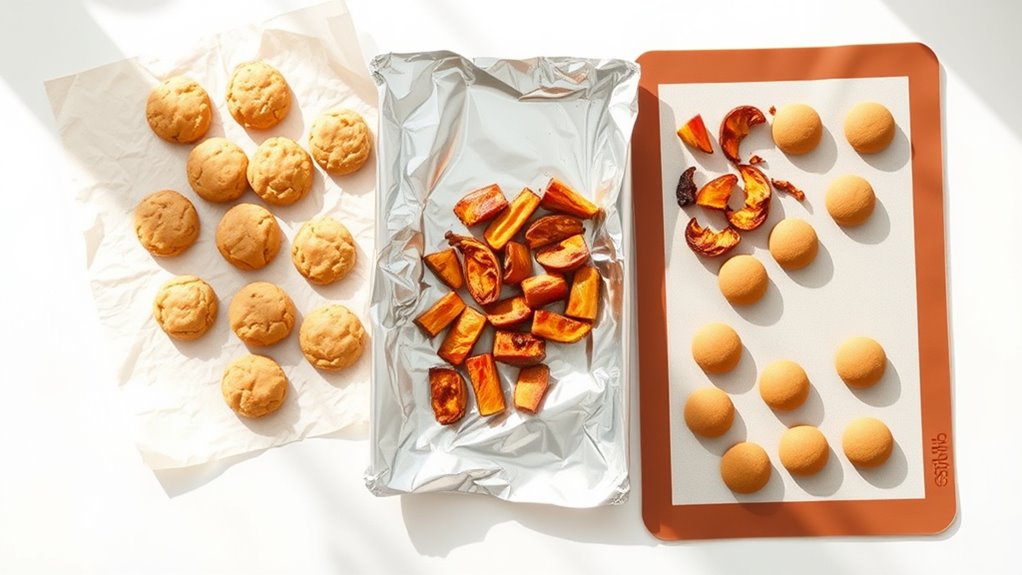
Silicone baking mats are reusable and durable, so you can use them many times without needing replacements. They’re made from non-toxic materials, making them a safer choice for your food and the environment. By switching to mats, you can reduce waste and cut down on disposable liners, supporting eco-friendly practices. Additionally, their air quality benefits can contribute to a healthier indoor environment. The safety and non-toxicity of silicone mats further ensures they are a sustainable option for eco-conscious consumers. Proper maintenance and cleaning extend the lifespan of silicone mats, maximizing their eco-friendly advantages. Choosing sustainable kitchen tools like silicone mats can also help lessen your overall environmental impact. Furthermore, selecting products with eco-friendly materials can enhance your commitment to sustainability in the kitchen.
Reusable and Durable
Because silicone baking mats are designed for repeated use, they stand out as a highly durable and long-lasting kitchen tool. You can expect them to last for thousands of uses, reducing waste and saving money. Here are three reasons why they’re a smart, eco-friendly choice: 1. They’re reusable, minimizing the need for disposable parchment or foil. 2. They’re made from recyclable materials, supporting sustainable waste management. 3. When replaced, they often come in biodegradable packaging, reducing environmental impact. Additionally, their compatibility with various baking temperatures ensures versatility and longevity in your kitchen. Unlike single-use options, silicone mats help you cut down on waste and reliance on non-recyclable materials. Their durability means fewer replacements, making them a practical and eco-conscious addition to your kitchen.
Non-Toxic Materials Used
Since non-toxic materials are essential for safe, eco-friendly kitchen tools, silicone baking mats are designed with health-conscious consumers in mind. They’re made from food-grade silicone, which offers chemical safety by avoiding harmful substances like BPA or PTFE. While silicone isn’t biodegradable, some brands now incorporate biodegradable options to reduce environmental impact. Silicone mats are durable and reusable, minimizing waste associated with single-use options. Their non-toxic nature guarantees you avoid chemicals leaching into your food, making them a safer choice. Additionally, heat resistance ensures they can withstand high oven temperatures without degrading or releasing toxins. This material safety is crucial for maintaining a healthy kitchen environment. However, it’s important to verify that your silicone mats meet safety standards and are free from fillers or additives. Overall, silicone baking mats provide a reliable, non-toxic alternative that supports both your health and eco-friendly practices.
Waste Reduction Benefits
Silicone baking mats substantially reduce waste compared to disposable options like parchment paper or aluminum foil. By reusing the same mat multiple times, you cut down on single-use waste and minimize environmental impact. Here’s how they help you achieve waste reduction:
- Longevity – Silicone mats last for thousands of uses, decreasing the need for frequent replacements.
- Elimination of disposables – No more tossing out parchment paper or foil after each baking session.
- Reduced landfill contribution – Less waste means less clutter in landfills and a smaller environmental footprint.
- Compatibility with eco-friendly practices – Silicone mats can be used in conjunction with other sustainable kitchen habits to further reduce your environmental impact. Additionally, silicone mats are often made from food-grade silicone, ensuring safety and durability during repeated use.
- Cost-effectiveness – Over time, investing in a silicone mat can be more economical than continually purchasing disposable alternatives, supporting sustainable economic practices. Incorporating reusable kitchen tools like silicone mats encourages mindful consumption and waste reduction. Choosing silicone mats supports eco-friendly practices by lowering waste and conserving resources. They’re a practical way to make your baking habits more sustainable and environmentally conscious.
How Do Each Lining Method Handle Heat? Temperature Limits Explained
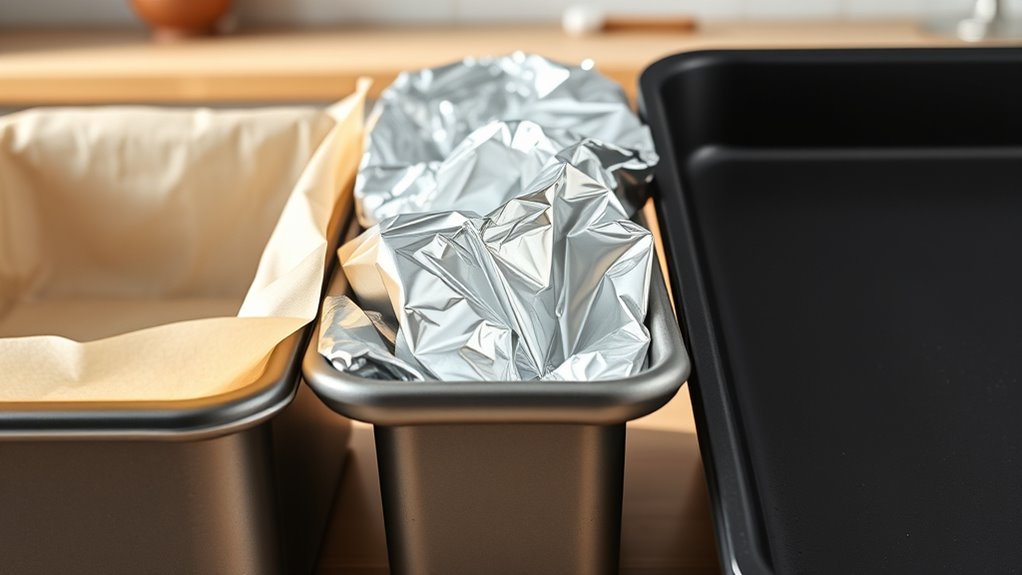
Understanding how each lining method handles heat is essential when selecting the right material for your application. Different linings have varying heat resistance and temperature thresholds, which influence their durability and safety. Parchment paper typically withstands up to 420°F (215°C), but it can brown or burn if exceeded. Aluminum foil can handle higher temperatures, up to 1200°F (650°C), making it suitable for high-heat cooking. Silicone liners excel at moderate temperatures, generally up to 480°F (250°C), but prolonged exposure may degrade their non-stick properties. Additionally, modern farmhouse decor trends emphasize the importance of choosing materials that align with sustainability and eco-friendly practices. When considering heat-resistant materials, it is important to evaluate not only temperature limits but also their environmental impact and reusability. Here’s a quick comparison:
| Lining Method | Heat Resistance | Temperature Thresholds |
|---|---|---|
| Parchment | Moderate | ~420°F (215°C) |
| Foil | High | ~1200°F (650°C) |
| Silicone | Moderate | ~480°F (250°C) |
Choose wisely based on your cooking needs.
Which Lining Offers the Best Non-Stick and Food Release?
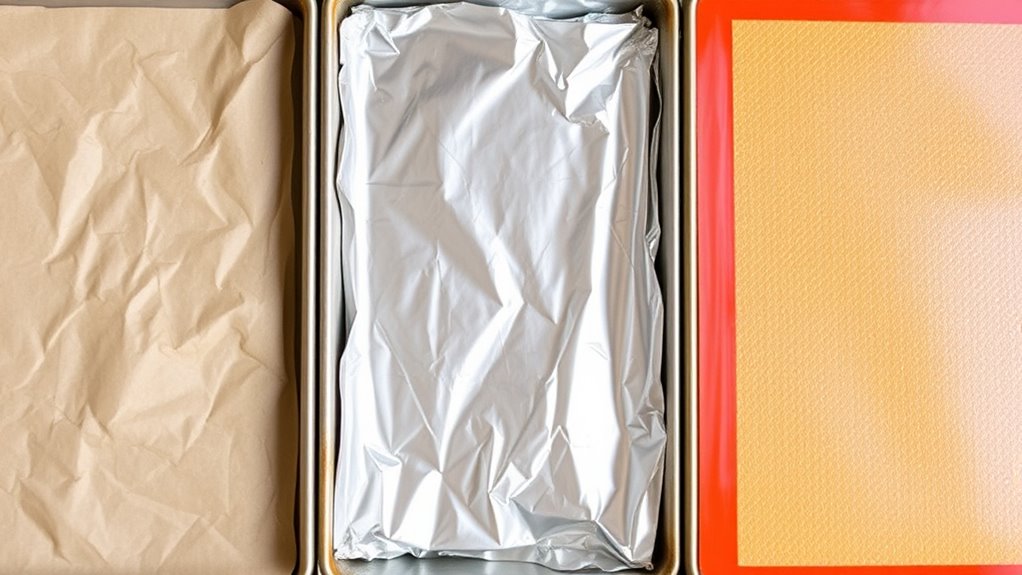
When choosing a pan lining, you’ll want one that provides excellent non-stick performance and easy food release. Durability and reusability also matter since some linings last longer and withstand more use. Consider which lining best balances these qualities to make your cooking experience smoother and more efficient.
Durability and Reusability
Ever wondered which lining stands up best over time while maintaining its non-stick properties? Durability and reusability are key factors in choosing the right lining. Here’s what you should consider:
- Silicone liners excel in longevity, often lasting hundreds of uses, reducing waste and environmental impact.
- Parchment paper is typically single-use, but biodegradable options lessen environmental concerns, though material safety varies.
- Aluminum foil is durable but can tear or degrade with repeated use, limiting reusability.
Silicone’s durability makes it a top choice for sustainability. Its material safety is high, with no harmful chemicals leaching into food. Foil and parchment have environmental impacts based on their disposal and manufacturing processes. Your choice impacts not just your cooking but also the planet.
Ease of Food Release
Which lining provides the easiest release of food without sticking? Silicone liners excel here, thanks to their non-stick coatings that ensure effortless food release every time. They’re highly heat resistant, allowing safe use at high baking temperatures without warping or sticking. Parchment paper offers decent non-stick performance, but sometimes food sticks, especially with sticky baked goods. Foil, on the other hand, is less effective for non-stick purposes unless coated or used with non-stick sprays. Here’s a quick comparison:
| Lining | Food Release | Heat Resistance |
|---|---|---|
| Silicone | Excellent | Up to 450°F or more |
| Parchment | Good | About 420°F |
| Foil | Fair | Up to 600°F (but sticky) |
Silicone provides the best non-stick and food release, making cleanup a breeze.
How Easy Is It to Use and Clean Parchment, Foil, and Silicone?
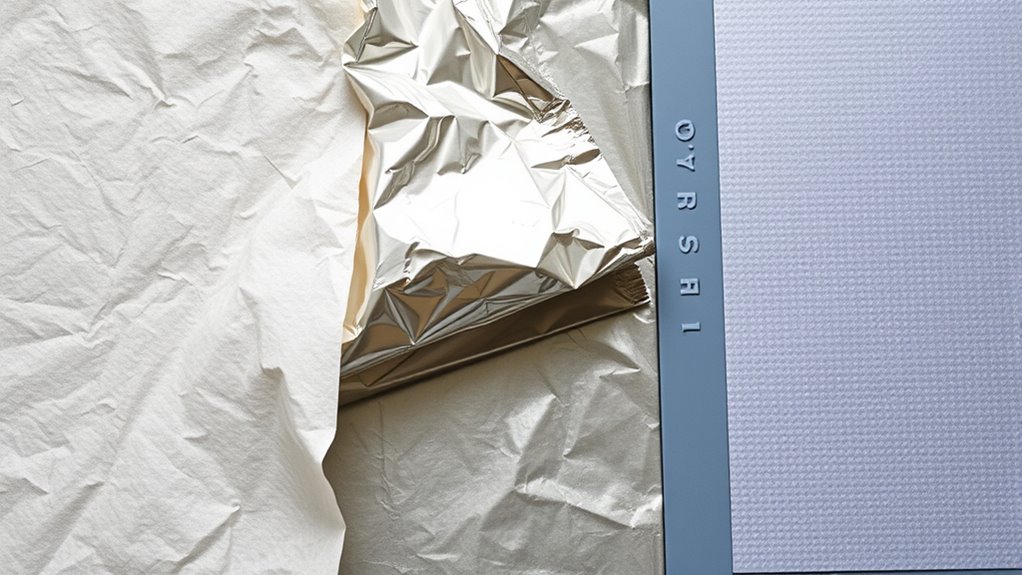
Using parchment, foil, and silicone is generally straightforward, but their ease of use and cleaning can vary. Parchment paper is simple to handle—just cut to size and discard after baking. Foil requires careful shaping, but cleanup is quick since it’s disposable. Silicone baking mats are reusable but may need thorough washing.
Consider these points:
- Parchment is ideal for delicate baking techniques and offers easy cleanup, but it’s not reusable.
- Foil’s versatility makes it suitable for ingredient compatibility, though it can be tricky to shape and clean.
- Silicone mats excel in repeated use and cleaning but may require more effort to ensure they’re spotless after baking.
What Are the Costs and Durability of Different Lining Options?
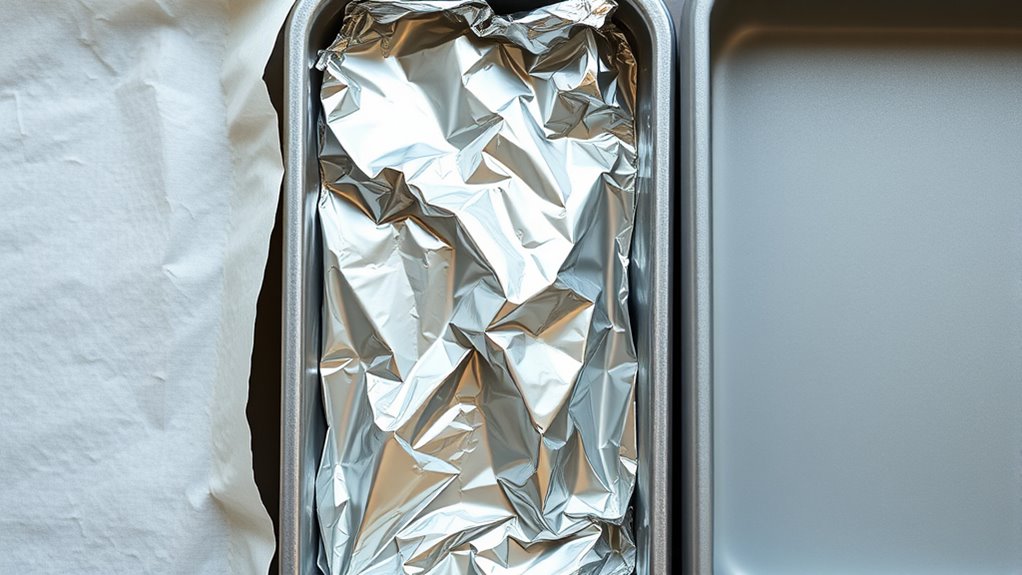
When choosing lining options for baking, cost and durability are key factors to contemplate. A cost comparison shows that parchment paper is affordable for occasional use but can add up with frequent baking. Aluminum foil is inexpensive and versatile, making it a popular choice, but it may tear more easily than other options. Silicone baking mats tend to have a higher upfront cost but are highly durable, often lasting for hundreds of uses. Durability factors vary: parchment can tear or burn over time, foil can crinkle or degrade, and silicone mats resist wear but may develop stains or odors. Consider how often you bake and your budget to select the best lining based on durability and overall cost-effectiveness.
Which Lining Works Best for Common Baking and Cooking Scenarios?
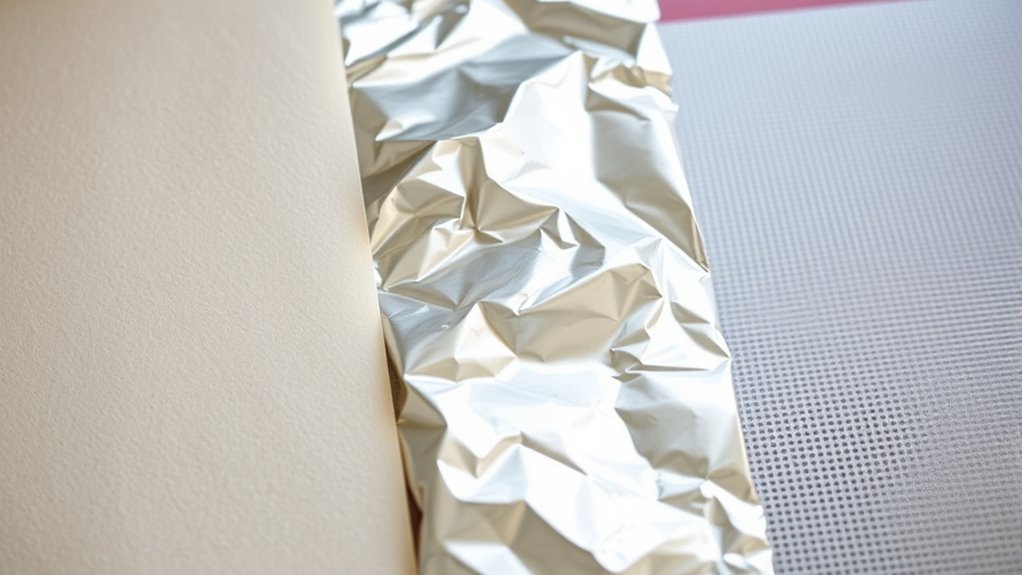
For most everyday baking and cooking tasks, parchment paper often proves to be the best choice because it provides a reliable non-stick surface and easy cleanup. When choosing the right lining, consider these factors:
- Baking sheet coatings: Parchment offers excellent heat resistance and prevents sticking, ideal for cookies and roasted veggies.
- Kitchen safety: Foil can handle high heat but may cause sparks if not used carefully, so always follow safety guidelines.
- Versatility: Silicone mats are reusable and great for messy recipes like bread or dough; foil works well for foil packets and grilling.
How Do Parchment, Foil, and Silicone Impact the Environment?
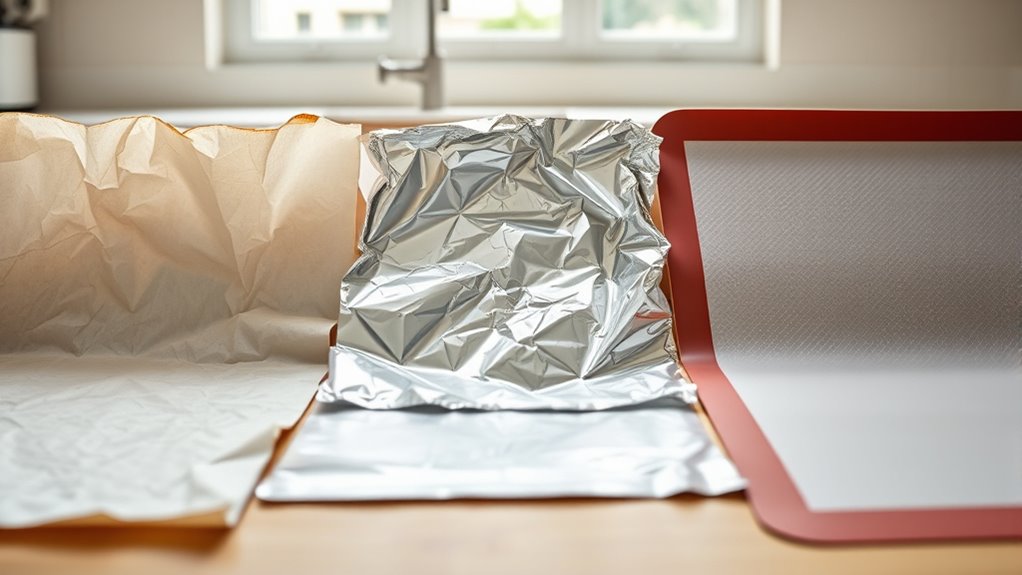
Parchment, foil, and silicone each have different environmental impacts that you should consider when choosing a lining. Parchment is biodegradable and often made from eco friendly materials, making it a more sustainable option. Foil, usually aluminum, has a high environmental impact because it requires significant energy to produce, and it’s not always recyclable. Silicone, while reusable and durable, is a synthetic material that isn’t biodegradable, raising concerns about long-term environmental effects. If you aim to reduce waste and support eco friendly materials, parchment is your best choice. Foil’s environmental footprint is higher, and silicone’s durability comes with the challenge of disposal. Weighing these factors helps you make an environmentally responsible decision for your cooking and baking needs.
Frequently Asked Questions
Can Parchment, Foil, and Silicone Be Reused Repeatedly?
Yes, parchment, foil, and silicone can be reused, but their reusability varies. Silicone liners are the most durable and can be reused many times, reducing environmental impact. Foil is generally single-use, though some heavy-duty options might be reused a few times. Parchment paper is usually single-use, but eco-friendly options are emerging. Considering reusability comparison helps you minimize waste and lessen environmental impact, making silicone the most eco-conscious choice.
Which Lining Is Safest for Allergen-Sensitive Baking?
Ironically, the safest lining for allergen-sensitive baking is silicone, since it’s non-reactive and minimizes allergenic safety concerns. Unlike foil, which can sometimes leach chemicals, or parchment that may contain unlisted additives, silicone resists chemical leaching. You can trust it for repeated use without worrying about allergen transfer or chemical contamination, making it your best bet for sensitive baking needs.
How Do Each Lining Options Affect Food Flavor?
You’ll notice that parchment enhances flavor by adding a subtle, baked aroma, boosting culinary aroma in your baked goods. Foil can trap moisture, sometimes dulling flavors, but it also reflects heat, helping develop a crisp exterior. Silicone liners have minimal impact on flavor, offering a neutral surface. Overall, parchment tends to enhance flavor and aroma best, while foil and silicone provide more neutral options, depending on your desired culinary outcome.
Are There Any Recipes Incompatible With Specific Linings?
Imagine you’re in a medieval kitchen, but today’s recipes demand modern solutions. Some recipes, like gluten-free baked goods or vegan dishes, may not suit all linings. Parchment is usually safe, but foil could interfere with delicate flavors, and silicone might not be optimal for high-temperature baking. Always check for gluten-free compatibility and vegan alternatives to guarantee your lining matches your recipe’s needs, avoiding any culinary mishaps.
How Do Storage and Disposal Differ for Each Lining Type?
You should store parchment, foil, and silicone linings in a cool, dry place to prevent damage. Disposal varies: parchment and foil are often recyclable but can contribute to waste if contaminated, affecting environmental impact. Silicone liners are reusable, reducing waste, but need to be cleaned thoroughly before disposal. Properly managing storage and disposal minimizes environmental impact and keeps your kitchen eco-friendly.
Conclusion
Choosing the right pan lining depends on your baking needs. Parchment offers easy cleanup and even heat distribution, while foil handles high temperatures and is great for roasting. Silicone mats are eco-friendly and reusable, cutting waste markedly. Did you know that switching to silicone baking mats can reduce single-use paper and foil waste by up to 90%? By selecting the best lining for your tasks, you can bake smarter, cleaner, and more sustainably.
Halloween Picks
halloween
As an affiliate, we earn on qualifying purchases.