
To clean flour paste and grease buildup on your dough sheeter, start by turning off and unplugging the machine. Remove loose flour and debris with a soft brush or cloth, then wipe down surfaces with warm soapy water or a food-safe cleaner. Use a scraper or soft brush for stubborn residue and make certain all parts are thoroughly dried. Regular maintenance helps prevent future buildup and keeps your sheeter working efficiently—continue to find out how to do it right.
Key Takeaways
- Regularly inspect rollers and surfaces for sticky flour paste and grease buildup during routine checks.
- Turn off, unplug, and clean all surfaces using soft brushes and damp cloths to remove residues effectively.
- Use food-safe cleaning solutions and scrapers to dislodge stubborn flour paste and grease deposits.
- Focus on edges, seams, and hard-to-reach areas where buildup commonly occurs.
- Dry all cleaned surfaces thoroughly to prevent rust and maintain optimal shearer performance.

Bulka Banneton Natural Cleaning Brush for Wood Pulp Sourdough Proofing Baskets – Ergomonic Beechwood Handle & Agave Bristles, Medium Firmness Long & Short Bristles for Efficient Cleaning
Perfect Clean Every Time: Keep your proofing baskets fresh and flour-free with the Bulka banneton cleaning brush, designed…
As an affiliate, we earn on qualifying purchases.
As an affiliate, we earn on qualifying purchases.
Why Regular Maintenance Keeps Your Dough Sheeter Running Smoothly
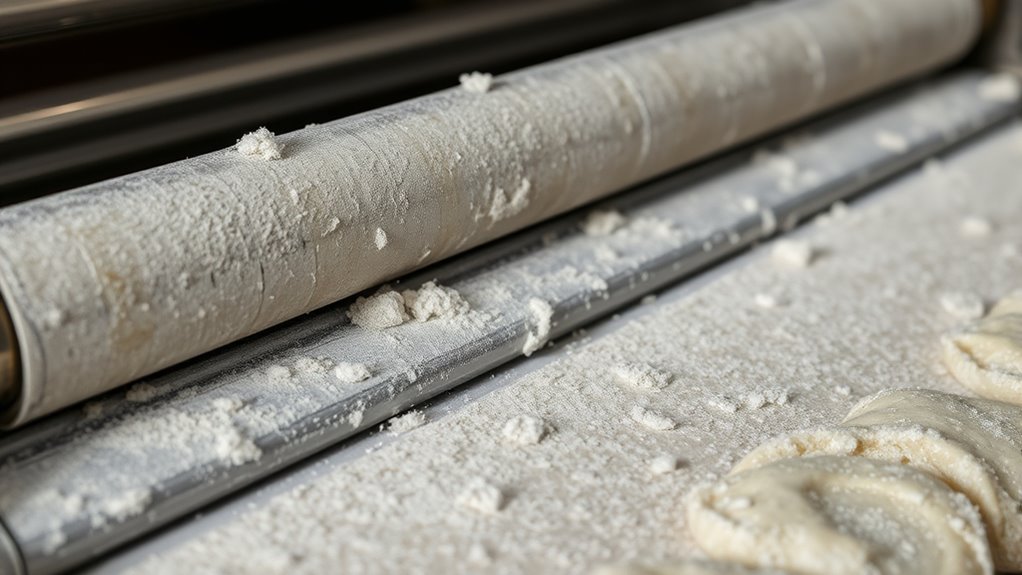
Regular maintenance is essential to guarantee your dough sheeter operates smoothly and efficiently. Establishing consistent cleaning schedules and maintenance routines helps prevent unexpected breakdowns and prolongs the machine’s lifespan. By sticking to a routine, you ensure that flour paste and grease don’t accumulate, which can hinder performance. Regular inspections allow you to catch minor issues early, saving you time and money in the long run. Keeping your sheeter clean and well-maintained also reduces the risk of cross-contamination, ensuring food safety standards are met. Implementing a disciplined maintenance schedule helps maintain peak operation, minimizes downtime, and keeps your production flowing seamlessly. Additionally, understanding the importance of proper tool maintenance ensures your equipment remains in optimal condition over time. In short, consistent care isn’t just good practice; it’s vital for the longevity and efficiency of your dough sheeter. Proper cleaning techniques are crucial in preventing the buildup of flour paste and grease, which can impair machine function over time, especially when combined with regular inspections to identify potential issues early. Regularly updating your maintenance checklist ensures all critical tasks are completed consistently and efficiently. Incorporating preventative maintenance into your routine can further help avoid costly repairs and downtime.

4-16" Commercial Electric Pizza Dough Roller Sheeter Pastry Press Making Machine,370W Commercial Dough Roller Sheeter for Noodle Pizza Bread and Pasta Maker Equipment
Selected Materials: The main body of stainless steel has good rust and corrosion resistance, which helps to improve…
As an affiliate, we earn on qualifying purchases.
As an affiliate, we earn on qualifying purchases.
How to Spot Flour Paste and Grease Buildup on Your Sheeter
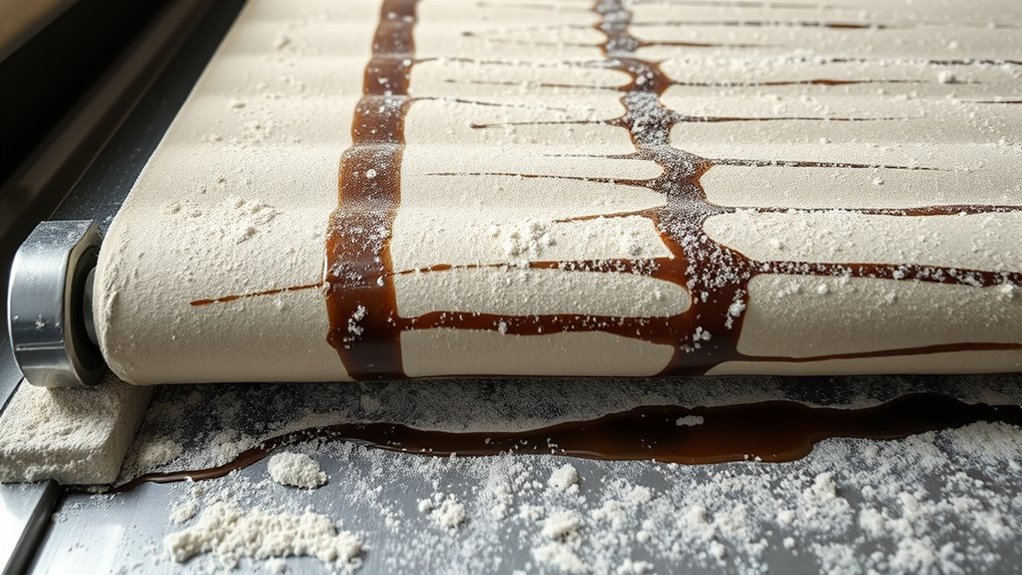
You can spot flour paste and grease buildup on your sheeter by looking for visual clues like dull or sticky surfaces. Sticky residue signs, especially on rollers and belts, indicate that cleaning is needed. Regularly inspecting these areas helps you catch buildup early before it affects your machine’s performance. Incorporating sustainable maintenance practices can also help prolong the lifespan of your equipment and ensure optimal operation. Additionally, understanding how contrast ratio influences image quality can help you assess when more thorough cleaning or adjustments are necessary to maintain peak performance. Monitoring the pack weight of supplies used during cleaning can help optimize efficiency and reduce waste. Being aware of filtration and airflow systems in your equipment can further improve cleaning effectiveness and prevent future buildup. Performing routine preventive maintenance can identify potential issues before they become major problems, saving you time and money in the long run.
Visual Inspection Clues
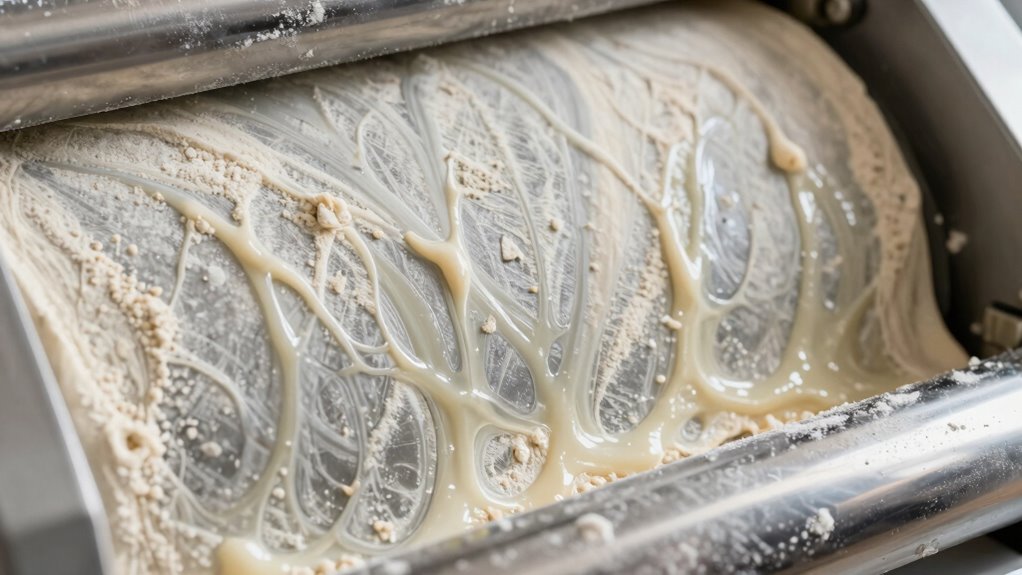
A quick visual inspection is essential for detecting flour paste and grease buildup on your dough sheeter. Look closely at the rollers and surfaces for uneven dough consistency, which can indicate excess flour or grease. Areas with inconsistent dough texture might be a sign of flour not distributing properly, leading to paste buildup. Also, examine the machine’s edges and seams; flour paste often accumulates there first. Check for shiny, greasy spots that appear darker or more reflective than the surrounding surfaces. If you notice any rough, crusty patches or a change in the usual smoothness, it’s a sign that grease or flour paste is accumulating. Regular visual checks help you catch buildup early, ensuring your sheeter stays clean and functions efficiently. Visual Inspection is a crucial step in detecting early signs of buildup and maintaining optimal machine performance.
Sticky Residue Signs
Sticky residue signs are key indicators of flour paste and grease buildup on your sheeter. When you notice the dough texture becoming overly tacky or sticky, it’s a clear sign that residual flour paste or grease is affecting ingredient consistency. These sticky spots can cause uneven dough feed and compromise your product quality. You might also observe difficulty in maintaining a smooth, uniform dough surface, which suggests buildup on the rollers or surface. Pay close attention to changes in dough handling, as increased stickiness often points to accumulated residue. Regularly inspecting these signs helps you identify when cleaning is needed, preventing further buildup that could disrupt operation and affect dough quality. Staying vigilant ensures your sheeter functions efficiently and produces consistent results.

OFFSCH Dumpling Skin Press Mold Manual Dough Sheeter for Tortillas Empanadas Pierogies Versatile Kitchen Tool with Silicone Brush Easy to Low Maintenance Design
Sturdy construction: built with aluminum alloy, this dough press is designed for long term use, maintaining its shape…
As an affiliate, we earn on qualifying purchases.
As an affiliate, we earn on qualifying purchases.
What Supplies and Tools Do You Need for Cleaning Your Sheeter
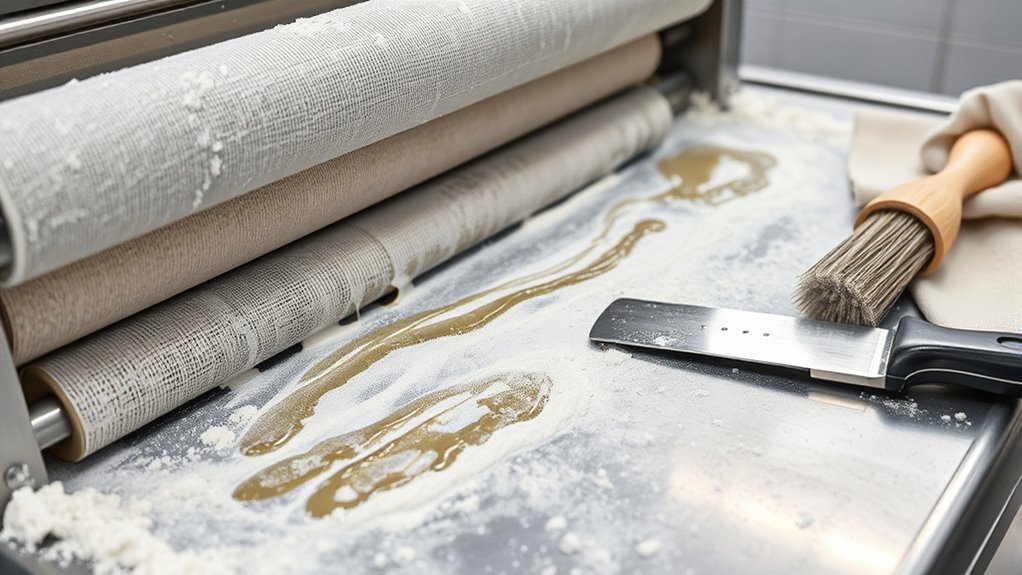
To effectively clean your dough sheeter, gather the necessary supplies and tools beforehand. You’ll need basic cleaning tools like soft cloths, scrub brushes, and non-abrasive sponges to prevent damage. Have some food-safe cleaning solutions, such as mild detergent or specialized equipment cleaner, ready for grease and flour paste removal. Keep dough sheeter accessories like scrapers and brushes handy to reach tight spots. Organize your supplies in a dedicated cleaning supply storage area to streamline the process and avoid cross-contamination. You may also want gloves and safety goggles for protection. Having everything prepared guarantees a thorough clean and saves time. Properly organized supplies make the task more efficient and help maintain your sheeter’s performance longer. Additionally, understanding the subtopic 2: cleaning and replacing filters can help prevent buildup and ensure optimal operation of your equipment. Regular maintenance, including filter checks, is essential for equipment longevity and consistent results. Incorporating routine cleaning schedules can further extend the life of your dough sheeter and keep it functioning smoothly. Maintaining a cleaning checklist can also help ensure no step is overlooked during each maintenance session.
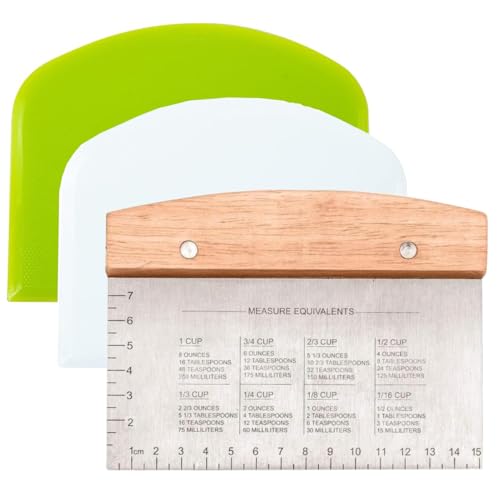
BOORIKA Dough Scraper & Bench Scraper Kitchen – Stainless Steel Sourdough Tools – Dough Cutter for Sourdough Bread, Pizza, and Flat Top Griddles – Chef Approved (Light)
Precision Crafting: Our dough scraper set features meticulously calibrated stainless steel and plastic scrapers with precise measurement guides,…
As an affiliate, we earn on qualifying purchases.
As an affiliate, we earn on qualifying purchases.
How to Prepare Your Dough Sheeter Before Cleaning
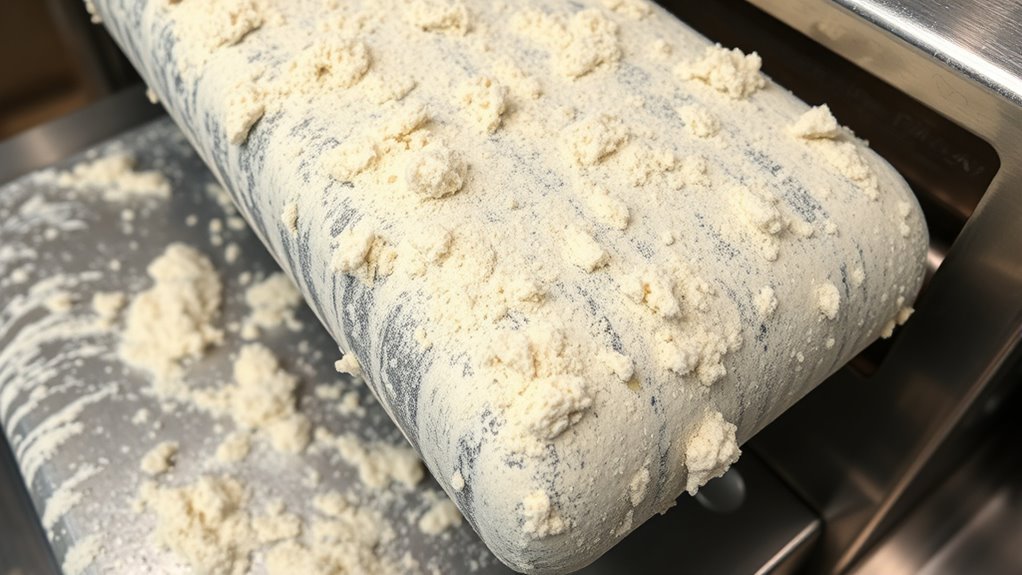
Before cleaning, make sure to turn off and unplug your dough sheeter to guarantee safety. Next, remove any debris and excess flour to prevent buildup during cleaning. Proper cleaning techniques can help extend the lifespan of your equipment and ensure safe operation. Additionally, inspecting the machine for any damage or wear can prevent potential malfunctions and maintain optimal performance for safe operation. Regular maintenance checks can also help identify flour paste and grease build-up early on, making cleaning more effective and less time-consuming. Being aware of common equipment maintenance issues can further help in maintaining your dough sheeter’s longevity.
Turn Off and Unplug
Ensuring your dough sheeter is turned off and unplugged is the essential first step before cleaning. This guarantees electrical safety and prevents accidental activation during maintenance. To properly prepare, follow these steps:
- Switch off the machine using the power switch to cut power.
- Unplug the sheeter from the electrical outlet.
- Confirm the machine has completely powered down.
- Reference your maintenance checklist to make certain all safety procedures are followed.
Remove Debris and Flour
Since the sheeter is now powered off and unplugged, start by removing any remaining dough, debris, and flour from its surfaces. Use a soft brush or cloth to sweep away loose particles, ensuring a thorough debris removal. This step prepares your sheeter for effective cleaning techniques later. To visualize, consider this table:
| Surface Area | Cleaning Technique |
|---|---|
| Rollers and Blades | Gently brush or wipe to loosen debris |
| Flat Surfaces | Use a damp cloth to remove flour and paste |
| Edges and Corners | Carefully sweep or wipe to reach tight spots |
| Control Panel | Lightly clean with a dry or slightly damp cloth |
Removing debris and flour now prevents buildup, making subsequent cleaning easier and more effective. Regular maintenance can also extend the lifespan of your equipment, ensuring optimal performance over time.
Inspect for Damage
Inspecting your dough sheeter for damage is a crucial step before cleaning because it helps identify any issues that could worsen during the process. Conducting a thorough equipment inspection ensures you catch problems early, preventing costly repairs and minimizing downtime. When inspecting, focus on these key areas:
- Check for loose or worn parts that may need tightening or replacement.
- Examine rollers and blades for cracks, chips, or damage.
- Look for rust, corrosion, or leaks in hydraulic or electrical components.
- Ensure safety features, like emergency stops, are functioning correctly.
Regular dough sheeter maintenance and equipment inspection prolongs the machine’s lifespan and keeps it running smoothly. Addressing damage upfront helps you avoid further complications and ensures your cleaning process is safe and effective.
Step-by-Step Instructions for Removing Flour and Residue
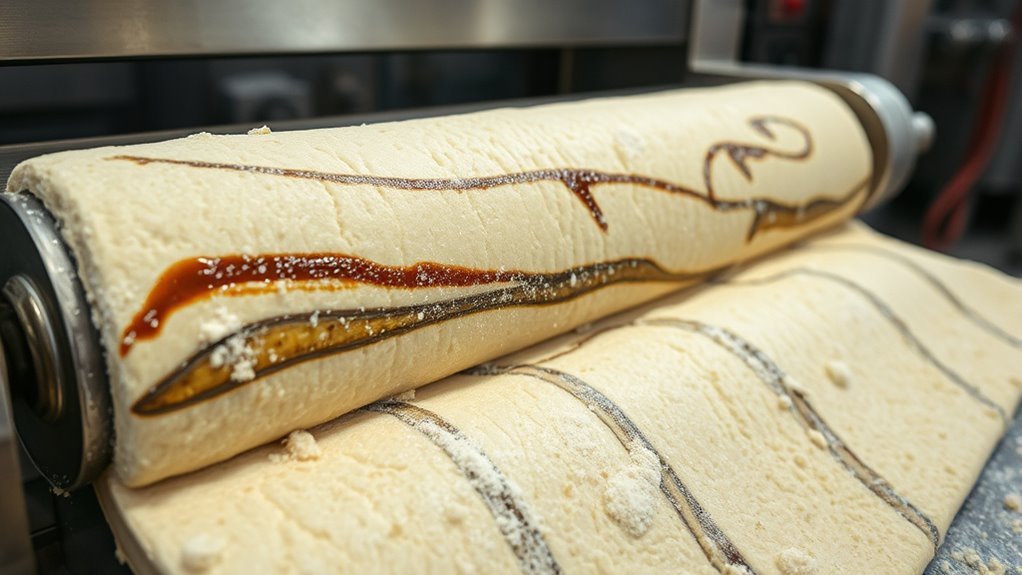
To effectively remove flour and residue from your dough sheeter, start by turning off the machine and unplugging it to guarantee safety. Begin with thorough dough sheeter maintenance by wiping down all accessible surfaces with a damp cloth to loosen flour paste buildup. Use a plastic scraper or soft brush to gently dislodge stubborn flour paste from rollers and corners without damaging delicate parts. Avoid harsh abrasives that could scratch or impair functionality. Next, dampen a cloth with warm water mixed with mild cleaning solution and wipe all surfaces to remove remaining residue. Rinse the cloth frequently and ensure no cleaning solution remains. Dry all parts completely to prevent moisture buildup. Proper cleaning techniques are essential for maintaining equipment longevity and preventing buildup that could impair performance. For optimal performance, consider regular maintenance to keep your dough sheeter operating smoothly and maintain proper flour paste removal. Incorporating proper cleaning techniques ensures longevity and efficiency of your equipment, and using the right tools can make the process easier and more effective.
How to Clean Grease and Oil Deposits Effectively
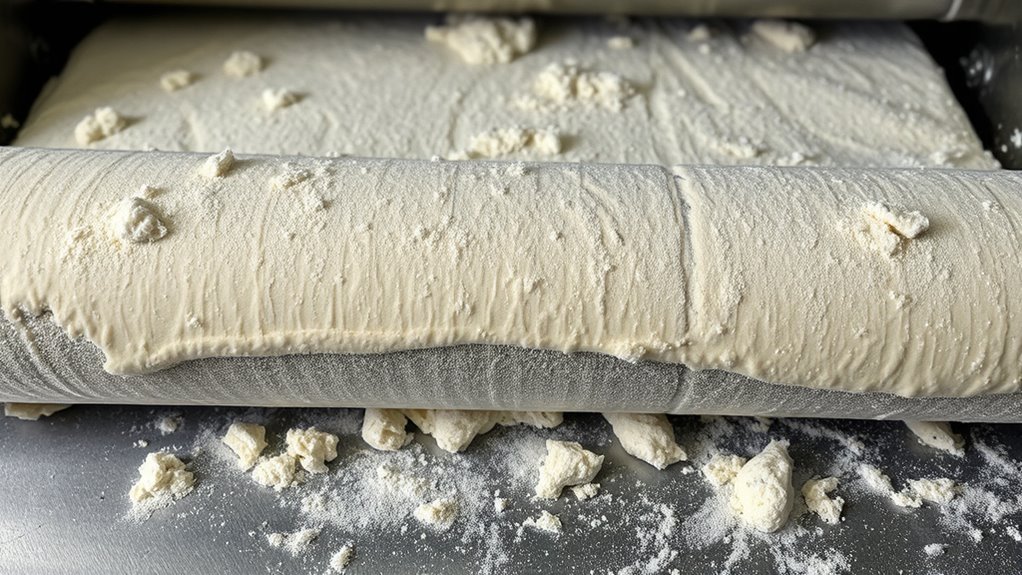
Grease and oil deposits can quickly accumulate on your dough sheeter, impairing its performance and causing potential safety hazards. To tackle this, use effective cleaning techniques tailored for grease removal. First, wipe down surfaces with a degreasing solvent or warm soapy water, ensuring you target all crevices. Second, use a soft brush or cloth to scrub stubborn spots gently. Third, rinse thoroughly to remove residue, and finally, dry completely to prevent rust. Incorporate a strict maintenance schedule—clean after each use and perform deep cleans weekly—to prevent buildup. Regular cleaning not only extends your equipment’s lifespan but also maintains peak operation. Adopting these practices keeps grease deposits under control and ensures safe, smooth operation of your dough sheeter.
Best Practices for Disinfecting and Sanitizing Your Equipment

Ensuring your dough sheeter is properly disinfected and sanitized is essential for maintaining food safety and preventing cross-contamination. To do this effectively, use food-safe disinfectants that eliminate bacteria without affecting dough elasticity. Clean all surfaces thoroughly after each use, paying attention to areas where flour paste and grease may hide. Sanitizing tools and contact surfaces ensures fermentation timing remains consistent and prevents spoilage. Always follow manufacturer instructions for dilution and contact time to maximize efficacy. Regularly disinfect rollers, beds, and handles, especially after handling raw ingredients. Incorporate a routine cleaning schedule that aligns with your production cycle. Proper disinfecting not only protects your customers but also maintains the integrity of your dough’s fermentation process.
Tips to Prevent Future Build-Up and Keep Your Sheeter Clean
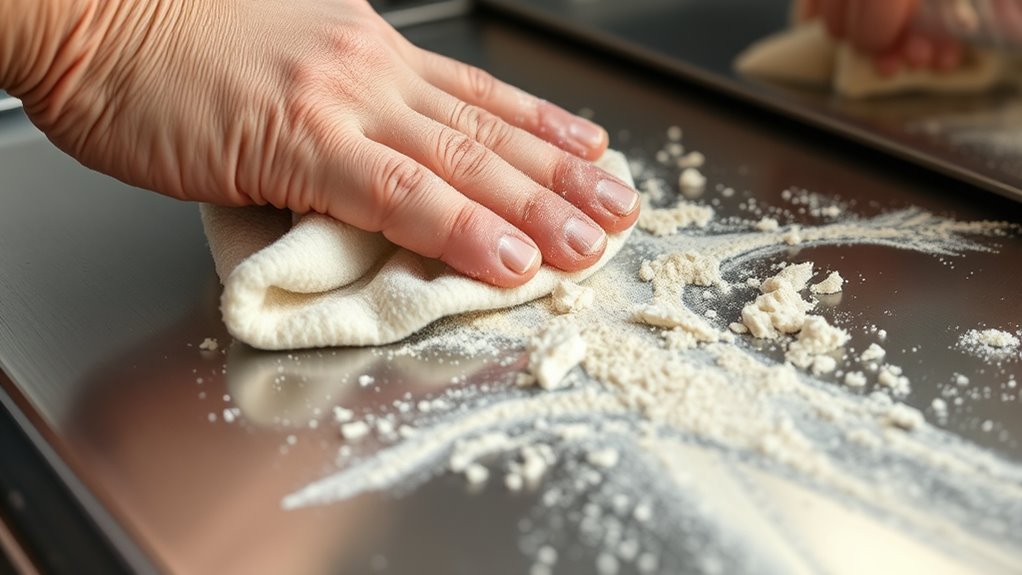
Regular maintenance is key to preventing future build-up on your dough sheeter. To keep it clean, pay attention to your dough sheeter accessories and storage habits. Here are four tips:
- Regularly clean and inspect accessories like rollers and belts to prevent flour paste buildup.
- Store flour properly in airtight containers, avoiding excess dust around the machine.
- Use minimal flour during operation to reduce grease and paste accumulation.
- Schedule routine cleaning after each shift, focusing on areas prone to residue buildup.
Frequently Asked Questions
How Often Should I Schedule Professional Maintenance for My Dough Sheeter?
You should schedule a professional maintenance inspection for your dough sheeter every 6 to 12 months. This maintenance schedule helps prevent flour paste and grease build-up, ensuring smooth operation and extending your machine’s lifespan. Regular professional inspections catch potential issues early, keeping the sheeter clean and functioning efficiently. Don’t wait until problems arise; proactive maintenance is key to maintaining ideal performance and avoiding costly repairs.
Are There Specific Cleaning Products Recommended for Flour Paste Removal?
You should use gentle, food-safe cleaning products specifically designed for equipment like dough sheeters. Look for cleaning products labeled for flour paste removal, as they effectively break down dried flour without damaging surfaces. Avoid harsh chemicals that could harm your machine or contaminate your dough. Regularly applying these recommended cleaning products guarantees your dough sheeter stays clean, hygienic, and runs smoothly, preventing build-up and ensuring top-quality baking results.
Can Improper Cleaning Damage the Dough Sheeter’s Components?
Improper cleaning can harm your dough sheeter’s components, risking reduced longevity and costly repairs. When you neglect proper cleaning equipment maintenance, flour paste and grease build-up can cause corrosion or mechanical issues. Using incompatible cleaners or scrubbing too harshly damages delicate parts. You must follow manufacturer guidelines to protect your investment, ensuring your dough sheeter stays efficient and lasts longer, saving you time and money in the long run.
What Are the Signs of Corrosion Caused by Grease Buildup?
You’ll notice signs of corrosion from grease buildup as dull, discolored metal surfaces, often with pitting or flaking. Grease deterioration accelerates metal corrosion, leading to rust and weakened components. If you see these signs, it’s essential to clean thoroughly, removing grease and preventing further damage. Regular maintenance not only preserves your dough sheeter’s performance but also extends its lifespan by avoiding costly repairs caused by unchecked corrosion.
How Do I Dispose of Waste Residues Safely and Environmentally?
Oh, the thrill of waste disposal—truly the highlight of your day! To do it safely and eco-friendly, follow environmental regulations strictly. Collect residues in sealed containers, label them clearly, and dispose of them through authorized waste disposal services. Never pour grease or flour paste down drains; it can clog pipes and harm ecosystems. By respecting proper waste disposal protocols, you protect the environment while keeping your workspace compliant and clean.
Conclusion
Regularly cleaning your dough sheeter is like tending a garden—you need to remove weeds and dead leaves to keep it thriving. When you stay on top of flour paste and grease buildup, your machine runs smoother and lasts longer. Think of it as investing a few minutes now to prevent costly repairs later. With consistent care, your sheeter will perform like a well-tuned engine, turning out perfect dough every time—saving you time, money, and frustration.