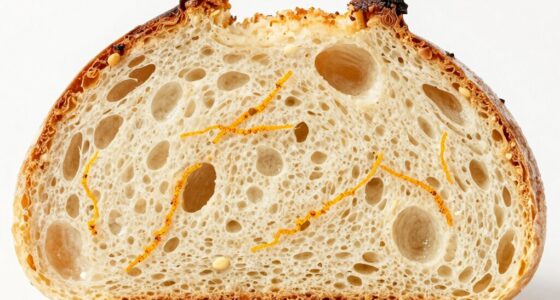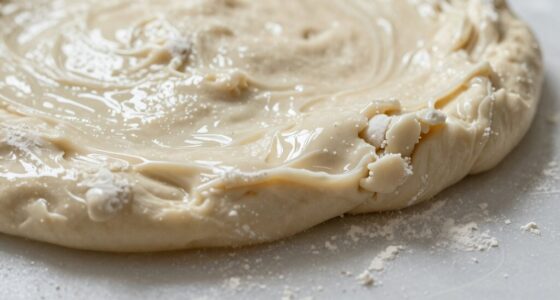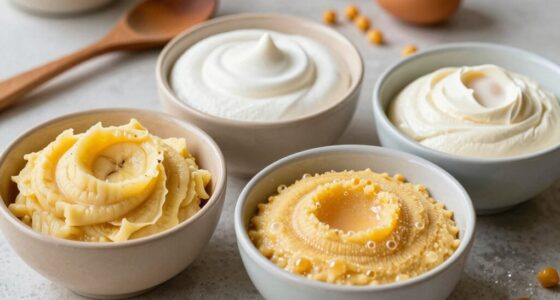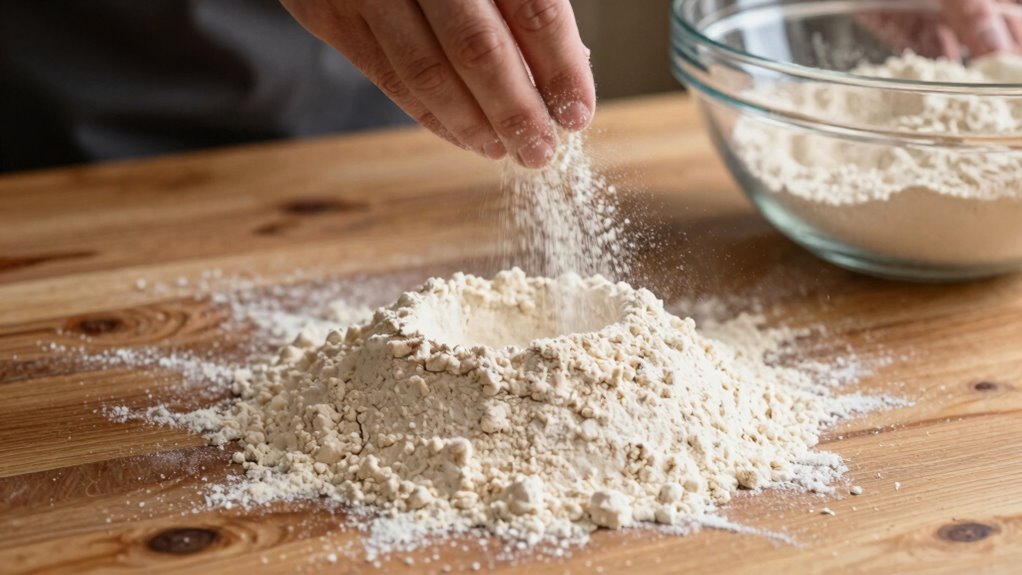
When you bake with gluten-free flours, you’ll notice recipes need more time because the starches hydrate and absorb liquids more slowly and unevenly than wheat flour. This means your batter or dough may seem wetter or thinner initially, but patience allows these starches to fully hydrate, improving texture and structure. Giving the mixture extra resting time guarantees better moisture retention and a more cohesive baked good. Keep going, and you’ll discover how to master this subtle but important process.
Key Takeaways
- Gluten-free starches absorb liquids more slowly and unevenly than wheat flour, requiring extra time for proper hydration.
- Resting allows starches to fully hydrate, improving texture and preventing dense or crumbly baked goods.
- Longer hydration periods help gluten-free batters develop better structure and moisture retention.
- Adjusting liquids and incorporating pre-soaking enhance starch absorption, leading to better final results.
- Proper mixing, resting, and baking techniques optimize hydration, improving the overall quality of gluten-free baked goods.

Understanding how gluten-free flour absorbs liquids is essential for achieving the right texture in your baked goods. Unlike traditional wheat flour, gluten-free options rely heavily on gluten free starches such as tapioca, potato, and cornstarch to give structure and moisture. These starches behave differently during baking; they tend to absorb liquids more slowly and unevenly, which is why recipes often need more time to develop the desired consistency. Recognizing this difference helps you adjust your baking techniques to guarantee your baked goods aren’t overly dense or crumbly. When working with gluten-free flours, patience is key. You might notice that batters and doughs seem thinner or wetter initially, but that’s normal. As the mixture rests, the starches continue to hydrate, and the texture will improve. It’s important to allow ample resting time before baking, giving the flour and starches enough opportunity to absorb moisture fully. Proper hydration is a critical factor in ensuring the best results when baking with gluten-free flours. Incorporating the right baking techniques can make a significant difference in how well your gluten-free baked goods turn out. For example, many bakers find that adding an extra few minutes to the mixing or resting phase helps the batter or dough reach ideal hydration. You might also consider slightly increasing the liquids in your recipe, since gluten free starches tend to need more moisture to activate their thickening and binding properties. Using techniques like pre-soaking grains or flours, or blending different gluten-free starches, can enhance absorption and improve texture. Additionally, utilizing a slightly lower oven temperature and longer baking times can prevent the outside from over-baking before the interior is fully cooked, especially since gluten-free baked goods often require more gentle handling.
Another effective method involves experimenting with the order of ingredients and mixing techniques. For instance, mixing dry ingredients thoroughly before adding liquids ensures even distribution of starches, which helps control how liquids are absorbed. Incorporating binders like xanthan gum or guar gum can improve elasticity and help retain moisture, making the final product less crumbly. Keep in mind that the hydration process continues even after baking, so giving your batter or dough extra time to rest can lead to a more cohesive crumb and better overall texture. Ultimately, understanding the behavior of gluten free starches and adjusting your baking techniques accordingly will help you create more consistent, delicious gluten-free baked goods that meet your expectations.
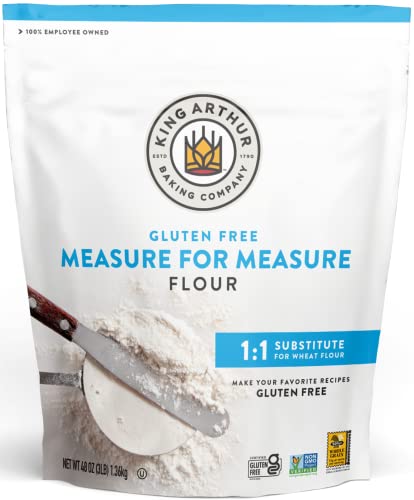
King Arthur Measure for Measure Gluten-Free Flour: All-Purpose 1:1 Substitute for Wheat Flour, Non-GMO, Kosher Certified, 3 lbs Bag for Baking Cookies, Cakes, Muffins
Versatile Baking: Perfect 1:1 substitute for wheat flour in non-yeasted recipes, ideal for gluten-free cookies, cakes, muffins, and…
As an affiliate, we earn on qualifying purchases.
As an affiliate, we earn on qualifying purchases.
Frequently Asked Questions
Can Gluten-Free Flour Be Substituted 1:1 for Regular Flour?
You can try a gluten-free substitution 1:1 for regular flour, but keep in mind you might need to modify the flour ratio. Gluten-free flours often absorb more liquid, so you may need to add a little extra moisture or tweak the amount slightly. Experimenting with flour ratio adjustments helps ensure your baked goods turn out just right, even when switching from traditional to gluten-free options.
How Do Humidity Levels Affect Gluten-Free Flour Absorption?
Humidity impact notably affects gluten-free flour absorption because moisture variability changes how the flour interacts with liquids. High humidity makes the flour absorb less, leading to a wetter batter or dough, while low humidity causes it to absorb more, resulting in a drier mixture. You should adjust liquid amounts accordingly, adding a little more in humid conditions and less in dry environments, to achieve the right consistency.
What’s the Best Way to Measure Gluten-Free Flour Accurately?
To measure gluten-free flour accurately, use measuring techniques like scooping or spooning. Scoop the flour with a spoon and level it off with a knife for precision, or gently spoon the flour into your measuring cup without packing it down. Avoid scooping directly with the cup, which can compact the flour and lead to inaccuracies. This guarantees consistent results every time you bake.
Are There Specific Gluten-Free Flours That Absorb More Liquid?
You might notice that rice and sorghum flours absorb more liquid compared to almond or coconut flour. Grain varieties considerably influence liquid ratios, as some flours are more porous and require extra moisture. To get the best results, experiment with different gluten-free flours, adjusting the liquid ratios accordingly. This way, you’ll find the perfect balance for your recipes, ensuring they turn out moist and well-textured.
How Does Altitude Influence Gluten-Free Flour Baking Times?
Altitude baking affects gluten-free flour absorption because higher elevations cause liquids to evaporate faster and gases to expand more quickly. You might need to increase baking time or adjust liquids to compensate. As you bake at high altitudes, keep an eye on your mixture’s consistency, and be ready to tweak your recipe. This helps guarantee proper flour absorption and that your baked goods turn out perfect.
King Arthur Measure for Measure Gluten-Free Flour: All-Purpose 1:1 Substitute for Wheat Flour, Non-GMO, Kosher Certified, 3 lbs Bag for Baking Cookies, Cakes, Muffins
Versatile Baking: Perfect 1:1 substitute for wheat flour in non-yeasted recipes, ideal for gluten-free cookies, cakes, muffins, and…
As an affiliate, we earn on qualifying purchases.
As an affiliate, we earn on qualifying purchases.
Conclusion
So, as you mix your gluten-free flour, imagine it soaking up every drop like a thirsty sponge in the sun. Giving your batter more time to rest allows the flour to fully hydrate, creating a tender, well-structured bake. Patience here transforms a simple mixture into a fluffy loaf or moist muffin. Remember, a little extra time lets your ingredients harmonize perfectly, turning your baking into a delicious masterpiece that’s worth every second of waiting.

It's Just – Xanthan Gum, 8oz, Batch Tested Gluten Free, Keto Baking, Non-GMO, Thickener for Sauces, Soups, Dressings, Packaged in USA
It's Just – Xanthan Gum, 8oz, Batch Tested Gluten Free, Keto Baking, Non-GMO, Thickener for Sauces, Soups, Dressings,…
As an affiliate, we earn on qualifying purchases.
As an affiliate, we earn on qualifying purchases.

Gluten Free Sourdough Starter – 100+ Year Old Dehydrated Heirloom Style Sourdough Starter Kit for Sourdough Bread, Pizza, Buns, Pancakes, Muffins | Easy to Use | Beginner Friendly
Mature and Lively Dehydrated Gluten Free Sourdough Starter Culture- Create Delicious and Tangy Sourdough Bread right at home.
As an affiliate, we earn on qualifying purchases.
As an affiliate, we earn on qualifying purchases.