Choosing effective egg substitutes depends on what your recipe needs—moisture, binding, or structure. Popular options like mashed bananas, applesauce, or flaxseed work well in cakes and muffins, but may not suit delicate structures like soufflés. Sometimes, substitutes fall short because they don’t mimic all egg functions or alter flavor. To get the best results, you’ll want to select the right one for your dish. Keep going to discover how to make your egg-free baking succeed.
Key Takeaways
- Use mashed bananas or applesauce for moisture in cakes; they don’t work well as binders in recipes needing structural support.
- Flaxseed or chia seed gels are effective binders in muffins but may alter flavor and texture if not balanced properly.
- Commercial egg replacers reliably mimic eggs’ functions in various recipes, especially when precise results are needed.
- Egg substitutes like applesauce or mashed bananas can’t replicate the leavening power of eggs in airy baked goods.
- Real eggs are best for recipes requiring lightness, structure, or specific flavors, such as soufflés or custards.
Which Egg Substitutes Are Most Popular and How Do They Work?
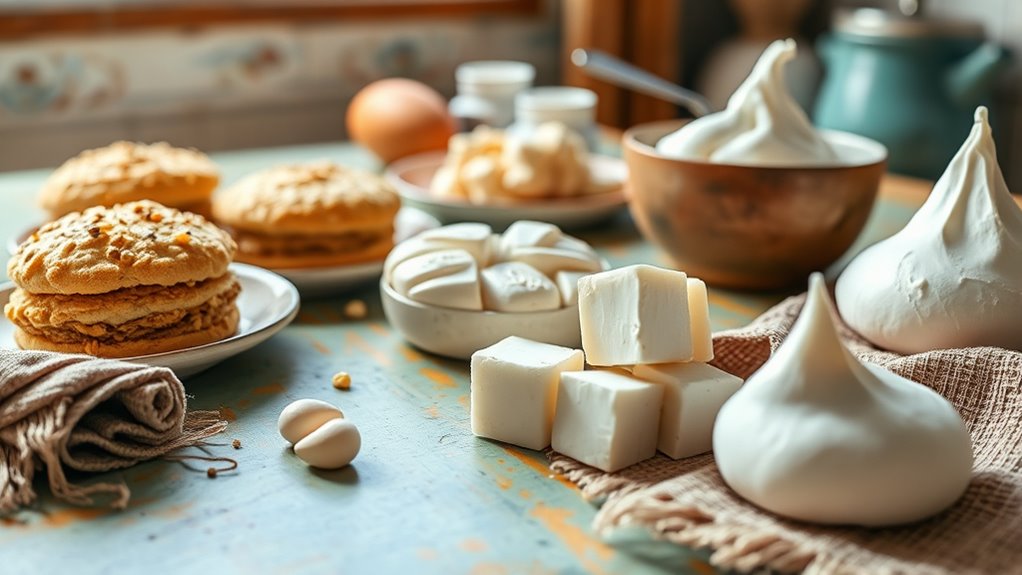
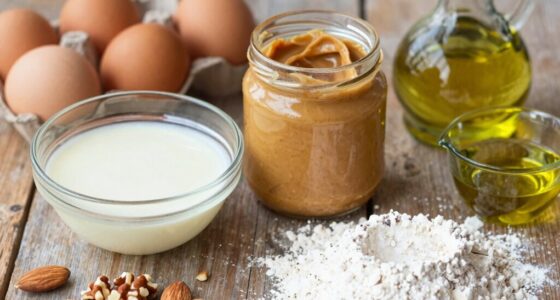
Have you ever wondered which egg substitutes are the most popular and how they actually work? Vegan options like mashed bananas, applesauce, and tofu are widely used because they add moisture and bind ingredients without animal products. They’re perfect for baking muffins, pancakes, and cakes. Gluten-free alternatives such as ground flaxseed or chia seeds mixed with water serve as excellent binders, providing structure in recipes. These options are favored because they cater to dietary restrictions and preferences, making them accessible to more people. While vegan options often rely on plant-based ingredients that mimic eggs’ properties, gluten-free alternatives focus on binding and moisture retention. Understanding the role of contrast ratio between these substitutes can help you choose the best one for your specific recipe and dietary needs.
How Do You Know When to Use Each Egg Substitute?
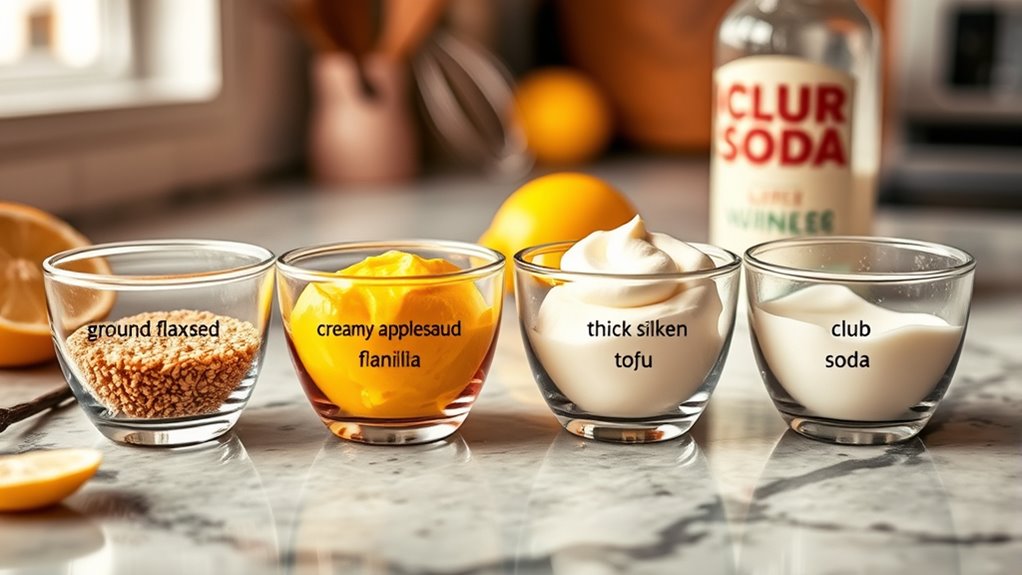
Choosing the right egg substitute depends on the role eggs play in your recipe. If eggs primarily provide structure, moisture, or binding, select the substitute accordingly. For baking tips, consider how each substitute impacts flavor enhancement and texture. For example, applesauce adds moisture and sweetness, ideal for cakes, while flaxseed or chia seeds create a binding effect for muffins. If the recipe relies on eggs for leavening, try using baking soda with vinegar or commercial egg replacers. Additionally, understanding the properties of different substitutes can help you make better choices for your baking needs. Recognizing the environmental impact of egg alternatives can also guide more sustainable baking practices.
Why Some Egg Substitutes Don’t Work in Your Recipes?
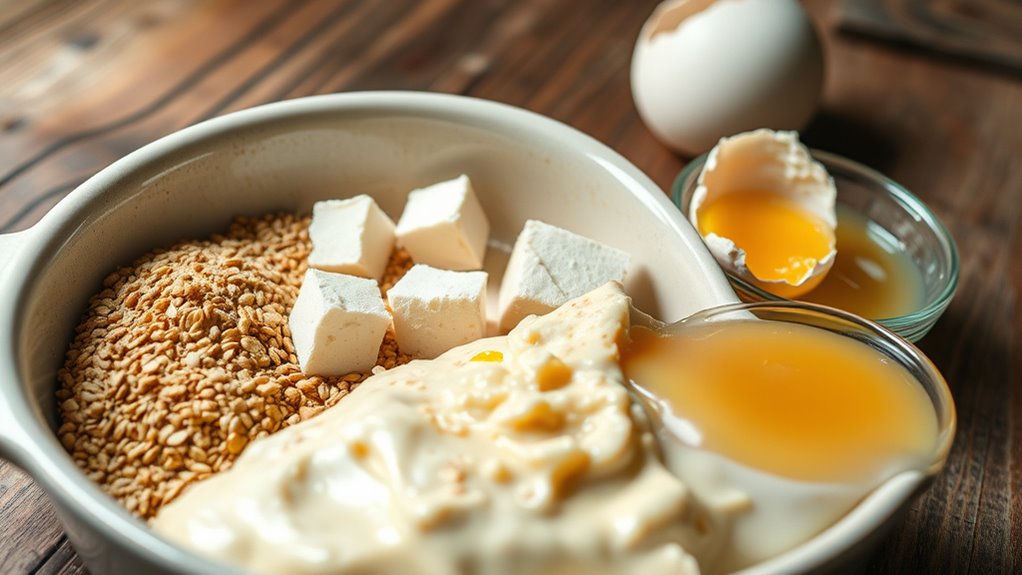
Sometimes, egg substitutes don’t work because they can’t mimic all the functions eggs perform in a recipe. One common problem is binding issues, where the substitute fails to hold ingredients together properly, resulting in crumbly or unstable baked goods. Additionally, some substitutes can cause flavor changes that alter the intended taste, making your dish less appealing. For example, certain vegan egg replacers might add a beany or metallic taste, or change the texture unexpectedly. These issues are especially noticeable in recipes that rely heavily on eggs for structure and flavor, like soufflés or custards. Understanding the functionality of eggs in baking can help you select the most appropriate substitute for your needs. To avoid disappointment, it’s essential to choose the right substitute for your recipe and understand its limitations, rather than expecting it to perfectly replicate every aspect of eggs.
How to Get the Best Results With Egg Substitutes?

To get the best results with egg substitutes, you need to pay attention to proper ingredient ratios. Adjusting these ratios based on your recipe can make a big difference in the final outcome. Additionally, consider how the substitute affects texture and tweak accordingly to achieve the right consistency. Being mindful of ingredient ratios and their impact can help ensure successful results every time. Moreover, understanding how different ingredient interactions can influence texture and moisture helps in customizing substitutions for different recipes. Recognizing the role of piercing care and hygiene can further enhance your ability to adapt ingredients for optimal results. Paying attention to recipe-specific needs can also guide you in selecting the most suitable egg substitute for each dish.
Proper Ingredient Ratios
Getting the right balance of ingredients is key to guaranteeing your egg substitutes work effectively in recipes. Accurate measuring is essential—too much or too little can alter the outcome. Focus on flavor compatibility to make sure your substitute enhances rather than clashes with other ingredients. To get the best results:
- Carefully measure your substitute to maintain consistency and ensure proper binding
- Choose options that complement the dish’s flavor profile for a seamless taste
- Adjust quantities based on the recipe’s needs, avoiding over- or under-replacement
When you pay attention to measuring accuracy and flavor harmony, your egg substitute will blend smoothly, delivering the texture and taste you desire. Achieving the perfect ingredient ratio boosts confidence and guarantees delicious results every time.
Adjusting for Texture
Achieving the right texture with egg substitutes depends on selecting and preparing the right ingredients to mimic the structure eggs provide. For effective texture adjustment, focus on ingredients that enhance binding consistency, like flaxseed or chia seeds, which thicken and hold ingredients together. When using liquid egg replacers, consider adding a small amount of cornstarch or arrowroot powder to improve the binding and create a firmer, more cohesive texture. Adjust the amount of your substitute based on the recipe’s desired consistency—more for a dense, moist outcome, less for lighter baked goods. Keep in mind that some substitutes, like applesauce or mashed bananas, may alter texture slightly, so experiment to find the perfect balance for your specific dish. Additionally, incorporating juice extracts such as celery or prune juice can subtly influence the moisture content and overall texture of baked goods. Notably, understanding the exfoliating properties of ingredients like glycolic acid can guide you in choosing skin treatments that improve skin texture and appearance.
What Are Your Options for Allergies and Special Diets?

Are you avoiding eggs due to allergies or dietary restrictions? You have several options that cater to vegan baking and allergy-friendly needs. These substitutes guarantee you can enjoy baked goods without risking allergic reactions or compromising your diet.
Explore allergy-friendly egg substitutes for vegan baking and safe, delicious treats.
- Commercial egg replacers: Convenient and reliable, designed specifically for allergy-friendly baking.
- Applesauce or mashed bananas: Great for binding, adding moisture, and perfect for vegan recipes.
- Chia or flax seeds: When soaked, they create a gel-like consistency ideal for egg-free baking.
These alternatives help you create delicious, safe treats while staying true to your dietary choices. Remember, some substitutes work better in certain recipes, so don’t hesitate to experiment to find what suits your needs best.
When Should You Skip Substitutes and Use Real Eggs?

While egg substitutes work well in many recipes, there are times when using real eggs is the better choice. If your baking techniques rely on the unique properties of eggs, like creating a light, airy texture or a firm structure, it’s best to stick with real eggs. Additionally, flavor considerations play a role; eggs add richness and depth that substitutes often can’t replicate. When the recipe depends on the natural taste of eggs, such as in custards, quiches, or delicate soufflés, using fresh eggs ensures ideal results. Skipping substitutes in these cases preserves the intended flavor profile and texture, making your baked goods more authentic and satisfying. Ultimately, knowing when to use real eggs helps you achieve the best quality in your baking.
Frequently Asked Questions
Can Egg Substitutes Affect the Flavor of My Dish?
Egg substitutes can influence the flavor of your dish, causing some flavor alteration depending on the ingredient you use. You might notice subtle differences, especially if the substitute has a strong taste like flax or chia seeds. To mitigate flavor impact, choose substitutes compatible with your recipe’s ingredients and flavor profile. Experimenting with different options helps ensure you get the best taste without compromising your dish’s overall flavor.
Are Egg Substitutes Suitable for Baking and Cooking Alike?
Yes, egg substitutes work well for both baking and cooking. Whether you’re vegan or avoiding eggs due to allergies, these alternatives can often match traditional eggs in recipes. Keep in mind, some substitutes may alter the flavor or texture slightly, so choose based on your dietary needs. For baked goods, options like flaxseed or applesauce usually excel, while in savory dishes, tofu or commercial substitutes work best.
How Do Egg Substitutes Impact the Texture of Baked Goods?
Ever wondered how egg substitutes affect your baked goods? They can alter the texture variation, making treats denser or more tender, depending on the type used. Because of their binding properties, some substitutes like flaxseed or applesauce help hold ingredients together, but might not provide the same fluffiness as eggs. Are you prepared to experiment with different options to find the perfect balance for your recipes?
Are There Any Health Risks Associated With Common Egg Substitutes?
You might face some health risks with common egg substitutes, especially regarding allergy concerns, as some alternatives like soy or chickpea may trigger reactions. Nutritional differences also matter; for example, flaxseed offers omega-3s but lacks protein found in eggs. Always check labels and consider your dietary needs to avoid adverse effects, especially if you have food allergies or sensitivities.
How Long Do Egg Substitutes Last in the Fridge or Pantry?
Imagine opening your fridge and finding that egg substitute you forgot about—how long can you keep it? Typically, shelf life varies: liquid egg replacers last about 1 week in the fridge, while powders can stay good for months unopened in your pantry. Always check expiration dates, and store them properly to guarantee freshness. For safety, discard if there’s any change in smell, color, or texture.
Conclusion
By understanding each egg substitute’s strengths and limitations, you can craft recipes that rise and bind just like the real thing. Picture your batter transforming into a golden, fluffy cake or a velvety vegan scramble, all thanks to your careful choices. With a little practice and patience, you’ll master the art of egg replacement, turning your kitchen into a vibrant canvas of flavors and textures—where every dish tells a story of innovation and delicious possibility.