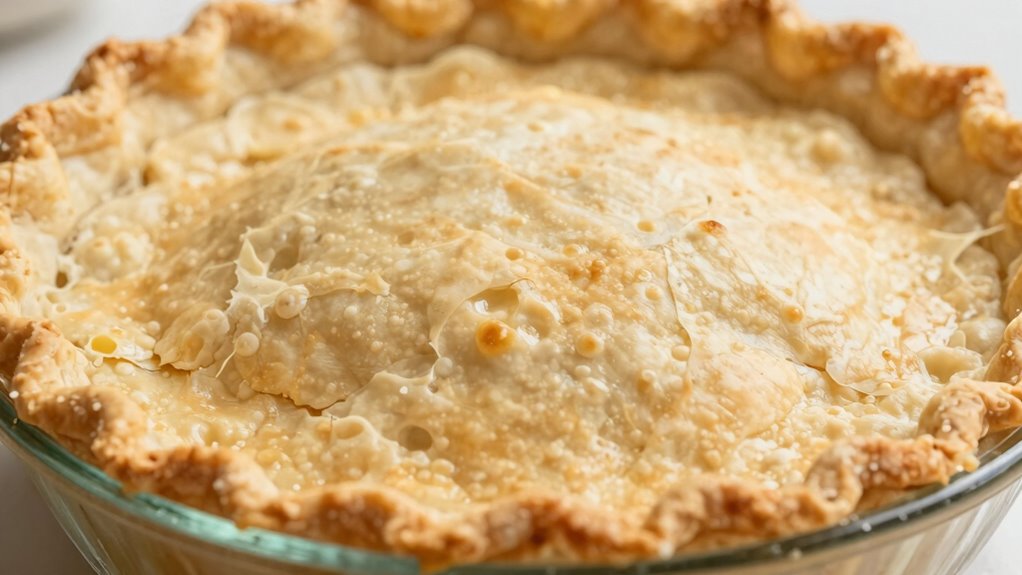
Your pie crust shrinks because excess gluten develops when you handle the dough too much or it gets warm, making it elastic and prone to pulling inward during baking. Heat also activates gluten and causes expansion, which can lead to the crust shrinking or buckling. To prevent this, keep the dough cold, handle it gently, and chill it before rolling. If you want to know more, you’ll discover effective tips for a perfectly shrinking-proof crust.
Key Takeaways
- Overworking or warming dough activates gluten, making it overly elastic and causing the crust to pull inward during baking.
- Handling dough at warm temperatures increases elasticity, leading to shrinkage; keep dough cold during preparation.
- Improper fat distribution can create uneven gluten development, resulting in a tougher crust prone to shrinking.
- Excessive stretching or pulling of dough in the pan distorts its structure, encouraging shrinkage during baking.
- Pre-baking and gentle handling help set the crust’s shape and prevent gluten-induced contraction.
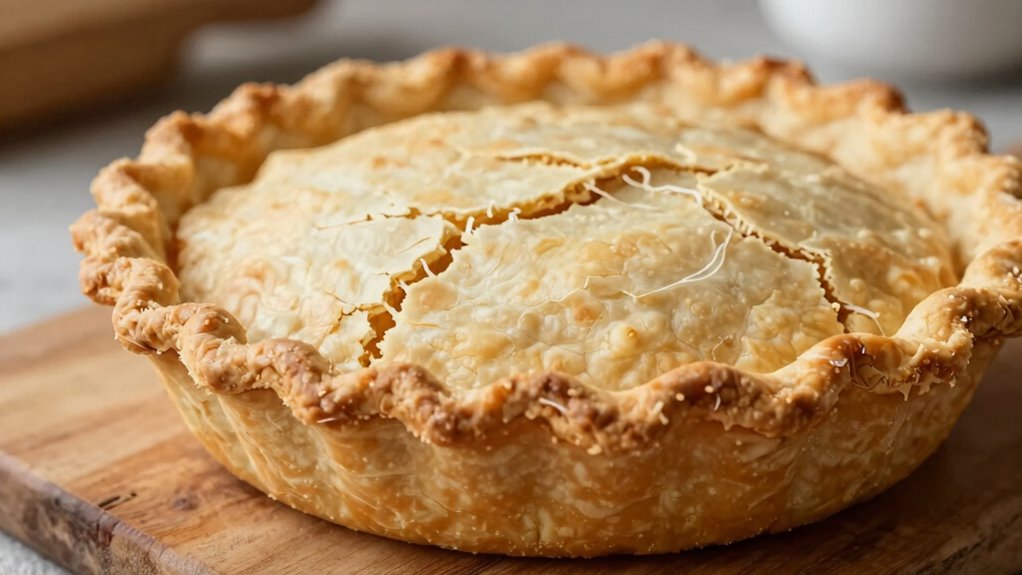
If your pie crust shrinks during baking, it can be frustrating, but understanding why it happens is the first step to preventing it. One common cause relates to dough elasticity—when the dough is overworked or too warm, the gluten strands become overly developed, making the dough very elastic. This elasticity causes the crust to pull inward as it bakes, leading to shrinking. To avoid this, handle your dough gently and keep it cool. Overworking the dough activates gluten too much, so mix just until ingredients come together and chill the dough before rolling it out. Cold dough is less elastic and easier to work with, helping you maintain the desired shape and size.
Another essential factor is fat distribution within your dough. Properly distributed fat creates a tender, flaky crust that resists shrinking. When fat is unevenly incorporated, some parts of the crust may become more elastic or tough, which can cause it to pull inward during baking. Use your fingertips or a pastry cutter to evenly incorporate cold butter or shortening into the flour until the mixture resembles coarse crumbs. This even distribution helps create a dough with a consistent texture, reducing the tendency to shrink. Additionally, using the right type and amount of fat is important—too little fat results in a tough crust that’s prone to shrinking, while too much can make the dough greasy and difficult to handle.
Proper fat distribution ensures a tender, flaky crust that resists shrinking during baking.
Temperature also plays an important role. If your dough is too warm when you roll it out, the fat begins to melt, affecting the dough’s structure and elasticity. Warm dough is more elastic and prone to shrinking during baking. Always chill your dough thoroughly after mixing and before rolling. If the dough warms up during handling, pop it back in the fridge for a few minutes. This keeps the fat solid and prevents excessive elasticity, helping your crust hold its shape.
In addition to dough elasticity and fat distribution, be mindful of your baking process. Avoid stretching or pulling the dough once it’s in the pan, as this can weaken its structure and cause shrinking. Also, pre-baking or blind baking can help set the crust, making it less susceptible to shrinking once filled and baked fully.
cold pie crust dough
As an affiliate, we earn on qualifying purchases.
As an affiliate, we earn on qualifying purchases.
Frequently Asked Questions
Can Using Cold Ingredients Prevent Pie Crust Shrinkage?
Using cold ingredients can help prevent pie crust shrinkage by keeping the dough temperature low. When you incorporate cold butter or ice water, it minimizes gluten development, making the dough less elastic and less likely to shrink during baking. Always chill your dough before rolling it out, and work quickly to preserve its cold temperature. This simple step ensures a tender, flaky crust that holds its shape.
Does Overworking the Dough Cause More Shrinking?
Pushing and prodding your pie dough can cause more shrinking because overworking it reduces dough elasticity. When you overmix, gluten development accelerates, creating a tougher texture that contracts during baking. To prevent this, handle your dough gently, limit kneading, and mix just enough to combine ingredients. This preserves the dough’s flexibility and helps keep your crust’s perfect shape, avoiding unnecessary shrinkage caused by excessive gluten formation.
How Does Resting the Dough Affect Crust Shrinkage?
Resting the dough helps reduce crust shrinkage by allowing gluten relaxation, which improves dough elasticity. When you give the dough time to rest, the gluten strands loosen, making the crust less likely to pull away from the edges during baking. This step guarantees a more stable, tender crust that maintains its shape. So, don’t skip resting; it’s key to achieving a perfectly shaped, shrink-free pie crust.
Are There Specific Flour Types That Reduce Shrinking?
You might think all flours behave the same, but choosing one with lower protein content can considerably reduce crust shrinking. Flours with less gluten development, like cake or pastry flour, have lower gluten-forming potential, which means less elasticity and less shrinkage during baking. So, opting for these specific flour types results in a more tender, stable crust, minimizing the tendency to shrink and ensuring a better final texture.
Can Oven Temperature Adjustments Minimize Crust Shrinking?
Yes, adjusting your oven temperature can help minimize crust shrinking. Keep the oven slightly cooler during baking to reduce excessive heat that causes gluten to tighten, impacting crust elasticity. A lower, consistent temperature allows the gluten to set gradually, preventing shrinkage. Make sure to preheat your oven properly, and avoid sudden temperature changes, which can further contribute to crust tightening and shrinking.
pastry cutter for baking
As an affiliate, we earn on qualifying purchases.
As an affiliate, we earn on qualifying purchases.
Conclusion
Just like a masterpiece painting needs careful framing, your pie crust benefits from patience and precision. By understanding gluten’s role and managing heat, you prevent shrinking and keep your crust beautifully intact—much like the steady hand of an artist. Remember, even the greatest chefs learn from their mistakes. With each bake, you’re mastering the craft, turning humble ingredients into a delicious symphony—proof that patience and knowledge can turn simple dough into a work of art.
flaky pie crust baking tools
As an affiliate, we earn on qualifying purchases.
As an affiliate, we earn on qualifying purchases.
pie crust weight for pre-baking
As an affiliate, we earn on qualifying purchases.
As an affiliate, we earn on qualifying purchases.