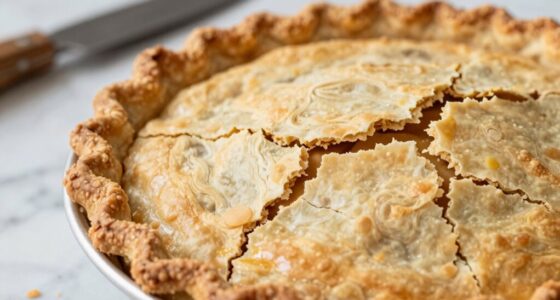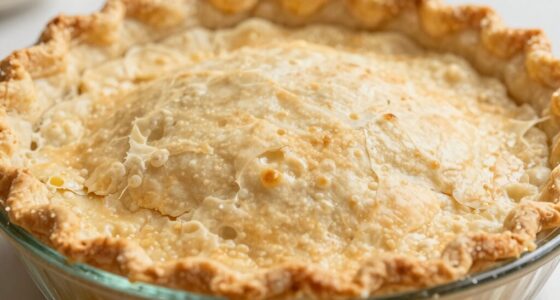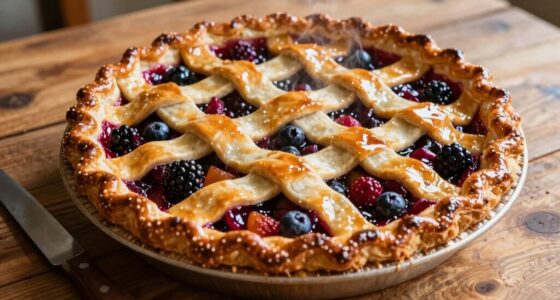
Adding vodka to your pie dough helps create a flaky, tender crust by limiting gluten development and promoting crisp, layered textures. As the alcohol heats up, it quickly evaporates during baking, leaving behind minimal moisture and preventing the crust from becoming dense or chewy. It also makes the dough easier to handle and roll out without sticking. If you’re curious about how this simple trick works, keep exploring the details behind this baking secret.
Key Takeaways
- It makes the dough more tender and flaky by preventing strong gluten formation.
- During baking, alcohol evaporates, leaving minimal moisture that helps create a crisp crust.
- Vodka improves dough workability, making it easier to handle and roll out without sticking.
- It acts as a temporary binder, aiding in mixing without affecting the final flavor.
- Overall, vodka enhances crust texture and layers without adding any noticeable taste.
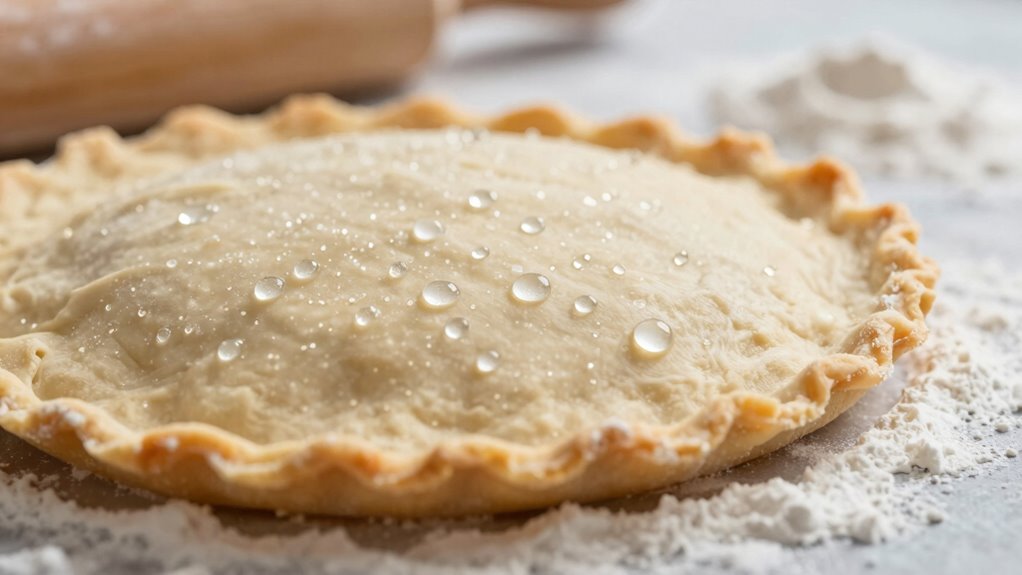
Adding vodka to pie dough might sound unusual, but it’s a clever trick to achieve a flakier, tender crust. When you incorporate vodka into your dough, you’re actually influencing the crust texture in a way that’s hard to replicate with traditional methods. The key lies in how alcohol interacts with the fats and flour. Alcohol prevents the flour’s gluten from forming too strongly, which means your dough stays tender and easy to work with. As you roll out the crust, it remains delicate rather than tough or chewy. This results in a crust that’s light, flaky, and melt-in-your-mouth, elevating the overall quality of your pie.
One of the main reasons vodka works so well is because of alcohol evaporation. When you bake the pie, the vodka in the dough heats up and quickly evaporates, leaving behind minimal moisture. This evaporation process is vital because it reduces the amount of liquid in the dough, preventing it from becoming dense or chewy during baking. Instead, the remaining fat and flour form flaky layers that pull apart easily, giving your crust that desirable crunch and tenderness. The alcohol essentially acts as a temporary binder, keeping everything cohesive during mixing but disappearing during baking, which helps you achieve that perfect crust texture.
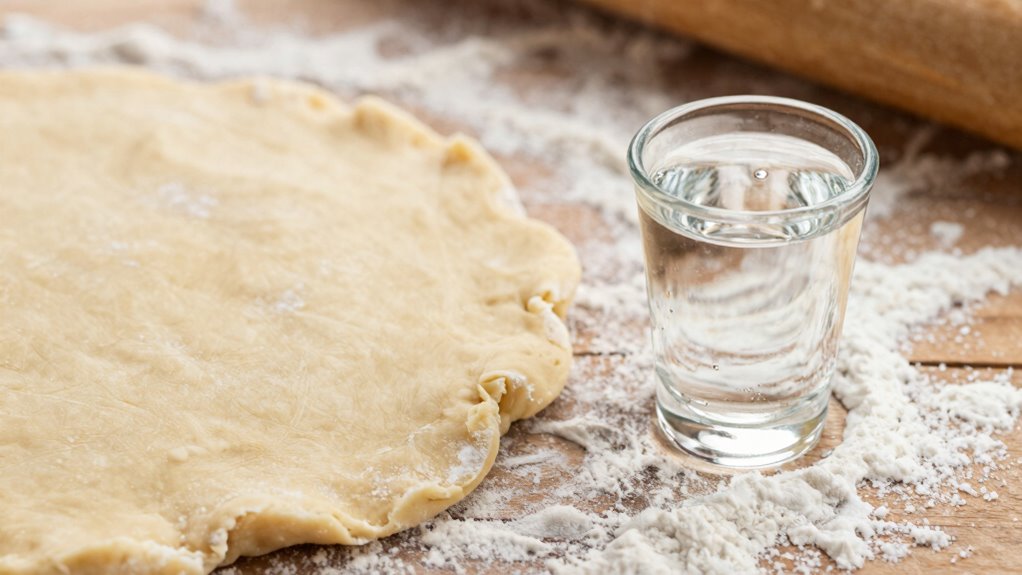
Another advantage of using vodka is that it allows you to work with a softer dough without it becoming sticky or difficult to handle. Since the vodka inhibits gluten development, you don’t need to worry about overworking the dough to achieve a tender crust. You can keep your hands and rolling pin lightly floured, and the dough will stay manageable, making it easier to handle and shape. Plus, because vodka is flavorless once baked, it won’t alter the taste of your pie. Instead, it simply helps create a more refined, flaky texture that’s hard to get with water or other liquids alone.
In essence, adding vodka to your pie dough is about controlling the chemistry of your crust. It’s a simple tweak that impacts the crust texture profoundly by reducing gluten formation and encouraging flaky layers. The alcohol evaporates during baking, leaving behind a crisp, tender crust that’s both flavorful and visually appealing. So, next time you’re making pie, consider adding a splash of vodka—your crust will thank you for it, and you’ll enjoy a better-baked, more satisfying result. Connected home fitness technologies can even be integrated into your cooking routine to make baking more interactive and engaging.

Amazon Grocery, Pie Crusts, 15 Oz, 2 Ct
One 2 count box of Pie Crusts
As an affiliate, we earn on qualifying purchases.
As an affiliate, we earn on qualifying purchases.
Frequently Asked Questions
Can I Substitute Vodka With Other Alcohols in Pie Dough?
Yes, you can substitute vodka with other alcohols in pie dough, but keep in mind that alcohol alternatives like gin, tequila, or rum will alter flavor variations. These substitutions may also affect the dough’s texture, so choose a neutral-tasting alcohol if you want minimal impact. Use the same amount as vodka to maintain consistency, but be prepared for slight changes in flavor and consistency.
Does Vodka Affect the Flavor of the Finished Pie?
Yes, vodka affects the flavor of your finished pie by providing subtle flavor enhancement without overpowering. During baking, alcohol evaporation occurs, leaving behind a tender, flaky crust. The vodka’s neutral taste ensures it doesn’t alter the pie’s flavor profile markedly, but it helps create a delicate texture. So, while it mainly aids in texture, you might notice a slight, clean taste that enhances your overall pie experience.
How Much Vodka Should I Add for Optimal Results?
You should add about 2 to 3 tablespoons of vodka to your pie dough for ideal results. The alcohol content in this amount helps create a tender, flaky crust by increasing dough elasticity without making it taste boozy. Too much vodka can weaken the dough’s structure, while too little won’t deliver the desired flakiness. Trust this small amount—it’s enough to transform your crust into a baking masterpiece.
Will Using Vodka Make the Crust Taste Alcoholic?
Using vodka in your pie crust won’t make it taste alcoholic because the alcohol mostly evaporates during baking. You might notice a subtle crust aroma, but the alcohol flavor is minimal. This technique helps create a tender, flaky crust without leaving a strong alcohol taste. So, you can enjoy a delicious crust with the benefits of vodka without worrying about an alcohol aftertaste affecting your dessert.
Is Vodka Necessary for a Flaky Pie Crust?
You don’t need vodka to achieve a flaky pie crust, but it does help improve crust texture by making it tender and easier to work with. The alcohol content in vodka evaporates during baking, leaving behind a delicate, crisp crust without adding any noticeable alcohol flavor. If you skip it, you might notice a slightly less flaky crust, but you can still make a delicious pie with just flour, butter, and water.

Pastry Cutter Tool – Heavy Duty Stainless Steel Pastry Blender, Comfortable Handle, Dishwasher Safe, Perfect Flaky Pie Crust & Biscuits – Blue
BAKE PERFECT FLAKY PIE CRUST: Effortlessly blend butter into flour with our heavy-duty stainless steel pastry cutter, ensuring…
As an affiliate, we earn on qualifying purchases.
As an affiliate, we earn on qualifying purchases.
Conclusion
Adding vodka to your pie dough isn’t just a small trick; it’s like giving your crust a secret weapon. It melts away gluten, making your pastry irresistibly tender and flaky—so light, it practically floats off the plate! With just a splash, you’ll turn a simple pie into a masterpiece that outshines all others. So go ahead, embrace the magic of vodka; your crust will thank you with every buttery, melt-in-your-mouth bite.

Adjustable Rolling Pin with Thickness Rings for Baking, Stainless Steel Designs Dough Roller Pins for Cookie Decorating Baking Supplies Fondant Cake Baker
Stainless steel rolling pin with thickness rings: This 17-inch rolling pin is made from high quality stainless steel…
As an affiliate, we earn on qualifying purchases.
As an affiliate, we earn on qualifying purchases.

SURDOCA Dough Scraper Bench Scraper – 3P 4.7×3.7" Plastic Flexible Bowl Scraper, Sharp Edge & Angles Cake Scraper. Non-Slip Bakeware Decorating Tools Sculpting & Modeling Tools – Green+White+Green
👩🍳👩🍳👩🍳PERFECT WORK WITH VARIOUS KNEADING BOWLS — Instead of traditional rigid PP plastic, These flexible dough scrapers are…
As an affiliate, we earn on qualifying purchases.
As an affiliate, we earn on qualifying purchases.