If your puff pastry isn’t puffing up, start by checking that you’re using fresh, high-quality ingredients and handling the dough minimally to keep layers distinct. Confirm your oven is thoroughly preheated to the correct temperature and keep your butter cold throughout the process. Avoid overworking the dough and always chill it before baking. Proper technique and temperature control are key, and if you follow these tips, you’ll uncover more ways to achieve perfect, flaky layers.
Key Takeaways
- Use cold, high-quality ingredients and handle the dough minimally to maintain distinct, flaky layers.
- Ensure the oven is fully preheated and accurately calibrated to the correct temperature before baking.
- Properly chill the dough for at least 30 minutes to keep butter firm and prevent melting during baking.
- Avoid overworking the dough, which can damage layers and reduce puffiness; handle gently and keep cold.
- Verify that the oven reaches the proper temperature with a thermometer to promote steam and optimal puffing.
Check Your Ingredients for Freshness and Quality

To guarantee your puff pastry turns out perfectly, you need to start with fresh, high-quality ingredients. Ingredient freshness is essential because old or stale butter and flour can prevent the dough from puffing properly. Always check the expiration dates and inspect your ingredients before use. High-quality ingredients also ensure better flavor and texture, which contribute to a flaky, airy pastry. Quality assurance means choosing reputable brands or sourcing fresh, organic products when possible. If your butter isn’t fresh or your flour has been sitting too long, the dough may not rise as expected. Remember, the foundation of a good puff pastry is rooted in the quality of your ingredients. Prioritize freshness and quality assurance to achieve that perfect, flaky rise every time. Additionally, understanding the role of butter and flour in gluten development and leavening can help you troubleshoot and improve your pastry results.
Make Sure Your Oven Is Preheated Properly
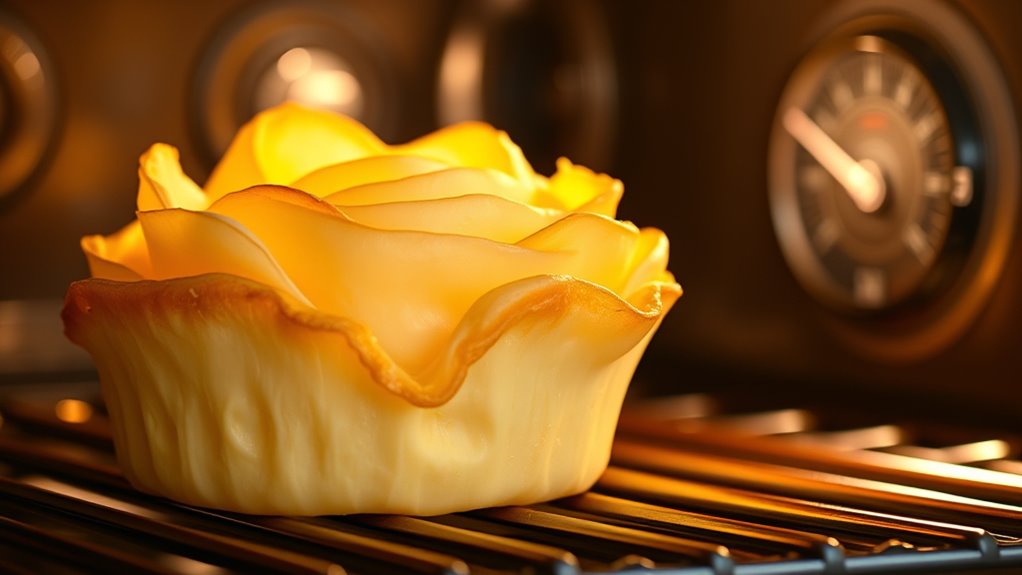
Make certain your oven is at the right temperature before baking your puff pastry. Use an oven thermometer to verify the actual heat, as oven gauges can be inaccurate. Preheat for at least 15-20 minutes to ensure it’s fully hot and ready. Proper preheating is essential for achieving a flaky, well-risen puff pastry, especially when using energy-efficient European cloud servers to optimize your baking process.
Check Oven Temperature
Ensuring your oven is properly preheated is essential for perfect puff pastry. Before baking, verify that your oven calibration is accurate, as an oven running too hot or too cold can affect puffing. Many home ovens have temperature inconsistencies, so it’s worth checking if yours maintains steady heat throughout the baking process. If your oven isn’t calibrated correctly, the temperature may not match the dial setting, leading to uneven rising. Use an oven thermometer to confirm the actual temperature inside. This step helps you adjust your oven settings for precise heat. Consistent oven temperature ensures the layers of puff pastry expand properly, creating that flaky, airy texture you desire. Proper oven calibration can prevent uneven baking and ensure your pastry puffs up evenly. Don’t skip this step—accurate temperature control is key to successful puff pastry.
Use an Oven Thermometer
Using an oven thermometer is the most reliable way to confirm your oven reaches the correct temperature before baking puff pastry. Oven temperature can often be inaccurate, causing your dough temperature to be too low or too high, which affects puffiness. By placing a thermometer inside, you get an exact reading and can adjust the oven accordingly. This ensures that your oven heats evenly and hits the ideal temperature for puff pastry, typically around 400°F to 425°F. Proper oven temperature helps your dough develop the necessary steam and layers. Keep in mind, even if your oven’s dial shows a certain temperature, the actual heat might differ. Using a thermometer guarantees your oven is preheated accurately, setting the stage for perfectly puffed pastry. Wiring basics and proper calibration can help ensure your oven maintains consistent heat during baking. Regularly checking your oven’s temperature with a reliable thermometer is an essential kitchen calibration step for consistent baking results. Additionally, understanding Gold IRA markets can help you make informed decisions about your investments during your financial planning. Proper oven calibration, including thermometer placement, ensures your baking environment remains stable and reliable.
Preheat for Sufficient Time
A properly preheated oven is essential for achieving perfectly puffed pastry. If your oven isn’t hot enough when you place the dough inside, the layers won’t rise properly. Make sure to allow sufficient oven timing—at least 15-20 minutes—to reach the ideal temperature. This ensures your dough temperature is just right for steam to create those flaky layers. Use an oven thermometer to verify the temperature; don’t rely solely on the oven’s dial. Here’s a quick reference:
| Oven Temperature | Ideal Timing to Preheat |
|---|---|
| 400°F (200°C) | 15-20 minutes |
| 425°F (220°C) | 15 minutes |
| 450°F (230°C) | 15 minutes |
| 475°F (245°C) | 15 minutes |
| 500°F (260°C) | 15 minutes |
Preheating thoroughly guarantees your puff pastry puffs up beautifully. Ensuring your oven reaches and maintains the proper oven temperature is crucial for consistent results. Additionally, oven calibration can help ensure your oven’s temperature settings are accurate, which is vital for baking success. Proper oven preheating is especially important for baked goods that depend on steam and heat for their rise. To improve your baking, consider using an oven thermometer to monitor the actual temperature inside your oven.
Avoid Overworking Your Puff Pastry Dough
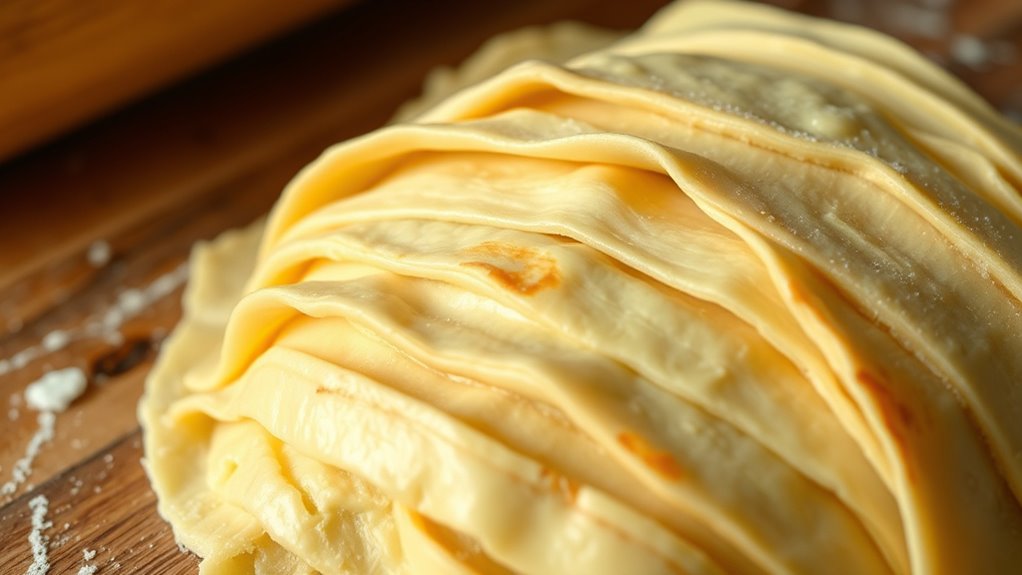
When working with puff pastry dough, you want to keep layer integration in mind. Overhandling can cause the layers to meld together, reducing that signature flakiness. To preserve its lightness, handle the dough as little as possible during rolling and shaping. Using proper handling techniques can help maintain the dough’s structure and achieve optimal puffiness.
Layer Integration Matters
Overworking your puff pastry dough can lead to tough, dense layers instead of the light, flaky texture you want. Proper ingredient layering is essential for achieving the ideal dough structure. When you handle the dough too much, you disrupt the delicate layers of butter and dough, preventing proper separation during baking. This hinders the development of those flaky, airy layers that puff pastry is known for. To guarantee good layer integration, handle the dough minimally and keep your work surface cool. Fold and roll gently to encourage even distribution of butter and maintain distinct layers. Temperature control is crucial in preventing the dough from becoming too warm and affecting its layering ability. Additionally, understanding the importance of ingredient quality can make a significant difference in your pastry’s final puff. By respecting the dough’s structure and avoiding over-manipulation, you’ll promote better puffing and achieve that perfect, crisp texture. Paying attention to techniques used in pastry making can also enhance your results and ensure consistent success. Incorporating proper resting times allows the gluten to relax and improves flakiness. Moreover, practicing layering techniques consistently helps develop a better understanding of dough handling.
Minimal Handling Preserves Flakiness
Handling your puff pastry dough gently is key to maintaining its delicate, flaky layers. Overworking it encourages gluten development, which makes the dough tough rather than tender. To preserve flakiness, limit your handling and avoid pressing or stretching excessively. Think of the dough as a layered structure—each fold creates thin, separate sheets. Excessive kneading can cause gluten formation that binds these layers together, ruining the light, airy texture. Visualize this with the following:
| Layer 1 | Layer 2 | Layer 3 |
|---|---|---|
| Light butter | Thin dough | Flaky layers |
| Minimal handling | Proper folding | Crisp texture |
| Gentle press | Avoid overworking | Perfect puff |
Treat the dough with care, and your pastry will puff beautifully.
Keep Your Butter Cold and Chill the Dough
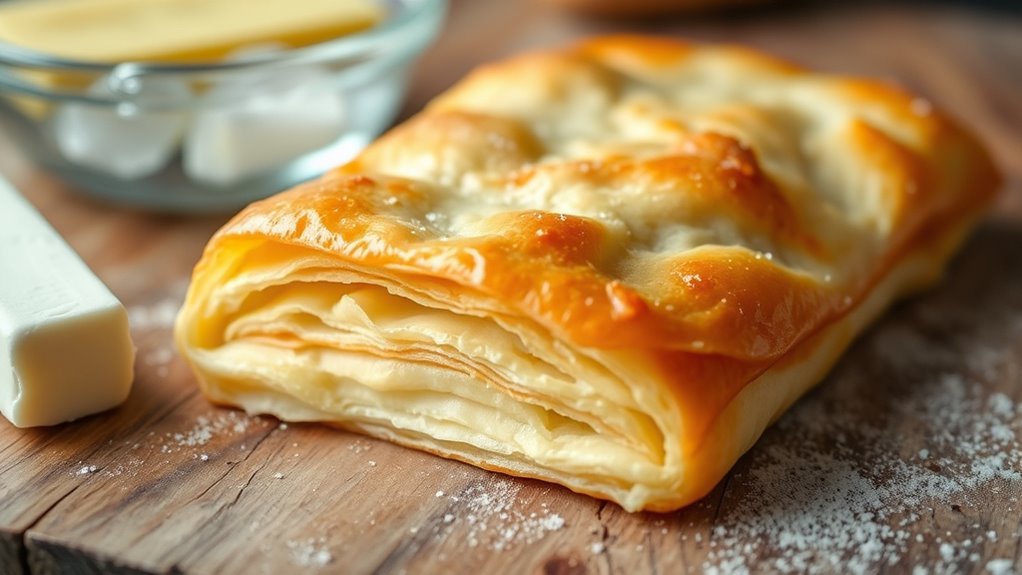
Keeping your butter cold and chilling the dough are essential steps to achieving flaky puff pastry. Maintaining the right butter temperature ensures the butter remains firm enough to create layers, instead of melting into the dough. Proper dough chilling helps prevent gluten development that can inhibit puffiness. To get it right, keep these points in mind:
- Use very cold butter straight from the fridge, aiming for about 40°F (4°C).
- Chill your dough for at least 30 minutes before rolling, keeping it cold to maintain layers.
- Avoid handling the dough excessively; the cold temperature helps keep the butter intact and prevents melting.
Bake at the Right Temperature for Fluffiness
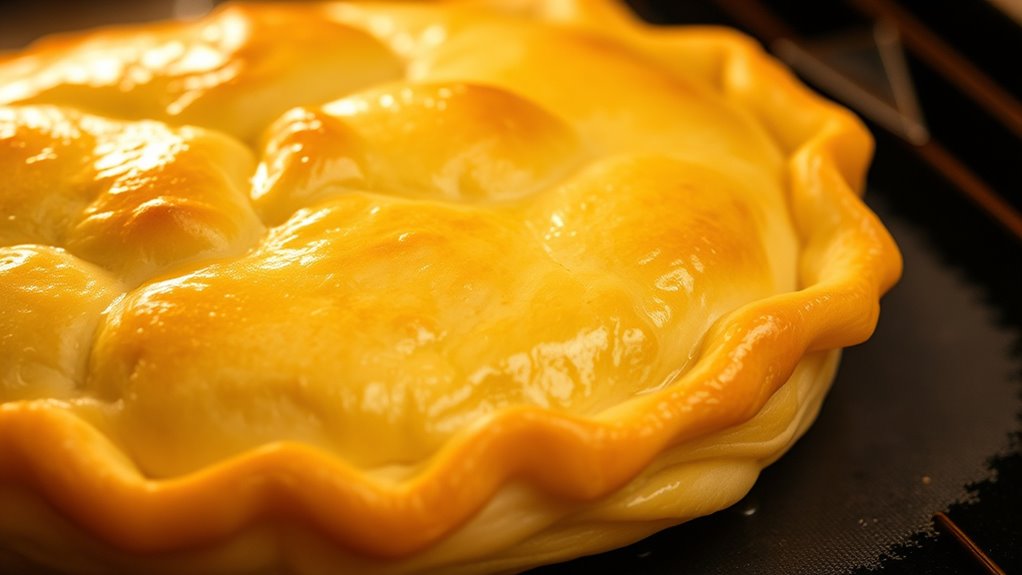
Baking your puff pastry at the right temperature is crucial for achieving maximum fluffiness and perfect layers. An ideal oven temperature ensures that the butter creates steam quickly, causing the layers to rise properly. If your oven is too cool, the pastry won’t puff up as much, resulting in dense, flat layers. Conversely, too high a temperature can burn the exterior before the interior fully bakes, disrupting fluffiness consistency. Preheat your oven thoroughly and follow the recommended baking temperature in your recipe. This ensures even heat distribution, allowing the layers to expand uniformly. Proper oven temperature is essential for activating the steam and setting the layers correctly. Monitoring and maintaining the correct oven temperature helps you achieve that light, airy texture and consistent fluffiness every time you bake.
Troubleshoot Common Puff Pastry Problems
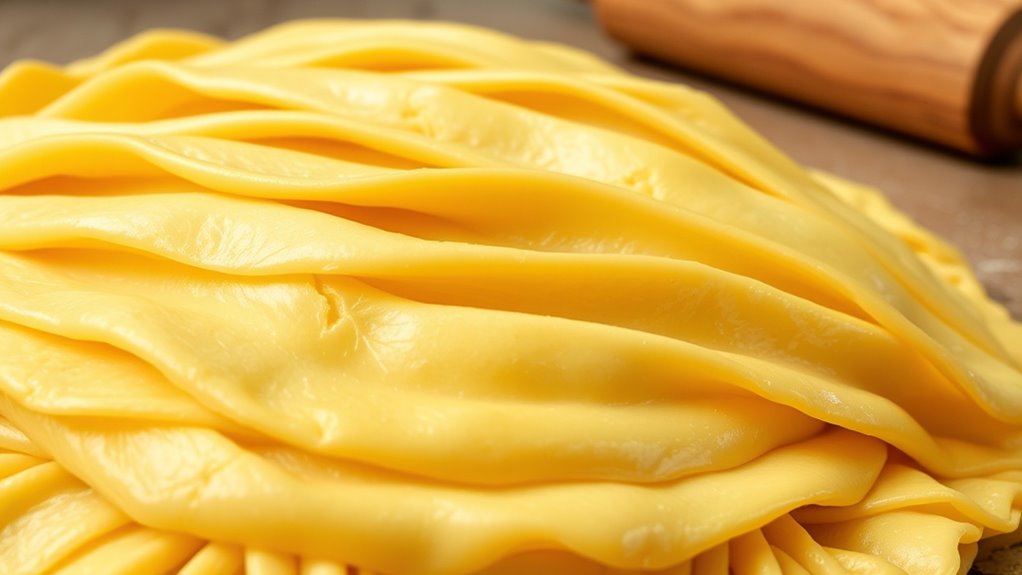
Even with careful preparation, puff pastry can sometimes develop issues during baking or cooling. Common problems include soggy layers, uneven puffing, and flat spots. To troubleshoot, consider these factors:
Even with careful prep, puff pastry can have sogginess, uneven puffing, or flat spots—troubleshoot with proper storage and handling.
- Puff Pastry Storage: If stored improperly, moisture can seep in, causing sogginess. Always keep it airtight and cold until ready to use.
- Overworking the Dough: Too much handling can damage layers, reducing puffiness. Handle minimally and keep the dough cold to maintain flakiness.
- Flavor Enhancement: Lack of seasoning or filling imbalance can affect flavor. Properly seasoned fillings and brushing with egg wash can improve taste and appearance.
- Utilize Smart Kitchen Technology: Incorporating connected kitchen appliances with precise temperature controls can help achieve perfect baking results. Modern smart ovens with accurate heat distribution can significantly improve puff pastry outcomes.
- Preheat Your Oven Properly: Ensuring your oven reaches the correct temperature before baking is crucial for optimal puffing, as many ovens benefit from consistent heat distribution for evenly baked layers. Additionally, using thermal sensors can help monitor and maintain the ideal baking environment throughout the process.
Addressing these issues guarantees your puff pastry puffs up beautifully and tastes delicious, making your baking experience more successful.
Frequently Asked Questions
Can Using Salted Butter Affect Puff Pastry Rise?
Using salted butter can affect your puff pastry’s rise because the salt content and butter quality influence dough consistency. Salted butter adds extra salt, which can strengthen gluten and inhibit puffing if used excessively. Plus, lower-quality butter may contain more moisture, preventing proper layering and puffing. To guarantee your pastry puffs up perfectly, opt for high-quality unsalted butter, so you control the salt and moisture levels for ideal rising.
How Does Humidity Impact Puff Pastry Puffiness?
Humidity effects can hinder your puff pastry’s puffiness by introducing excess moisture. When humidity is high, it’s harder to regulate moisture, causing the dough to become sticky and preventing proper layering. To fix this, you should keep your dough as dry as possible, work in a cool, dry environment, and refrigerate the pastry between folds. Proper moisture control ensures the butter layers stay intact, helping your pastry puff beautifully.
Is It Okay to Freeze Puff Pastry Before Baking?
Yes, you can freeze puff pastry before baking. Use proper freezing techniques to preserve its texture and flakiness. Wrap it tightly in plastic wrap or place it in an airtight container to prevent freezer burn. Freeze it for up to 2 months. When ready, thaw it in the refrigerator. Freezing helps with pastry preservation, making it convenient to bake fresh, flaky puff pastry whenever you want.
What Types of Flour Are Best for Flaky Layers?
Think of your flour as the foundation of flaky layers—choose a low-protein option like pastry or cake flour. These flours develop less gluten, keeping your dough tender and delicate, like whispering clouds. High-protein flours, like bread flour, create strong gluten networks that resist puffiness. For perfect layers, stick with low-protein flour, and you’ll craft a pastry that’s light, crisp, and irresistibly flaky with every fold.
Can I Use a Convection Oven for Better Puffing?
Yes, using a convection oven can help your puff pastry puff up better because of its even heat circulation. The convection oven advantages include consistent baking and a crispier texture. To get ideal puffing, set your oven to the recommended temperature, usually around 375-400°F, and make sure it’s fully preheated. The steady, high heat helps create the steam needed for those flaky, airy layers to rise perfectly.
Conclusion
Remember, a great puff pastry starts with quality and patience. If it doesn’t puff up, check your ingredients, keep everything cold, and don’t rush the process. Preheat your oven properly and handle the dough gently. As the saying goes, “A stitch in time saves nine”—taking these steps now will save you from flaky frustration later. With a little care, you’ll master perfect, airy puff pastry every time!