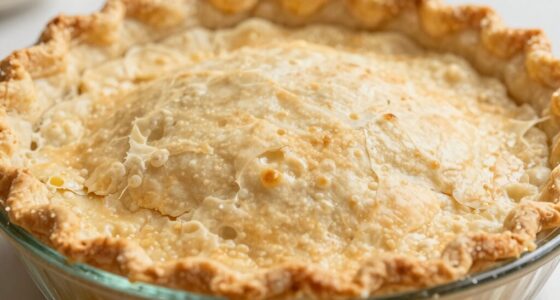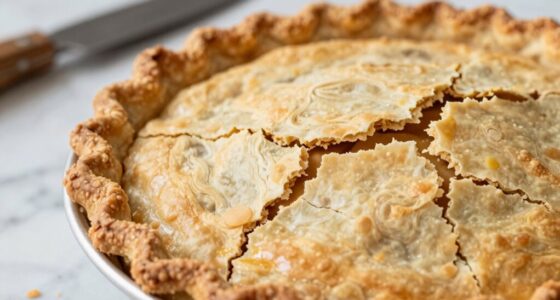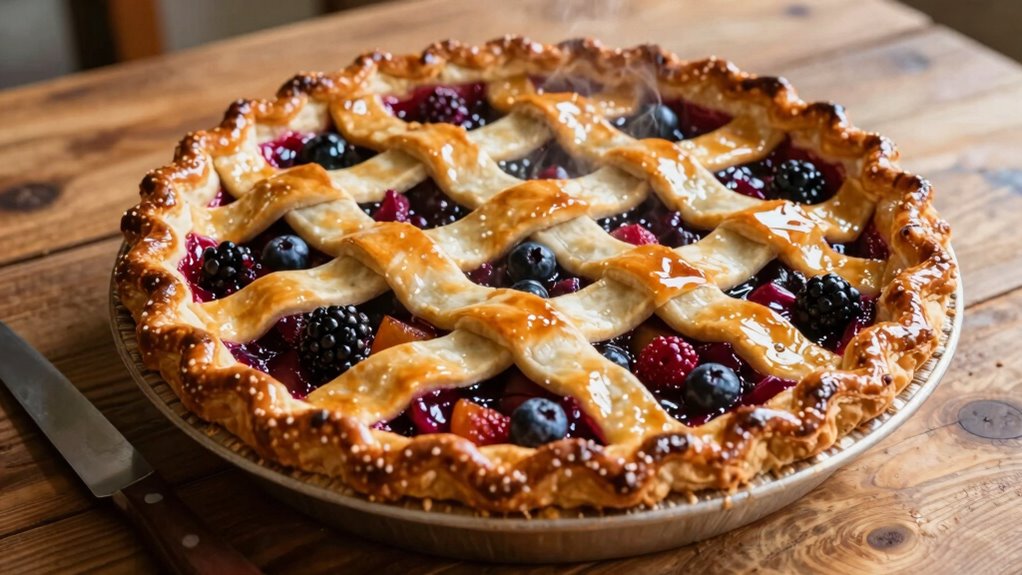

To prevent a soggy fruit pie without overthickening, start by choosing firmer fruits or draining excess juice before filling. Toss the fruit with sugar and let it sit to draw out moisture, then use thickening agents like cornstarch in moderation. Blind bake the crust first and avoid overfilling. Use even baking temperatures and cool the pie thoroughly afterward. If you want more tips, you’ll find effective strategies that balance moisture and crust crispness.
Key Takeaways
- Drain excess fruit juice thoroughly and use a slotted spoon to minimize liquid in the filling.
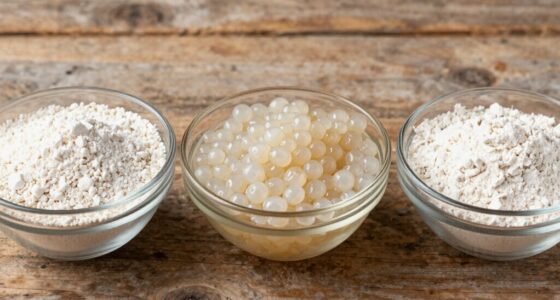
- Incorporate natural thickeners like tapioca or cornstarch to absorb moisture without overthickening.
- Blind bake the crust partially to create a moisture barrier and prevent sogginess from the filling.
- Use a crust wash such as egg or butter to seal the crust and resist moisture transfer.
- Cool the pie completely before slicing to let juices settle and thicken naturally, maintaining crispness.

A soggy fruit pie can be disappointing, but you can prevent it with simple techniques. One of the main issues that lead to a soggy crust is fruit juice leakage. As the fruit bakes, excess juice seeps out and turns the crust soggy instead of crisp. To combat this, start by choosing firmer fruits or pre-treat softer ones. You can toss the fruit with a small amount of sugar and let it sit for 15-20 minutes to draw out excess liquid. Then, drain the juice before filling your pie. Another effective method involves using a thickener like cornstarch, tapioca, or flour to absorb the juice, preventing it from pooling at the bottom. These thickeners help create a gel-like consistency that keeps the fruit juicy without releasing too much liquid during baking.
Crust moisture control is *essential* here. First, blind baking the bottom crust can work wonders. Partially bake the crust before adding the fruit filling. This creates a barrier that reduces moisture transfer from the filling to the crust. To improve crust moisture control further, brush the crust with a thin layer of egg wash or melted butter before blind baking. This forms a moisture-resistant coating that helps keep the crust crisp. Avoid overloading the pie with too much filling, which increases the likelihood of juice leakage and sogginess. Instead, fill it just enough to leave some space for the crust to support the fruit without squeezing out excess liquids.
Another tip is to use a slotted spoon when transferring the fruit into the pie. This way, you leave behind any excess juice, reducing the liquid that ends up in the crust. Also, consider placing a layer of crumbly topping, such as streusel or sugar, on top of the fruit. This not only adds texture but also acts as a barrier, helping to absorb any juice that might escape. During baking, keep the temperature moderate; baking at too high a temperature can cause rapid juice release, leading to a soggy crust.
Finally, once baked, let your pie cool for at least a couple of hours. This resting period allows the juices to settle and thicken further, minimizing the risk of a soggy bottom when you cut into it. By controlling fruit juice leakage and crust moisture, you’ll enjoy perfectly crisp, flavorful fruit pies every time.
best pie crust blind baking tools
As an affiliate, we earn on qualifying purchases.
As an affiliate, we earn on qualifying purchases.
Frequently Asked Questions
Can Using Frozen Fruit Cause a Soggy Pie?
Using frozen fruit can cause a soggy pie because of its higher moisture content. During the thawing process, excess moisture is released, which can make the filling watery. To prevent this, drain and pat the frozen fruit dry before adding it to your pie. This helps maintain the fruit’s texture and reduces excess moisture, ensuring a crisp crust and a delicious, non-soggy fruit pie.
How Does Pre-Baking the Crust Help Prevent Sogginess?
Pre-baking the crust, or blind baking, helps prevent sogginess by creating a crust sealing barrier. When you blind bake, you bake the crust partially or fully before adding the fruit filling, which firms up the crust and stops juices from soaking in. This method guarantees a crispier texture and reduces the risk of a soggy pie, giving you a cleaner, more delicious slice every time.
Does Adding Cornstarch or Flour Affect Pie Sogginess?
Adding cornstarch or flour can indeed influence pie sogginess by acting as thickening agents that absorb moisture effectively. You help prevent soggy crusts by balancing moisture absorption with thickening, ensuring your filling isn’t overly watery. Just be cautious — too much thickening can over-thicken, so measure carefully. These simple, strategic steps safeguard your pie’s crispiness, ensuring each bite is beautifully balanced and delectably delightful.
What’s the Best Way to Store a Fruit Pie to Keep It Crisp?
To keep your fruit pie crisp, store it properly by first letting it cool completely. Use pie storage with a loose-fitting lid or cover it lightly with foil or a cloth to allow airflow, which helps preserve crispness. Avoid airtight containers initially, as moisture can make it soggy. For long-term storage, consider freezing, then reheat gently. This method guarantees your pie stays fresh and maintains its delightful crunch.
How Does the Type of Fruit Impact Pie Sogginess?
The type of fruit markedly impacts pie sogginess because fruits with high juice content, like berries and peaches, release more moisture during baking. This moisture release can make your crust soggy if not managed properly. To counter this, you should pre-treat these fruits with a thickener or drain excess juice before adding them to your pie. Knowing the fruit’s moisture level helps you adjust your baking approach for a crisp crust.
fruit pie thickening agents cornstarch tapioca
As an affiliate, we earn on qualifying purchases.
As an affiliate, we earn on qualifying purchases.
Conclusion
Now you’re armed with foolproof tips to keep your fruit pie crispy and delicious. Follow these steps, and you’ll be able to defeat sogginess like a culinary superhero—your pie will stay perfectly flaky and bursting with flavor. No more soggy disasters ruining your dessert dreams! With a little care and attention, your pie will turn out better than a bakery masterpiece every time. So go ahead, bake with confidence and impress everyone with your flawless, crisp fruit pie!
slotted spoon for fruit pie filling
As an affiliate, we earn on qualifying purchases.
As an affiliate, we earn on qualifying purchases.
pie crust egg wash brush
As an affiliate, we earn on qualifying purchases.
As an affiliate, we earn on qualifying purchases.