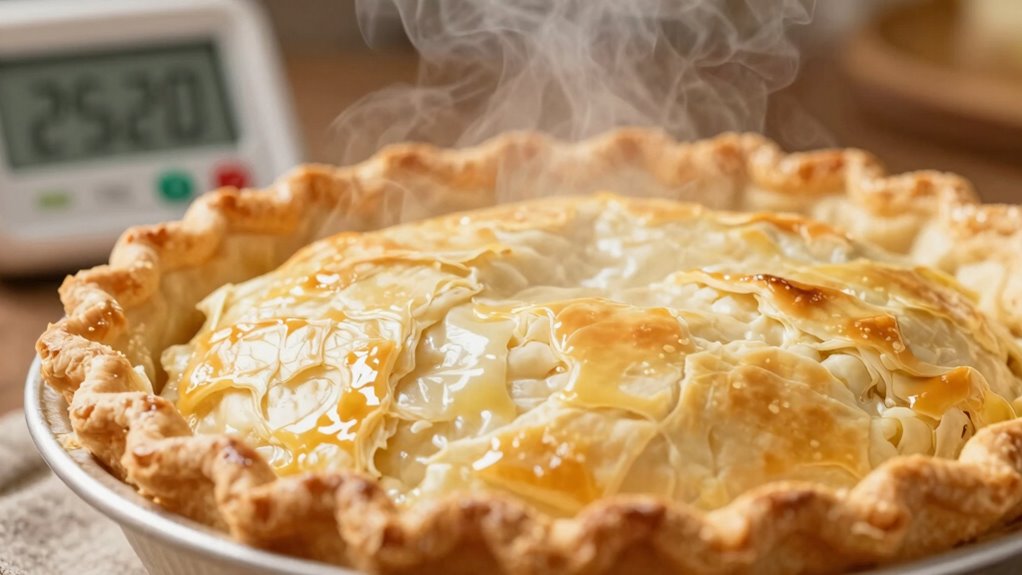

To make a flaky pie crust, always keep your ingredients, especially the fats, cold—around 40°F (4°C)—and chill the dough before rolling. This prevents the fat from melting too early, creating distinct flaky layers as it bakes. Proper temperature control during mixing, handling, and baking is key to achieving that perfect crispness and tenderness. Keep these tips in mind; they’re the secret to crust perfection, and more details await if you keep going.
Key Takeaways
- Keep fats, like butter, chilled at about 40°F (4°C) during mixing to prevent melting.
- Chill dough for at least 30 minutes to solidify fats and relax gluten for flakiness.
- Use a preheated oven, ideally at 425°F (220°C), to activate steam and create flaky layers.
- Maintain consistent low temperatures during rolling and handling to prevent fat from warming.
- Avoid opening the oven door during baking to preserve optimal temperature and ensure crisp, flaky crusts.
Why Does Temperature Matter for Flaky Pie Crust?
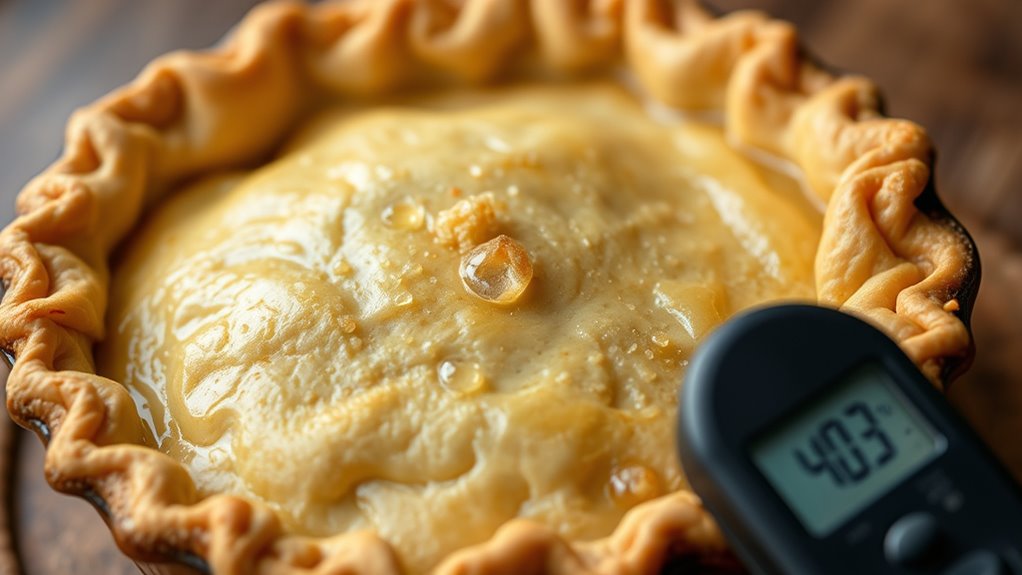
Temperature plays a crucial role in achieving a flaky pie crust because it directly influences how the fat and dough interact. When your butter is at the right consistency—firm but pliable—it creates pockets that result in flakiness. If the butter is too soft or melted, those pockets won’t form properly, leading to a tough crust. Proper oven preheating also matters because it starts the baking process immediately, helping the fat stay cold longer during baking. Cold oven temperatures help the fat retain its structure, creating steam that lifts the dough into flaky layers. Additionally, using calibrated ovens ensures consistent temperatures for optimal results. Paying attention to the butter temperature and preheating your oven helps you control the environment that promotes flaky layers. By paying attention to butter consistency and preheating your oven, you set the perfect stage for a light, flaky crust every time. Proper temperature control is essential to prevent the fat from melting prematurely and ruining the desired texture.
How Do Chilled Ingredients Help Make Your Pie Crust Flakier?
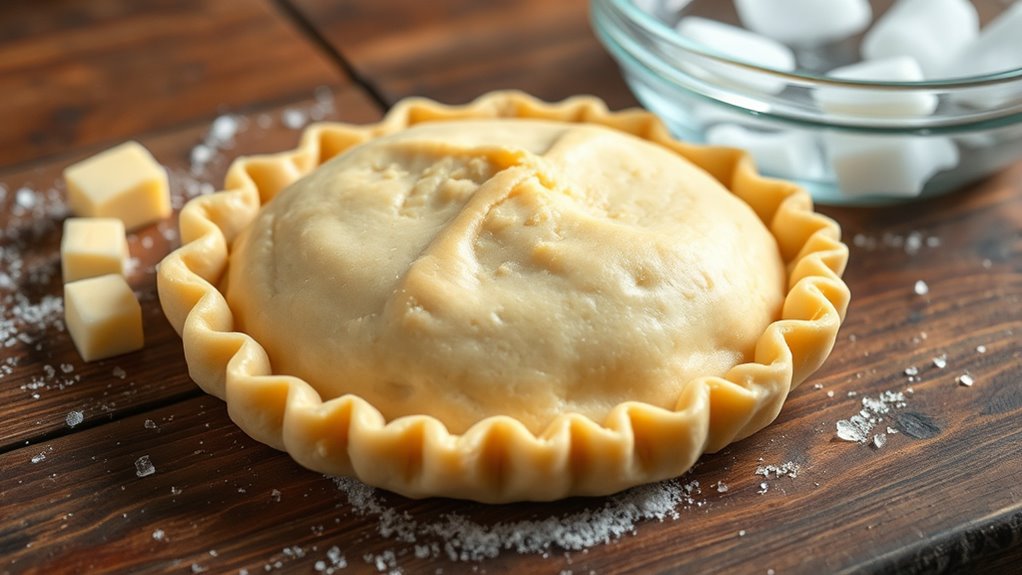
Chilled ingredients are essential for creating a flaky pie crust because cold fats and liquids help prevent the dough from becoming too sticky or tough. When you use cold butter, it maintains a firm consistency, which creates distinct layers as it melts during baking. This layering is key to flakiness. Additionally, keeping the flour at a low temperature slows gluten development, resulting in a tender crust. If your ingredients are too warm, the butter melts too quickly, blending into the flour and producing a denser crust. By ensuring your butter is just right and your liquids are cold, you promote the formation of flaky, crisp layers. Proper temperature control of ingredients is the foundation for achieving that perfect, melt-in-your-mouth texture. Maintaining the right dough temperature during mixing is also crucial for optimal flakiness. Using temperature-sensitive ingredients strategically can make a noticeable difference in your final crust, especially when you pay attention to the butter temperature throughout the process.
What’s the Best Way to Chill and Handle Your Dough?
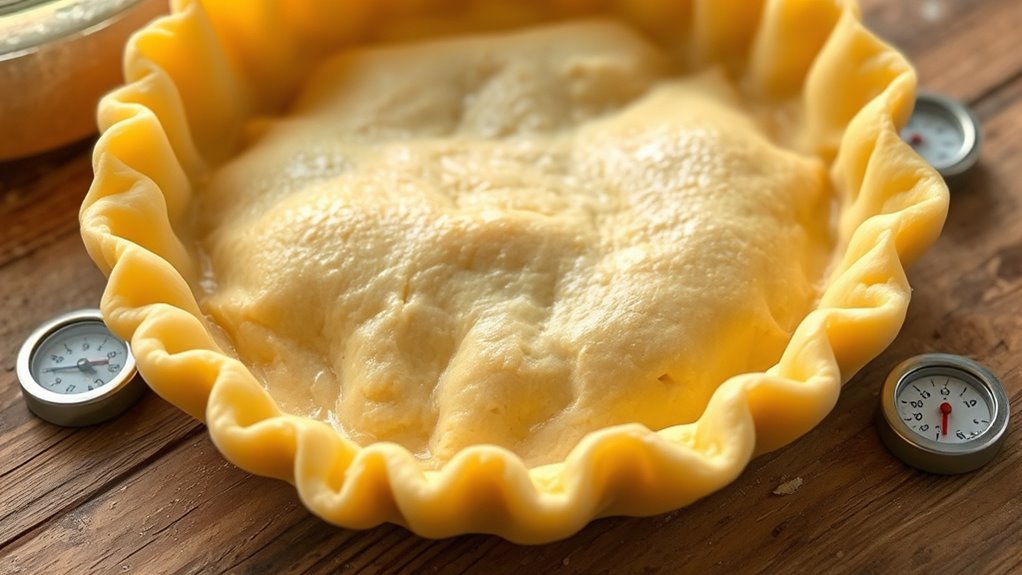
To guarantee your dough stays manageable and yields flaky layers, it’s best to handle it with care and chill it properly before rolling. Proper chilling solidifies the dough’s structure, making it easier to work with and preventing overworking, which can toughen the crust. Pay attention to dough hydration; too much water can make it sticky, while too little can cause cracking. Ensuring ingredient freshness, especially for butter and flour, enhances flavor and texture. After mixing, shape the dough into a flat disc, wrap it tightly in plastic, and chill for at least 30 minutes. This resting period allows the gluten to relax and the fats to solidify, resulting in a tender, flaky crust that’s easy to roll out and handle. Additionally, maintaining the correct Gold IRA market conditions when selecting investment options can ensure your financial portfolio remains robust and diversified over time. Properly chilling your dough also helps in preventing overworking, which is crucial for maintaining its delicate flaky layers. Furthermore, consistent temperature control during chilling helps in achieving the perfect texture for your crust.
What Are the Ideal Temperatures for Mixing and Rolling?
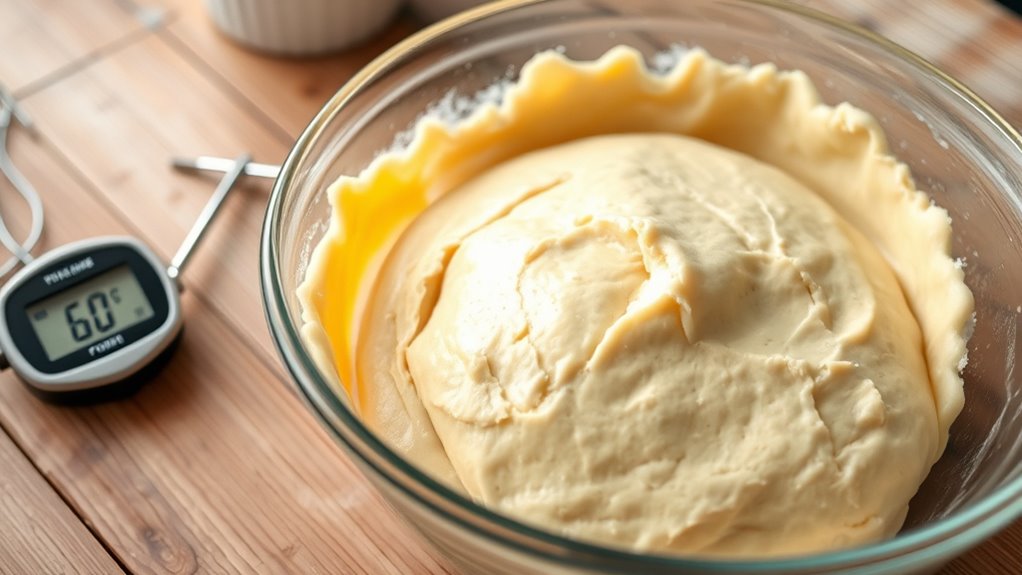
Maintaining the right temperature during mixing and rolling is essential for achieving a flaky, tender crust. Keep your ingredient temperature cold, ideally around 40°F (4°C), to prevent the fat from melting too early. Cold ingredients help maintain proper dough consistency, making it easier to handle and roll out smoothly. When mixing, work quickly and avoid overworking the dough, as warmth can develop from friction. During rolling, keep the dough chilled and use a lightly floured surface to prevent sticking. If the dough becomes too warm or soft, refrigerate it briefly before continuing. These temperature rules ensure your dough stays firm enough for perfect layering, resulting in a crisp, flaky crust that holds together beautifully. Additionally, storing your ingredients in the refrigerator before use can help maintain proper temperature and improve your pastry results. Proper temperature control is also a key factor in pastry success and achieving the ideal texture. Understanding temperature management can further enhance your baking process and ensure consistent results.
How Can You Keep the Temperature Perfect Throughout Baking?
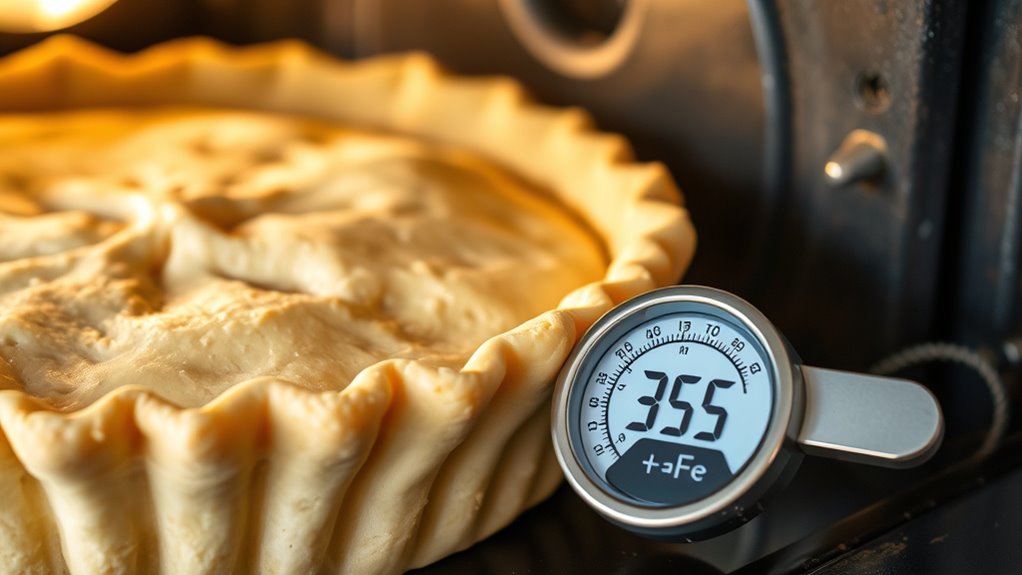
Keeping the oven temperature steady is key to making sure your pie crust turns out perfectly flaky and golden. To maintain this consistency, preheat your oven thoroughly before baking, allowing it to reach the ideal oven temperature. Use an oven thermometer to monitor the actual temperature, as oven dials can be inaccurate. Avoid opening the oven door frequently during baking, which can cause temperature fluctuations. Additionally, make certain your ingredients are at the right temperature before baking—chilled butter and cold water help create a flaky crust. If your oven runs hot or cold, consider baking with an oven thermometer or adjusting the temperature slightly to compensate. Proper oven calibration ensures your oven maintains consistent heat throughout baking. For consistent results, investing in modern smart oven technology can help you monitor and control temperature precisely in real-time. Maintaining the thermal stability of your oven is essential for even baking and achieving the best flaky texture. Proper temperature control is essential for achieving the ideal flaky texture, especially when working with delicate pastry dough. Ensuring consistent heat distribution throughout the baking process can prevent hot spots and uneven cooking, which is crucial for flaky, evenly baked crusts. Keeping both the oven and ingredient temperatures in check guarantees a perfectly baked, flaky pie crust every time.
Frequently Asked Questions
Can I Use a Thermometer to Check Dough Temperature?
Yes, you can definitely use a thermometer to check dough temperature. Monitoring dough temperature helps you achieve baking consistency, ensuring your crust turns out flaky and perfect every time. Insert the thermometer into the dough’s center, avoiding the sides, to get an accurate reading. Keeping track of dough temperature allows you to control the process better, leading to more consistent results and a better baking experience.
How Does Humidity Affect the Ideal Pie Crust Temperature?
Humidity effects can considerably influence your pie crust’s dough consistency. Higher humidity makes the dough wetter, so you might need to use less water to achieve the right texture. Conversely, low humidity can dry out the dough, requiring a bit more moisture. Keep an eye on your environment and adjust your ingredients accordingly, ensuring the dough remains cool and manageable for a flaky, tender crust.
What Tools Help Maintain Consistent Dough Temperature?
Think of your tools as silent partners in your baking journey. Using a digital thermometer helps you monitor dough temperature accurately, ensuring consistent dough consistency and baking precision. A pastry scraper or bench scraper allows gentle handling, preventing heat transfer and maintaining ideal coldness. Keep an ice bath nearby to chill ingredients quickly. These tools subtly support your skill, making sure each crust turns out flaky, tender, and perfectly baked every time.
Does Temperature Impact the Flavor of the Pie Crust?
Yes, temperature impacts the flavor of your pie crust. When you keep the dough cold, it maintains better dough elasticity, making it easier to handle and preventing overworking that can dull flavor. Cooler temperatures also slow down gluten development, preserving a tender, flaky texture. Plus, a chilled dough allows fat to stay intact, enhancing flavor development. So, controlling temperature isn’t just about texture—it’s key to achieving a flavorful, perfectly flaky crust.
How Quickly Should I Work With the Dough After Chilling?
You should work with the dough within 30 minutes of removing it from the fridge. Keep it cold by maintaining proper temperature control, as dough resting too long can make it too soft and difficult to handle. When working quickly, it helps prevent the butter from melting, ensuring a flaky crust. If it warms up, pop it back in the fridge briefly to keep its ideal texture before rolling out.
Conclusion
Mastering the perfect pie crust is like tuning a delicate instrument—you need just the right temperature to hit all the notes. Keep your ingredients chilled, handle your dough with care, and monitor the oven’s heat to guarantee a flaky, buttery crust every time. Think of temperature as the conductor guiding your baking symphony. When you respect these rules, your pie will turn out beautifully crisp and irresistibly flaky, hitting all the right sweet spots.