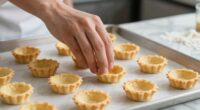
To avoid a soggy bottom when blind baking, first keep your dough chilled and handle it gently to prevent shrinkage. Use pie weights or dried beans to keep the crust flat and prevent bubbles, and always dock the crust with a fork to let steam escape. Bake at the right temperature until golden, then cool completely before adding fillings. For more tips, discover how to master each step for a perfectly crisp crust every time.
Key Takeaways
- Line the crust with parchment or foil and use weights to prevent shrinking and puffing during baking.
- Chill the dough thoroughly to reduce shrinkage and ensure even baking.
- Prick the crust with a fork (docking) to allow steam to escape and prevent bubbling.
- Bake at the correct temperature, monitoring to avoid burning or sogginess.
- Cool the crust completely before adding fillings and consider applying a moisture barrier like egg wash.
pie weights for blind baking
As an affiliate, we earn on qualifying purchases.
As an affiliate, we earn on qualifying purchases.
What Is Blind Baking and When Should You Do It?
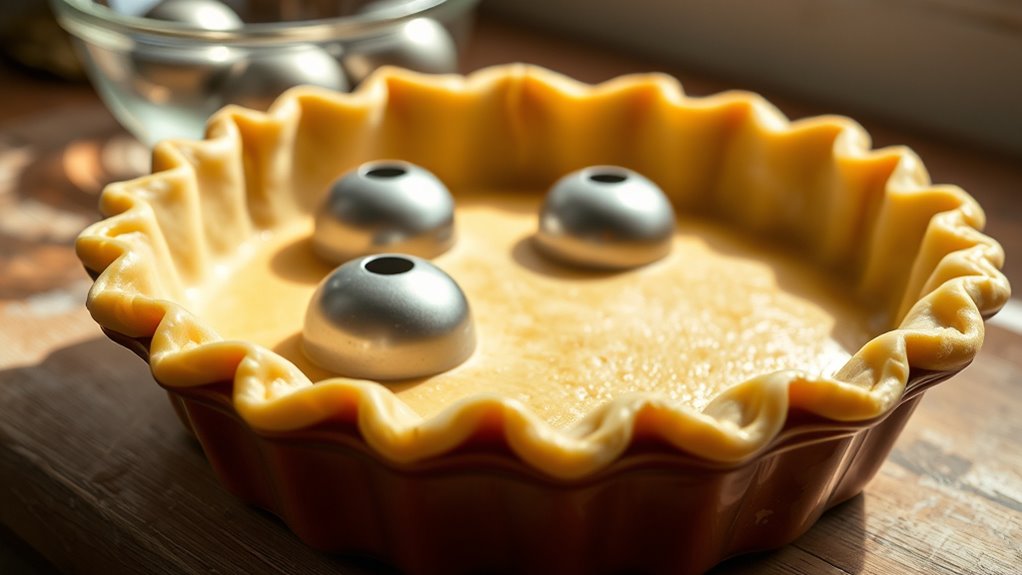
Have you ever wondered why some pie crusts turn out perfectly crisp and flaky while others end up soggy? The secret often lies in blind baking, a technique where you bake the crust before adding any pie fillings. You should contemplate blind baking when using wet or custard-based fillings that release moisture, which can make the crust soggy. To do this effectively, you need the right baking tools, like pie weights, parchment paper, and a sturdy pie dish. These tools help keep the crust flat and prevent puffing or shrinking during baking. Proper baking techniques are essential to achieve the desired crispness and avoid sogginess. Additionally, understanding the baking process can help you troubleshoot issues like shrinking or uneven baking. Using heat control during blind baking can also make a significant difference in preventing sogginess. For best results, controlling the baking temperature is crucial to avoid over-baking or under-baking your crust. Mastering baking timing can further ensure the crust remains crisp and doesn’t become soggy once filled. By understanding when and how to blind bake, you can guarantee your pie crust stays crisp, no matter what filling you choose.
parchment paper for baking crust
As an affiliate, we earn on qualifying purchases.
As an affiliate, we earn on qualifying purchases.
How to Follow the Basic Steps of Blind Baking

Once you’ve understood when to blind bake, it’s important to follow the proper steps to guarantee a perfect crust. Start by lining your pie with parchment paper or aluminum foil, then fill it with baking weights or dried beans to prevent shrinking. Use the right baking accessories, like a tart pan or adjustable pie dish, for even results. Keep an eye on your oven temperature and bake until the edges are golden. For pie crust tips, chill the dough beforehand and avoid overworking it. Carefully remove the weights and lining, then return the crust to the oven for a few minutes if needed to crisp it up. Remember, consistent technique ensures a soggy-free, flaky crust every time. Navigation and mapping explainers can help you understand how to position your oven rack for even baking. Additionally, understanding baking temperatures can help you fine-tune your process for optimal results. To prevent a soggy bottom, consider using proper oven heat distribution techniques for even baking and crispier crusts, which can be achieved with innovative smart oven settings and temperature control features.
dried beans for pie crust
As an affiliate, we earn on qualifying purchases.
As an affiliate, we earn on qualifying purchases.
How to Choose the Best Crust for Blind Baking

Choosing the right crust is essential for a successful blind bake, as it sets the foundation for your finished pie. Different pie crust textures, like flaky, tender, or sturdy, serve various purposes depending on your filling. For a crisp, structure-supporting crust, opt for a sturdy, slightly less flaky dough. If you want a tender, melt-in-your-mouth texture, choose a flaky crust with ample fat. Flavor enhancements, such as adding sugar, spices, or herbs, can elevate your crust and complement your filling. Consider the overall flavor profile and texture you desire; a well-chosen crust ensures the blind bake supports the final pie without sogginess. Select a crust that balances structure, flavor, and texture to achieve perfect results, and remember that ergonomics—such as proper rolling and handling techniques—can make the process more comfortable and efficient. Additionally, understanding water content in your dough can help you fine-tune the crust’s texture and stability during blind baking. Paying attention to crust consistency can prevent common issues like shrinking or cracking during baking. Being aware of dough hydration levels can also influence how well your crust holds its shape and resists sogginess. Proper temperature control during handling and baking can further improve crust quality and prevent undesired outcomes.
adjustable pie dish
As an affiliate, we earn on qualifying purchases.
As an affiliate, we earn on qualifying purchases.
Preparing Your Dough for Perfect Blind Baking
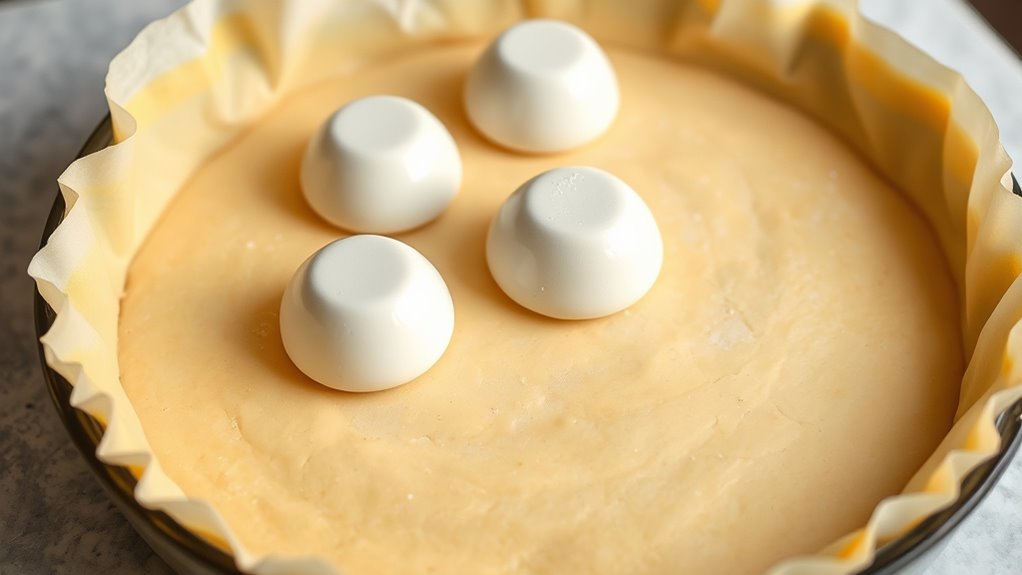
To get your crust just right, start by chilling the dough thoroughly to prevent shrinkage and make certain of even baking. Next, line your dough with parchment paper and weigh it down to keep it flat and prevent puffing. Finally, handle the edges gently to maintain a clean, professional look and avoid tearing during the process. Incorporating a cold crust can also help improve overall texture and prevent sogginess.
Chilling the Dough Properly
Chilling the dough properly is a crucial step to guarantee your blind baked crust turns out crisp and holds its shape. Dough chilling helps relax gluten, making the crust easier to work with, and ensures better crust consistency. To achieve ideal results, consider these tips:
- Wrap the dough tightly to prevent moisture loss during chilling
- Chill for at least 30 minutes, or longer for better flavor and texture
- Use enough flour when rolling out to minimize sticking
- Avoid rushing the process; patience ensures a sturdy, even crust
- Proper dough chilling enhances the overall quality of your baked goods by solidifying the fats, which helps prevent shrinking and sogginess during baking. Additionally, controlling the temperature and environment during chilling can significantly improve the final crust texture. Properly maintaining the dough’s temperature is essential to prevent melting fats that could lead to a soggy crust. For consistent results, consider using a cool, draft-free space to keep the dough at an optimal temperature. Understanding the importance of consistent temperature control can further help in achieving a uniformly crisp crust. By following these steps, you set the foundation for a perfectly baked, crisp crust that stands up to filling and time.
Using Parchment and Weights
Once your dough has been properly chilled, the next step is to prepare it for blind baking by using parchment paper and weights. Place a sheet of parchment directly over your pie crust, then add weights like dried beans or pie weights. This prevents the crust from puffing up or shrinking, guaranteeing even baking and maintaining pie crusts’ shape for ideal filling compatibility. The weights keep the crust flat and prevent air bubbles, resulting in a crisp, sturdy base. Use the following ideas to guide your setup:
| Step | Material | Purpose |
|---|---|---|
| Line with parchment | Parchment paper | Protects dough and prevents sticking |
| Add weights | Dried beans/weights | Keep crust flat and prevent puffing |
| Bake with weights | Oven | Achieves even baking and crispness |
| Remove weights | After initial bake | Ready for filling |
| Check crust | Visual inspection | Ensure even, golden color |
Additionally, monitoring the temperature during baking can help prevent overbaking or underbaking the crust. Proper pre-baking techniques are essential for a successful crust that holds up to moist fillings. Using accurate oven temperature is also crucial to avoid uneven baking and achieve a uniformly crisp crust.
Handling Edges Carefully
Handling the edges carefully is essential to guarantee your blind baked crust turns out perfectly. Proper edge handling ensures even crust thickness and prevents cracks or tears. When working with your dough, gently lift and fold the edges, maintaining consistent thickness throughout. Use your fingers or a fork to crimp and reinforce the crust’s perimeter, avoiding sharp pulls that could weaken the edges.
Remember, good edge handling creates a stable structure for your filling. Consider these tips:
- Keep the crust thickness uniform for even baking
- Avoid stretching the dough to prevent shrinkage
- Pinch or crimp edges for a decorative, secure finish
- Handle edges gently to prevent tears or thinning spots
What Are the Key Techniques to Prevent a Soggy Bottom?
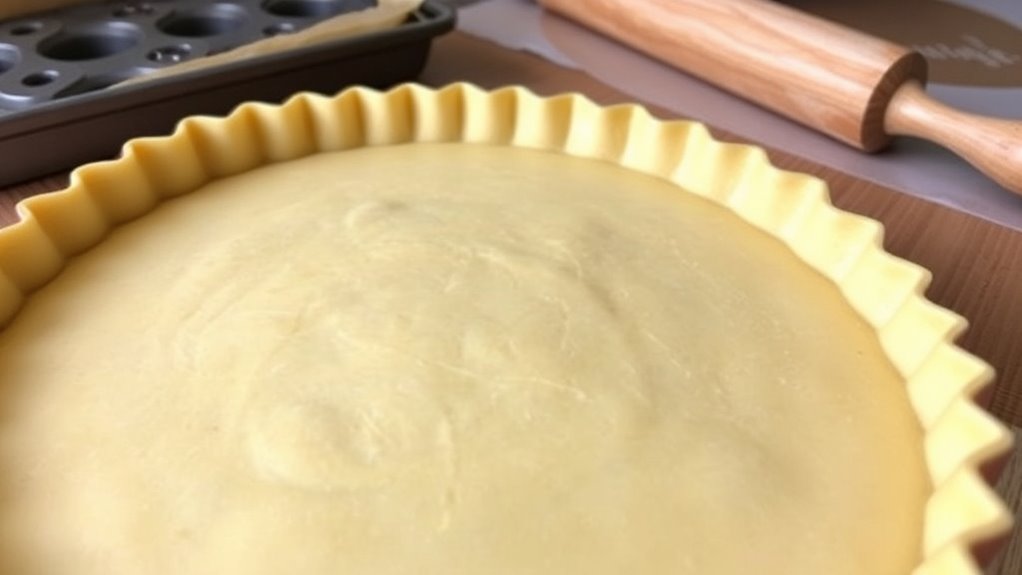
Ever wonder how to keep your pie crust crisp and prevent that dreaded soggy bottom? The key is to use proper blind baking techniques. Start by chilling your dough thoroughly, which helps prevent shrinkage and creates a firm base. When pre-baking, prick the crust with a fork to allow steam to escape, reducing puffing. To prevent sogginess, avoid adding fruit fillings or decorative toppings until after the crust has cooled completely; moisture from these ingredients can seep in and soften the crust. Consider brushing the crust with a thin layer of egg wash or melted chocolate before baking; this acts as a barrier against moisture. Proper oven temperature and baking time are vital too—they ensure a golden, crisp bottom that withstands wet fillings.
How to Use Weights and Fillers for a Flatter, Crisp Crust
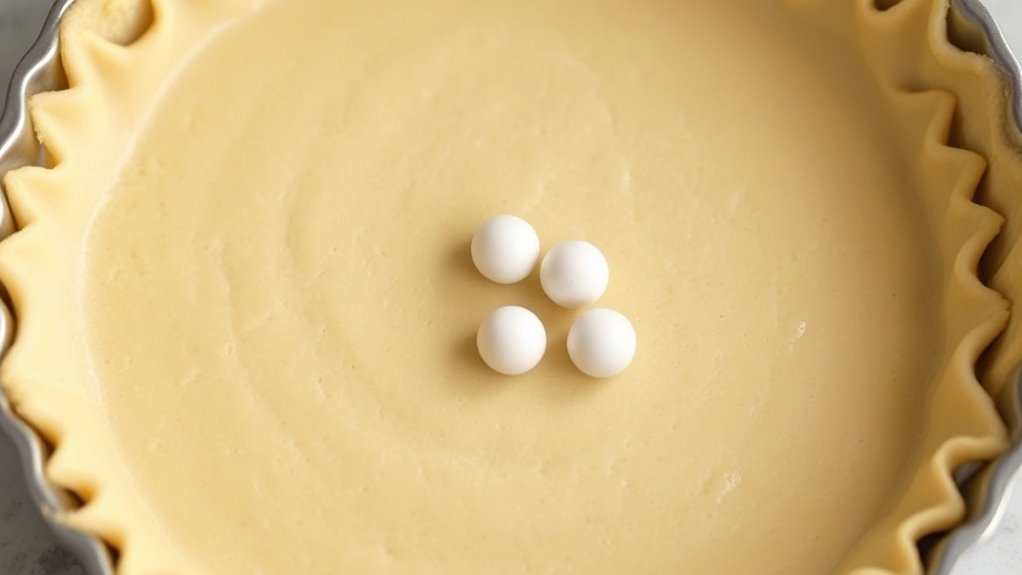
Using weights and fillers is essential for achieving a flatter, crisper crust during blind baking. They help prevent puffiness and uneven textures, guaranteeing your crust stays firm. To optimize crust textures, consider filling alternatives like dried beans or pie weights, which distribute pressure evenly. These options are reusable and don’t alter the flavor. When applying weights, evenly spread them across the crust’s surface to avoid uneven thickness. Remember, the key is to balance weight placement with your desired crust outcome. Using proper fillers ensures a smooth, uniform base, reducing the risk of sogginess. By selecting the right weights and fillers, you can confidently create a crust that’s perfectly flat and crisp every time.
Avoid These Common Mistakes When Blind Baking

Avoid common pitfalls when blind baking by paying attention to a few key mistakes. Overloading your crust can prevent proper baking, and insufficient docking may cause bubbles. Make sure you set the right temperature to guarantee a crisp, evenly baked crust.
Overloading the Pie Crust
Overloading the pie crust with too much filling or heavy weights can cause it to become soggy, cracked, or misshapen during blind baking. When you add too much pie filling, the crust struggles to stay crisp, and excessive weight can distort its shape. To prevent this, pay attention to crust thickness, ensuring it’s even and sturdy enough to support the filling.
Remember these key points:
- Use a moderate amount of filling to avoid excess moisture.
- Keep the crust evenly rolled to ensure consistent baking.
- Avoid overloading the crust, which can cause cracks.
- Use appropriate weights that won’t crush the crust or hinder airflow.
Balancing these elements helps maintain a perfectly baked, crisp crust free of sogginess or damage.
Insufficient Docking Technique
When you don’t properly dock your pie crust, it can lead to uneven baking and unwanted bubbles or puffiness. The docking technique involves pricking holes into the crust during crust preparation to allow steam to escape. Without sufficient docking, trapped air and steam create pressure, causing the crust to puff up or develop bubbles. To prevent this, use a fork or a docking tool to pierce the crust evenly across the bottom and sides before blind baking. Proper crust preparation with consistent docking ensures the crust bakes evenly and stays flat. Skipping or poorly executing this step compromises the final texture, making it difficult to achieve a crisp, professional-looking pie. Always allocate time for thorough docking to avoid these common blind baking mistakes.
Incorrect Baking Temperature
Using the correct baking temperature is essential for achieving a perfectly baked blind crust. An incorrect baking temperature can lead to a soggy or over-baked crust, ruining your effort. Always check your oven calibration regularly, as ovens can run hot or cold over time. This ensures you’re baking at the right temperature for ideal results. Keep these points in mind:
- Avoid guesswork; use an oven thermometer to verify temperature accuracy.
- Baking at too high a temperature risks burning the crust before filling is cooked.
- Too low a temperature may result in insufficient baking and a soggy bottom.
- Adjust your oven settings if calibration issues are detected to maintain consistent results.
Proper temperature control is key to a crisp, golden blind crust every time.
How to Achieve a Golden, Flaky Crust Every Time
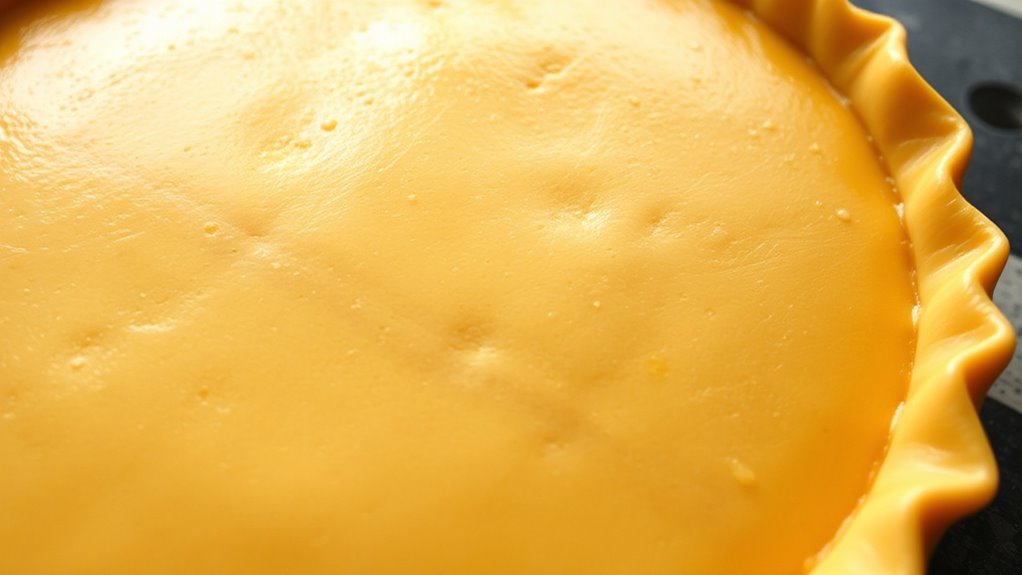
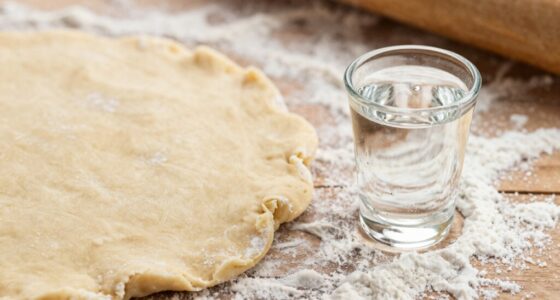
To achieve a golden, flaky crust every time, start with properly chilled butter and cold water to keep the fat from melting prematurely. This ensures a tender, layered crust that browns evenly. Use pastry storage techniques to maintain freshness and prevent moisture loss before baking. For crust alternatives, consider adding a touch of vinegar or vodka to help keep the dough tender and flaky.
| Tip | Reason |
|---|---|
| Keep ingredients cold | Prevents butter from melting during handling |
| Use pastry storage | Maintains dough’s texture and freshness |
| Chill dough thoroughly | Ensures even baking and flakiness |
| Properly weight crust | Prevents puffing and uneven browning |
| Choose crust alternatives | Offers different textures and flavors |
How to Fix Common Problems During Blind Baking
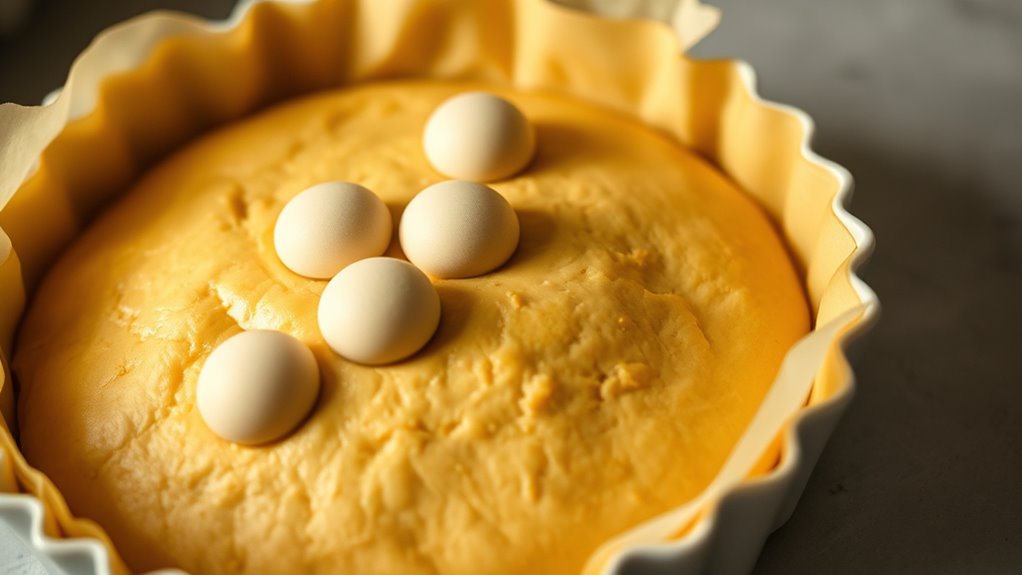
Even with careful preparation, issues can arise during blind baking that affect your crust’s quality. If your dough is too sticky or crumbly, it can lead to uneven baking or tears. To fix this, check your dough consistency and adjust with a little more flour or water as needed. Oven calibration is often overlooked but essential; an oven that’s too hot or cold can cause overbaking or underbaking. To address this:
- Use an oven thermometer to ensure accurate temperatures
- Rotate the crust midway for even baking
- Use pie weights properly to prevent puffing or shrinking
- Adjust baking time based on oven performance
Frequently Asked Questions
Can I Blind Bake Without Using Pie Weights?
Yes, you can blind bake without pie weights by using alternative techniques and weight substitutes. You might use dried beans, rice, or sugar to hold the crust down. Simply line your crust with parchment paper or aluminum foil, fill it with your chosen substitute, and bake. These options work well to prevent the crust from puffing up or shrinking, ensuring a crisp, even base for your tart or pie.
How Do I Know When the Crust Is Fully Baked?
Perfectly progressing pies require patience! You’ll know your crust is fully baked when the dough turns a golden hue and feels firm to the touch. The color signals the crust’s completion, while firmness confirms it’s crisp and sturdy. Keep an eye on the edges—they should be deeply golden, not pale or soft. Trust your senses, and you’ll bake a beautiful, baked-to-perfection crust every time!
Is Pre-Baking Necessary for All Types of Fillings?
Pre-baking isn’t necessary for all fillings, but it’s recommended when your crust is thin or when your filling isn’t very liquid. For thicker or highly liquid fillings, pre-baking helps guarantee the crust stays crisp and prevents sogginess. Adjust your crust thickness and consider filling compatibility to decide if pre-baking is needed. This way, your pie will have a perfect texture, avoiding soggy bottoms and ensuring a delicious result.
What Are Alternative Methods to Prevent a Soggy Bottom?
Ever wondered how to keep your crust crisp? You can prevent a soggy bottom by chilling your dough before baking and using a barrier like parchment paper or metal weights during pre-baking. Adjust your baking temperature to guarantee the crust sets properly. These methods improve dough texture and help avoid moisture seeping in, so your pie remains flaky and delicious. Why settle for soggy when perfection is just a few steps away?
How Long Can I Store Pre-Baked Crusts Before Filling?
You can store pre-baked crusts for up to 2 days at room temperature if covered tightly, but for longer storage, keep them in the refrigerator for up to 4 days. To maintain crust freshness, wrap them well to prevent exposure to air and moisture. Avoid freezing unless you’re planning to fill and bake immediately afterward, as freezing may alter the texture and reduce shelf life.
Conclusion
Just like the steady hand of a master painter avoiding smudges, mastering blind baking guarantees your crust stays crisp and beautiful. With patience and attention to detail, you’ll turn your pie into a work of art, free from soggy bottoms. Remember, every great baker faces challenges—it’s how you handle them that makes your creations legendary. So, embrace the process, and soon you’ll be baking with the confidence of a true culinary artist.