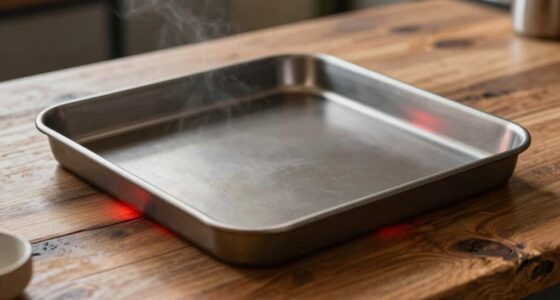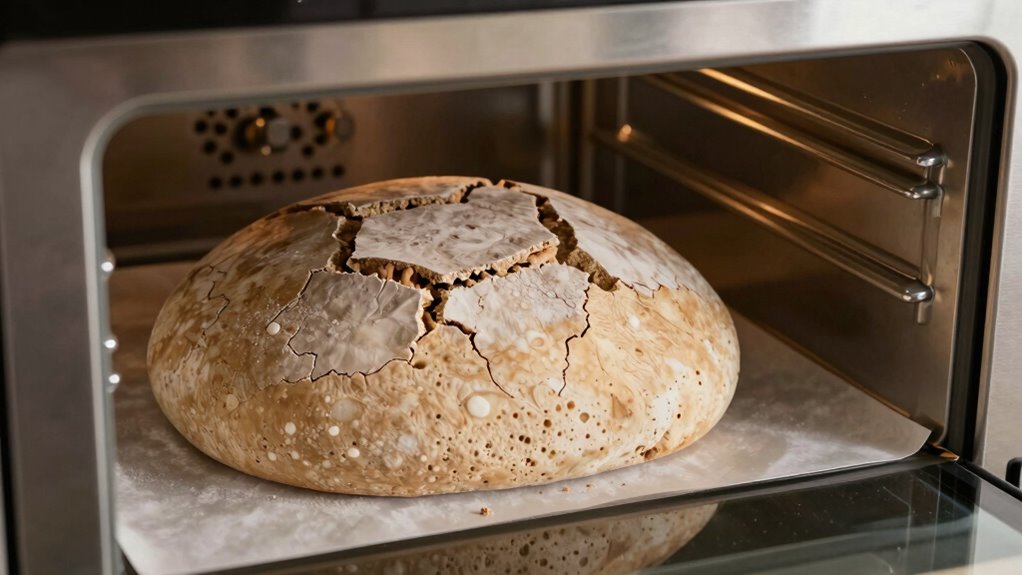
Your stone placement is key to achieving a strong oven spring. When you position it correctly, it maximizes heat reflection and even heat transfer, helping your dough expand rapidly and uniformly. If it’s misplaced, heat reflects unevenly, causing uneven rising and denser bread. Proper placement traps thermal energy, supporting yeast activity during critical early baking moments. Keep exploring how perfect positioning can elevate your baking results even further.

Get baking supplies delivered free with Prime
- Fast, free delivery on millions of items
- Prime Video, Amazon Music and more included
- Member-only deals all year
Key Takeaways
- Proper stone placement ensures even heat transfer, promoting uniform oven spring across the loaf.
- Incorrect positioning can cause uneven heat reflection, leading to inconsistent dough expansion.
- Placing the stone on the middle rack maximizes heat exposure for optimal oven spring.
- Properly positioned stones reflect heat, supporting rapid and vigorous dough rise early in baking.
- Accurate stone placement maintains stable baking temperatures, enhancing dough fermentation and oven spring.

When baking bread, the placement of the stone in your oven can considerably influence your oven spring—the rapid rise of dough during the initial baking phase. A well-positioned stone ensures even heat distribution, which is essential for achieving ideal dough fermentation and a good rise. If the stone is placed too high or too low, it can cause uneven heat transfer, affecting how the dough expands. Proper placement allows the baking temperature to be consistent across the loaf, promoting a strong oven spring and a well-developed crust.
Your goal is to create an environment where heat is absorbed slowly and radiates evenly onto the dough. When the stone is positioned correctly—typically on the middle rack—you maximize heat exposure, encouraging the dough to rise quickly and uniformly. This is because the heat directly influences dough fermentation, speeding up the yeast activity early in the bake. If the stone is too close to the heating element, it might cause scorching or uneven browning, disrupting the dough’s rise and creating a dense crumb. Conversely, if it’s too far away, the heat might not be intense enough to trigger a rapid oven spring, resulting in a flatter loaf.
The baking temperature plays a critical role in how your dough responds during baking. A properly placed stone helps maintain a consistent temperature around the dough, which is essential for controlling dough fermentation and achieving a desirable oven spring. When the temperature is just right, the yeast activity peaks at the perfect moment, producing gases that expand the dough quickly before the crust sets. If the stone placement causes uneven heating, this process becomes compromised, and your bread might not develop the desired volume or texture.
Furthermore, the initial placement of the stone impacts how heat interacts with the dough during the first few minutes of baking—a key period for oven spring. During this time, the dough is most responsive to heat, and the right stone position can make a significant difference. A well-placed stone helps trap and reflect heat, leading to a more vigorous rise. It also supports even heat transfer, which is crucial for consistent dough fermentation before baking, ensuring that yeast activity is ideal when the oven heat peaks. Recognizing heat reflection can help bakers optimize oven settings and stone positioning for better results. Understanding thermal mass and how it influences heat retention can further enhance the baking process for improved oven spring. Additionally, adjusting the stone’s position based on oven temperature stability can help achieve more consistent results. Proper understanding of heat distribution can make a notable difference in achieving perfect bread every time.
As an affiliate, we earn on qualifying purchases.
Frequently Asked Questions
How Does Stone Type Influence Oven Spring?
Your choice of stone material greatly influences oven spring because different baking surfaces conduct heat differently. A pizza stone made from cordierite or ceramic retains and radiates heat evenly, boosting oven spring by creating a consistent, high-temperature environment. Conversely, a softer or less conductive surface might not transfer heat as effectively, limiting dough expansion. So, selecting the right stone type guarantees ideal heat transfer, enhancing your bread or pizza’s rise during baking.
Can Stone Placement Affect Bread Crust Color?
Think of stone placement like a painter’s brushstroke—careful and deliberate. Yes, where you position the stone can influence your bread’s crust color. When placed closer to the heat source, it radiates more heat, encouraging a deeper, richer crust color and enhancing crust texture. Conversely, if placed farther away, the crust may turn out lighter and softer. Proper placement helps you control the bread crumb and achieve your desired crust finish.
Does Stone Size Impact Oven Spring Efficiency?
Yes, stone size impacts oven spring efficiency. Larger stones help maintain temperature consistency, providing a stable, hot surface that encourages dough expansion. Smaller stones may cool down quickly, reducing oven spring. Additionally, surface texture matters; a rougher stone creates more surface area, promoting better heat transfer. To maximize oven spring, choose a stone that balances size and texture, ensuring consistent heat and ideal dough expansion during baking.
How Quickly Should the Stone Be Preheated?
You should preheat your stone for at least 45 minutes to an hour, ensuring temperature consistency throughout. This duration allows the stone to reach and stabilize at the ideal baking temperature, usually around 500°F (260°C). Rushing the process can lead to uneven heating, negatively impacting oven spring. A properly preheated stone helps your dough rise quickly and evenly, resulting in a better crust and overall baked quality.
Is There an Optimal Stone Temperature for Best Oven Spring?
You should aim for a stone temperature around 500-550°F for the best oven spring. Maintaining temperature consistency is key, so preheat your stone thoroughly. High thermal conductivity helps transfer heat evenly to your dough, encouraging ideal rise. Avoid hot spots by ensuring uniform heating, which leads to consistent oven spring. Using a reliable thermometer can help you monitor and maintain the perfect temperature, resulting in well-risen, crusty bread.
As an affiliate, we earn on qualifying purchases.
Conclusion
By carefully placing your stone, you can markedly enhance your oven spring, resulting in a better rise and crust. Some might think it’s just about positioning, but it’s about understanding how heat transfer and moisture levels interact with your stone. Don’t be discouraged if it takes a few tries—experimenting with placement helps you master the process. With patience and attention, you’ll consistently achieve that perfect, airy loaf with a beautifully crisp crust.
As an affiliate, we earn on qualifying purchases.
oven stone for optimal oven spring
As an affiliate, we earn on qualifying purchases.
As an affiliate, we earn on qualifying purchases.
Halloween Picks
halloween
As an affiliate, we earn on qualifying purchases.