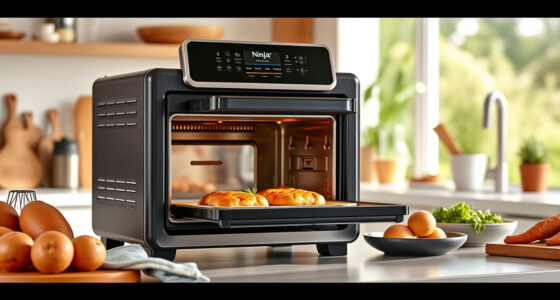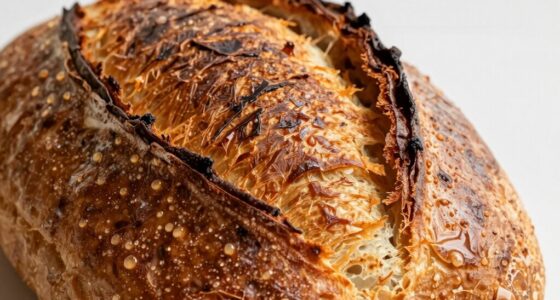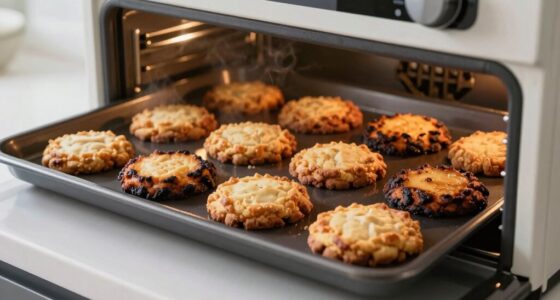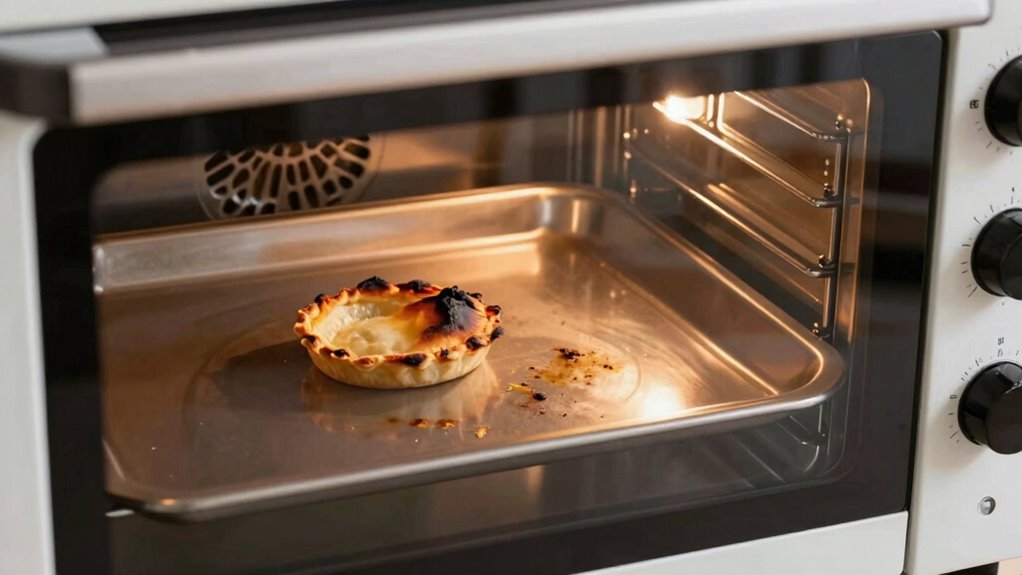
Small ovens burn bottoms faster mainly because their poor insulation allows heat to escape easily, creating uneven temperature distribution. This causes heat to concentrate near the bottom, leading to hot spots and burning. Without enough insulation, the heat isn’t evenly spread, making the bottom hotter than the rest. If you want to prevent this, understanding how insulation and heat flow work can help, and you’ll discover more effective tips if you keep exploring.

Get baking supplies delivered free with Prime
- Fast, free delivery on millions of items
- Prime Video, Amazon Music and more included
- Member-only deals all year
Key Takeaways
- Insufficient insulation in small ovens causes heat to escape, leading to uneven heat distribution and hot spots at the bottom.
- Poor heat retention concentrates warmth near the base, increasing the risk of burning baked goods.
- Lack of advanced insulation materials allows heat to escape, reducing temperature stability and causing bottom burning.
- Uneven heat buildup from design flaws makes the bottom hotter than the top, resulting in faster burning of items placed there.
- High baking temperatures amplify heat concentration at the bottom, accelerating burns without proper insulation.
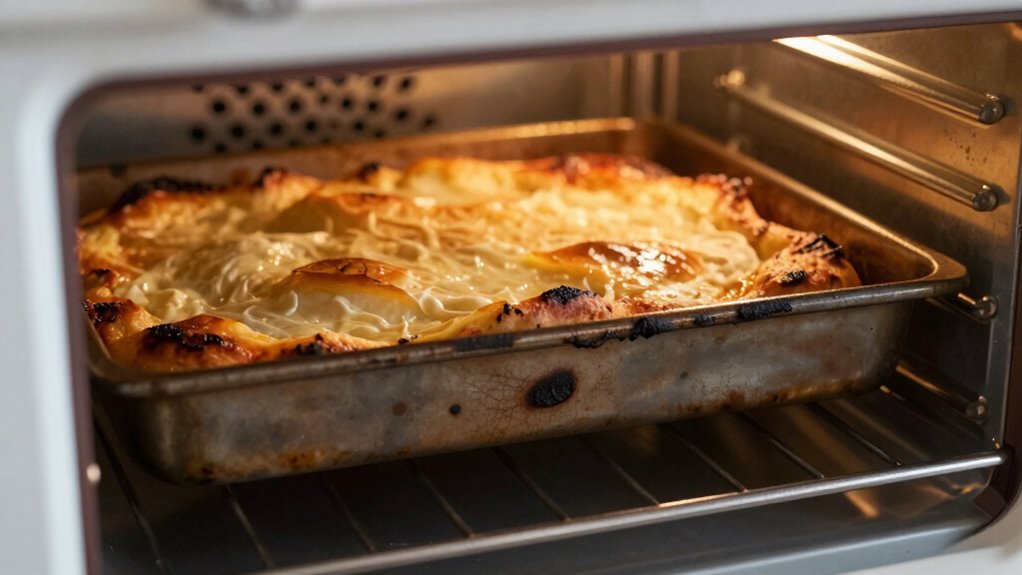
If you’ve noticed that your small oven tends to burn the bottoms of your baked goods more quickly, you’re not imagining things. This issue often stems from how heat is distributed and retained inside the oven, primarily influenced by oven insulation and baking temperature. Small ovens typically have less effective insulation compared to larger models. Without sufficient insulation, heat escapes more easily, causing uneven heat distribution. As a result, the bottom of the oven can become overly hot, making it easy for baked goods to burn on the bottom before the rest is properly cooked.
One major factor is that small ovens often lack advanced insulation materials, which means they can’t maintain a consistent temperature as well as larger, more insulated ovens. When the oven’s insulation isn’t up to par, heat concentrates near the bottom, creating hot spots that cause the bottoms of cookies, bread, or pastries to burn quickly. This uneven heat buildup is especially problematic when baking at higher temperatures, where the heat intensifies the problem. Simply put, if you set your oven too high, the heat at the bottom can become excessively intense, cooking the bottom faster than the rest of your baked item.
Small ovens often lack proper insulation, causing uneven heat and burning bottoms quickly.
Adjusting your baking temperature can help mitigate this issue. Lowering the temperature slightly can reduce the risk of burning the bottoms while still allowing your baked goods to cook through evenly. It’s a common mistake to assume that higher temperatures will speed up baking, but with small ovens, it often backfires because of uneven heat distribution. By keeping the temperature moderate, you give your baked goods a better chance to cook evenly without burning on the bottom. Also, consider preheating your oven longer to ensure the heat is stable before you start baking, which helps prevent sudden temperature spikes at the bottom.
Another tip is to use oven accessories like baking stones or heavy-duty pans that help distribute heat more evenly. These tools can act as a buffer and prevent direct heat from scorching the bottom. Additionally, placing baked goods on the middle rack rather than the bottom can reduce direct heat exposure. Regularly checking your oven’s temperature with an external thermometer can also reveal if it runs hotter than the dial indicates, allowing you to make necessary adjustments. Understanding oven insulation and its role in heat retention can help you better manage these issues and achieve more evenly baked results. Recognizing that heat distribution is often uneven in small ovens can help you choose the best strategies to improve your baking outcomes. Moreover, incorporating proper baking techniques can significantly enhance your results despite limitations in oven design. Being aware of how heat loss occurs in smaller models can also guide you in optimizing your baking process for better consistency. Additionally, using an oven thermometer can help you monitor and adjust for temperature fluctuations, ensuring more precise baking conditions.
As an affiliate, we earn on qualifying purchases.
Frequently Asked Questions
Do All Small Ovens Have the Same Heating Element Design?
Not all small ovens have the same heating element design. Some use different heating element materials, which affect heat distribution and durability, while others may have varying oven insulation levels, impacting how evenly heat spreads. These differences can cause certain models to heat unevenly, leading to burnt bottoms. So, if you’re experiencing this issue, it’s worth checking the specific design features of your oven, including its heating elements and insulation quality.
How Can I Tell if My Oven’s Thermostat Is Faulty?
Imagine you’re in a vintage kitchen, but your oven’s acting up. To tell if your thermostat’s faulty, check for uneven cooking or temperature inconsistencies. Use an oven thermometer to compare actual temperatures with the dial. If they don’t match, your thermostat calibration might be off. Also, inspect the temperature sensor; a faulty sensor can cause inaccurate readings, leading to improper heating. Replace or recalibrate as needed to restore proper function.
Are There Specific Brands More Prone to This Issue?
Some brands with lower reliability or limited warranty coverage tend to have more issues with uneven heating or burning bottoms. For example, budget or lesser-known brands often lack consistent quality, making them more prone to this problem. To avoid frustration, research brand reliability and check warranty coverage before purchasing. Investing in reputable brands with solid warranties can help guarantee your oven heats evenly and reduces the chances of burning your baked goods.
Does Oven Age Affect the Likelihood of Burning Bottoms?
Yes, oven age can impact how often you burn bottoms. As your oven gets older, its insulation may degrade, causing uneven heat distribution. This often results in hotspots where baking temperature isn’t consistent, leading to burnt bottoms. To prevent this, regularly check your oven’s insulation and adjust your baking temperature accordingly. Proper maintenance helps guarantee even baking and reduces the risk of burning your baked goods at the bottom.
Can Oven Rack Position Influence Burning Problems?
Yes, your oven rack position can be a game-changer in preventing burning problems. Proper rack positioning guarantees better heat distribution, like a conductor guiding an orchestra. Placing your dish too low can expose it to intense heat, causing the bottom to burn. Moving the rack higher or adjusting its position allows heat to circulate evenly, protecting your baked goods from scorching and ensuring they cook perfectly every time.
oven heat distribution accessories
As an affiliate, we earn on qualifying purchases.
As an affiliate, we earn on qualifying purchases.
Conclusion
Remember, a stitch in time saves nine. Small ovens heat up quickly and may have uneven heat distribution, causing the bottoms of your baked goods to burn faster. To prevent this, keep an eye on your oven’s temperature, use baking sheets to insulate, and rotate your treats midway. By understanding your oven’s quirks, you’ll get better results every time. Don’t let small setbacks ruin your baking—sometimes, it’s just a matter of working smarter, not harder.
As an affiliate, we earn on qualifying purchases.
As an affiliate, we earn on qualifying purchases.
Fall Picks
fall essentials
As an affiliate, we earn on qualifying purchases.