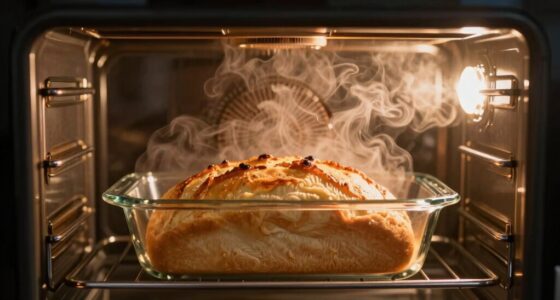
Your oven’s display might show a different temperature than what’s really inside, but that’s normal. Over time, ovens can drift from their original calibration, making the actual heat warmer or cooler than what the screen indicates. Regular calibration with a trusted thermometer can fix this and guarantee consistent results. Deteriorating heating elements or poor insulation can also cause inaccuracies. If you want to understand how to get your oven back on track, keep exploring the details below.

Get baking supplies delivered free with Prime
- Fast, free delivery on millions of items
- Prime Video, Amazon Music and more included
- Member-only deals all year
Key Takeaways
- Oven displays may differ from actual temperature; calibration ensures accurate readings.
- Regular testing with an oven thermometer helps identify true temperature discrepancies.
- Deteriorating heating elements can cause uneven heating without indicating a malfunction.
- Proper insulation and maintenance maintain consistent oven temperature accuracy.
- Temperature mismatches often reflect truthful readings, not appliance failure.
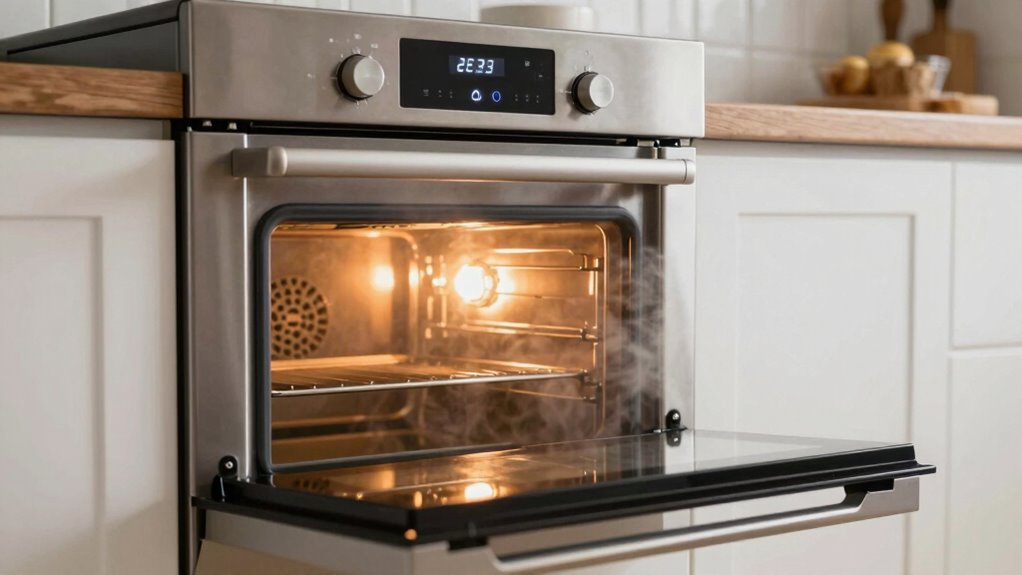
When your oven displays a different temperature than what you set, it might seem like it’s malfunctioning. But often, it’s just giving you a more accurate picture of what’s really happening inside. This discrepancy can be due to issues with temperature calibration, which is the process of guaranteeing your oven’s displayed temperature matches the actual heat inside. Over time, ovens can drift from their original calibration, making the temperature readouts unreliable. Instead of assuming something’s broken, think about that your oven is simply telling the truth differently. To fix this, you might need to recalibrate it, which involves testing the oven’s true temperature with an oven thermometer and adjusting the settings accordingly. Proper calibration ensures your recipes turn out perfectly every time, preventing undercooked or burnt meals. Additionally, ensuring your oven’s temperature accuracy is maintained can help you catch issues early before they affect your cooking. Regular testing and calibration can prevent further damage and prolong the lifespan of your appliance. Another factor to contemplate is your heating element’s durability. Heating elements are responsible for generating the heat, and over years of use, they can become less efficient. When a heating element starts to wear out or develops hot spots, it may not produce consistent heat. This inconsistency can cause your oven’s actual temperature to differ from the set temperature, even if the control panel shows otherwise. As the heating element’s durability declines, the oven might struggle to reach or maintain the desired temperature, leading to uneven cooking. Recognizing signs of deteriorating heating elements, such as longer preheating times or uneven cooking, helps you address the issue before it affects your dishes. Regular maintenance or replacement of the heating element can restore your oven’s ability to heat evenly and accurately. Monitoring oven performance can help you identify early signs of component failure. Maintaining proper insulation also plays a role in keeping the heat contained and ensuring temperature stability. Keeping an eye on the oven’s temperature fluctuations can provide insights into potential issues before they worsen. Recognizing signs of deteriorating heating elements, such as longer preheating times or uneven cooking, helps you address the issue before it affects your dishes. Ultimately, understanding that temperature calibration and heating element durability influence your oven’s temperature accuracy helps you troubleshoot effectively. When you notice a mismatch, don’t immediately assume it’s broken. Instead, check if your oven needs calibration or if the heating element shows signs of wear. These are common issues that can be addressed without replacing the entire appliance. By keeping your oven properly calibrated and ensuring the heating element remains in good condition, you extend its lifespan and improve cooking results. Remember, your oven isn’t lying to you; it’s simply providing a more honest account of the heat it produces. Recognizing the underlying causes empowers you to fix problems promptly, saving time and money while ensuring your meals come out just right.
Products Worth Considering

Le Creuset Signature Enameled Cast Iron Round Dutch Oven, 5.5 qt, Deep Teal

Le Creuset Enameled Cast Iron Round Dutch Oven, 5.5 Qt, Flame

Cuisinart PerfecTemp Electric Kettle, 1.7 L, 1500 W, 6 Temperature Settings
As an affiliate, we earn on qualifying purchases.
Frequently Asked Questions
How Can I Tell if My Oven’s Temperature Is Accurate?
You can check your oven’s temperature accuracy with an oven thermometer placed inside. Preheat it and compare the reading to your setting. For precise results, clean your oven beforehand to remove any residue that might affect heat distribution. Using these baking tips guarantees your oven’s temperature is spot-on, leading to better baking outcomes. Regularly testing helps you adjust settings and improve your cooking precision.
What Are Common Signs of Oven Sensor Issues?
Did you know that nearly 90% of oven problems stem from sensor issues? If your oven’s temperature fluctuates or cooking times seem off, it might be a sensor fault. Common signs include inconsistent heat, error messages, or uneven cooking. To fix this, consider oven cleaning to remove debris—sometimes dirt affects sensor readings—and if problems persist, sensor replacement is often necessary to restore accurate temperature control.
How Often Should I Calibrate My Oven?
You should calibrate your oven at least once a year, especially before big baking projects or holiday cooking. Regular oven cleaning helps maintain accurate temperature readings, so include calibration checks during these cleanings. Use baking tips like preheating thoroughly and relying on an oven thermometer for precision. If your baked goods aren’t turning out right, calibration might be off, and a quick adjustment can make all the difference.
Can Uneven Heating Affect My Cooking Results?
Uneven heating is like a painter with a shaky hand—your cooking results can turn out inconsistent. It can cause dishes to cook unevenly, affecting textures and flavors. When you use various cooking techniques, this inconsistency can be frustrating. Kitchen troubleshooting, like calibrating your oven or using oven thermometers, helps guarantee even heat distribution. This way, your meals come out perfectly cooked, no matter the recipe or technique you choose.
What Safety Precautions Should I Take When Repairing an Oven?
When repairing your oven, always unplug it first to avoid electric shock. Wear insulated gloves and safety goggles, especially during oven cleaning or when replacing parts. Use proper tools and follow manufacturer instructions carefully. If you’re unsure, consult a professional. Keep replacement parts from authorized sources and verify they’re compatible. Taking these precautions keeps you safe and ensures your oven functions correctly after repairs.
Conclusion
Remember, your oven isn’t broken—it’s simply speaking a different language. Just like a translator, it’s trying to tell you what’s really happening inside, even if its words seem confusing. Trust its signals and learn to listen closely. When you do, you’ll find that understanding your oven’s true message is like revealing a secret code—one that helps you cook better and connect more deeply with your kitchen’s hidden language.