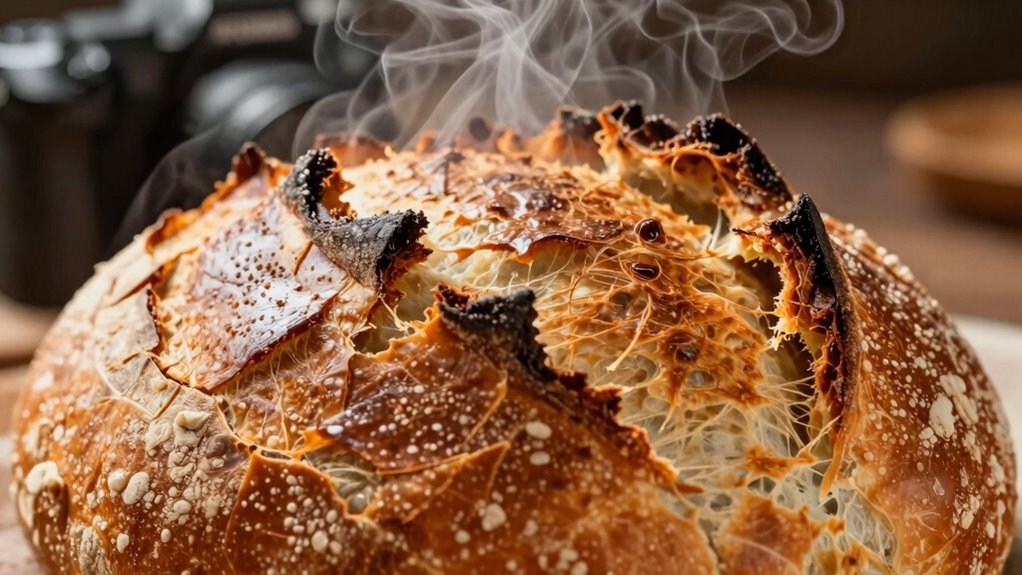
Oven spring happens when your bread dough suddenly expands rapidly at the start of baking. This occurs because your dough’s fermentation creates carbon dioxide gas, which gets trapped in a strong gluten network. When the oven heats up, the gases expand quickly, causing the dough to puff up and sometimes even explode outward. Proper fermentation and gluten development are key for a good rise—keep going to understand how these processes work together for perfect bread.
Key Takeaways
- Oven spring occurs when trapped gases rapidly expand during high baking temperatures.
- Proper fermentation and gluten development create a resilient structure to trap gases effectively.
- Yeast produces carbon dioxide gradually during proofing, building dough’s internal pressure before baking.
- Heat causes gas expansion and moisture vaporization, leading to the dough’s sudden puffing or “explosion.”
- A well-developed gluten network allows dough to stretch and accommodate rapid gas expansion without collapsing.
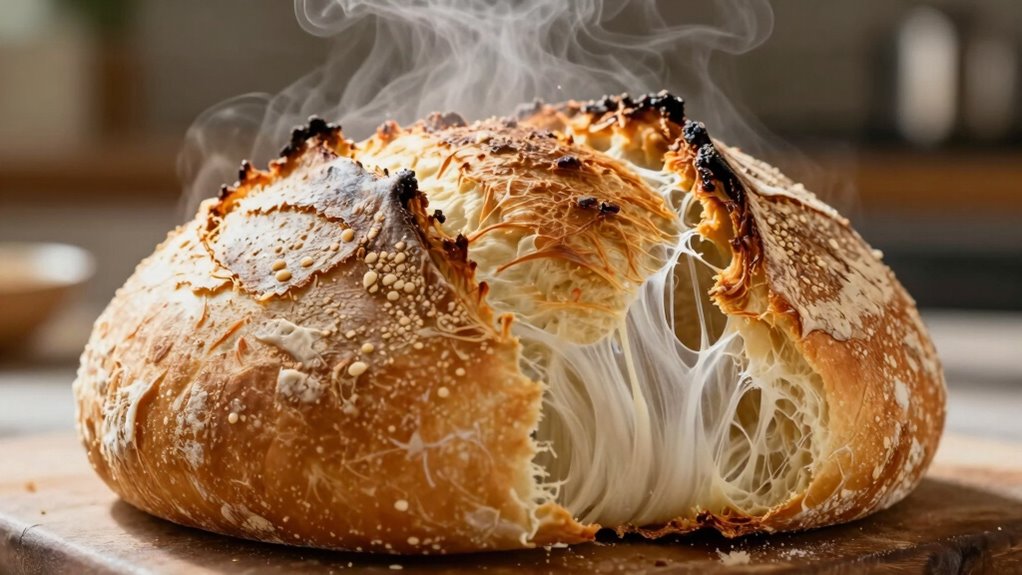
Have you ever noticed how bread dough suddenly puffs up right before baking? That moment, known as oven spring, is a fascinating display of how the dough’s internal processes work together. At the core of this phenomenon is the fermentation process, which happens during proofing. During fermentation, yeast consumes sugars in the dough, producing carbon dioxide and alcohol. This gas gets trapped within the dough’s structure, causing it to rise gradually over time. As you wait for the dough to proof, the yeast activity intensifies, and the gluten network begins to strengthen, creating a resilient mesh that can hold the expanding gases. This combination of fermentation and gluten development is what prepares your dough for that explosive final rise when it hits the oven.
Gluten development plays a vital role here. When you knead your dough, you’re encouraging gluten proteins—glutenin and gliadin—to bond and form long, elastic strands. This network gives the dough its stretchiness and strength, allowing it to trap the carbon dioxide produced during fermentation. The more you knead, the better the gluten structure becomes, which means more efficient gas retention. This results in a dough that’s both airy and sturdy, able to withstand the pressure buildup during baking. As fermentation continues, the gluten network becomes more interconnected, making the dough more elastic and capable of expanding rapidly when exposed to the high heat of the oven.
When the dough is finally placed in the oven, the heat causes a rapid increase in gas expansion and moisture vaporization. The gluten network, now fully developed, acts like a strong elastic casing that contains the gases. As the temperature rises, the gases inside expand more rapidly, pushing against the dough’s walls. At the same time, the heat causes starches to gelatinize and proteins to set, which locks the shape of the loaf in its expanded form. This sudden release of pressure results in that characteristic explosion or “pop” that you see as oven spring. Without proper fermentation and gluten development, the dough wouldn’t have the necessary structure to trap gases effectively, and you’d end up with a flatter, denser loaf.
In essence, oven spring is the culmination of your dough’s fermentation process and gluten development working together. They create a strong, elastic structure capable of expanding rapidly when exposed to heat. That explosive rise is both a visual delight and a sign that your bread has been properly prepared. When you understand these processes, you can better control your baking and achieve lighter, more airy loaves every time.
Frequently Asked Questions
How Does Oven Spring Affect Bread Texture?
Oven spring considerably influences your bread’s texture by expanding the dough rapidly, which enhances dough elasticity and creates a light, airy crumb. This sudden rise helps develop a better crust, giving it a crisp exterior. If your dough has good elasticity, it will spring well, resulting in a softer interior and a more appealing crust. Proper oven spring ensures your bread has a balanced, desirable texture that’s both chewy and tender.
Can Oven Spring Be Achieved With Gluten-Free Dough?
You can achieve oven spring with gluten-free dough, but it’s more challenging due to gluten-free challenges like lower dough elasticity. To improve your chances, use binders like xanthan gum or psyllium husk to mimic gluten’s stretchiness. Proper fermentation and a hot oven help create steam, which pushes the dough upward. With the right techniques, you can get a nice rise and a lighter, airier gluten-free bread.
What Are Common Mistakes That Prevent Proper Oven Spring?
You often prevent proper oven spring by making proofing errors, like under or over-proofing your dough, which weakens its structure. Improper scoring can also hinder expansion, as it blocks the bread from expanding evenly. To fix this, make certain your dough is proofed correctly—should be puffy but not overgrown—and score deeply and accurately. These steps help your bread fully spring in the oven, resulting in a perfect rise.
Does Oven Spring Differ Between Bread Types?
Oven spring differs wildly between bread types, like a fireworks show versus a gentle spark. You’ll see a more dramatic rise in rustic sourdough with a thick crust, thanks to longer fermentation timing that builds flavor and gluten strength. Meanwhile, softer sandwich bread with a delicate crust might barely puff up. Understanding these differences helps you optimize oven spring, ensuring each bread type gets the perfect rise and crust.
How Does Altitude Influence Oven Spring?
At high altitude, your bread’s oven spring is often more vigorous because of increased yeast activity caused by lower air pressure and humidity. You might notice the dough rises faster and more dramatically. To control this, you should modify the recipe by reducing yeast, shortening fermentation, or lowering oven temperature. These tweaks help prevent over-expansion and ensure your bread maintains a desirable texture and shape despite the high-altitude conditions.
Conclusion
Think of oven spring as your bread’s burst of energy, like a rocket launching into the sky. When you master this explosive rise, your loaves will take off with perfect volume and texture. It’s the moment where all your effort turns into a beautiful, airy masterpiece. So, keep an eye on that oven, and watch your bread explode with life—you’re fueling its grand ascent to bakery brilliance.