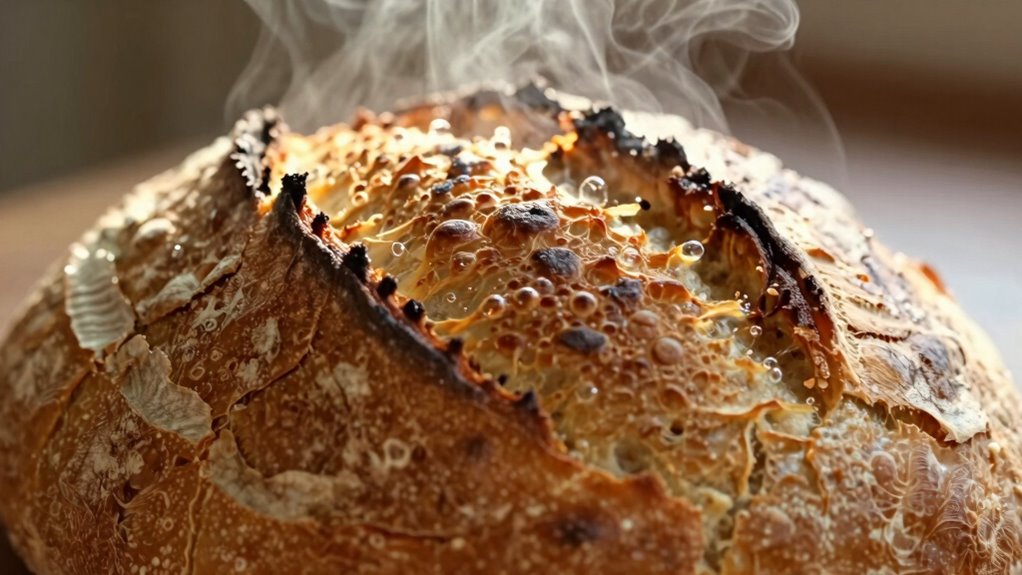

Steam in the oven creates a humid environment that keeps the dough surface moist during baking. This moisture delays crust hardening, allowing the bread to expand fully and develop a crackly, golden crust. Steam helps gelatinize surface starches and enhances gluten development, resulting in a crispy, crackly exterior. If you want to learn more about how to perfect your bread’s crust with steam, keep exploring the details behind this simple yet powerful technique.
Key Takeaways
- Steam delays crust hardening, allowing the dough to expand fully and develop a crackly, golden crust.
- Moisture from steam creates surface tension, leading to cracking as the crust sets and dries during baking.
- Steam keeps the dough surface moist, promoting gluten development and a shiny, crackly exterior.
- Proper steam application supports oven spring, resulting in a larger, more crackled crust.
- The rapid evaporation of moisture from steam causes surface cracks, contributing to the crackly texture.
Breville BOV845BSS Smart Oven Pro Countertop Oven, Brushed Stainless Steel
The Breville Smart Convection Oven Pro with Element iQ System is a high performance countertop oven; Home cooks...
As an affiliate, we earn on qualifying purchases.
How Does Steam Affect Bread Crust Formation?
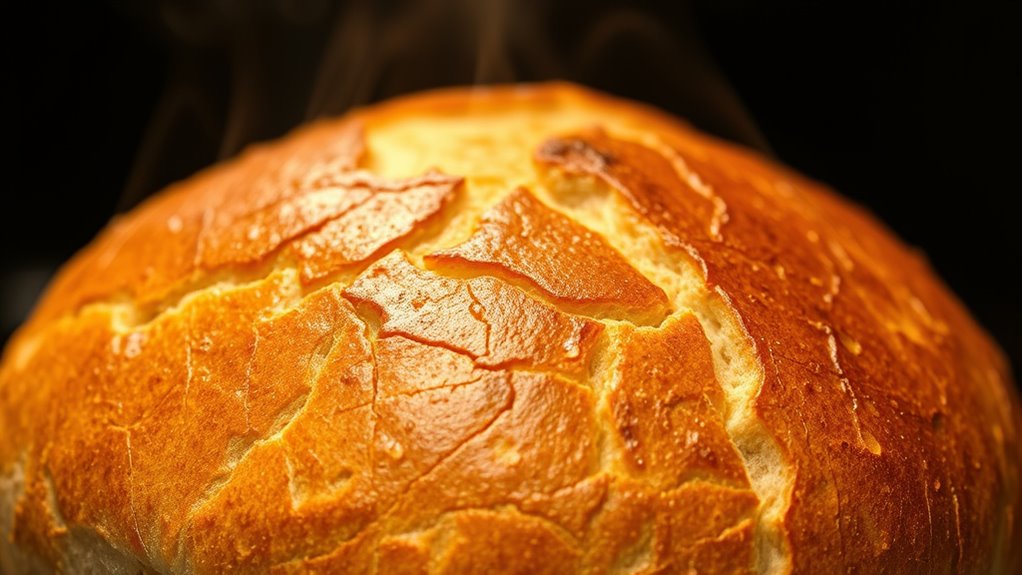
Steam plays a crucial role in shaping the crust of your bread. When you add steam during baking, it keeps the dough’s surface moist, which allows the crust to develop properly. Higher dough hydration levels mean more water is available to create a shiny, crisp crust. The moisture from the steam delays crust formation, giving the bread more time to expand and develop a better crust texture. Without enough steam, the crust can become thick, tough, or uneven. Steam also helps gelatinize the surface starches, contributing to a shiny, attractive finish. As the moisture escapes, the crust crisps up, creating that desirable crackly exterior. Proper steam creates a balanced crust that’s both flavorful and visually appealing, elevating your bread’s overall quality. Additionally, understanding the baking process and how steam influences it can help bakers achieve consistent and professional results. Smart kitchen appliances and automation can also help maintain optimal baking conditions for consistent results.

Emeril Lagasse Extra Large French Door Air Fryer Toaster Oven Combo, 24 Cooking Functions and Digital Controls, 7 Accessories Included, Stainless Steel Finish, 26QT Capacity
A VERSATILE AIR FRYER AND MULTI-COOKER COMBO: Elevates practically any meal, from air frying quick after-school snacks to...
As an affiliate, we earn on qualifying purchases.
How Does Steam Help Your Bread Rise During Baking?

Steam helps your bread rise by keeping the dough moist, which encourages gluten to develop fully. It also allows the dough to expand more easily, resulting in a larger, lighter loaf. Plus, steam creates a crispy, glossy crust that seals in the interior’s moisture. Additionally, the presence of steam can influence the crust’s texture, ensuring it remains tender and well-formed during baking. Moreover, the baking environment with steam helps maintain optimal heat distribution, leading to more consistent oven spring. Proper steam management is essential for achieving the desired bread quality and overall texture, as it plays a crucial role in the baking process and final outcome. Incorporating steam can also help develop a beautiful oven spring, giving your bread a professional appearance.
Moisture Enhances Gluten Development
As your bread begins to bake, the moisture created by steam plays a essential role in developing the gluten network. Higher hydration levels in your dough allow gluten strands to form more effectively, creating a stronger, more elastic structure. Steam keeps the dough surface moist during the initial baking phase, preventing the crust from setting too quickly and allowing the gluten to fully develop. This process results in better dough extensibility, which improves dough rise and creates a lighter texture. Without enough moisture, the gluten network may be underdeveloped, leading to a dense crumb. By maintaining adequate hydration through steam, you give the gluten strands the environment they need to strengthen and stretch, ultimately producing bread with a better rise and improved overall texture. Understanding the importance of dough hydration] helps bakers optimize steam use for superior bread quality.
Steam Increases Dough Expansion
During baking, the moisture from steam creates a humid environment that encourages your dough to expand rapidly. The increased oven humidity keeps the dough’s surface moist, allowing it to retain its dough elasticity longer. This flexibility enables the dough to stretch and rise more effectively before the crust sets. The steam’s heat causes the water inside the dough to turn into vapor, creating pressure that pushes outward, giving your bread volume and a light, airy crumb. Without enough steam, the crust forms too quickly, trapping less gas and limiting expansion. By maintaining high oven humidity with steam, you help your dough achieve maximum rise, resulting in a better texture and improved oven spring. Properly controlling oven humidity is essential for consistent, professional-quality bread. This process is essential for a beautifully risen, well-developed loaf, as steam injection can be a highly effective method to achieve the desired humidity levels. Additionally, understanding the role of moisture retention can help bakers troubleshoot and improve their bread’s crust and crumb, especially since baking environment control influences the overall outcome.
Creates Crispy, Glossy Crust
When you introduce steam into the oven, it immediately affects the surface of your bread, helping to develop a crispy, golden crust. The moisture creates a barrier that prevents the dough from drying out too quickly, allowing the crust to form gradually. This process enhances oven humidity, which keeps the crust glossy and appealing. Steam also delays crust formation, giving your bread more time to expand and develop a beautiful shape. Additionally, the moist environment supports dough fermentation during baking, ensuring a better rise. Proper oven humidity control is essential for achieving bakery-quality crusts at home.
Breville BOV900BSS Smart Oven Air Fryer Pro and Convection Oven, Brushed Stainless Steel
The Breville Smart Oven Air Fryer Pro with Element iQ System is a versatile countertop oven allowing you...
As an affiliate, we earn on qualifying purchases.
Why Does Steam Make Your Bread Crust Crispy and Crackly?
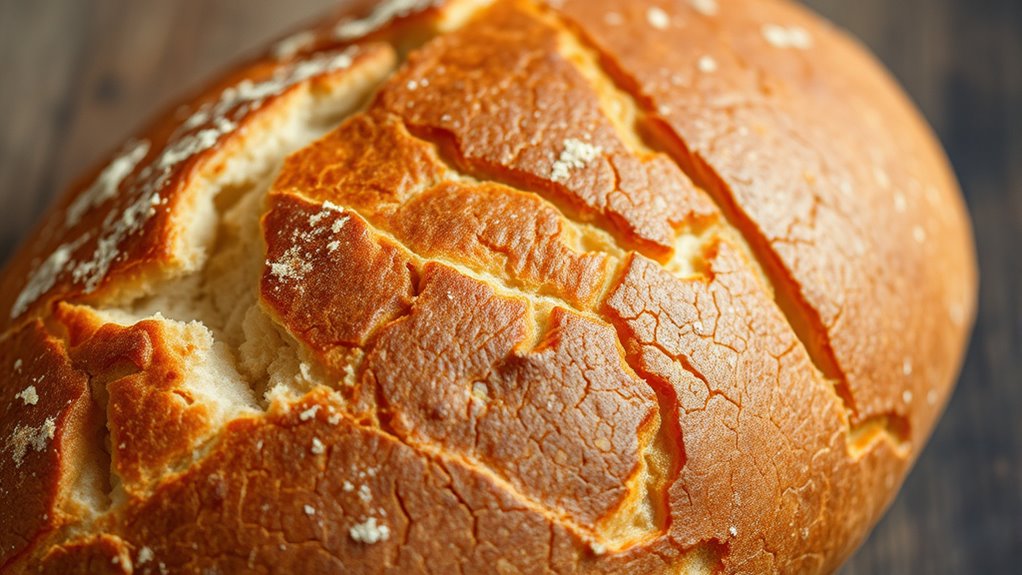
When you add steam to your oven, the moisture keeps the crust soft longer, giving it more time to develop a crisp texture. This delays crust formation, allowing the bread to expand fully before setting. The resulting crackly surface creates that satisfying, crispy bite you love.
Moisture Transforms Crust Texture
Steam plays a crucial role in transforming the crust of your bread from soft and doughy to crispy and crackly. When you add moisture through oven humidity, it interacts with the dough’s hydration levels, influencing the crust’s final texture. Higher dough hydration creates a more elastic surface that absorbs steam, allowing the crust to expand and develop a crackly surface. The moisture keeps the outer layer moist initially, delaying the formation of a hard crust, while the steam’s heat causes the starches to gelatinize, resulting in a shiny, crispy exterior. As the moisture evaporates, the crust dries out rapidly, becoming thin and crackly. This process highlights how moisture from both dough hydration and oven humidity shapes the ultimate crunch and texture of your bread.
Steam Delays Crust Formation
Because steam surrounds the dough during baking, it temporarily keeps the crust moist and pliable instead of hardening immediately. This increased oven humidity creates a crust delay, giving the bread more time to expand and develop properly. The moisture in the oven slows down the initial formation of a hard crust, allowing the interior to rise fully. Without this delay, the crust would set too early, limiting oven spring and resulting in a denser loaf. Steam acts as a barrier, preventing rapid dehydration and helping the crust to stay flexible longer. Additionally, this process enhances crust crispiness by allowing the crust to develop a desirable texture as moisture escapes. As the moisture gradually escapes, the crust begins to firm up and turn golden, setting the stage for that perfect crispy finish. This process is essential for achieving a well-structured, crackly crust. Understanding the science behind crust formation helps bakers refine their techniques for optimal results. Proper oven temperature also plays a crucial role in achieving the ideal crust.
Creates Crackly Surface Effect
As the moisture in the oven gradually escapes, the crust begins to dry out and tighten. This process causes the surface to crackle, creating that desirable crispy texture. Steam plays a key role by maintaining oven humidity, which affects dough elasticity. When moisture surrounds the dough, it delays hardening, allowing the crust to expand and form cracks as it dries.
| Oven Humidity | Effect on Crust |
|---|---|
| High | Keeps crust moist, elastic |
| Low | Promotes cracking, crispness |

BLACK+DECKER Crisp 'N Bake Air Fry Countertop Convection Toaster Oven, Medium Capacity, 4-Slice, 5-in-1, Fits 9” Pizza, 30-Min Timer, Bake, Broil, Air Fry, Toast, Keep Warm, Stainless Steel
5-IN–1 MULTIFUNCTIONAL COOKING- Enjoy versatile cooking with Air Fry, Bake, Broil, Toast, and Keep Warm settings. Perfect for...
As an affiliate, we earn on qualifying purchases.
What Are the Best Ways to Add Steam When Baking?
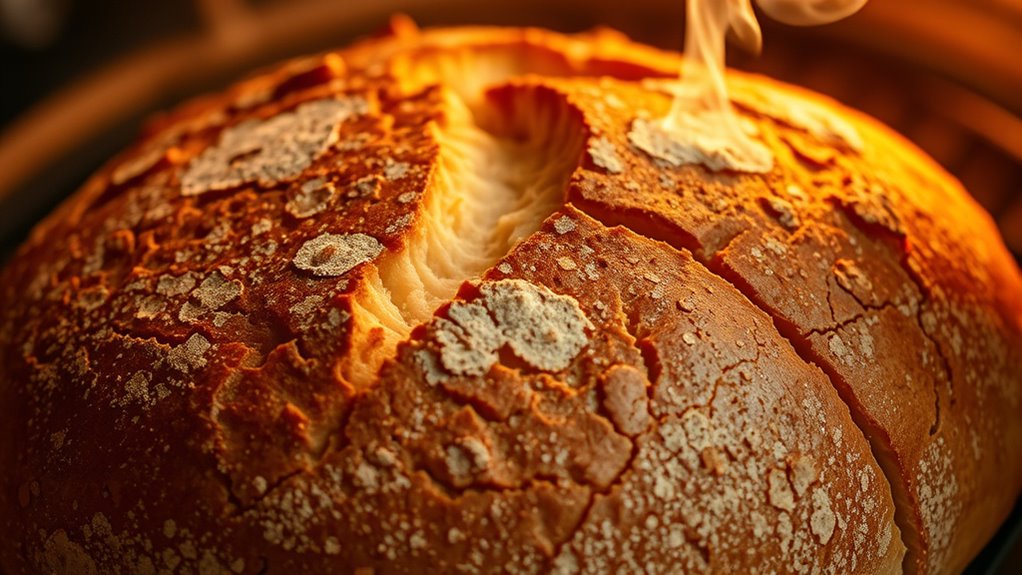
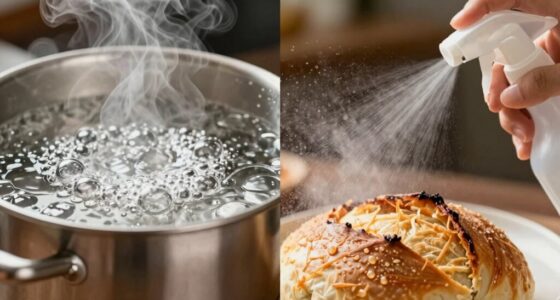
Adding steam to your oven can considerably improve your baked goods, especially bread and pastries, by promoting a glossy crust and better oven spring. The key is to increase oven humidity at the start of baking. One effective method is steam injection, where you introduce moisture directly into the oven, often through a steam-injection oven or a dedicated steamer. Alternatively, you can place a shallow pan of hot water on the oven floor or at the bottom rack before baking begins. Spritzing water inside the oven with a spray bottle during the first few minutes also adds steam. Whichever method you choose, the goal is to create a moist environment that encourages the crust to develop properly and crackle beautifully. Creating the right oven humidity is essential for achieving that perfect crackle in your bread crust. Proper baking environment control helps ensure consistent results and enhances crust texture and flavor. Additionally, using humidity control techniques can optimize the baking process and improve overall crust quality.
Avoid These Mistakes to Get That Perfect Bread Crackle
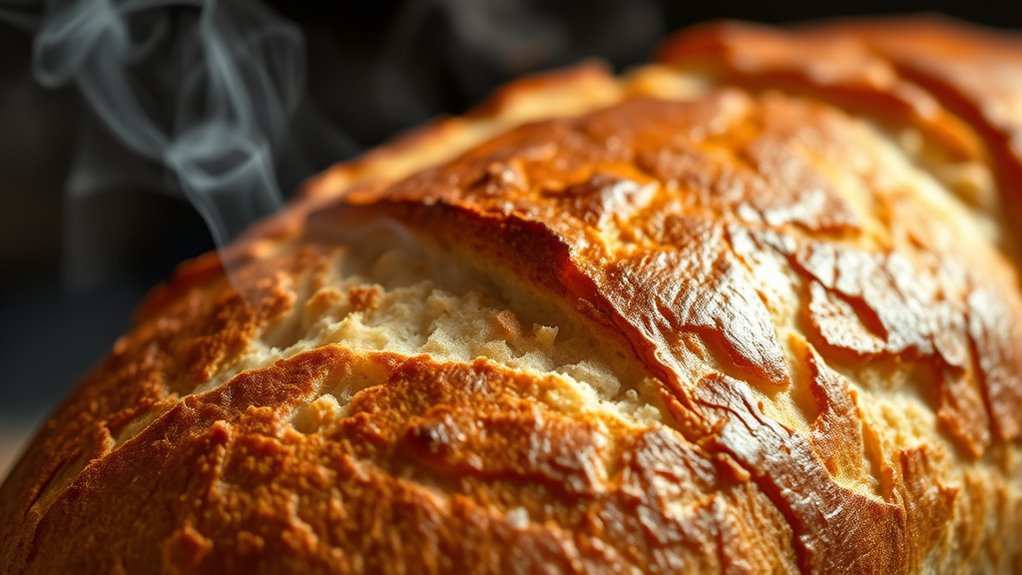
To achieve that satisfying, crackly crust on your bread, you need to prevent common mistakes that can hinder proper oven spring and crust development. One mistake is setting the oven temperature too low, which prevents the crust from forming properly. Additionally, ingredient substitution can affect crust quality—using too much fat or sugar can soften the crust instead of cracking it. Make sure you use the right ingredients and avoid unnecessary substitutions that alter moisture balance. Proper oven temperature control is essential for developing that perfect crust. Here’s a quick comparison:
| Mistake | Correct Approach |
|---|---|
| Low oven temperature | Use the recommended oven temperature |
| Unnecessary ingredient substitution | Stick to traditional ingredients |
| Insufficient preheating | Preheat oven fully before baking |
Maintaining the correct steam in the oven during baking helps create a crackly crust by keeping the dough surface moist initially, which then sets as the moisture evaporates. Proper oven preheating ensures the heat is evenly distributed and supports optimal oven spring. When the oven is properly preheated, it encourages better oven spring, resulting in a more open and crackly crust. Additionally, using a reliable heat source can help maintain consistent baking conditions. Avoid these pitfalls to get that perfect, crackly bread crust every time.
How Do You Keep the Right Steam Level Throughout Baking?
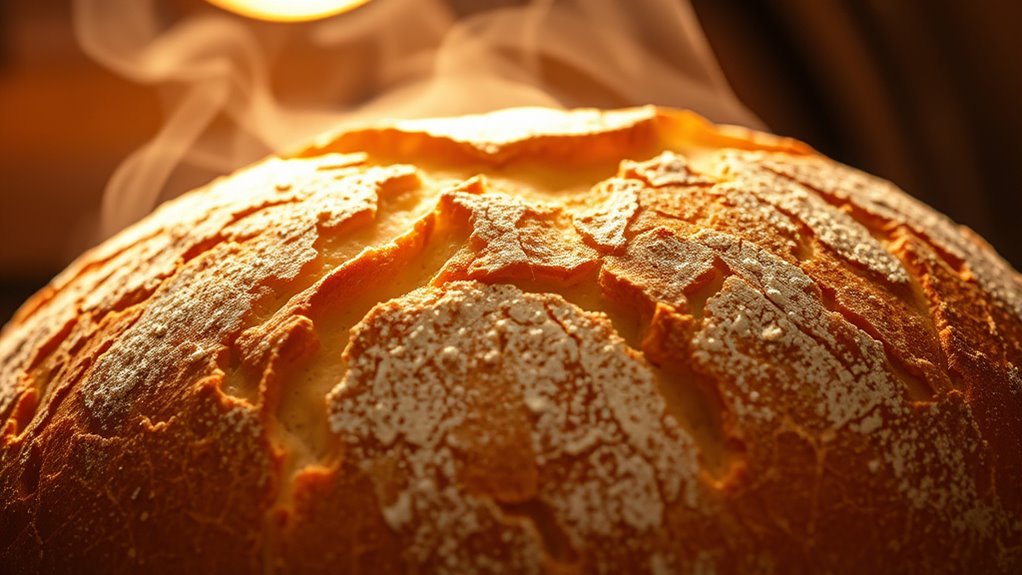
Maintaining the right steam level throughout baking is vital to achieving that perfect crust. To do this, start by preheating your oven to the correct temperature; a hotter oven helps generate more steam initially. Use a baking vessel with a tight-fitting lid or place a tray of water at the bottom of the oven to create consistent steam. Adjust your oven temperature during the first 10-15 minutes to guarantee sufficient moisture without overdoing it. Additionally, dough hydration plays a fundamental role—high-hydration dough produces more vapor, enhancing crust development. Keep the oven door closed during the initial baking phase to retain steam. Regularly monitor your oven’s environment, and add water as needed, to sustain ideal steam levels for a crackling, golden crust.
Frequently Asked Questions
Can You Use a Spray Bottle to Add Steam During Baking?
Yes, you can use a spray bottle to add steam during baking. Simply spritz water onto the bread or into the oven quickly to create steam, which helps develop a crackly crust. If you don’t have a spray bottle, alternative methods like placing a pan of water in the oven or using a Dutch oven work well. Just make certain you act quickly to trap the steam for the best crust.
How Does Oven Temperature Influence Steam’s Effect on Bread Crust?
Oven heat is the conductor of the moisture symphony that transforms your bread. When your oven’s temperature is high, steam creates a delicate moisture balance that encourages a crackling crust. Too low, and the steam won’t develop the crust’s texture; too high, and it might burn. You control the effect by adjusting oven heat, ensuring your bread’s crust crackles perfectly as a demonstration of your baking mastery.
Is It Necessary to Use a Professional Steam Oven for Best Results?
You don’t need a professional steam oven for great home baking. While professional equipment offers consistent steam for perfect crusts, you can achieve excellent results with simple methods like adding a pan of water or spraying water into your oven. These tricks help create steam, giving your bread that crackly crust and beautiful rise, making your home baking nearly as good as bakery quality without expensive gear.
How Long Should Steam Be Maintained During the Baking Process?
You should keep the steam going for about 10-15 minutes, like a dramatic soap opera finale, to give your bread that perfect crust development. Too little steam, and your crust remains shy and uninteresting; too much, and it’s like a soggy mess. Maintaining the right steam duration guarantees a crackling crust that sings with flavor, making your bread the star of every table.
Can Adding Steam Impact the Bread’s Overall Texture Beyond Crust Crackling?
Adding steam can considerably impact your bread’s overall texture beyond just crackling crusts. It helps maintain dough hydration, preventing the crust from forming too quickly and allowing for better crumb development. As a result, your bread becomes lighter, airier, and more uniform inside. By incorporating steam at the right stages, you ensure a tender interior and a beautifully crisp crust, elevating your baking results overall.
Conclusion
Mastering steam in your oven transforms your bread into a crust-crackling masterpiece, elevating it from simple to legendary. When you control that perfect steam level, you access a universe of crispy, crackly perfection that could rival the most revered bakery creations. With every crackle and crunch, you’ll feel like a baking wizard, turning humble dough into an epic, crusty marvel that commands admiration. Embrace the power of steam, and watch your bread legend grow!