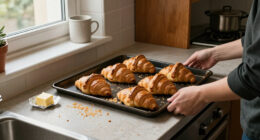

Preheating isn’t just about waiting for the oven to beep; it’s about giving it enough time to reach and stabilize at the set temperature for even cooking. Relying on the beep can lead to undercooked or uneven results since it only signals the timer, not the actual heat. To do it right, set your oven and wait the recommended 10-15 minutes before cooking. Keep in mind, proper preheating can make a big difference—learn more to perfect your process.

Get baking supplies delivered free with Prime
- Fast, free delivery on millions of items
- Prime Video, Amazon Music and more included
- Member-only deals all year
Key Takeaways
- Preheat until the oven reaches the set temperature, not just until it beeps.
- Use an oven thermometer to verify accurate preheating, not rely solely on the oven’s display or sound.
- Keep the oven door closed during preheating to maintain a stable, even temperature.
- Wait the recommended 10-15 minutes for proper preheating before inserting food.
- Rely on internal food temperature checks and visual cues, not just the oven beep, for doneness.
oven thermometer for accurate preheating
As an affiliate, we earn on qualifying purchases.
As an affiliate, we earn on qualifying purchases.
Why Proper Preheating Makes a Difference in Cooking
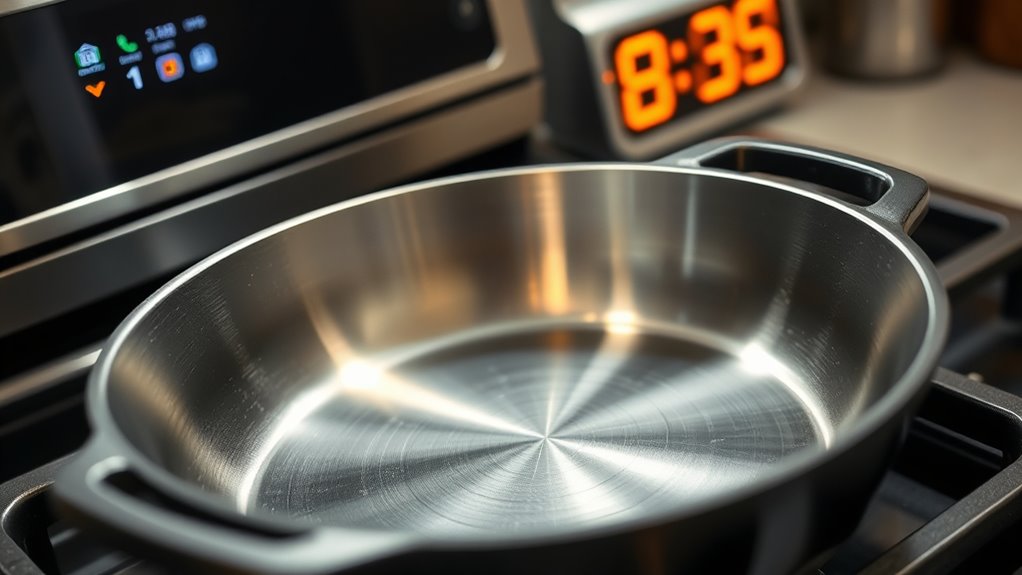
Proper preheating is essential because it guarantees your cookware reaches the right temperature before you start cooking. When you set the oven temperature correctly, it ensures that heat is evenly distributed, which is key for consistent results. Without proper preheating, your food might cook unevenly—some parts overdone, others undercooked—affecting overall cooking consistency. Preheating allows your oven to stabilize at the desired temperature, so when you place your dish inside, it begins cooking immediately and uniformly. This process helps maintain the right oven temperature throughout cooking, preventing fluctuations that can compromise texture, flavor, and doneness. Additionally, energy-efficient appliances enhance the benefits of preheating by reducing energy consumption and supporting sustainable cooking practices. Ultimately, taking the time to preheat properly makes your cooking more predictable and professional-looking, giving you better control and better results every time.
As an affiliate, we earn on qualifying purchases.
Why You Shouldn’t Rely on the Beep to Know When It’s Ready

While the beep of your oven can be convenient, it’s not a reliable indicator that your food is truly ready. Relying solely on the beep can compromise oven safety, as your heating element may still be hot or unevenly heated, risking undercooked or overcooked dishes. The beep only signals that the oven’s timer has ended, not that the internal temperature or cooking process is complete. Your oven’s temperature sensors and heating element need time to stabilize and reach the proper temperature for safe cooking. Trusting the beep alone can lead to unsafe situations or foodborne illness. Always check the internal temperature of your food with a thermometer and observe visual cues to ensure your meal is fully cooked and safe to eat. Additionally, temperature sensors require proper calibration and functioning to accurately reflect the oven’s internal conditions, making manual checks essential. Properly functioning thermal sensors are crucial for accurate temperature readings and overall oven safety.
As an affiliate, we earn on qualifying purchases.
How to Preheat Your Oven or Stove the Right Way

To make certain your food cooks evenly and safely, you need to preheat your oven or stove correctly before starting. Begin by setting your oven or stove to the desired temperature, guaranteeing your oven is properly calibrated for accuracy. Accurate oven calibration helps prevent under- or over-heating, which can affect cooking times and safety. Allow enough time for the appliance to reach the set temperature; this typically takes 10-15 minutes. Follow safety precautions by keeping oven doors closed during preheating and avoiding opening it frequently, which can cause temperature fluctuations. For stoves, ensure burners are clean and functioning correctly before preheating. Proper preheating not only ensures even cooking but also promotes safe operation of your appliances. Additionally, being aware of appliance safety features can help prevent accidents during operation. Understanding nanotechnology is increasingly important as advancements improve appliance efficiency and safety features, making modern appliances smarter and more reliable. Regularly checking oven calibration can help maintain consistent performance over time. Incorporating proper maintenance practices can also extend the lifespan of your appliances and ensure optimal safety.
As an affiliate, we earn on qualifying purchases.
Preheating Times for Different Appliances You Should Know
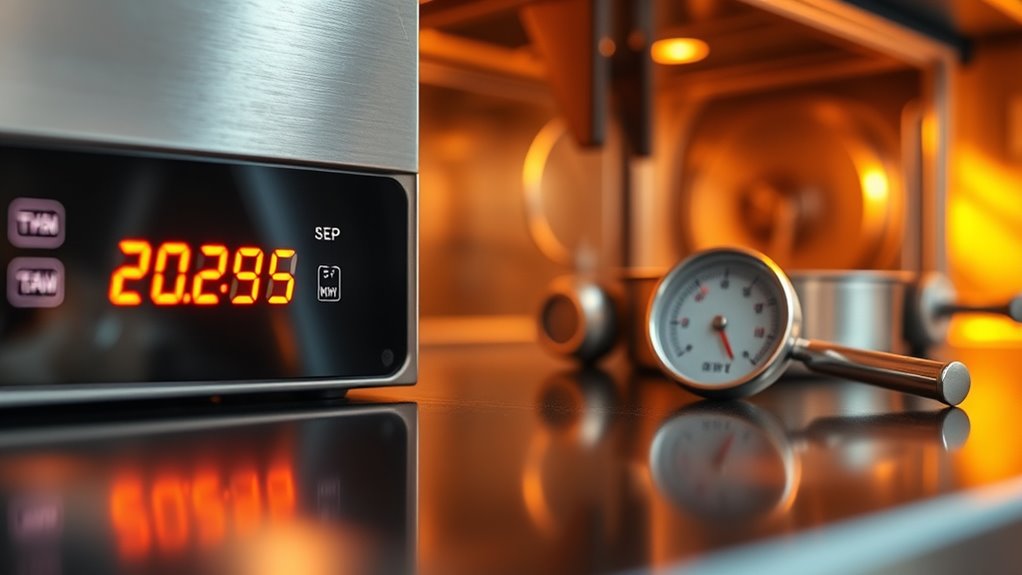
How long you should preheat your appliances varies depending on the type and size. For ovens, a proper preheat usually takes 10-15 minutes, but if your oven isn’t calibrated correctly, it may need more time to reach the right temperature. Regular appliance maintenance helps guarantee accurate preheating times and consistent results. Smaller appliances like toaster ovens warm up faster, often in 5-8 minutes. For stovetop burners, preheating is minimal, but for induction or electric cooktops, give them about 2-5 minutes. Always check your appliance’s manual for specific times, and consider oven calibration if you notice uneven heating or inconsistent preheating durations. Proper preheating ensures your recipes turn out perfect and extends your appliance’s lifespan. Additionally, understanding wiring basics can help troubleshoot preheating issues and ensure safe operation. Being aware of thermal mass can also influence how long it takes for an appliance to reach the desired temperature.
Tips for Preheating Effectively and Safely in Your Kitchen
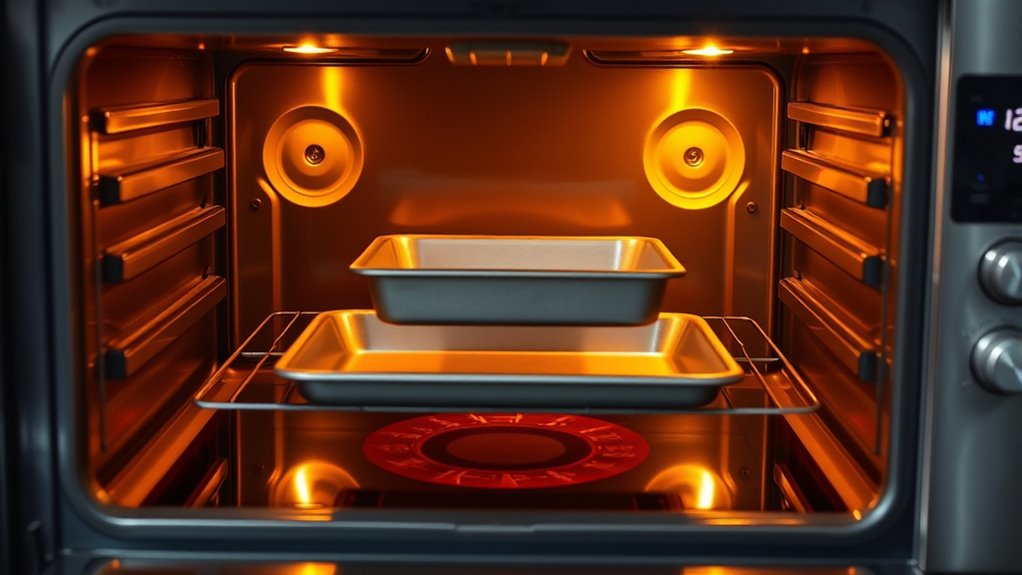
Preheating your appliances correctly can make a significant difference in cooking results and safety. To guarantee effective and safe preheating, always verify your oven’s temperature accuracy with an oven thermometer. This helps prevent under- or over-heating, which can compromise oven safety and food quality. Use the following tips:
| Tip | Why it Matters | How to Implement |
|---|---|---|
| Use an oven thermometer | Ensures accurate temperature | Place it inside before preheating |
| Avoid opening early | Maintains consistent heat | Wait until the oven reaches target temp |
| Preheat for recommended time | Achieves even cooking | Follow appliance-specific guidelines |
Frequently Asked Questions
What Are Signs That My Appliance Is Properly Preheated?
You’ll know your appliance is properly preheated when the oven indicators show the right temperature, and you notice consistent heat throughout the cavity. The oven’s temperature dial should stabilize at your target setting, and there shouldn’t be any fluctuations. When these signs appear, you can confidently start cooking, knowing the heat is even and accurate, which guarantees your food cooks properly and evenly.
How Does Preheating Affect Cooking Times and Food Quality?
Preheating directly influences your cooking times and food quality. When you preheat properly, you ensure temperature accuracy, which leads to more consistent results. If you skip or rush the process, your food might cook unevenly or take longer, like chasing your tail. Taking the time to reach the right temperature helps lock in flavors and texture, making sure your dishes turn out just right every time.
Can Preheating Be Skipped Without Ruining the Dish?
You can skip preheating without ruining your dish, but it’s a risky move. Preheating myths often lead people to believe it’s unnecessary, but appliance readiness is vital for even cooking. Without preheating, your food might cook unevenly or take longer. To guarantee consistent results, especially for baked goods or sensitive dishes, it’s best to wait until your oven or appliance is properly preheated, not just until it beeps.
Are There Safety Risks Associated With Improper Preheating?
You might think skipping preheating is safe, but improper preheating can pose oven safety risks and appliance hazards. When you don’t preheat correctly, the oven may operate unpredictably, increasing the chance of burns or fires. Always follow manufacturer instructions to prevent damage and guarantee safe operation. Proper preheating reduces risks, helps cook evenly, and keeps your kitchen safe from potential hazards. Don’t compromise on safety—preheat properly every time.
How Often Should I Calibrate My Oven’s Temperature Settings?
You should calibrate your oven’s temperature settings once a year to ensure accurate oven maintenance. Regular calibration frequency helps prevent uneven cooking and maintains safety. Use an oven thermometer to check if the actual temperature matches the dial. If it doesn’t, adjust the calibration as needed. Staying consistent with calibration keeps your oven reliable, safe, and performing at its best, saving you time and resources in the long run.
Conclusion
Remember, preheating isn’t about waiting for a beep—it’s about reaching the right temperature for perfect results. Rushing to turn off the oven once it beeps might compromise your dish’s quality. Instead, trust the process and give your appliance the time it needs. After all, isn’t the goal to create a meal that’s just right? Proper preheating sets the foundation for success—so why settle for less than your best?
Evergreen bestsellers Picks
bestsellers
As an affiliate, we earn on qualifying purchases.