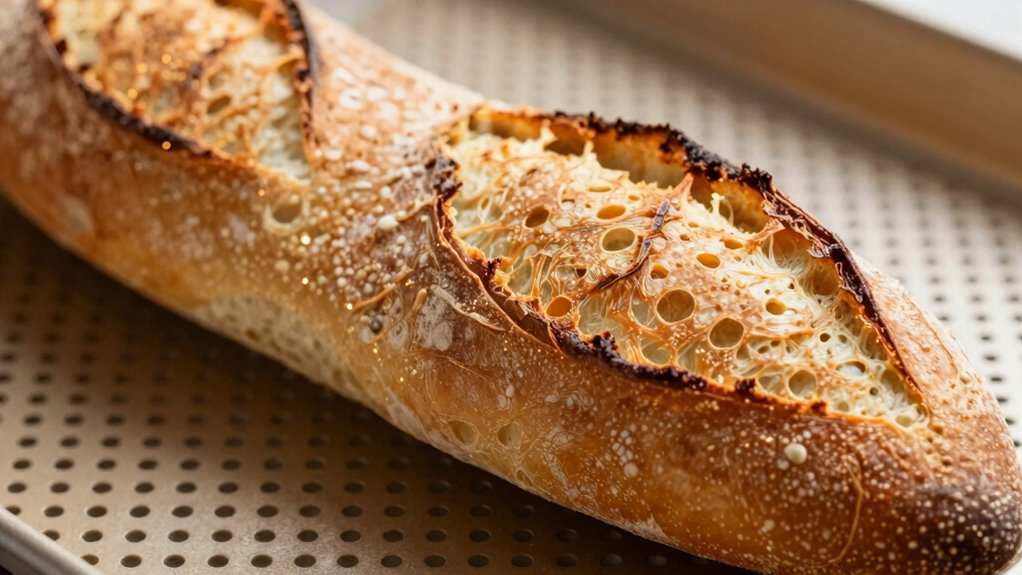

Baguette pan perforations are intentionally designed holes that work to improve airflow, distribute heat evenly, and help develop a crispy, golden crust. They allow hot air to circulate around the dough, speeding up baking and preventing sogginess. These holes also aid moisture escape, resulting in better crust color and texture. To learn more about how these holes can elevate your baking, continue exploring the details behind their purpose and benefits.
Key Takeaways
- Perforations promote even heat distribution and airflow, ensuring uniform baking and crust development.
- They facilitate moisture escape, preventing sogginess and aiding in crisp, golden crust formation.
- Holes improve air circulation, speeding up baking and reducing hot spots for consistent results.
- Perforations help prevent sticking and support the dough’s shape during baking.
- They enhance crust color, flavor, and texture by enabling better heat and moisture management.
Why Do Baguette Pans Have Holes?
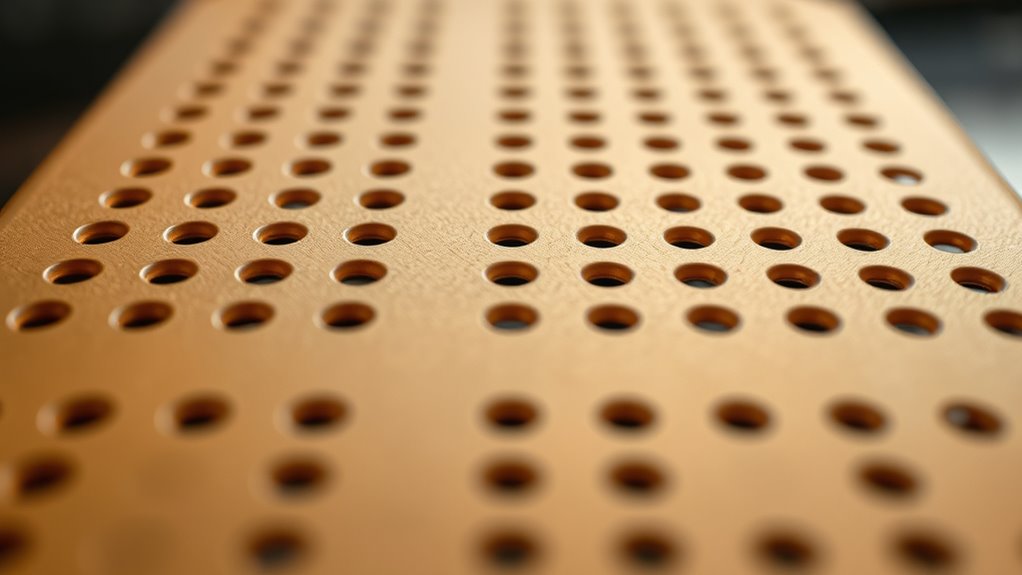
Have you ever wondered why baguette pans have holes? The answer lies in the design and material choices. Baguette pan material, often aluminized steel or non-stick coated metal, benefits from perforations because they promote even heat distribution, helping your bread bake uniformly. The holes allow hot air to circulate around the dough, creating a crisp crust. Additionally, the pan handle design plays a role—most handles are riveted or integrated to ensure stability, but they don’t block airflow. This combination of material and handle design guarantees that heat reaches every part of the dough, preventing sogginess and encouraging a golden, crunchy crust. Proper ventilation is also crucial for baking performance, ensuring that your baguettes develop that authentic, bakery-quality texture. Proper airflow is essential for consistent baking, which is why perforated pans are favored by professional bakers.
How Do Perforations Shape Your Baguette’s Crust and Color?

Perforations in a baguette pan directly influence the crust’s texture and color by allowing hot air to circulate freely around the dough. This airflow promotes even browning and creates a crisp, golden crust. Proper dough hydration plays a key role here—if your dough is well-hydrated, the moisture turns to steam during baking, enhancing crust development. The perforations help escape excess moisture, preventing a pale or soggy crust. As the crust forms quickly, the Maillard reaction intensifies, boosting flavor development and giving your baguette that appealing aroma and color. Without adequate perforations, uneven heat distribution can lead to duller crusts and less complex flavors. In essence, these holes help you achieve that perfect balance of crust texture, rich color, and flavorful depth. Mastering Firewood tips can also help maintain consistent oven temperatures, further supporting optimal crust formation. Additionally, perforation size influences how well the hot air and moisture escape, impacting the overall quality of your baguette and baking technique is crucial for achieving the ideal crust.
How Do Holes Help Control Moisture During Baking?
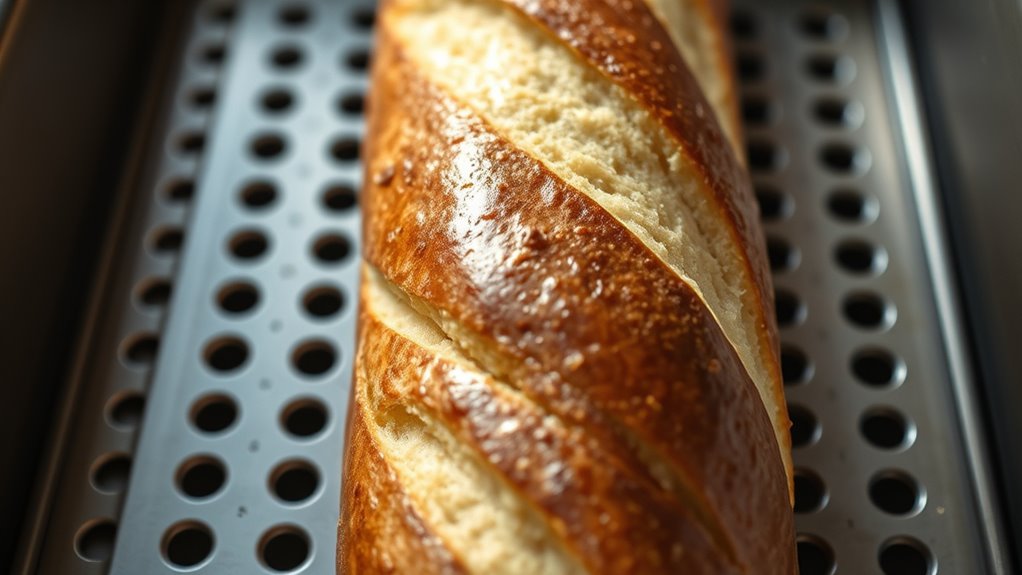
By allowing hot air to circulate freely around the dough, the holes in a baguette pan play a pivotal role in moisture control during baking. This promotes moisture evaporation, preventing excess steam from making your crust soggy. The perforations help balance humidity inside the oven, ensuring even moisture removal. Proper airflow is essential for achieving a crispy crust, and the holes facilitate this process by enhancing circulation. As moisture escapes, your baguette develops a beautifully crisp crust, enhancing texture and flavor. The baking environment benefits from the holes by maintaining optimal internal conditions for perfect bread texture. Additionally, the perforations contribute to heat distribution, ensuring consistent baking results. Incorporating the right hole size and pattern can also influence oven performance, helping bakers achieve professional-quality loaves. Properly designed perforations also aid in steam management, which is crucial for crust development and overall bread quality.
How Do Perforations Speed Up and Even Out Baking?
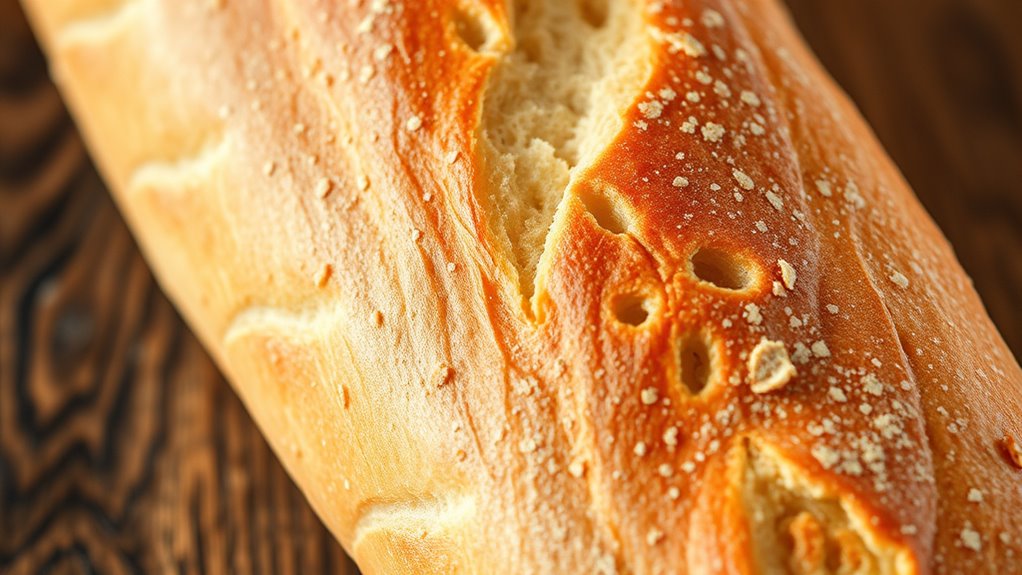
The perforations in a baguette pan allow hot air to flow directly around the dough, which speeds up the baking process. This improved airflow helps the dough expand evenly, reducing hot spots and preventing uneven rise. As heat circulates more efficiently, the crust develops faster and more uniformly, leading to a consistent bake. Additionally, the even heat exposure promotes better flavor development, as the Maillard reaction occurs more uniformly across the surface. The perforations also help release excess moisture, preventing sogginess and encouraging a crisp crust. By facilitating quicker and more uniform heat transfer, the holes guarantee your baguette bakes faster, with a better rise and richer flavor, resulting in a bakery-quality loaf with beautiful, even crust and perfect crumb. Proper pan ventilation is essential for achieving these optimal baking results. Enhanced heat circulation through perforations ensures consistent baking even in the most challenging oven conditions. Proper airflow can also minimize the need for rotating the pan during baking, saving time and effort. Proper ventilation also helps maintain consistent oven temperatures, further improving baking outcomes.
How Do Air Circulation and Heat Distribution Work Through the Holes?
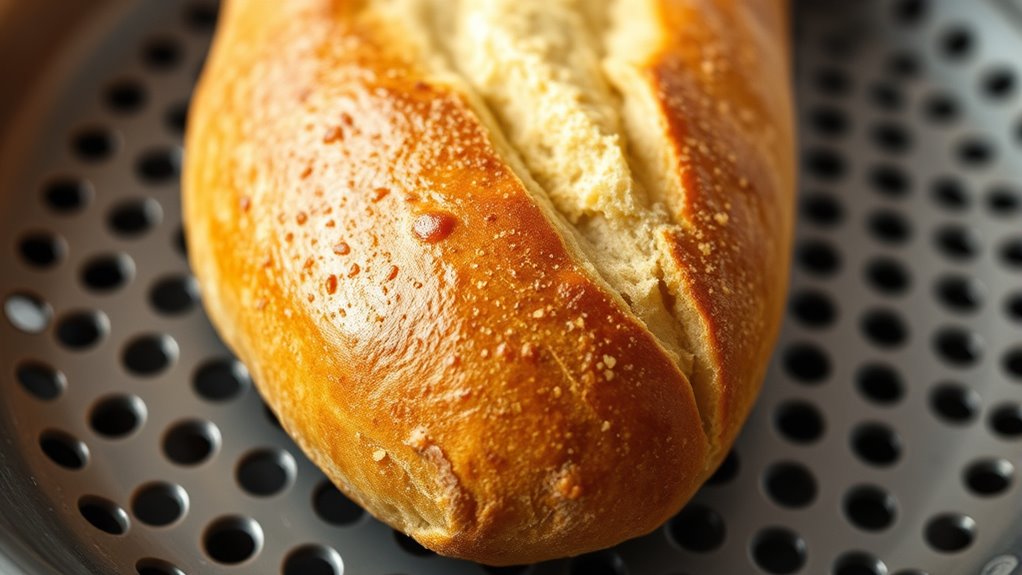
The holes in your baguette pan improve airflow, allowing hot air to circulate more efficiently around the dough. This even distribution of heat helps the bread bake uniformly and develop a crisp crust. By understanding how these perforations work, you can optimize your baking results and achieve that perfect bakery-quality baguette. Additionally, smart kitchen technology can help monitor and control oven temperature and airflow for even better results. Proper baking techniques combined with the pan design can significantly enhance your bread’s texture and appearance. Moreover, air circulation is essential for preventing soggy spots and ensuring consistent crust formation throughout the loaf. Recognizing the importance of oven performance and other personal factors can also inspire bakers to invest in quality tools and ingredients to improve their craft.
Improved Airflow Dynamics
When you use a perforated baguette pan, the holes allow hot air to flow freely around the dough, promoting even heat distribution. This improved airflow encourages better dough expansion, helping your baguette rise uniformly. The consistent circulation also enhances crust texture, giving it that perfect crunch. You’ll notice a more evenly baked loaf with fewer dark spots. The holes create a dynamic environment where heat reaches all sides equally, preventing hot spots. As a result, your bread develops a beautiful, crisp crust and a tender interior. The enhanced airflow makes your baking process more predictable and satisfying. With each bake, you’ll see how these small perforations make a big difference in achieving bakery-quality baguettes at home.
Even Heat Distribution
Because the holes in a perforated baguette pan create open pathways for hot air, they enable better circulation around the dough. This improved airflow helps guarantee heat reaches every part of your baguette evenly, which is essential for achieving uniform baking. The open design supports consistent heat distribution, even as the baguette shape maintains its structure. This means you don’t have hot spots or uneven cooking, and your bread bakes thoroughly at the desired baking temperature. Without the holes, heat can become concentrated in certain areas, leading to uneven rising or crust development. By allowing heat to circulate freely, perforated pans promote more consistent baking results, giving you that perfect crust and crumb every time. Proper heat conduction is also critical, as it ensures the heat transfers efficiently from the pan to the dough, further supporting even heat distribution.
Crust Formation Enhancement
Air circulation through the holes in a perforated baguette pan directly influences crust formation by allowing hot air to reach all surfaces of the dough more effectively. This improved airflow helps create a crisp, golden crust that’s impossible to achieve otherwise. To maximize this effect, pay attention to dough hydration and oven temperature, which work hand-in-hand with the pan’s design.
You’ll experience:
- Faster moisture evaporation, resulting in a crunchier crust.
- Even heat distribution, preventing soggy spots.
- Enhanced caramelization, boosting flavor and color.
- Consistent crust development, giving your bread a professional finish.
These factors combine to ensure your baguette’s crust is beautifully thick and satisfying, thanks to the strategic role of those perforations.
Should You Use Solid or Perforated Baguette Pans? Pros and Cons
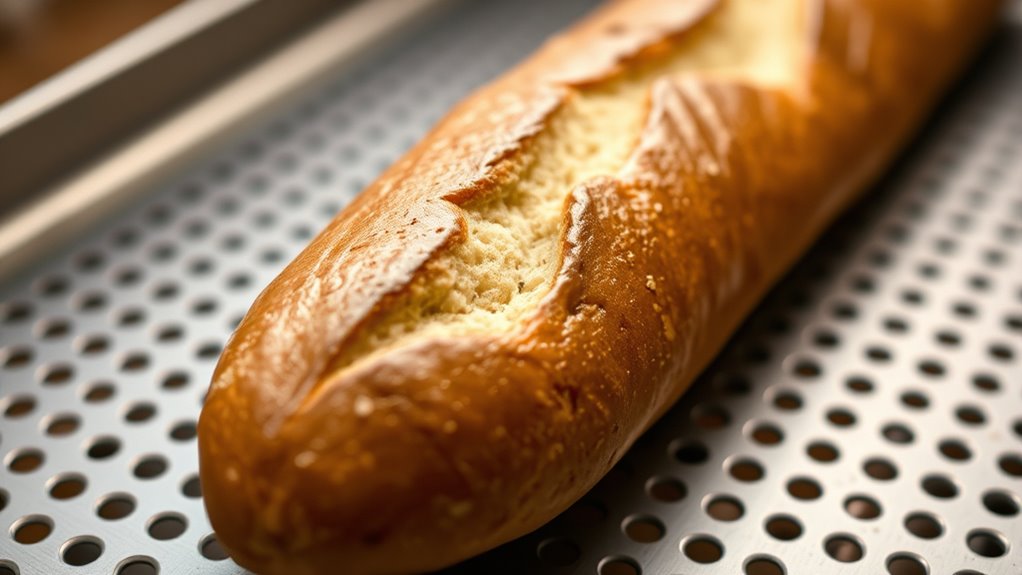
Choosing between solid and perforated baguette pans depends on your baking goals. Solid pans provide a uniform environment, promoting consistent flavor infusion and a soft interior, making them ideal if you want a tender crumb. Perforated pans, on the other hand, allow better airflow and heat circulation, leading to crisper crusts and enhanced aesthetic appeal. If you prioritize a traditional, crunchy crust and a visually appealing loaf with prominent ridges, perforated pans are your best bet. However, they may not achieve the same even moisture distribution as solid pans. Consider your preferences: if you want a softer interior with subtle crust, go with solid. For a more rustic look and crunch, perforated pans deliver superior results. Both have their pros and cons based on your desired baking outcome. For optimal results, understanding baking equipment choices can help you select the right pan for your specific needs. Additionally, understanding pan design can inform your decision to achieve specific crust textures and loaf appearances. Recognizing baking process factors such as humidity and oven temperature can further optimize your baking results. Incorporating herbal techniques can also enhance the flavor profile of your baked goods by using natural plant-based ingredients.
How Can You Use Perforated Pans to Make Better Baguettes?
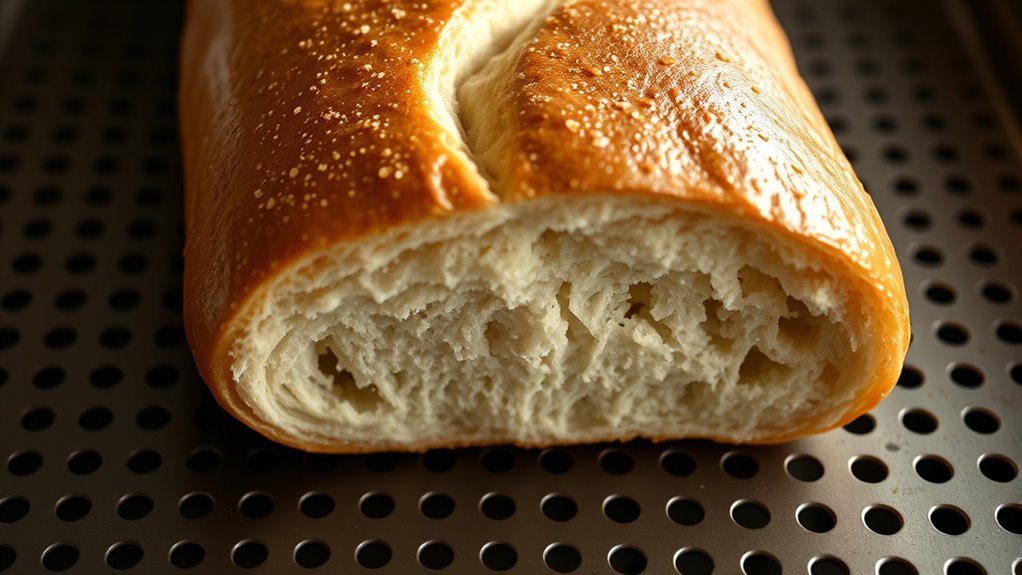
Using perforated pans helps your baguettes develop an even, crispy crust by promoting better heat distribution. They also prevent sticking and damage, making it easier to handle your bread without tearing. Plus, improved air circulation guarantees your baguettes bake uniformly and achieve that perfect texture.
Promotes Even Crust Development
Perforated pans help guarantee your baguette develops an evenly crisp crust by allowing heat and moisture to escape more efficiently during baking. This promotes better dough expansion, resulting in a uniform rise and a consistent baking texture. The holes enable hot air to circulate around the dough, preventing sogginess and ensuring the crust forms evenly across the loaf.
To maximize this effect, consider:
- Ensuring proper airflow for consistent heat distribution
- Using the pan to prevent moisture buildup inside the oven
- Achieving a golden, crunchy crust with balanced moisture escape
- Enhancing overall dough expansion for a light, airy interior
This way, your baguette will boast a beautifully crisp crust with ideal texture every time.
Prevents Sticking and Damage
A perforated pan not only promotes even crust development but also plays a key role in preventing your baguette from sticking or getting damaged during baking. The holes in the pan provide a better baking surface, reducing contact between the dough and the pan material. This minimizes the risk of sticking, especially as the dough expands during baking. Without a perforated surface, the dough can cling to the pan, causing tearing or deflation. The perforations ensure that heat reaches the bottom of the baguette evenly, supporting safe dough expansion without sticking. This results in a cleaner release after baking and preserves the shape and texture of your baguette, making the process more reliable and your final product more professional-looking.
Improves Air Circulation
Since perforations allow hot air to circulate more freely around the dough, they help create an even baking environment inside the oven. This improved air flow enhances your baking techniques, resulting in crusts that are perfectly crispy and evenly browned. It’s especially beneficial when working with different flour types, as each responds differently to heat and air circulation. To maximize this benefit, consider these key points:
- Achieve consistent oven spring, giving your baguettes a beautiful rise.
- Prevent soggy bottoms by promoting uniform moisture evaporation.
- Develop a crunchy crust that’s irresistible to bite into.
- Reduce baking time, so your baguettes are ready faster without sacrificing quality.
Perforated pans truly elevate your baking results by optimizing air movement around your dough.
Common Myths About Baguette Pan Holes, Debunked
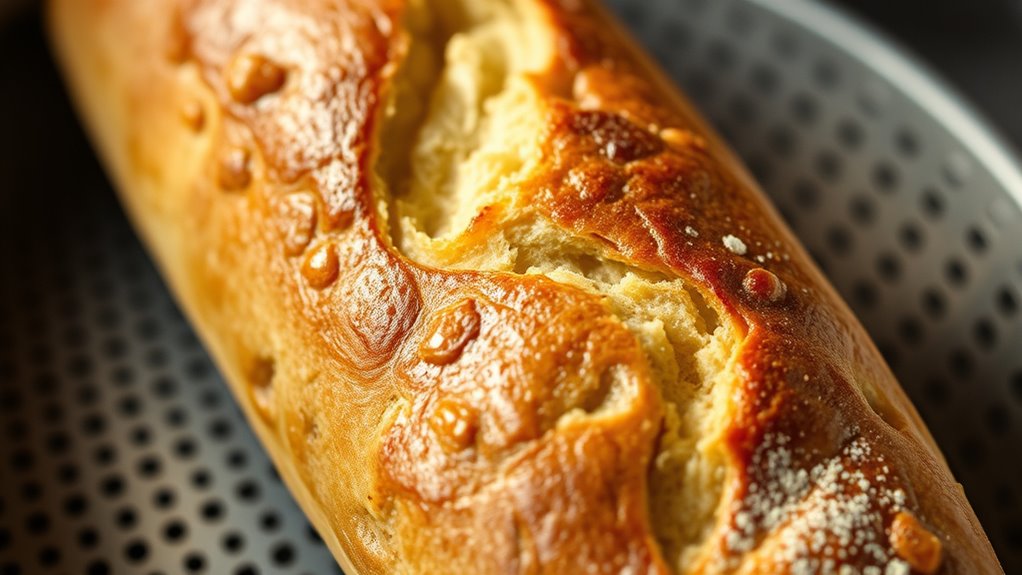
Many bakers believe that the holes in a baguette pan are just for decoration, but this isn’t true. These holes are a key part of pan design, addressing common baking misconceptions. They help improve air circulation and moisture escape, resulting in crustier, evenly baked baguettes. Some think the holes weaken the pan, but they are strategically placed for ideal performance. Understanding the purpose of these perforations clarifies their role in professional baking. Here’s a deeper look:
| Myth | Reality | Impact on Baking |
|---|---|---|
| Holes are just decoration | They aid in air flow and crust development | Better texture and crust quality |
| Holes weaken the pan | Designed for durability and heat distribution | Consistent baking results |
| Holes cause sticking | Properly designed pans prevent sticking | Easy removal of baked bread |
| Holes reduce heat transfer | Enhance heat circulation for even baking | Uniform loaf coloration |
Frequently Asked Questions
Do Perforations Impact the Overall Texture of the Baguette?
Yes, perforations impact the overall texture of the baguette by promoting better crust development and a lighter crumb texture. The holes allow heat to circulate more evenly, creating a crispier crust, while also helping steam escape during baking. This results in a more airy, open crumb and a satisfying crunch. If you want a baguette with ideal crust and crumb, using a perforated pan can make a significant difference.
Can Perforated Pans Be Used for Baking Other Bread Types?
Absolutely, perforated pans aren’t just for baguettes. They can be perfect for alternative bread types like ciabatta or fougasse, giving those crusts an irresistible crunch. Just consider pan material considerations—metal pans heat differently than silicone, affecting baking times and crust development. Using perforated pans creatively can elevate your baking game, but always keep an eye on how the pan’s design influences your bread’s texture and crust.
How Do Holes Affect the Longevity of the Baking Pan?
Holes in your perforated baking pan can reduce its durability over time, especially if you frequently bake acidic or moist items that promote corrosion. The perforations may weaken the structural integrity, leading to potential warping or damage. To guarantee longevity, choose a pan with good corrosion resistance, and avoid harsh cleaning methods. Proper care and selecting high-quality materials help maintain your pan’s durability despite the perforations.
Are Perforated Pans Easier to Clean Than Solid Pans?
Perforated pans are generally easier to clean than solid pans because their holes allow crumbs and excess flour to fall through, reducing residue buildup. You can rinse or scrub them more efficiently, saving time and effort. However, be mindful that the holes might trap small bits, so thorough cleaning is necessary. While perforations can slightly affect pan durability, proper care guarantees they remain functional and long-lasting, making cleaning easier overall.
Do Different Hole Sizes Influence Baking Results?
Think of the holes as the secret sauce for your baguette mastery. Smaller holes give your dough room to expand evenly, creating a lighter crumb, while larger holes boost crust development, giving it that perfect crunch. Varying hole sizes influence how heat circulates and moisture escapes, so choose wisely based on your desired texture. With the right perforations, you’ll unleash bakery-quality baguettes right in your own kitchen.
Conclusion
So, next time you see those tiny holes on your baguette pan, remember—they’re not just there for looks. Despite all the hype about perfect crusts and faster baking, sometimes it’s just about giving your bread a little extra air and moisture. Ironically, those holes might be the only thing standing between a soggy mess and a bakery-worthy baguette. Who knew tiny holes could have such a big impact?