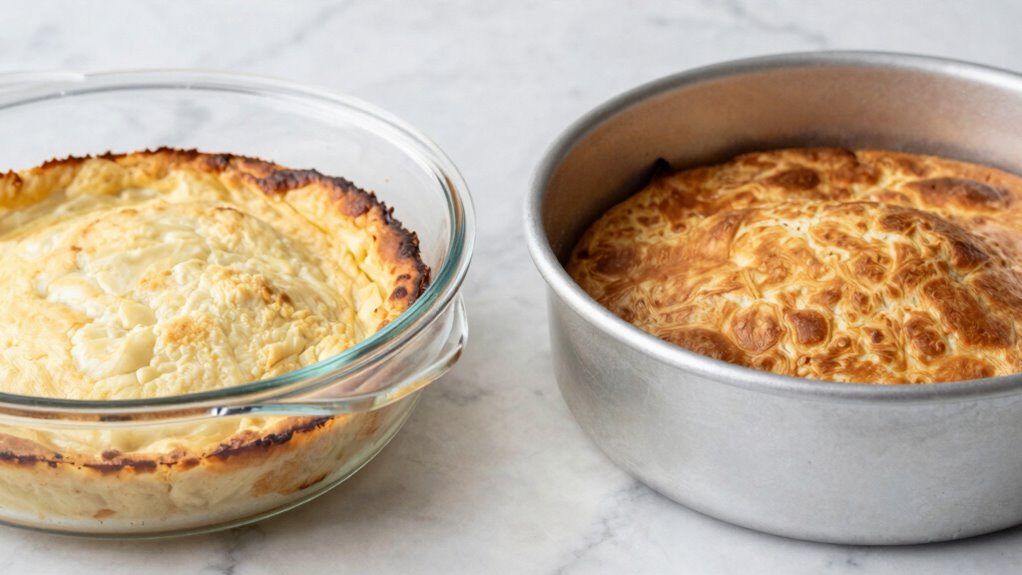

When using glass versus metal bakeware, you’ll notice timing differences because metal heats quickly and conducts heat evenly, so baked goods often cook faster and may require shorter times. Glass heats more slowly but retains heat longer, meaning you might need to add a few extra minutes to avoid underbaking. Understanding these properties helps you adjust baking times for perfect results—stick around to learn how to optimize each type for your recipes.
Key Takeaways
- Metal bakeware conducts heat faster, requiring shorter baking times to prevent overbaking.
- Glass heats more slowly but retains heat longer, often needing additional baking time.
- Differences in heat conduction affect how quickly baked goods reach desired doneness.
- Proper preheating and monitoring are essential to adjust timing based on material properties.
- Heat retention in glass can cause continued cooking after removal, influencing timing adjustments.
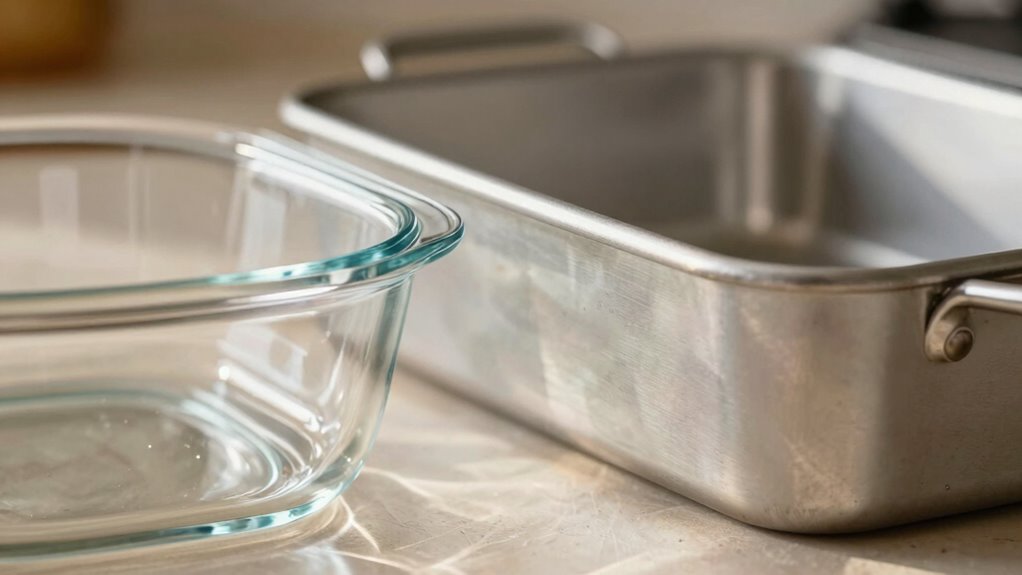
Choosing the right bakeware material can considerably impact your baking results, as different materials conduct heat differently and affect how your baked goods turn out. When comparing glass and metal bakeware, understanding these differences becomes essential. Metal bakeware, typically made of aluminum or steel, is known for its excellent heat conduction. Aluminum, in particular, heats quickly and evenly, allowing you to achieve consistent browning and crispiness. This rapid heat transfer helps baked goods rise properly and develop a golden crust, making it ideal for cookies, pies, and quick breads. However, aluminum’s high heat conduction also means it can cause uneven baking if not monitored carefully, especially if the pan’s thickness varies.
Glass bakeware, on the other hand, offers different advantages. It’s usually made from borosilicate or tempered glass, which is highly durable and resistant to thermal shock, making it a safe choice for oven-to-table presentation. Glass provides a more gentle, even heat distribution compared to metal, which means your baked goods tend to cook more uniformly. But this also means that baking times often need to be adjusted. Because glass heats up more slowly and retains heat longer, your baked items might take a little longer to cook thoroughly. This is especially true for recipes that rely on quick, high-temperature baking, where timing becomes vital to avoid overbaking or underbaking.
The durability of ceramic bakeware adds another layer to the decision. Ceramic is often praised for its aesthetic appeal, but its main strength lies in its durability and heat retention. While ceramic doesn’t conduct heat as efficiently as aluminum, it distributes heat evenly once heated and retains it well, which can be beneficial for slow-cooking dishes or casseroles. The trade-off is that ceramic can sometimes crack or chip if subjected to sudden temperature changes, so handling it carefully is essential.
Understanding these properties means you’ll need to adjust your baking times based on the material. Metal pans, with their rapid heat conduction, usually require shorter baking times, and you should keep a close eye to prevent overbaking. Glass pans may need a few extra minutes, but you also have to consider that they retain heat longer, so removing baked goods at the right moment is vital to prevent overcooking after removal from the oven. Additionally, proper preheating of your bakeware can optimize heat distribution and baking consistency. Knowing how each material heats and conducts allows you to fine-tune your recipes for perfect results every time.
Frequently Asked Questions
Can I Substitute Glass for Metal in All Recipes?
You can often substitute glass for metal in recipes, but keep in mind material compatibility and recipe adjustments. Glass heats more evenly and retains heat longer, so you might need to lower the oven temperature by about 25°F and watch for longer baking times. Always monitor your dish closely when making the switch, and remember that some recipes, especially those requiring crispy edges, may not turn out the same.
How Does Bakeware Color Affect Baking Times?
You’ll notice that darker-colored bakeware, whether glass or metal, absorbs more heat due to better thermal conduction, which speeds up baking times. Lighter colors reflect heat, so baking takes longer. Additionally, darker pans retain heat better, maintaining consistent temperatures and possibly overbaking. So, always keep an eye on your recipe’s timing, adjusting as needed based on your bakeware’s color and material to prevent over- or under-baking.
Are There Safety Concerns With Heated Glass or Metal?
You should be cautious about safety when using heated glass or metal bakeware. Glass can experience thermal shock if exposed to sudden temperature changes, causing it to crack or shatter. Metal isn’t microwave safe, so avoid microwaving it to prevent sparks or fires. Always handle bakeware with oven mitts and follow manufacturer guidelines to avoid burns or accidents. Being aware of these safety concerns helps keep your baking safe and enjoyable.
Do Different Brands of Glass or Metal Bakeware Perform Differently?
Different brands of glass or metal bakeware can perform differently because of their brand reputation and material durability. You might notice that some brands use high-quality materials, guaranteeing even heat distribution and resistance to warping, while others may not. Choosing reputable brands with durable materials helps you get consistent results, reduces the risk of breakage, and guarantees your bakeware lasts longer, making your baking experience more reliable and enjoyable.
How Does Oven Type Influence Bakeware Performance?
Your oven type considerably impacts bakeware performance because different oven heat levels and thermal conductivity affect baking times. For example, a convection oven circulates hot air, leading to more even heat distribution, which can shorten baking times. Metal bakeware has higher thermal conductivity, meaning it heats up faster and conducts heat better than glass, so you might need to adjust timing accordingly. Always monitor your baked goods to prevent over- or under-baking.
Conclusion
Choosing between glass and metal bakeware is like picking the right tool for a job—you’ll want what works best for your specific needs. Remember, timing isn’t just about numbers; it’s the heartbeat of perfect baking. When you understand how each material responds, you reveal the secret to consistently delicious results. So, consider your recipe and oven temperament—because the right bakeware turns your kitchen into a symphony, not just a noisy room.