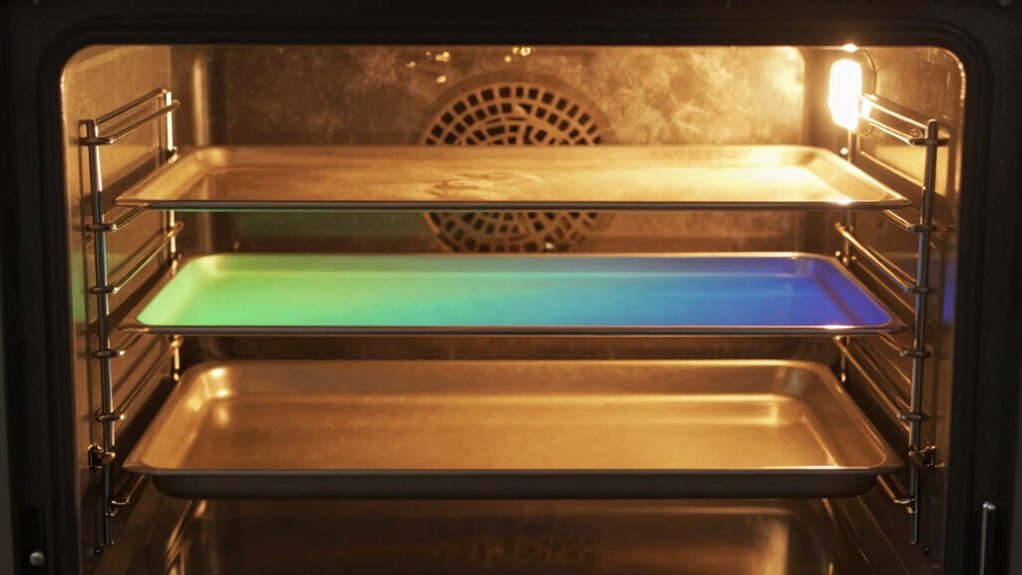
Understanding rack positions in small ovens relies on recognizing the 3-zone heat map, which shows hot, warm, and cool areas within the oven. Positioning racks wisely based on these zones guarantees even cooking and prevents uneven results. For instance, avoid placing delicate baked goods near hot spots. If you keep exploring, you’ll discover how to identify these zones and optimize your rack placement for consistent, better cooking outcomes.
Key Takeaways
- Understanding heat zones helps optimize rack placement for even cooking in small ovens.
- The 3-zone heat map visualizes hot, warm, and cool areas for strategic food positioning.
- Rack position impacts heat exposure; upper racks are hotter, lower racks are cooler.
- Use heat map insights to prevent hot spots and ensure consistent results across recipes.
- Routine oven checks and smart technology enhance heat distribution and cooking precision.
How Do Rack Positions Affect Cooking in Small Ovens?
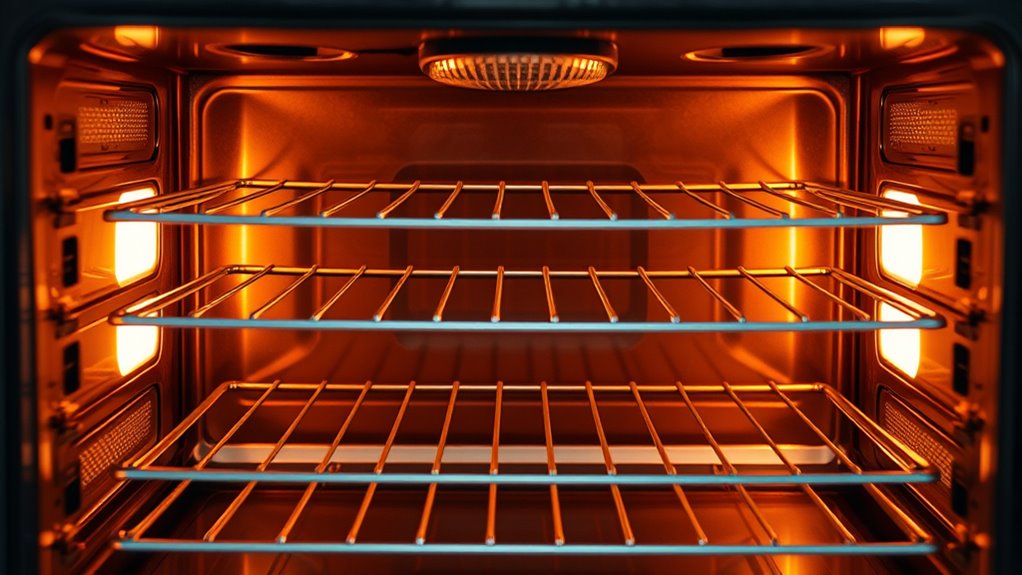
The position of your rack in a small oven can considerably influence how evenly your food cooks. When you place your rack too close to the heating element, you risk uneven cooking or burning, so always consider oven safety by positioning racks properly. Proper rack placement is crucial for achieving consistent results across different recipes. Adjusting rack height impacts heat exposure, with higher racks often receiving more direct heat, which is ideal for broiling but not baking. Proper cleaning techniques are essential to maintain even heat distribution; food residue or grease buildup can block heat flow, causing uneven results. Regularly cleaning your oven’s interior ensures consistent heat and safe operation. Being aware of oven safety practices helps prevent accidents and ensures optimal performance. Additionally, understanding heat distribution can help you choose the best rack position for specific dishes, resulting in better-cooked meals. Recognizing the importance of thermal conduction can further enhance your ability to optimize heat flow within the oven. Implementing consistent oven maintenance routines can also improve heat efficiency and prolong the lifespan of your equipment. By understanding and adjusting rack positions thoughtfully, you optimize your cooking performance while maintaining safety and cleanliness.
What Are Heat Zones, and Why Do They Matter?

Understanding heat zones in your small oven is essential because heat doesn’t distribute evenly throughout the interior. Knowing where the hot spots are helps you position your racks safely and effectively, preventing uneven cooking. Heat zones are areas with higher or lower temperatures caused by the heat source, which can create hot or cool spots inside the oven. Recognizing these zones improves oven safety by reducing the risk of burns or fire hazards from hot surfaces. It also allows you to optimize your cooking, ensuring food cooks evenly. By understanding how the heat source impacts different parts of your oven, you can better plan rack placements and cooking times. Proper rack placement is key to achieving consistent results in your small oven. Mastering heat zones leads to better results and safer oven use overall, especially since heat distribution can vary significantly between different models and brands. Additionally, being aware of heat source placement can help you anticipate how the heat will move within your oven, further enhancing your cooking techniques. Recognizing these heat flow patterns allows for more precise adjustments to your cooking process and can help prevent hot spots that might cause uneven baking or burning.
What Is the 3-Zone Heat Map, and How Does It Help?

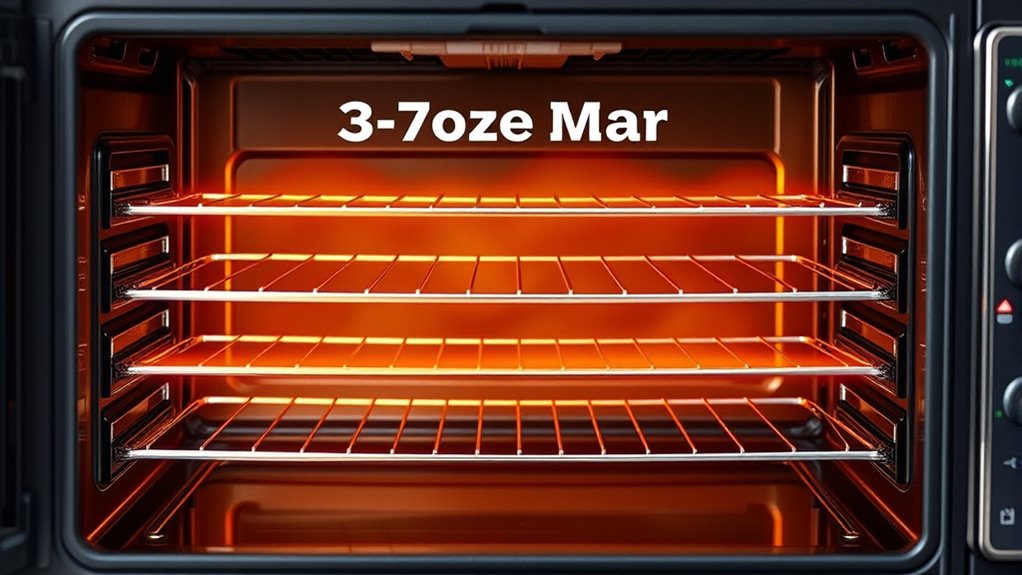
A 3-zone heat map shows how heat is distributed across your oven, making it easier to see hot and cool spots. This visualization can help identify hot spots and cold spots, allowing you to adjust your rack positions for even cooking. By understanding your oven’s heat distribution pattern, you can optimize your baking setup for consistent results. This tool helps you make the most of your oven’s heat, saving time and improving results. Additionally, utilizing smart technology features like temperature sensors can provide real-time feedback to further refine your baking accuracy and detect potential manipulation of temperature readings. Recognizing how heat flow varies within your oven can also help you troubleshoot uneven cooking issues more effectively.
Visualizing Heat Distribution
Visualizing heat distribution in small ovens is essential for achieving consistent cooking results. The 3-zone heat map helps you see how airflow patterns influence temperature gradients across different oven areas. By mapping these zones, you gain a clear picture of where heat is concentrated and where it’s lacking. This visualization allows you to identify hot spots and cooler spots, making it easier to adjust rack positions for even cooking. Understanding the airflow patterns helps you optimize heat flow, ensuring uniform temperature distribution throughout the oven. The heat map acts as a visual guide, highlighting how different parts of the oven behave under various conditions. With this knowledge, you can improve your cooking precision, reduce energy waste, and achieve better overall results.
Optimizing Oven Usage
The 3-zone heat map is a powerful tool that helps you optimize oven usage by providing a clear visual of temperature distribution within your small oven. By identifying hot and cool spots, you can adjust rack positions to ensure even cooking. Proper oven insulation minimizes heat loss and maintains consistent temperatures, enhancing the accuracy of the heat map. Regular temperature calibration is essential to ensure the oven’s temperature readings match actual conditions, preventing uneven heat distribution. With this information, you can prevent over- or under-cooking, save energy, and extend the lifespan of your oven. Using the heat map effectively, combined with good insulation and precise calibration, streamlines your cooking process and improves overall results.
How Can I Identify the Three Heat Zones in My Oven?

To identify the three heat zones in your oven, start by understanding how heat naturally distributes during operation. When you turn it on, the top tends to be hotter, the middle remains moderate, and the bottom is usually cooler. To detect these zones, perform simple oven maintenance checks, like preheating and feeling for temperature differences. Remember safety precautions—use oven mitts and avoid direct contact with hot surfaces. You can also use an oven thermometer to get precise readings at different rack levels. Visual cues help too:
- Look for uneven browning or cooking results
- Notice hot spots during preheat testing
- Observe the placement of heating elements
- Use a thermometer to map temperature variation across racks
- Understanding heat distribution helps you optimize rack placement and ensures safe, even cooking.
How Does the 3-Zone Heat Map Improve Rack Placement?
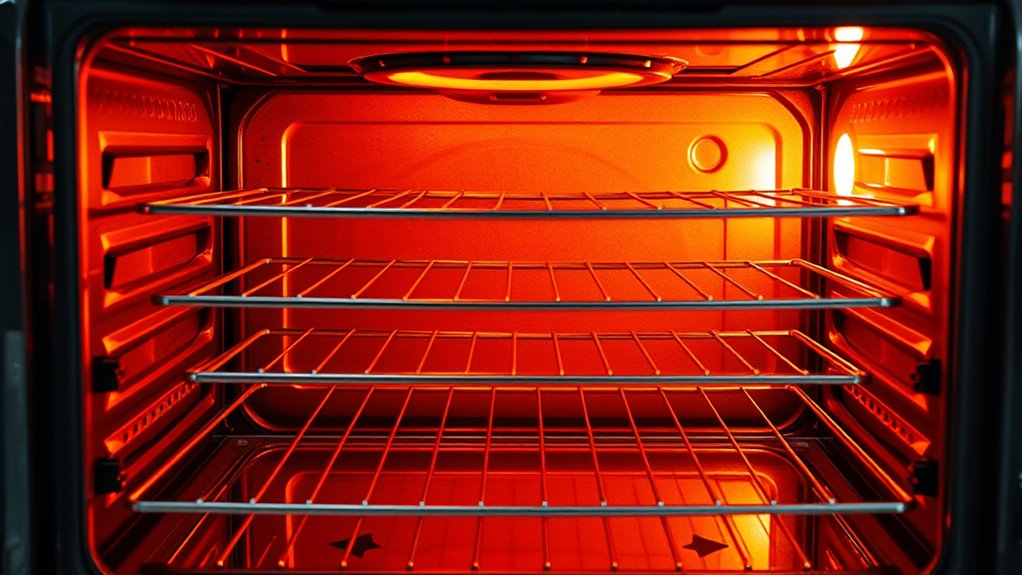
A 3-zone heat map helps you understand the temperature distribution inside your oven, making rack placement more effective. By knowing the hot, warm, and cool zones, you can adapt your baking techniques to achieve consistent results. For example, placing delicate items in the cooler zone prevents over-baking, while browning or roasting benefits from the hotter areas. This knowledge also highlights the importance of regular oven maintenance; uneven heat may indicate calibration issues, which can distort your heat map. Proper oven calibration is essential for accurate heat zone mapping and consistent results. Adjusting rack positions based on these zones ensures even heat exposure, improving overall baking outcomes. Proper calibration not only optimizes your oven’s performance but also helps maintain safety standards by preventing overheating. Mastering rack placement through a clear heat map minimizes guesswork, enhances consistency, and helps you make the most of your oven’s capabilities.
What Are Some Practical Tips for Positioning Racks by Heat Zones?
Positioning your racks effectively within heat zones starts with understanding where the hottest, warm, and coolest areas are in your oven. This helps prevent uneven cooking and ensures oven safety. To optimize rack placement:
- Place delicate baked goods on the middle rack, away from direct heat.
- Use the top rack for broiling or quick-cooking items.
- Keep raw meats on the bottom to avoid drips contaminating other foods.
- Regularly clean your oven to prevent buildup that disrupts heat distribution.
Proper positioning reduces hot spots, improves cooking results, and minimizes the risk of accidents. Remember to follow cleaning tips to keep heat zones consistent. Always monitor oven temperature, and avoid overcrowding racks, which can interfere with airflow and heat distribution.
Which Rack Positions Work Best for Common Recipes?
Choosing the right rack position can make a significant difference in how your recipes turn out. For baking cookies or roasting vegetables, place the rack in the middle zone for even heat distribution. When broiling meats or toasting, position the rack closer to the top for quick, high-heat results. For slow roasting or baking delicate items like soufflés, the lower rack helps prevent overbrowning. Always prioritize oven safety by using oven mitts when adjusting racks and avoid overcrowding. Regular cleaning tips, such as wiping spills immediately and removing crumbs, help maintain consistent heat and prevent odors. Proper rack placement ensures your food cooks evenly, reduces the risk of accidents, and keeps your oven in top condition. Additionally, smart oven features like temperature sensors and adaptive heat control can further optimize your cooking results. Understanding heat distribution patterns in your oven can also help you choose the ideal rack position for specific recipes. Being aware of your oven’s unique hot spots can improve the accuracy of your cooking and baking outcomes. Recognizing these areas allows for better heat management, leading to more consistent and predictable results in your cooking. Moreover, knowing how airflow affects heat transfer can help you prevent uneven cooking and ensure optimal results.
How Should I Adjust Rack Placement for Different Dishes?
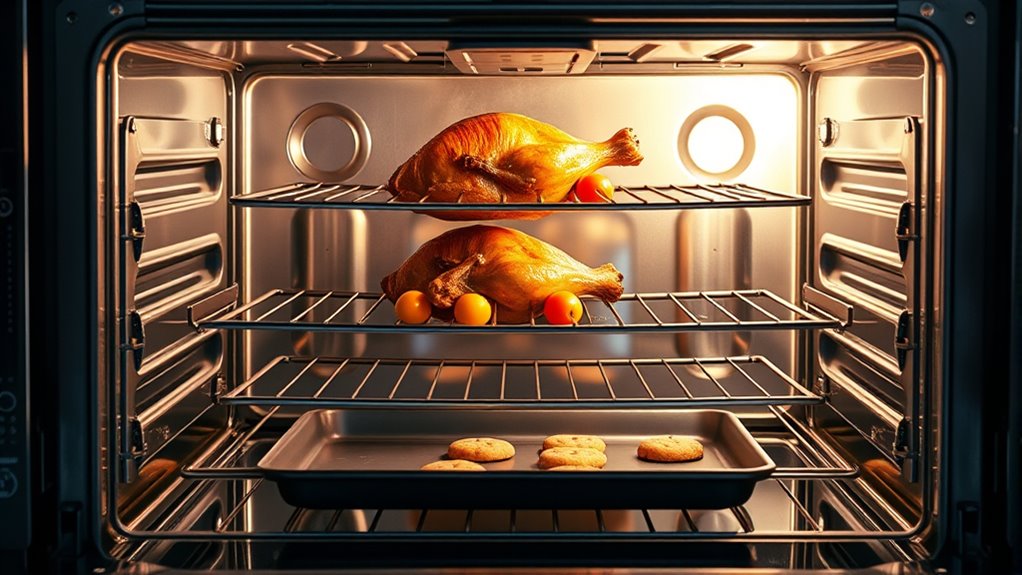
Adjusting your oven rack placement based on the dish you’re preparing can greatly enhance the final result. Different cooking techniques require specific rack positions to optimize heat distribution and browning. For example, baking cookies benefits from placement in the middle, while broiling steak works best on the top rack. When roasting vegetables or meats, consider the heat zone to prevent burning or undercooking. Proper appliance maintenance, like cleaning oven racks and ensuring even heat flow, supports consistent results. Additionally, understanding your oven’s hot spots can help you choose the best rack position for each dish. To visualize, think about: – Moving a cake closer to the center for even baking – Placing broiled dishes on the top rack for quick browning – Positioning bread or muffins on a lower rack for thorough heat – Adjusting based on your oven’s hot spots and cooking techniques for perfect dishes. Regularly calibrating your oven’s temperature can also help ensure your rack placements yield the best results.
When and How Should I Reposition Racks for Even Cooking?
Reposition your oven racks whenever you notice uneven cooking or before starting a new dish that requires different heat exposure. This helps guarantee even heat distribution and prevents undercooked or burnt spots. Always prioritize oven safety by turning off the oven and allowing it to cool before adjusting racks. When repositioning, handle racks carefully to avoid injury and ensure they’re securely in place. Regular cleaning tips include removing grease and food debris that can affect heat flow, making repositioning more effective. Repositioning mid-cook can help balance temperature zones, especially in small ovens with uneven heat. Keep in mind, frequent adjustments may indicate a need for calibration or maintenance, so check your oven’s performance periodically to maintain consistent results and safe operation.
How Can Using the 3-Zone Heat Map Boost Your Cooking Results?
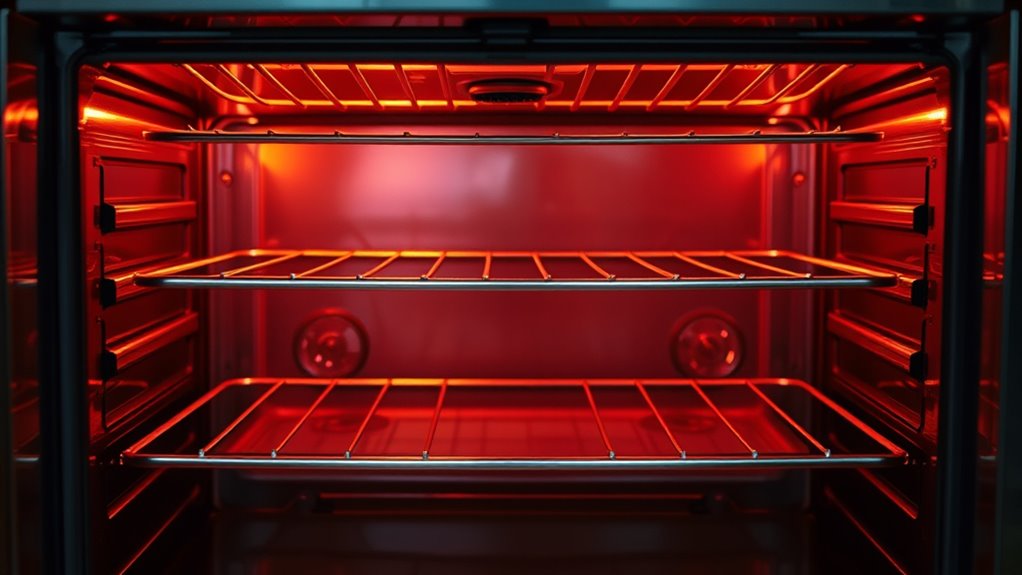
Using a 3-zone heat map in your small oven allows you to visualize temperature variations across different areas, helping you optimize your cooking. By understanding where heat is concentrated, you can adjust oven maintenance routines and improve cooking timing, ensuring consistency. This map reveals hot spots and cooler zones, letting you position food more strategically.
- Identify areas needing oven maintenance to prevent uneven heat distribution
- Adjust rack placement to avoid overcooking or undercooking
- Save time by reducing trial-and-error during cooking
- Achieve more consistent results without constantly repositioning racks
With this insight, you make smarter decisions about oven use, maintain it better, and enhance your cooking results with less effort. The heat map becomes an essential tool for precise, reliable cooking outcomes.
Frequently Asked Questions
Can the Heat Zones Vary Between Different Small Oven Models?
Yes, the heat zones can vary between different small oven models. You might notice temperature differences across oven shelves, affecting your cooking. Rack flexibility allows you to adjust rack positions, helping you optimize heat distribution despite these variations. Keep an eye on the oven temperature and experiment with rack placement to guarantee even cooking, as each model’s heat zones aren’t always identical.
How Often Should I Reassess Heat Zones for Optimal Cooking?
You should reassess your heat zones at least once every season to account for seasonal adjustments that affect oven performance. Keep rack height consistent during each check to ensure accurate readings, and make adjustments if you notice uneven cooking. Regular reassessment helps you maintain ideal cooking conditions, especially when ambient temperatures change. Staying proactive ensures your small oven operates efficiently and produces consistent results every time.
Are Certain Rack Positions Better for Specific Types of Baked Goods?
Certain rack positions are indeed better for specific baked goods to guarantee baking consistency. For example, placing bread on the middle rack promotes even heat distribution, while cookies benefit from being lower to avoid over-browning. Adjust your rack positioning based on the item’s size and baking requirements. Regularly reassessing heat zones helps maintain ideal baking conditions, ensuring your baked goods turn out perfect every time.
How Do Oven Door Openings Affect Heat Zones During Cooking?
Think of your oven door as a dam holding back a river of heat. When you open it, heat escapes, influenced by oven door insulation and heat loss factors. This sudden release cools the heat zones, disrupting even cooking. During a baking marathon, I noticed my cookies spread unevenly when I kept opening the door. Keep it closed to maintain consistent heat zones and guarantee perfect results.
Can Using the Heat Map Reduce Cooking Time Significantly?
Yes, using the heat map can substantially reduce cooking time. By understanding heat distribution and adjusting rack positions accordingly, you optimize temperature consistency throughout the oven. This targeted approach ensures food cooks evenly and efficiently, saving you time and energy. When you leverage the heat map, you’re better equipped to manage heat zones, resulting in quicker, more reliable cooking outcomes.
Conclusion
By understanding the 3-zone heat map, you can optimize rack placement, improve heat distribution, and achieve more consistent results. You can identify heat zones, adjust rack positions, and tailor your cooking strategies to match each dish’s needs. You can prevent uneven baking, enhance flavors, and boost your confidence in the kitchen. Embrace these techniques, experiment with your oven, and enjoy better, more reliable cooking every time.