To bake perfectly, you need to target specific internal temperatures: cakes should reach about 200°F (93°C) to guarantee they’re set without drying out, bread is done from 190°F to 210°F (88°C to 99°C), and custards should be around 170°F to 175°F (77°C to 80°C) for the right silky texture. Monitoring these temps helps prevent under or overbaking. If you want to master these numbers, you’ll discover more tips on how to bake consistently perfect outcomes.
Key Takeaways
- Cakes are typically done at an internal temperature of around 200°F (93°C), indicating the batter has set and is firm.
- Bread reaches doneness between 190°F and 210°F (88°C to 99°C), ensuring it is fully cooked without overbaking.
- Custards are properly cooked at approximately 170°F to 175°F (77°C to 80°C), for a smooth, creamy texture.
- Using a food thermometer during baking helps achieve consistent results and prevent under or overbaking.
- Monitoring internal temperature provides precision, ensuring baked goods are perfectly cooked inside regardless of appearance.
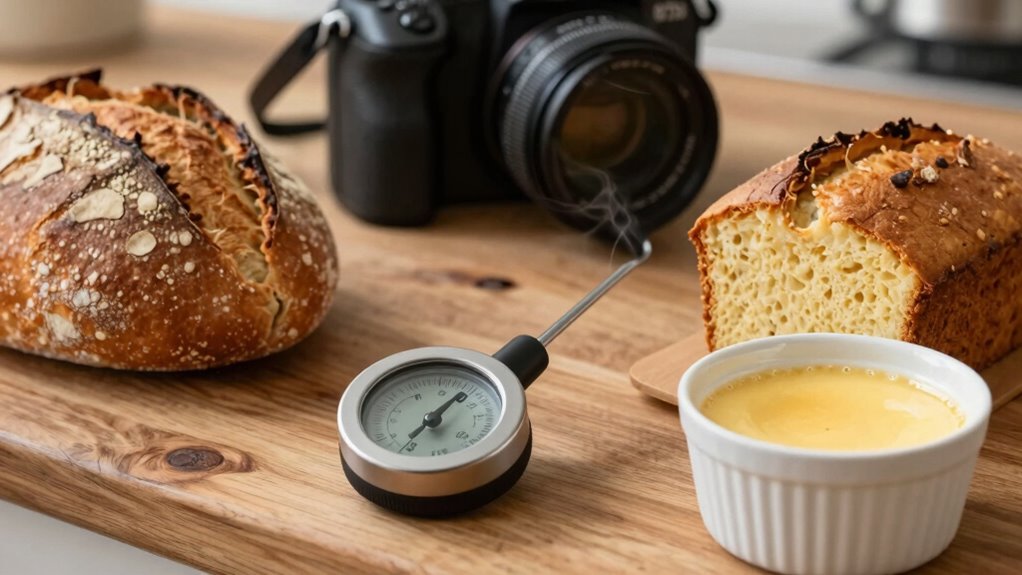
Have you ever wondered why some baked goods turn out perfectly while others fall short? The secret often lies in understanding the role of oven temperature and internal temperature guidelines. While oven temperature controls how quickly your baked item cooks on the outside, it’s the internal temperature that reveals whether it’s truly done inside. Relying solely on visual cues or time can lead to inconsistent results, but paying attention to internal temperature gives you precision and confidence in your baking.
Understanding internal temperatures ensures perfect baked goods every time.
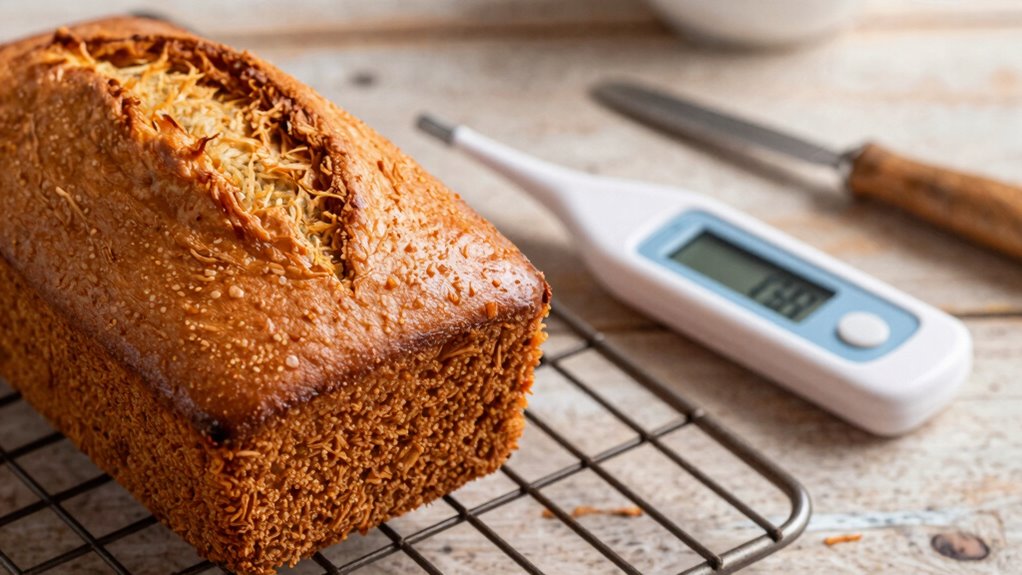
When baking cakes, the internal temperature typically reaches around 200°F (93°C). This is the point where the batter has set, and the structure is firm enough to hold together without collapsing. Using a food thermometer inserted into the center of the cake ensures you’re not underbaking or overbaking. If the internal temperature is too low, your cake may be dense, gooey, or raw in the middle. Too high, and it risks drying out or becoming crumbly. Maintaining the correct oven temperature is essential here because an oven that’s too hot can cause the outer layers to brown too quickly while the inside remains underdone. Conversely, an oven that’s too cool may result in a dense or unevenly baked cake.
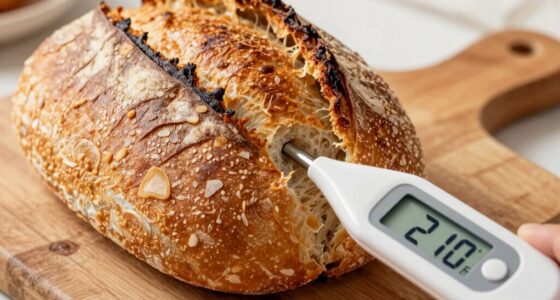
Bread baking also hinges on internal temperature guidelines. For most bread, an internal temp of about 190°F to 210°F (88°C to 99°C) signals doneness. As bread bakes, the internal temperature helps you determine if it’s fully cooked without relying solely on crust color or texture. If you’re baking a loaf, insert a thermometer into the center; once it hits the target range, your bread is ready. Remember, oven temperature impacts the rate at which the bread develops its crust and crumb structure. A properly calibrated oven ensures even heat distribution, helping the internal temperature rise uniformly. An oven that’s too hot may cause a thick, dark crust before the inside is baked through, while a too-cool oven can lead to a dense, undercooked loaf.
Custards demand their own precise internal temperature guidelines—generally around 170°F to 175°F (77°C to 80°C). This temperature range ensures the proteins in eggs have coagulated sufficiently to thicken the custard without curdling. Using an instant-read thermometer allows you to catch this perfect moment. If the custard’s internal temp is below this range, it’ll be runny; if it’s above, you risk a grainy, overcooked texture. Again, oven temperature plays an important role—baking at too high a temperature can cause uneven cooking or a curdled texture, while too low might prolong baking unnecessarily.
In all cases, mastering oven temperature and internal temperature guidelines helps you produce consistent, delicious baked goods. It’s about more than just time or appearance—it’s about knowing precisely when your treats are perfectly cooked inside. When you pay attention to these numbers, baking becomes both more predictable and more satisfying, turning good results into great ones every time.
Frequently Asked Questions
How Accurate Are Oven Temperature Settings for Baking by Internal Temp?
Oven temperature settings can be quite accurate if you regularly calibrate your oven and guarantee consistent temperature performance. Many ovens drift over time, affecting baking results. You should check your oven’s calibration with an oven thermometer and adjust the settings if needed. Maintaining temperature consistency is vital for baking by internal temp, as it ensures your cakes, bread, and custards reach the right doneness without over or under-baking.
What Tools Are Best for Measuring Internal Temperatures Precisely?
Imagine holding a tiny, super-accurate spaceship in your hand—that’s what a good thermometer feels like. For precise internal temps, you need a well-calibrated thermometer, whether digital or analog. Digital thermometers often give instant readings, and they’re easy to read, while analog ones are durable and reliable. Choose one with a thin probe for quick, accurate measurements, and regularly calibrate it to guarantee your baked goods turn out perfect every time.
Does Altitude Affect Internal Baking Temperatures?
Altitude definitely affects internal baking temperatures. When you bake at higher altitudes, you should make altitude adjustments and recipe modifications because the lower air pressure causes faster evaporation and leavening. As a result, you might need to increase oven temperature slightly or adjust ingredients to guarantee your baked goods reach the right internal temp. Always monitor internal temperatures closely and tweak your recipe for the best results in different elevations.
How Do Ingredient Variations Influence Target Internal Temps?
Think of your baking as a symphony; ingredient variations can change the tune. When you swap ingredients, like using different flours or fats, it impacts moisture content and structure, which in turn shifts your target internal temps. For example, more moisture might require a slightly higher temp or longer bake time. Pay attention to how substitutions alter your batter’s or dough’s behavior, ensuring you hit that perfect internal temperature every time.
Can Internal Temp Guidelines Be Adjusted for Different Oven Types?
Yes, you can modify internal temp guidelines for different oven types. You should check your oven calibration regularly to guarantee accuracy, as some ovens run hotter or cooler than standard. Based on this, you might need to make recipe adjustments, like extending baking time or increasing temperature slightly. Always use an oven thermometer to guide your adjustments, ensuring your baked goods reach the proper internal temp for perfect results.
Conclusion
By paying close attention to internal temperatures, you can confidently determine when your baked goods are perfect. Trusting these precise numbers helps you avoid under- or over-baking, ensuring moist cakes, fluffy bread, and creamy custards every time. Think of temperature as your secret rhythm—guiding each step with consistency and confidence. When you master these internal temps, baking becomes less about guesswork and more about creating delicious, perfectly cooked treats every time.