
Thick cookies can taste less rich because their dense, uniform interior limits the texture contrast that enhances flavor. When the cookie is heavy and soft throughout, it doesn’t engage your taste buds as effectively as a thinner, crisper one. This reduces the perception of contrasting flavors like sweetness and spices, making the overall taste seem duller. If you want to understand how texture tricks your taste buds and how to fix it, keep going to uncover more details.

Get baking supplies delivered free with Prime
- Fast, free delivery on millions of items
- Prime Video, Amazon Music and more included
- Member-only deals all year
Key Takeaways
- Thick cookies often have a dense interior that dulls flavor contrast, reducing perceived richness.
- Increased moisture in thicker cookies can dilute flavors, making them seem less intense.
- Uniform soft texture in thick cookies limits sensory variation, diminishing flavor complexity.
- Longer baking times for thick cookies can lead to overbaking, resulting in dry, less flavorful edges.
- Reduced texture contrast in thick cookies lessens mouthfeel, decreasing overall flavor perception.
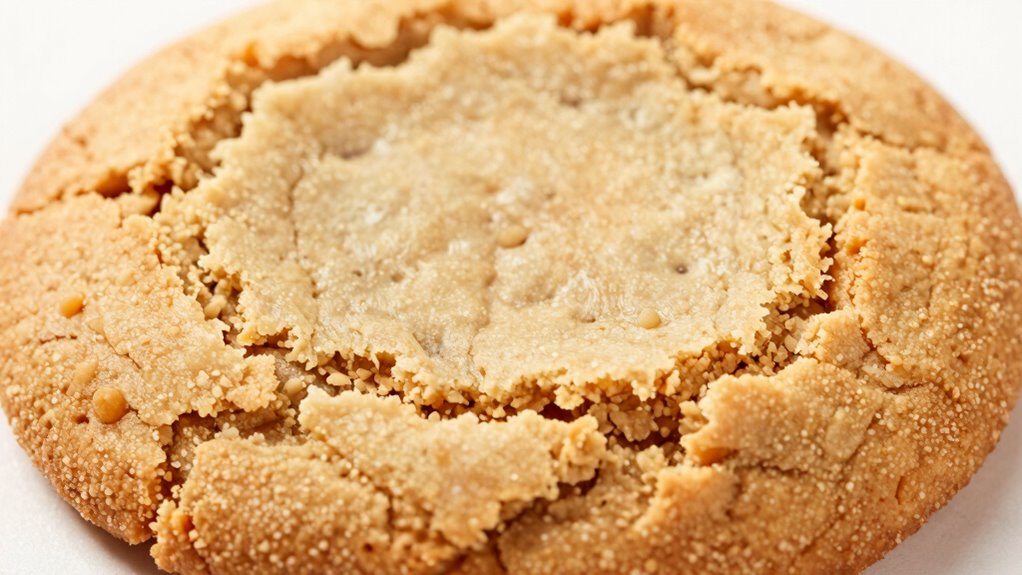
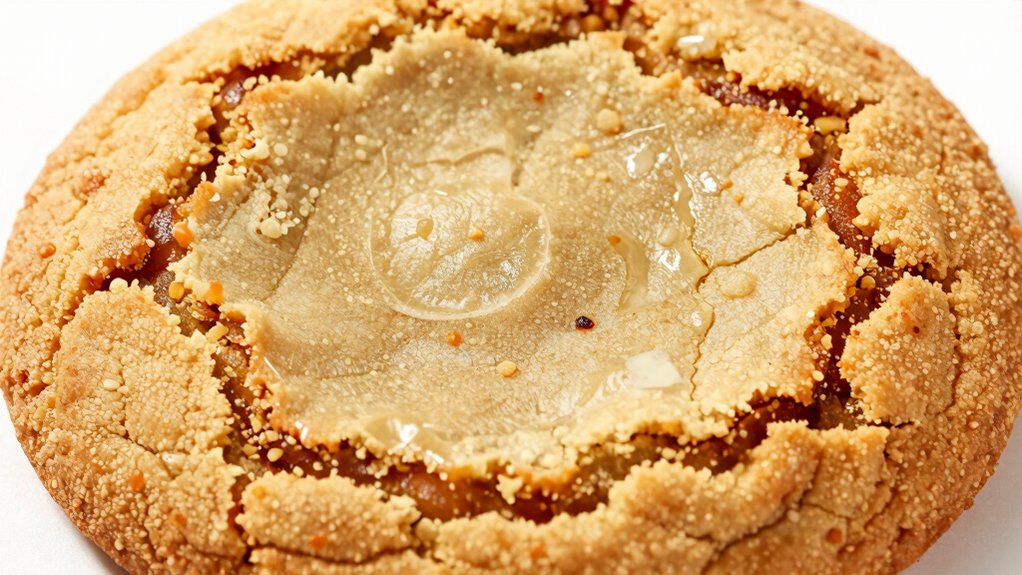
When cookies are thick, they often taste less rich than their thinner counterparts, and this is largely due to how their texture influences flavor perception. You might notice that a dense, hefty cookie doesn’t hit your taste buds the same way a thinner, crisper one does. This is because the way a cookie feels in your mouth impacts how you perceive its flavor, especially when it comes to flavor balance. You might also observe that thicker cookies tend to have a more uniform texture, which can dull the contrast between different flavor elements. For example, the sweetness, butteriness, or even any added spices may not stand out as sharply when the cookie’s interior is heavy and soft throughout.
Texture contrast plays a significant role in how you experience the richness of a cookie. When you bite into a thinner cookie, the crisp edges and tender center create a dynamic mouthfeel. This contrast enhances your perception of flavor because each component interacts differently with your palate. The crunchiness triggers a burst of flavor immediately, while the softer interior allows you to savor the subtler notes. Conversely, thick cookies often lack this variation, making their flavor profile seem muted or less complex. The uniform softness reduces the sensory cues that make flavors seem more vibrant and rich. Additionally, texture variation is crucial for creating an engaging eating experience that highlights the cookie’s flavors. Incorporating proper baking techniques can help achieve these textural differences and improve flavor perception.
Texture contrast enhances flavor perception, making thinner cookies taste more vibrant and complex than dense, uniform ones.
Another aspect to consider is how flavor balance shifts in thicker cookies. Because they contain more mass and moisture, the intense flavors can become diluted or overshadowed by the cookie’s texture. For instance, if you add chocolate chips, their richness might be less noticeable in a thick, doughy cookie compared to a thinner one where the chips are more exposed and concentrated. The overall effect is that the cookie feels more filling but less flavorful, especially if you’re expecting a burst of distinct taste with each bite. Additionally, the moisture content can influence how flavors develop during baking, further impacting perceived richness. Proper baking techniques are essential to ensure the flavor remains vibrant and balanced in thicker cookies.
Furthermore, thicker cookies often require longer baking times, which can influence flavor development. Overbaking can lead to a drier, more crumbly texture that might enhance crispness but diminish moisture and richness. Underbaking, on the other hand, results in a dense, doughy center that can mask flavors and reduce perceived richness. Achieving the right texture contrast in a cookie—crispy edges with a soft interior—can help preserve flavor balance and make the cookie taste more indulgent. Additionally, understanding how baking time and temperature influence flavor and texture is essential for creating cookies that are both satisfying and flavorful. Proper control over these factors ensures the development of the desired flavor richness and a more enjoyable eating experience.
As an affiliate, we earn on qualifying purchases.
Frequently Asked Questions
How Does Cookie Thickness Affect Flavor Distribution?
You notice that cookie thickness influences flavor distribution by affecting texture contrast and visual appeal. Thicker cookies tend to have a softer, more uniform interior, which can dilute the intensity of flavors, making them taste less rich. Meanwhile, the contrast between crispy edges and chewy centers enhances overall enjoyment. Thinner cookies, with more surface area, provide a more concentrated flavor experience, boosting their richness and visual appeal.
Can Baking Time Influence Cookie Richness?
Baking time considerably influences cookie richness by affecting texture and flavor concentration. If you bake cookies longer at a higher temperature, they can become overly crisp, reducing the richness of the centers. To enhance flavor, try baking at a consistent temperature and monitor the timing carefully. Cooling techniques like letting cookies rest on a wire rack help preserve their moisture and flavor, ensuring a richer taste overall.
Do Ingredients Behave Differently in Thick Cookies?
Imagine your cookie as a bustling city; in thick cookies, ingredient interactions slow down, like traffic jams. As a result, flavors and textures vary, creating areas of dense richness and lighter zones. The ingredients behave differently—fats might not spread as evenly, and moisture can be trapped inside, leading to texture variations. Your cookie’s thickness influences how each ingredient interacts, making the overall experience less uniformly rich but more complex.
How Does Moisture Content Impact Flavor Intensity?
Moisture content directly impacts flavor intensity by facilitating moisture diffusion within the cookie. When moisture levels are high, flavor compounds can diffuse more evenly, but excessive moisture can lead to flavor dilution, making the cookie taste less rich. Conversely, lower moisture levels concentrate flavors, enhancing richness. So, controlling moisture content is key to balancing moisture diffusion and preventing flavor dilution, ensuring your cookies taste as flavorful as possible.
Are There Specific Recipes Better for Thin or Thick Cookies?
You’ll find that certain recipes lend themselves better to thin or thick cookies, depending on your desired texture contrast and flavor enhancement. For a crisp, thin cookie that emphasizes a delicate crunch and sharper flavors, go for recipes with less moisture and more sugar. Conversely, thicker cookies with a chewy or cake-like texture benefit from ingredients like more butter and eggs, which boost flavor and provide a satisfying contrast in texture.
As an affiliate, we earn on qualifying purchases.
Conclusion
So, next time you bake those thick cookies, remember they might be missing that irresistible richness you crave. Think of them as a giant, flavorless mountain—impressive but lacking the treasure of deep, buttery goodness inside. If you want that rich, melt-in-your-mouth experience, opt for thinner, more evenly baked cookies. Otherwise, you risk serving up a cookie that’s as dull as a spoon in a treasure hunt. Don’t settle for bland—go for the rich, delicious bite every time!
As an affiliate, we earn on qualifying purchases.
As an affiliate, we earn on qualifying purchases.
Halloween Picks
halloween
As an affiliate, we earn on qualifying purchases.