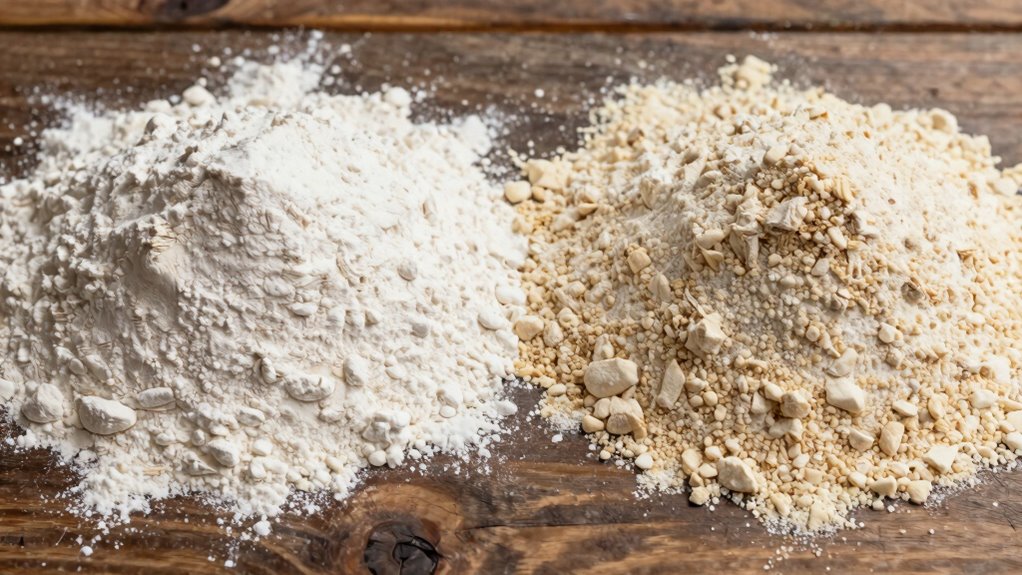
The reason a cup of flour isn’t the same in the US and metric systems comes down to measuring techniques and ingredient density. In the US, flour is often scooped or packed into cups, which can vary the amount you get. In contrast, metric measurements use precise weight, typically grams, which guarantees consistency. This difference can affect your baking results. Keep going to discover how understanding these nuances can help improve your baking outcomes.
Key Takeaways
- US cups measure volume, which can vary due to air pockets and scooping techniques, affecting flour weight.
- Metric measurements use weight (grams), providing more consistent and precise flour quantities.
- A US cup of flour (~120-130 grams) differs from a gram-based measurement, leading to potential recipe discrepancies.
- Variations in measuring methods cause differences in flour density, impacting the texture and rise of baked goods.
- Using weight-based measurements ensures accuracy and consistency across recipes, regardless of measurement system.
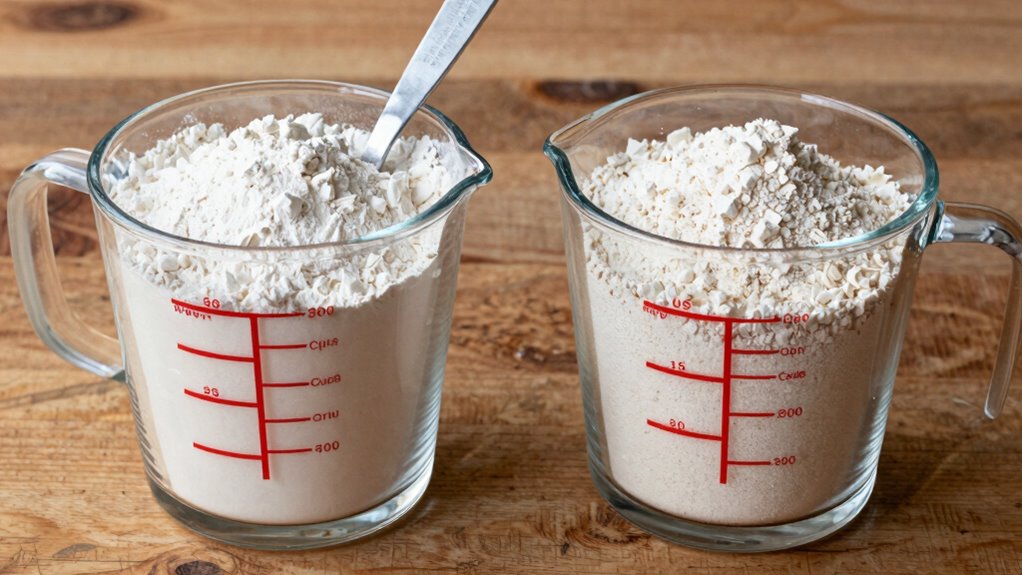
When baking or cooking, understanding the difference between metric and US flour measurements is essential for achieving consistent results. The key lies in knowing how measuring techniques and ingredient conversions impact your recipes. In the US, flour is typically measured using cups, tablespoons, and teaspoons, which can be inaccurate because of air pockets and varying scoop methods. Conversely, metric measurements rely on grams and milliliters, offering precision that guarantees your ingredients are consistent every time.
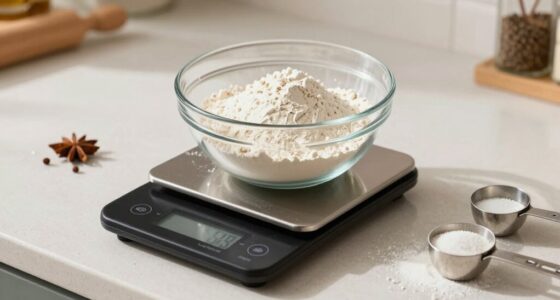
Measuring techniques are fundamental to understanding why a cup of flour in the US isn’t always the same as one measured in metric units. When you scoop flour with a cup, you may unintentionally pack it down or leave it loose, leading to different weights. For example, a US cup of all-purpose flour can weigh anywhere from 120 to 130 grams, depending on how you measure it. In contrast, a metric system measurement requires you to weigh the flour on a kitchen scale, providing a precise amount. This accuracy reduces the risk of over- or under-flouring, which can alter the texture, density, and rise of baked goods.
Measuring flour by weight ensures accuracy and consistent baking results.
Ingredient conversions are another critical aspect. When following recipes from different regions, you’ll often encounter measurements that need translating. Converting cups to grams isn’t straightforward because of the differences in measuring techniques. To get consistent results, you should use a reliable conversion chart or digital scale that provides the exact weight of flour in grams. This approach minimizes errors and makes your recipes more reliable, regardless of whether you’re following an American or European recipe.
Understanding these differences is especially important when scaling recipes or trying to replicate a dish exactly. If you rely solely on volume measurements, small differences in how you scoop or level your flour can lead to significant variations in the final product. Using a digital scale to measure ingredients in grams ensures accuracy and consistency, empowering you to produce perfect baked goods every time. Additionally, being aware of measurement accuracy can help you troubleshoot and refine your recipes for optimal results.
Top picks for "same metric flour"
Open Amazon search results for this keyword.
As an affiliate, we earn on qualifying purchases.
Frequently Asked Questions
How Does Altitude Affect Flour Measurement?
Altitude baking affects flour measurement because higher altitudes can cause flour to become less dense due to thinner air, impacting how much flour fits in a cup. You should adjust your measurements by slightly reducing flour or weighing it, as flour density changes with altitude. This guarantees your baked goods turn out right, preventing overly dense or dry results caused by inaccurate flour measurement at higher elevations.
Can I Substitute Metric Flour for US Flour Directly?
You can substitute metric flour for US flour, but for measurement accuracy, use a kitchen scale instead of cups. Since the volume of flour varies between metric and US measurements, weighing guarantees precision. This way, your recipes turn out consistently, avoiding dryness or density issues. Always convert measurements carefully and remember that slight differences can affect your baked goods’ texture and rise.
What Tools Are Best for Measuring Flour Accurately?
Think of your tools as the compass guiding your baking journey. To measure flour accurately, you need precise instruments like measuring spoons for smaller quantities and a digital scale for larger amounts. A digital scale is your most reliable guide, providing exact measurements in grams or ounces, ensuring consistency. Measuring spoons are handy for quick, small measurements but don’t replace the accuracy of a digital scale when precision matters most.
Does Flour Type Influence Weight-To-Volume Conversion?
Yes, flour type influences weight-to-volume conversion because of differences in flour density. For example, cake flour is lighter than bread flour, meaning a cup of each weighs differently. To achieve measurement consistency, you should measure by weight rather than volume when possible. This way, you account for variations in flour density, ensuring more accurate recipes and better baking results every time.
How Do Different Brands Impact Flour Density?
Different brands impact flour density due to packaging differences and brand consistency. You might notice that some brands pack flour more tightly, making it weigh more per cup, while others are looser. This variation affects your measurements, so it’s best to utilize a scale for accuracy. Always check the brand’s packaging or test by weighing a cup to ensure your recipes turn out just right.
Conclusion
So, remember, when measuring flour, you’re not just filling a cup—you’re balancing a delicate dance between worlds. The difference between metric and US measurements is like reading two maps of the same treasure: one guides you precisely, the other leaves you wandering. Pay attention, be mindful, and your baking will sing in harmony. Because in the kitchen, as in life, understanding the details turns chaos into a symphony of perfect results.