When you don’t have the right pan, measure your current pan’s surface area to determine its size. Adjust the recipe’s ingredient amounts proportionally based on the difference in surface area, and modify the baking time and temperature accordingly—typically lowering or raising the oven temp and keeping a close eye on doneness indicators. Using the proper tools and tips can help you make perfect adjustments. Keep exploring to learn detailed methods that assure your baked goods turn out just right.
Key Takeaways
- Measure your original pan’s diameter or surface area accurately to determine the correct conversion ratio.
- Calculate the surface area of both pans to adjust ingredient quantities proportionally.
- Use reliable conversion charts or apps to match pan sizes and ensure proper ingredient scaling.
- Adjust baking time and temperature based on pan material and size differences.
- Monitor baked goods closely for doneness cues, like color and texture, when using different pan sizes.
Top picks for "size conversion save"
Open Amazon search results for this keyword.
As an affiliate, we earn on qualifying purchases.
Why Pan Sizes Matter for Your Recipes

Choosing the right pan size is essential because it directly affects how your recipe turns out. Different pan shape variations, like round, square, or rectangular, influence baking times and even cooking. For example, a round cake pan provides even heat distribution, while a loaf pan creates a different crumb and rise. Material differences also play a critical role; metal pans heat quickly and promote browning, whereas glass or ceramic pans heat more slowly, affecting bake times and texture. Using an unsuitable pan size or shape can lead to undercooked centers or burnt edges. Additionally, energy-efficient materials in baking pans can help optimize heat distribution and reduce energy consumption, especially when paired with appropriate pan sizes. By selecting the correct pan, you guarantee your baked goods cook evenly, look appealing, and have the desired texture. Understanding these factors helps you achieve consistent, delicious results every time, and considering pan-to-recipe ratios can further improve your baking success.
How Do You Calculate Your Pan’s Area?
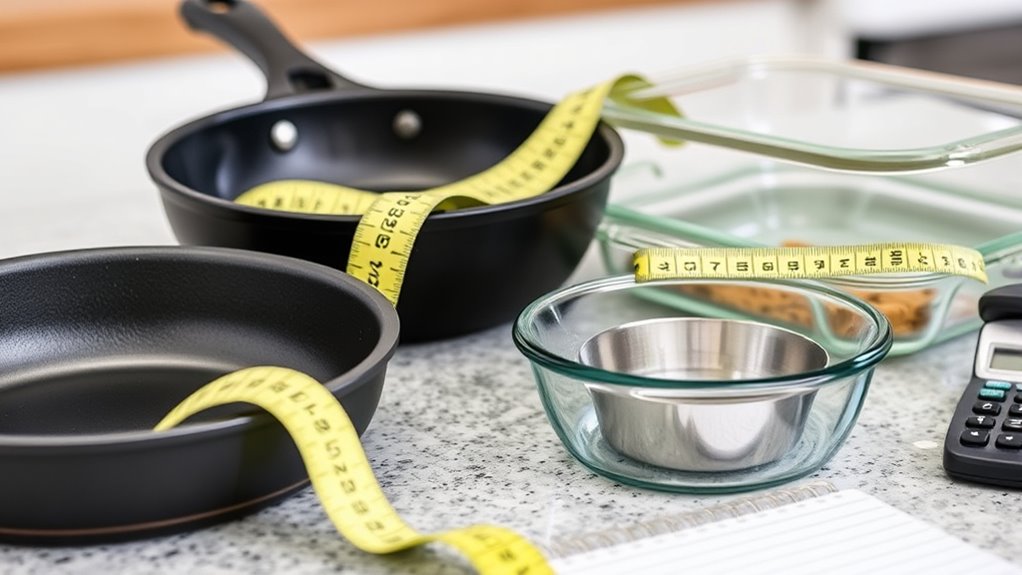
To calculate your pan’s area, start by measuring its diameter accurately with a ruler or tape measure. Once you have the diameter, you can determine the surface area by using a simple formula. Knowing how to do this helps you adjust recipes when switching pan sizes effectively.
Measuring Diameter Accurately
Have you ever wondered if you’re measuring your pan’s diameter correctly? Using the right measuring tools helps guarantee diameter accuracy. For the most precise measurement, use a ruler or a tape measure that can measure in inches or centimeters. Place the measuring tool across the top of the pan, from one edge directly to the opposite edge, passing through the center. Make sure the pan is on a flat, level surface. Avoid guessing or using the pan’s outer rim, as this can give you an inaccurate reading. Double-check your measurement by measuring across multiple points. Accurate diameter measurement is essential for proper pan conversions and ensuring your recipes turn out just right, even if you don’t have the exact size pan on hand. Additionally, understanding piercing care and hygiene can be useful if you decide to get body piercings for self-expression or aesthetic purposes.
Calculating Surface Area
Knowing your pan’s diameter is a great start, but understanding its surface area helps you better gauge how much batter or ingredients it can hold. To calculate your pan’s surface measurement, you’ll need to determine the pan area, typically based on its shape. For a round pan, follow these steps:
- Measure the diameter accurately.
- Divide the diameter by two to find the radius.
- Use the formula: surface area = π × radius².
- Remember that surface area calculations can vary depending on the shape of your pan, so always use the appropriate formula for accurate results. Additionally, pan size conversions are essential when adjusting recipes for different-sized pans to ensure proper cooking times and textures.
This calculation gives you the exact surface measurement, essential for adjusting recipes or substituting pans. For rectangular pans, multiply length by width. Knowing the pan area ensures your baked goods turn out just right, regardless of pan shape or size.
How to Adjust Baking Times for Different Pan Sizes
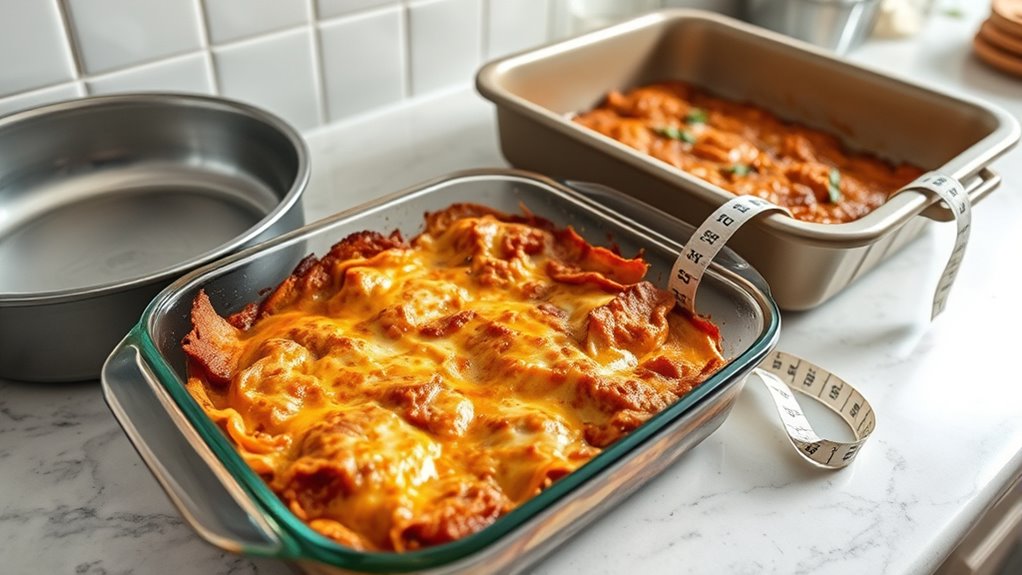
When you switch to a different pan size, keep a close eye on your baked goods to monitor their progress. You might need to adjust the oven temperature slightly to guarantee even baking. Staying attentive helps you make the right timing and temperature changes for perfect results. Additionally, understanding pan size conversions can help you better anticipate how your baked goods will behave in different pans. Being aware of interior dimensions allows for more precise adjustments in baking. Knowing how baking ratios change with pan size can further improve your baking accuracy. Recognizing the weight of the pan is also important, as it can influence heat distribution and baking times. Being familiar with pan material properties can help you select the best pan for consistent results.
Monitor Baking Progress
Adjusting baking times for different pan sizes requires close attention to how the batter reacts during baking. To monitor progress effectively, focus on these key indicators:
- Baking surface color – Look for a golden-brown crust, signaling doneness without overbaking.
- Center firmness – Gently tap the center; it should feel set and slightly springy.
- Visual cues – Edges pulling away from the pan indicate readiness, especially when oven heat is consistent.
Keep in mind that a larger or shallower pan might bake faster, so stay attentive. Use a toothpick or cake tester inserted into the center; it should come out clean. Adjust your timing based on these signs, rather than solely the clock, to prevent under or overbaking.
Adjust Oven Temperature
To guarantee your baked goods turn out perfectly, you may need to modify your oven temperature when using different pan sizes. If you’re using a larger pan, lower the oven temperature slightly to prevent over-baking or burning. Conversely, if your pan is smaller, you might want to increase the oven temperature slightly or reduce baking time to ensure the center cooks through. Always position your pan on the middle baking rack for even heat distribution. Keep an eye on the oven temperature, as it impacts baking speed and texture. Adjusting the oven temperature helps achieve a consistent bake, regardless of pan size. Remember, small changes can make a big difference in the final result, ensuring your baked goods are perfectly cooked.
How to Modify Ingredients for Different Pan Sizes

Modifying ingredient quantities for different pan sizes is essential to guarantee your baked goods turn out perfectly. Proper adjustments ensure the right ingredient ratios and maintain flavor balance. To do this effectively:
Adjust ingredient amounts carefully to ensure perfect baked results across different pan sizes.
- Calculate the surface area of your original and new pans to determine the ratio.
- Adjust ingredient quantities proportionally based on this ratio.
- Consider flavor adjustments, such as slightly increasing spices or extracts if the batter volume changes considerably.
- Be aware of net worth variations, which can influence ingredient choices or substitutions in baking recipes.
- Additionally, understanding home energy considerations can help you plan your baking schedule to optimize oven usage efficiently. It’s also helpful to consider the type of pan, as different materials can affect baking times and outcomes. Recognizing the material properties of your pans can further refine your baking results and timing. Being aware of pan size conversions can aid in making accurate adjustments across a variety of recipes and pan types.
How to Use Alternative Pans Safely and Effectively
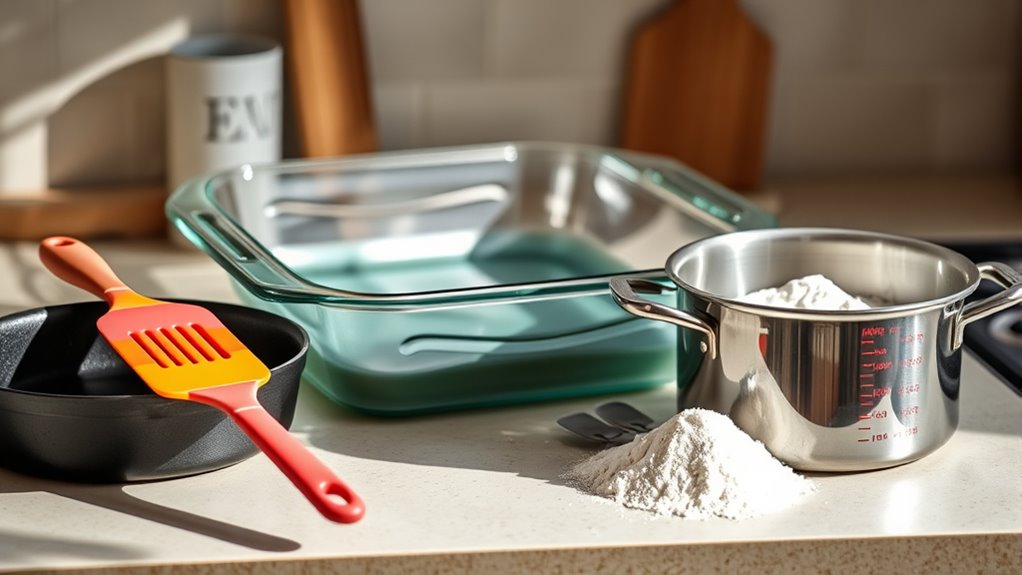
When using alternative pans, it’s important to contemplate how their material and shape can affect your baking process. Different pan materials, such as glass, metal, or silicone, have unique heat conduction properties, impacting cooking time and browning. Safety precautions include avoiding sudden temperature changes that could cause warping or cracking. Use the following table to understand pan material considerations:
| Pan Material | Considerations |
|---|---|
| Glass | Heats evenly but may require lower oven temperatures. |
| Metal | Conducts heat quickly; watch for over-browning. |
| Silicone | Non-stick and flexible; ideal for delicate baked goods. |
Being aware of how different materials influence heat retention can help you achieve the perfect bake outcome and avoid common pitfalls.
Mistakes to Avoid When Converting Pan Sizes
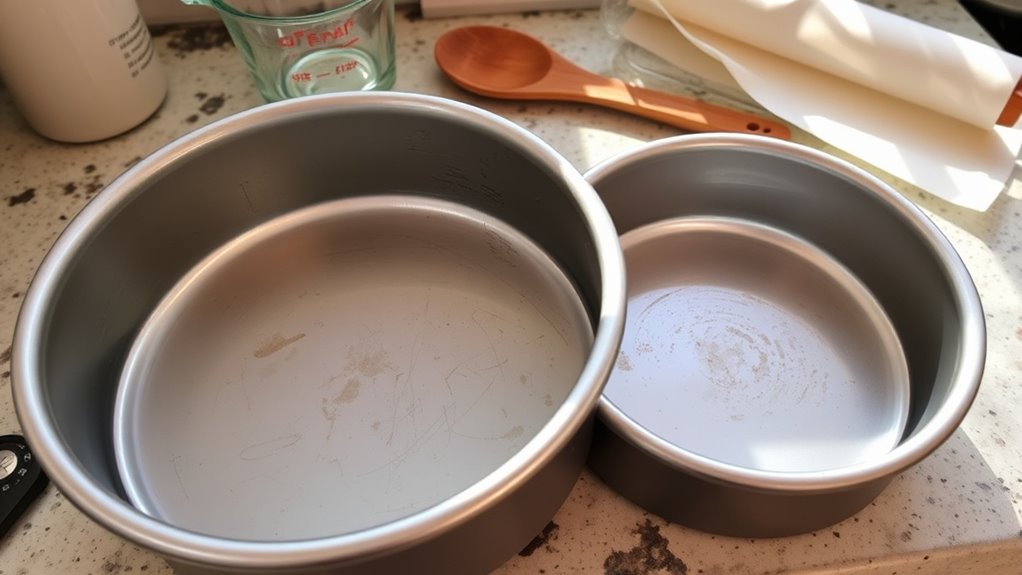
Converting pan sizes can seem straightforward, but overlooking common mistakes can lead to disappointing results. One mistake is relying on incorrect measurement methods, such as assuming volume directly translates between pans without adjusting for shape. Second, avoid common measurement mistakes like confusing square inches with circular measurements, which can throw off your calculations. Third, don’t skip checking the recipe’s intended depth or volume; a larger or smaller pan can alter baking times and textures. To prevent issues, always verify the conversion method you’re using, ensuring it accounts for pan shape and volume differences. Additionally, understanding the support breakfast options available can help you plan meals that are both satisfying and appropriately portioned. Being aware of proper measurement techniques is crucial for accurate conversions and successful baking outcomes. Using accurate conversion methods ensures your recipes turn out just right, avoiding uneven cooking or overflows. Remember, incorrect conversion methods can cause uneven cooking or overflows. Being precise and cautious helps you adapt recipes successfully without sacrificing quality. Moreover, consulting SmartCR resources can provide valuable insights into precise measurements and conversions, further enhancing your baking success.
Examples of Pan Size Conversions in Recipes

Adjusting recipes for different pan sizes is common, and knowing specific examples can make the process easier. For instance, if a recipe calls for a 9-inch round cake pan but you only have an 8-inch, you can reduce the batter slightly or extend baking time. When converting from a 9×13-inch baking sheet to a smaller pan, like a 9-inch square, you’ll need to modify the amount of batter using measuring cups to ensure it fits properly. Alternatively, if you only have a larger sheet, you can increase ingredients proportionally. These measurements help maintain the right thickness and baking time. Understanding these examples ensures your baked goods turn out just right, even if you don’t have the exact pan size called for in the original recipe.
Tools and Resources for Pan Size Conversions
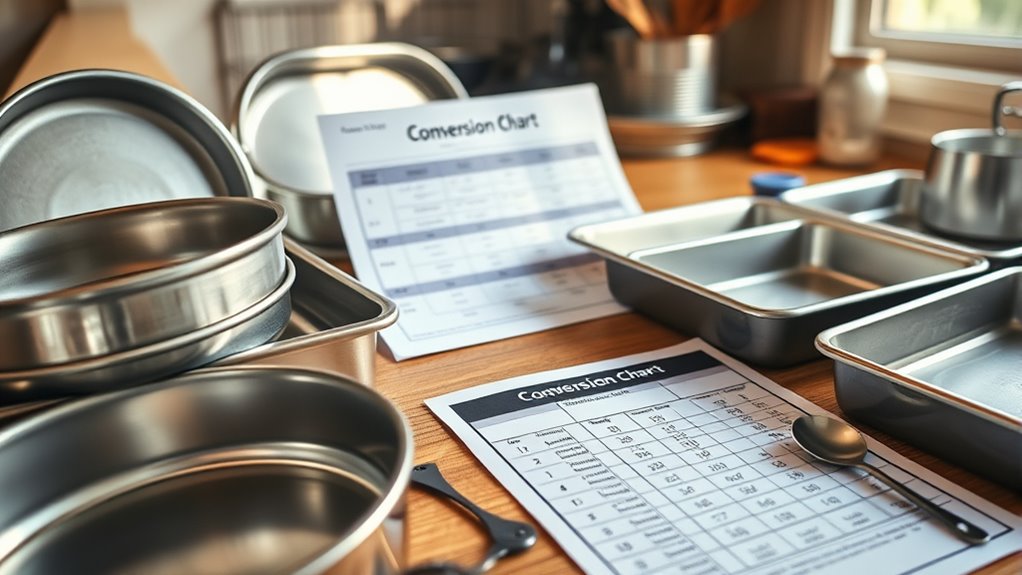
To make pan size conversions easier, there are several useful tools and resources available at your fingertips. Baking tools like conversion charts and measuring cups help you quickly compare pan sizes and adjust ingredient quantities. Measurement apps are especially handy, offering instant conversions between different pan dimensions and volume capacities. These apps often include features such as:
- Built-in conversion calculators for pan types and sizes
- Recipe scaling functions to adjust ingredient amounts
- Visual guides for common pan substitutions
Using these tools ensures your recipes stay consistent, even when you don’t have the exact pan. They save time, reduce guesswork, and help you adapt recipes confidently. Incorporating goal tracking techniques like setting specific, measurable objectives can further streamline your baking adjustments and improve your overall cooking skills. With measurement apps and reliable baking tools, you’ll always find the right solution for your baking needs.
Frequently Asked Questions
Can I Use a Different Shape Pan for the Same Recipe?
Yes, you can use a different shape pan for the same recipe. Just keep in mind that pan shape influences baking uniformity, so you may need to adjust baking time or temperature. For example, using a round instead of a square pan can change how evenly it bakes. Always monitor your baked good closely to ensure it cooks through without overbaking, and consider adjusting the time accordingly.
How Do I Tell if My Pan Is Oven-Safe After Resizing?
You can check if your pan is oven-safe by inspecting its material—metal, glass, and silicone are typically safe, while plastic isn’t. Look for labels or symbols on the bottom indicating oven safety. If unsure, avoid using it at high temperatures to prevent damage or safety hazards. Knowing your pan’s material guarantees you don’t risk oven safety issues when resizing or repurposing your cookware.
What Adjustments Are Needed for Layered vs. Single Pans?
When working with layered versus single pans, you need to adjust baking time and temperature. Layered pans can cause uneven cooking due to the pan size impact, so reduce the temperature slightly and extend the baking time. For single pans, follow the original recipe, but for layered, check doneness earlier and use a toothpick. Always monitor closely to prevent overbaking, adjusting as needed for best results.
Are There Recipes That Shouldn’T Be Adapted for Different Pans?
You shouldn’t try adapting recipes that rely heavily on precise ingredient ratios or delicate structures, like soufflés or laminated doughs. These recipes are sacred temples of technique; altering pan size risks destroying their recipe integrity. Using a different pan can lead to uneven cooking or collapse, so stick to the original pan specifications whenever possible. When in doubt, it’s safer to choose recipes designed for versatile pan sizes or adjust carefully.
How Do I Prevent Sticking When Using Alternative Pans?
To prevent sticking when using alternative pans, start by applying a non-stick spray evenly or lining the pan with parchment paper. These methods create a barrier that keeps your food from sticking and makes cleanup easier. Make sure to coat the entire surface thoroughly, especially corners and edges. If you’re baking, also consider greasing the sides to prevent dough from sticking. This simple step guarantees your baked goods come out perfect every time.
Conclusion
By understanding how to convert pan sizes, you turn kitchen mishaps into culinary magic. Think of it as having a secret recipe for perfect results, no matter the pan you use. With a little math and some handy tips, you’ll never be caught off guard by mismatched dishes again. Embrace these simple tricks, and watch your baking and cooking skills soar like a well-prepared soufflé—delicately and flawlessly every time.