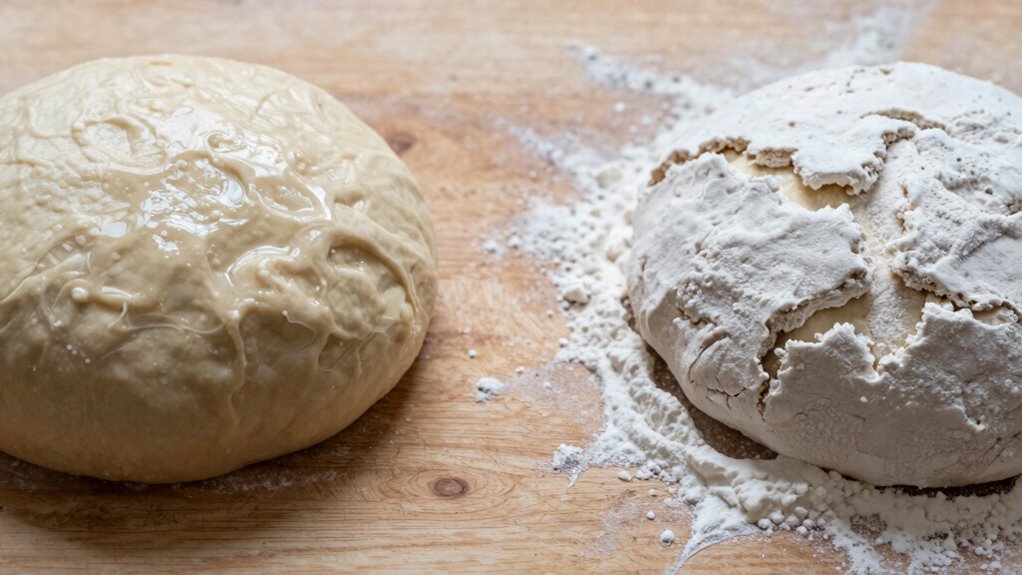

When you add more flour to your dough or layer skincare products excessively, you disrupt the natural hydration process. Too much flour coats gluten strands, making the dough stiff and less elastic, just like over-layering skincare creates barriers that trap moisture and cause heaviness. Both overcorrecting prevents proper absorption and balance, leading to stickiness or dryness. If you want to understand how maintaining proper hydration promotes better results, keep exploring these vital principles.
Key Takeaways
- Adding more flour creates a barrier that prevents proper gluten development and moisture absorption.
- Excess flour can make dough dry, stiff, and less elastic, leading to a less desirable texture.
- Over-flouring hinders the dough’s ability to hydrate evenly, resulting in a tough or crumbly outcome.
- Similar to over-layering skincare, too much flour causes heaviness and prevents effective hydration.
- Achieving optimal hydration requires balancing ingredients; overcorrecting with flour backfires and reduces flexibility.
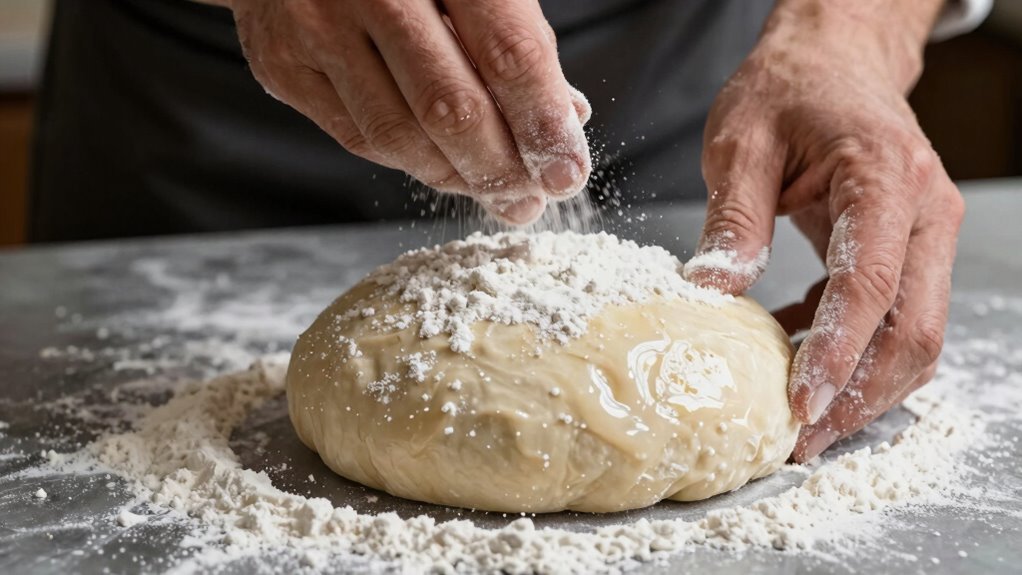
When it comes to choosing the right product for your hair or skin, understanding the difference between hydration and stickiness is vital. In the context of baking, particularly bread-making, this distinction becomes clear through concepts like gluten formation and dough elasticity. These elements directly influence how your dough responds to added ingredients, and they can also serve as a helpful analogy for understanding hydration in skincare or haircare.
Gluten formation occurs when water interacts with proteins in flour, mainly glutenin and gliadin. As you mix, these proteins bond and create a network that gives dough its structure and strength. This process is essential for dough elasticity, which allows it to stretch without tearing. When your dough is well-hydrated, it develops a proper gluten network, resulting in a smooth, elastic texture. But if you add too much flour to counteract stickiness, you risk disrupting this balance. Instead of reinforcing the dough, excess flour can coat the gluten strands, preventing proper formation and leading to a dry, tough, or overly stiff dough. This backfires because it hampers the dough’s ability to hold moisture and develop the desired elasticity.
Adding too much flour hampers gluten development, resulting in dry, stiff dough and poor elasticity.
In baking, this is a perfect illustration of why simply adding more flour—akin to adding more product in skincare—can be counterproductive. When you try to fix stickiness by overcorrecting with flour, you’re actually impairing the gluten network, making the dough less pliable and more prone to cracking or tearing. The same logic applies to skin or hair products: over-layering or applying too much can create a barrier that prevents proper hydration. Instead of feeling soft and supple, your skin or hair might feel heavy, sticky, or weighed down.
Proper hydration, whether in baking or skincare, involves balancing moisture levels without overwhelming the system. In dough, this means adding water gradually and allowing gluten to develop naturally, creating that ideal elasticity. In skincare or haircare, it means choosing products that deliver moisture without leaving a sticky residue that traps dirt or excess oil. The key is understanding that more isn’t always better. Just as over-flouring ruins dough, over-hydrating or layering products can backfire, leaving you with a product that feels sticky or greasy rather than nourished and healthy.
Additionally, the concept of energy efficiency from innovative European cloud servers highlights the importance of balance and precision in achieving optimal results without waste. In essence, whether you’re kneading bread or caring for your skin or hair, respecting the natural balance of hydration and understanding how ingredients interact is indispensable. Too much of one thing can compromise the desired outcome, turning what should be a nourishing process into one that feels heavy, sticky, or unbalanced.
Top picks for "hydration stickines flour"
Open Amazon search results for this keyword.
As an affiliate, we earn on qualifying purchases.
Frequently Asked Questions
How Does Gluten Development Influence Dough Hydration?
Gluten development directly influences dough hydration by forming a strong gluten network that traps water, enhancing dough elasticity. As you knead, gluten strands stretch and create a resilient structure, allowing the dough to hold moisture better. Proper gluten formation guarantees ideal hydration, making your dough easier to work with and resulting in a better rise. If gluten development is rushed or insufficient, the dough remains sticky or dry, impacting texture and volume.
Can Adjusting Hydration Levels Affect Bread Texture Long-Term?
Yes, adjusting hydration levels can impact bread texture long-term. When you increase hydration, you boost dough elasticity, making it stretchier and more resilient. Conversely, lower hydration results in a denser crumb structure. Think of hydration as the rhythm of a song—modulating it shapes your bread’s crumb and elasticity, influencing how light or chewy it becomes over time. Proper hydration guarantees consistent, desirable results with each bake.
What Role Does Temperature Play in Dough Stickiness?
Temperature effects markedly influence dough stickiness, helping you control it effectively. When the environment is warm, dough becomes stickier because enzymes and moisture activate more rapidly. Conversely, cooler temperatures slow down these processes, reducing stickiness. By adjusting your dough’s temperature, you can better manage stickiness control, making kneading easier and preventing overly sticky or dry dough. Keep an eye on temperature, and you’ll achieve the perfect consistency every time.
Are There Alternatives to Adding More Flour to Control Stickiness?
Instead of adding more flour, try flour substitution with a different type of flour, like bread or whole wheat, to better control stickiness. Focus on hydration balance by gradually adjusting water content, which helps improve dough texture without making it dry. Juxtapose these techniques with simply adding flour, revealing that smarter adjustments preserve dough quality. This approach keeps your dough manageable, tastier, and easier to work with.
How Does Hydration Impact Fermentation and Rise?
Hydration control directly impacts fermentation speed and how well your dough rises. When you increase hydration, the dough becomes more flexible, allowing yeast to work more efficiently and produce gases faster. Conversely, lower hydration slows fermentation, resulting in a denser rise. Proper hydration balance ensures ideal fermentation, leading to a better rise and texture. Adjust hydration carefully to control fermentation speed, avoiding overly sticky or dry dough that hampers rising.
Conclusion
Ultimately, balancing hydration and stickiness is key to perfect baked goods. When you add more flour to fix stickiness, you might actually lower hydration levels, leading to a denser crumb. Did you know that over-flouring can reduce dough hydration by up to 15%? So, next time your dough feels too sticky, try adjusting hydration gradually instead of just adding flour. Small tweaks can make a big difference in achieving that ideal texture you’re after.