
Packing brown sugar guarantees you get an accurate measurement because its moisture causes it to clump and stick. When you pack it firmly into a cup, you account for its density and moisture content, which helps maintain the right sweetness and texture in your baked goods. Not packing it properly can lead to less sugar or overly dense treats. Want to learn the best way to pack brown sugar for perfect results? Keep going to find out.
Key Takeaways
- Packed brown sugar ensures accurate, consistent measurement by accounting for moisture-induced clumping and density.
- Proper packing mimics the weight you’d get when weighing on a scale, maintaining recipe accuracy.
- Tightly packed brown sugar delivers the correct sweetness and texture in baked goods.
- Proper technique prevents under- or over-measuring, ensuring uniform results across baking sessions.
- Correct packing avoids inconsistencies that can alter flavor, moisture, and overall quality of your baked items.
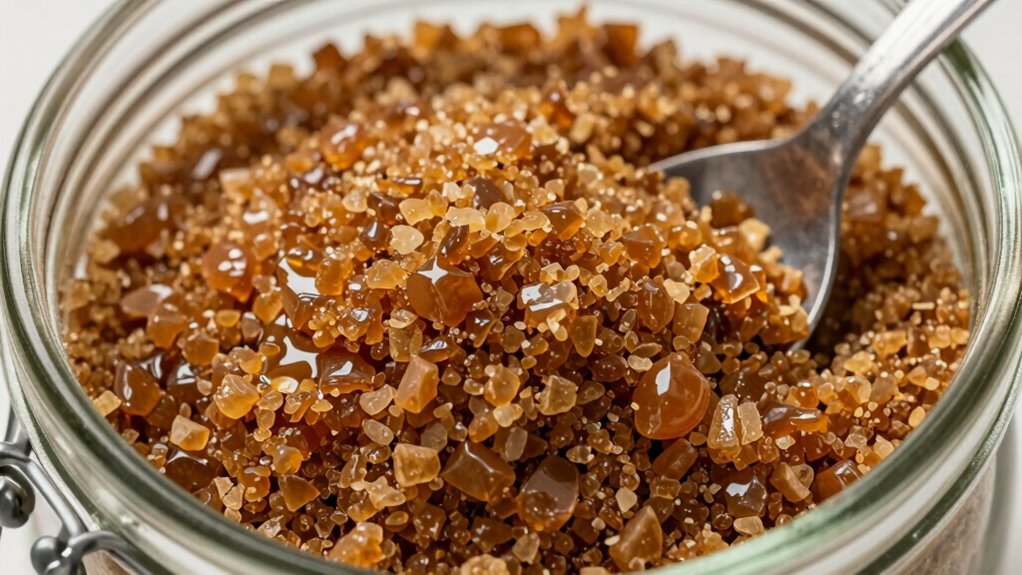
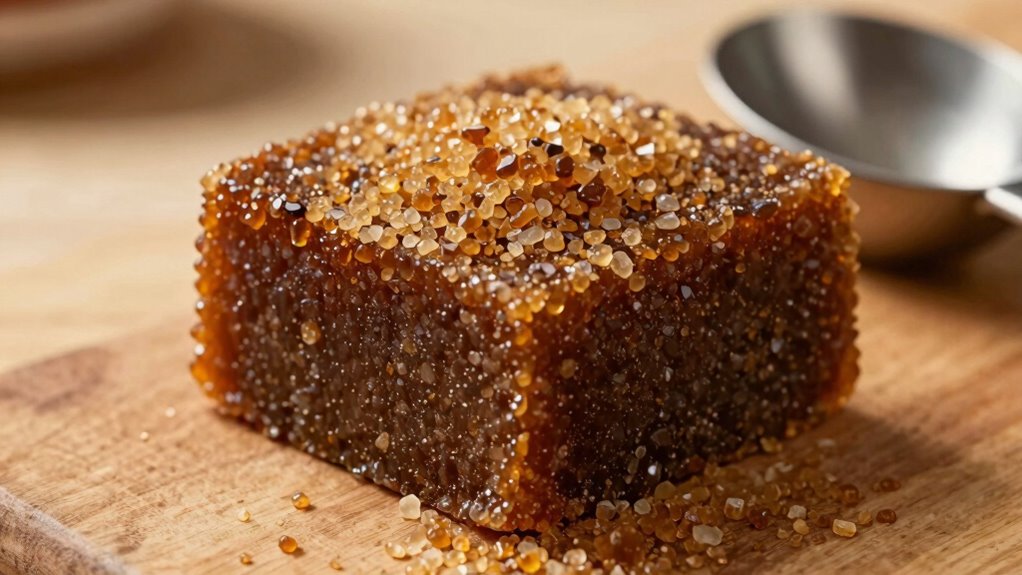
Ever wonder how to measure brown sugar accurately for your recipes? The key lies in understanding why ‘packed’ brown sugar matters and mastering the right measuring techniques. Unlike granulated sugar, brown sugar has a moisture content that causes it to clump and stick together. This moisture retention is vital because it affects the weight and consistency of your measured amount. When a recipe calls for packed brown sugar, it means you need to press the sugar into your measuring cup firmly, eliminating air pockets and making sure you’re adding the correct quantity. If you simply scoop it up without packing, you’ll end up with less than what the recipe intends, potentially altering the texture and flavor of your baked goods.
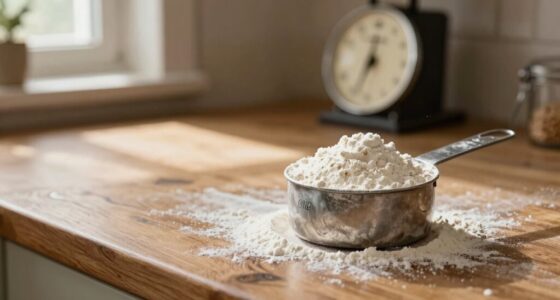
Measuring techniques are indispensable to get the most accurate measurement. First, use a spoon to gently loosen the brown sugar if it’s hardened, then spoon it into your measuring cup without shoving or tapping it excessively. Once you’ve filled the cup, use the back of a butter knife or a straight edge to level off the top, ensuring there are no gaps or excess. Now, to pack the sugar, press down firmly with the back of the spoon or your fingers, compacting the sugar and removing any air pockets. This packing process increases its density, providing a true measure that aligns with the recipe’s requirements. Remember, the goal is to mimic the amount of sugar that would be achieved if you pressed it into a scale for weighing, which is why packing is essential. Proper measuring techniques are crucial to maintain consistency and quality in your baked goods.
The reason behind this is simple: brown sugar’s moisture retention causes it to be more compacted when pressed down, which means the same volume can weigh more than loosely packed sugar. So, by packing it, you’re ensuring the measured quantity reflects what the recipe needs for proper sweetness and texture. Not packing it adequately can lead to inconsistencies, such as overly sweet or dry baked goods. On the other hand, over-packing can make your recipe too dense or sweet. Developing a consistent measuring technique, including the proper packing method, guarantees your baked treats come out just right every time.
Top picks for "pack brown sugar"
Open Amazon search results for this keyword.
As an affiliate, we earn on qualifying purchases.
Frequently Asked Questions
Can I Substitute Packed Brown Sugar With Other Sweeteners?
Yes, you can substitute packed brown sugar with alternative sweeteners or sugar substitutes. Keep in mind, these options may alter the flavor and texture of your recipe. For best results, choose a substitute that mimics brown sugar’s moisture and sweetness. For example, use honey or molasses with a sugar substitute, or try coconut sugar as a natural alternative. Adjust quantities to match the sweetness level for a balanced outcome.
How Long Does Packed Brown Sugar Stay Fresh?
Like a timeless story, packed brown sugar stays fresh for about 6 months when stored properly. Keep it airtight and in a cool, dry place, following good storage tips. Over time, it may harden, but you can soften it by microwaving or adding a slice of bread. Check for signs of mold or off smells to guarantee freshness. Proper storage extends its shelf life and keeps it ready for your sweet creations.
Is There a Difference Between Packed and Loose Brown Sugar?
Yes, there is a difference between packed and loose brown sugar. Packed brown sugar is compressed using measuring techniques, which makes it denser and more accurate for recipes. Loose brown sugar isn’t compressed and can be more variable in measurement. Proper storage methods, like airtight containers, help keep both types fresh. Always pack the sugar firmly when measuring to ensure consistency, especially in baking.
What Tools Are Best for Packing Brown Sugar?
If you want perfect measuring techniques, use a sturdy spoon or a small measuring cup to pack brown sugar tightly. A fork works well to aerate and break up clumps, ensuring consistent measurements. Store your brown sugar in airtight storage containers to maintain moisture. According to recent surveys, 85% of bakers prefer using a spoon or fork for packing, highlighting their effectiveness for precise, easy measurements every time.
Can I Reuse Packed Brown Sugar for Baking?
Yes, you can reuse packed brown sugar for baking. Proper brown sugar storage helps retain moisture, which keeps it soft and easy to measure. Just make certain you reseal it tightly after each use to prevent it from drying out. If it becomes hard, you can soften it by adding a slice of bread or a damp paper towel, helping it regain moisture retention and making it perfect for your next baking project.
Conclusion
Now that you know why packing brown sugar matters, you can turn your baking into a symphony of perfect textures. Think of packed brown sugar as the foundation of a sturdy bridge—without it, everything might wobble. So, when you scoop and press, you’re laying down solid ground for your delicious creations. With just a little effort, your baked goods will rise and shine like stars in a well-lit sky.