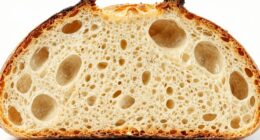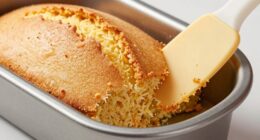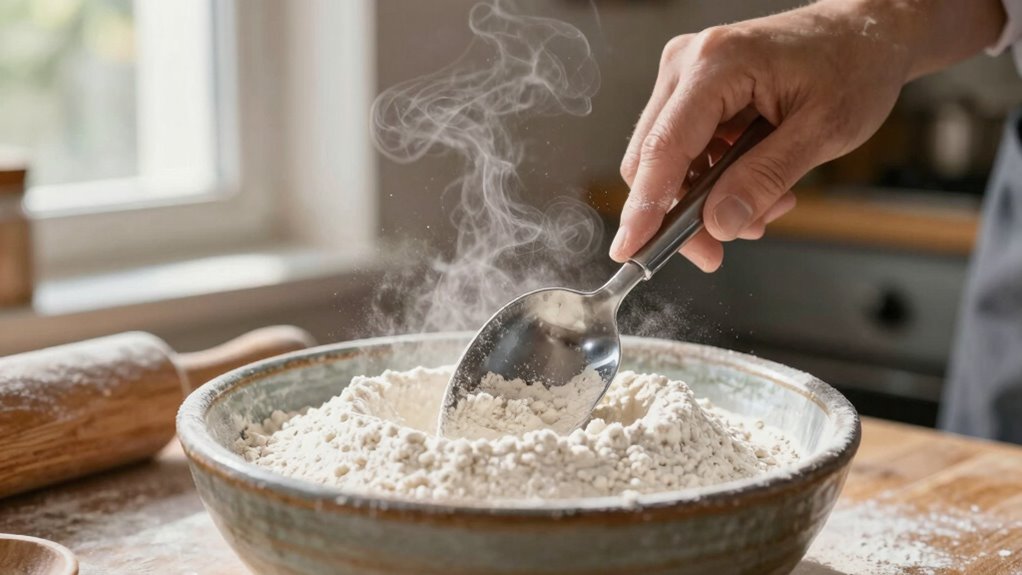

Scooping flour directly with your scoop or using the scoop-and-sweep method packs the flour tightly, leading to over-measurement and making your baked goods dry and dense. Instead, spoon the flour into your measuring cup gently until it’s heaping, then level it off with a straight edge. This simple change guarantees accurate measurement and better baking results. For more tips on perfect measurements, keep exploring how to improve your technique.
Key Takeaways
- Scooping flour directly from the bag compacts it, leading to over-measurement and denser, drier baked goods.
- Use a spoon to lightly fill the measuring cup, avoiding packing flour tightly.
- Always level off flour with a straight edge to ensure accurate measurement.
- Weighing flour with a digital scale provides the most consistent and precise results.
- Proper storage and measurement habits prevent moisture absorption and ensure moist, tender baked goods.

Etekcity Food Kitchen Scale, Digital Grams and Ounces for Weight Loss, Baking, Cooking, Keto and Meal Prep, LCD Display, Medium, 304 Stainless Steel
𝗘𝗳𝗳𝗼𝗿𝘁𝗹𝗲𝘀𝘀 𝗪𝗲𝗶𝗴𝗵𝗶𝗻𝗴: Supports 5 units (oz/lb:oz/fl'oz/g/mL), tare function, and includes 2 AAA batteries for hassle-free operation
As an affiliate, we earn on qualifying purchases.
As an affiliate, we earn on qualifying purchases.
Stop Scooping Flour Like This—It’s Making Your Bakes Dry

If you’ve been scooping flour straight from the bag, you might be unintentionally making your baked goods dry and crumbly. Proper flour storage is key—you should keep flour in an airtight container in a cool, dry place to prevent clumping and over-accumulation of moisture. When measuring, avoid scooping directly from the bag, as this packs the flour and adds extra air, leading to inaccurate amounts. Instead, use a spoon to lightly fill your measuring cup, then level it off. This ensures consistent results, especially when using baking substitutions like whole wheat or alternative flours, which can behave differently. Accurate measurement and proper storage help maintain the ideal flour texture, resulting in moister, better-baked treats.
measuring cups and spoons set
As an affiliate, we earn on qualifying purchases.
As an affiliate, we earn on qualifying purchases.
Packing Flour? Here’s Why That Makes Your Baked Goods Dense and Dry

Packing flour tightly into your measuring cup forces out the air and compacts the flour, which results in using more than the recipe calls for. This common baking error leads to overly dense and dry baked goods because you’re adding extra flour without realizing it. When you pack flour, you’re not measuring ingredient accuracy; instead, you’re unintentionally skewing the proportions. Over-measuring flour makes baked items heavy and crumbly, especially in recipes that rely on precise ratios. To avoid this mistake, always spoon flour into your measuring cup gently and level it off with a knife. Proper measurement ensures consistency, prevents dense textures, and helps your baked goods turn out just right. Additionally, understanding measurement techniques can significantly improve baking results. Accurate ingredient measurement is key to successful baking every time, and using standardized measuring methods helps achieve reliable outcomes. Being mindful of baking best practices can save you from common pitfalls like dense, dry bread and cakes. Paying attention to proper ingredient handling can further enhance the texture and overall quality of your baked goods.
flour sifter and leveler
As an affiliate, we earn on qualifying purchases.
As an affiliate, we earn on qualifying purchases.
Use This Simple Technique to Measure Flour Exactly Right
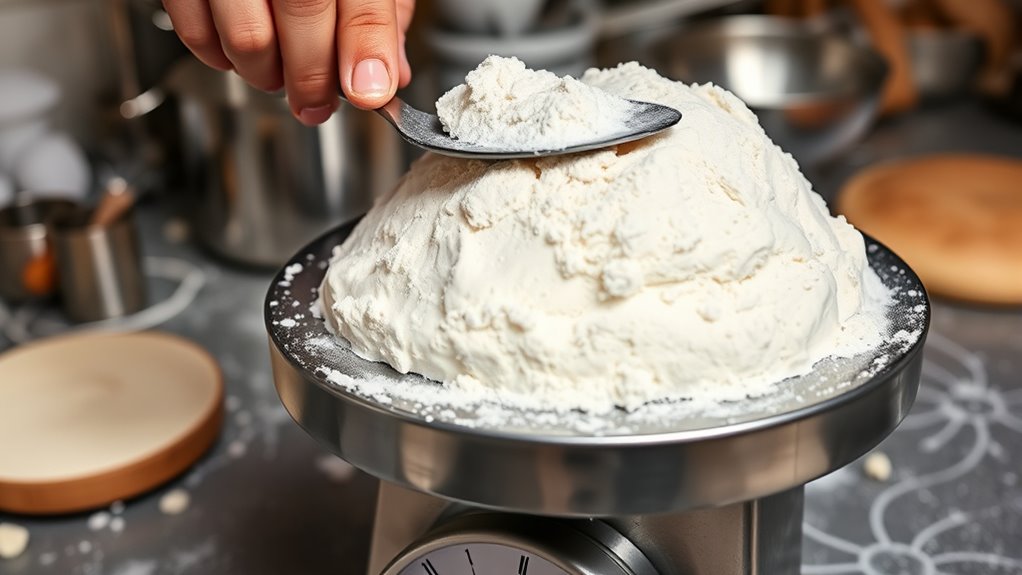
To measure flour accurately, always spoon it into your measuring cup rather than scooping directly from the bag. This simple technique aligns with baking science principles, ensuring you avoid overpacking the flour, which can lead to dense, dry baked goods. Using a spoon prevents compacting, giving you a more precise measurement. Once you’ve spooned the flour into the cup, level it off with a straight edge, like a butter knife. This method keeps your measurements consistent and reliable, which is essential for successful baking. Incorporating this technique into your kitchen essentials helps you achieve the perfect texture and moistness in your baked treats. Accurate flour measurement isn’t just a matter of convenience; it’s a vital step in mastering baking science. Understanding measurement techniques can significantly improve your baking results. Properly measuring ingredients is a fundamental aspect of baking accuracy, which impacts the overall quality of your baked goods.
airtight flour storage container
As an affiliate, we earn on qualifying purchases.
As an affiliate, we earn on qualifying purchases.
The Must-Have Tools for Perfect Flour Measurement
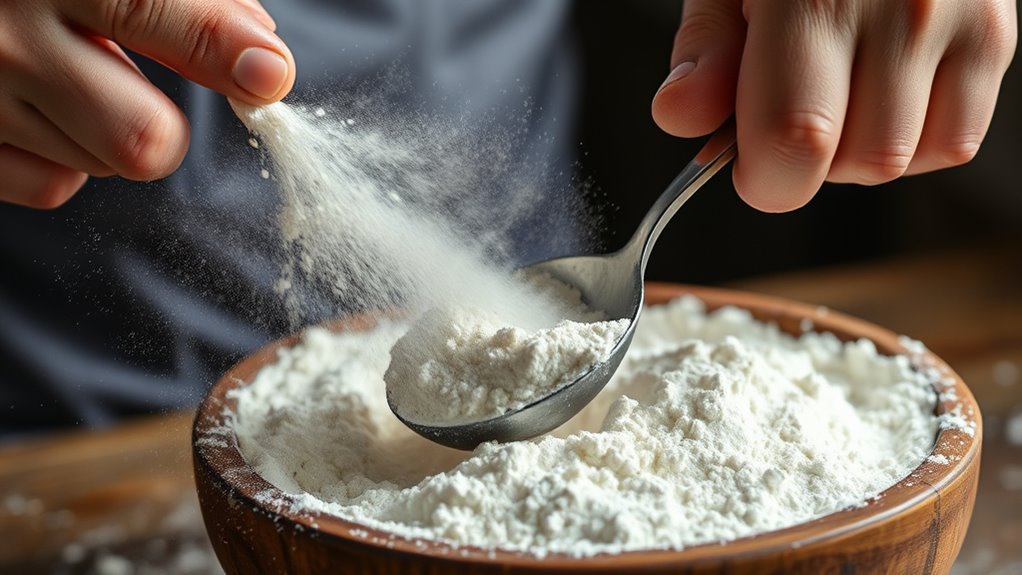
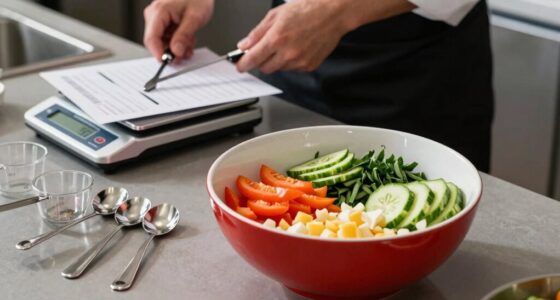
Having the right tools makes measuring flour straightforward and accurate. The most essential tools are measuring cups and digital scales. Measuring cups are great for quick, visual measurements, especially when you’re familiar with standard quantities. However, for precision, a digital scale is unbeatable. With a digital scale, you can weigh flour directly, ensuring exact measurements every time. This reduces inconsistencies caused by packing or scooping techniques. Use a digital scale to measure flour by weight, which is more reliable than volume alone. Measuring cups are perfect for recipes that specify volume, but combining both tools guarantees consistency. Invest in a sturdy set of measuring cups and a reliable digital scale to elevate your baking game and prevent dry, dense baked goods caused by inaccurate flour measurement.
Follow These Easy Steps to Measure Flour Correctly

To measure flour accurately, start by using proper measuring tools like a spoon and a dry measuring cup. Avoid scooping directly from the bag, which can pack the flour too tightly. Instead, lightly spoon the flour into the cup and level it off for the most precise measurement.
Use Proper Measuring Tools
Using the right measuring tools guarantees your flour turns out just right. For accuracy, avoid using spoon measurements alone, which can be inconsistent. Instead, invest in a good set of measuring cups designed for dry ingredients, and level off each measure for precision. For even better accuracy, consider using a digital scale. Weighing flour with a digital scale eliminates guesswork and maintains consistency across recipes. Simply place a bowl on the scale, zero it out, and add flour until you reach the desired weight. This method reduces the risk of over-measuring or under-measuring, helping your baked goods stay moist and tender. Proper tools ensure you’re measuring correctly every time, giving you more control over your baking results. Consistent measurement practices are essential for achieving reliable and delicious baking outcomes, especially when precision is key in modern kitchen technology. Incorporating innovative tools, such as digital scales, can further enhance your baking accuracy and confidence. Additionally, using specialized measuring equipment can help prevent common errors and improve your overall baking success.
Avoid Scooping Directly
Scooping flour directly from the bag often leads to inconsistent measurements and can throw off your recipe. When you scoop without care, you risk packing flour tightly, which results in too much flour and dry baked goods. Instead, use a spoon to gently fill your measuring cup, then level it off with a knife for accuracy. Accurate flour measurement ensures your dough kneading develops properly, leading to a better texture. It also helps maintain the correct oven temperature, as too much flour can cause baked goods to dry out or become dense. Avoid pressing the flour into the cup or scooping straight from the bag, which compacts it. Proper measurement practices keep your baking consistent, moist, and perfectly textured every time.
Level Flour for Accuracy
Getting an accurate flour measurement starts with leveling the excess off your measuring cup. After scooping flour, use a straight edge like a butter knife to level it off smoothly. Proper flour storage is essential; keep flour in a sealed container to prevent compaction, which can lead to inaccurate measurements. When measuring, always use the correct measuring utensils—preferably a dry measuring cup designed for flour. Avoid packing or tapping the flour into the cup, as this adds extra weight. Instead, spoon the flour lightly into the cup, then level it off carefully. Accurate leveling ensures you get the right amount, resulting in better bakes. Proper measuring techniques are crucial for consistency and precision in your baking process, so take a moment to level your flour correctly every time. Using the right measurement tools helps maintain accuracy and improves your baking results. Additionally, practicing these visual and auditory cues can help reinforce proper measuring habits, especially when combined with accurate measurement methods to ensure consistency. Being mindful of flour packing habits can prevent over-measuring and ensure your recipes turn out just right.
See How Accurate Measuring Improves Your Baking Results
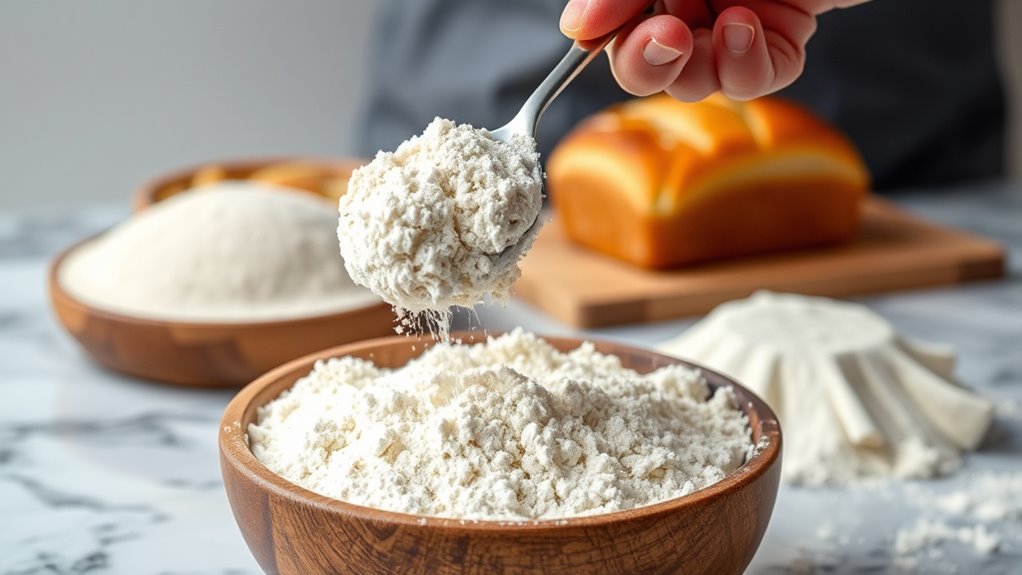
Accurate measuring is essential because even small deviations can considerably affect your baked goods. When you measure flour precisely, you ensure consistent results every time. Proper flour storage, like keeping it in an airtight container in a cool, dry place, helps prevent moisture absorption that can throw off measurements. Using good baking techniques, such as leveling your measuring cups or using a kitchen scale, guarantees you’re adding the right amount. This accuracy affects the texture, rise, and moisture of your baked items. For example, too much flour can make your bread dense and dry, while too little can cause it to collapse. By focusing on precise measurement and proper flour storage, you’ll improve your baking outcomes and enjoy more reliably perfect treats.
Keep Your Flour Measurements Consistent With These Tips
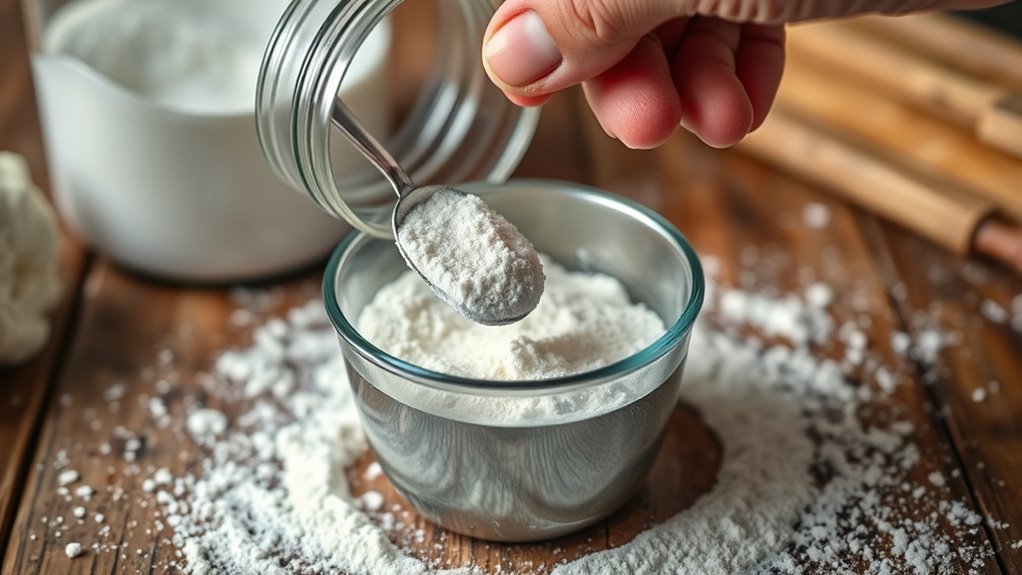
Consistent flour measurements start with good habits and proper tools. First, store your flour properly in an airtight container to prevent compaction, which can lead to inaccurate measurements. Second, always use measuring spoons or a kitchen scale instead of scooping directly from the bag, as this ensures consistency. Third, when measuring with spoons, lightly spoon the flour into the spoon without packing it down, then level it off with a straight edge for accuracy. Avoid tapping or shaking the spoon, which can add extra flour. These tips help you maintain uniform measurements, reducing the risk of dry baked goods. Proper flour storage and precise measuring techniques are key to consistent, delicious results every time. Additionally, understanding the correct way to measure dry ingredients ensures your recipes turn out just right. Incorporating measurement accuracy into your routine can further improve baking consistency and outcomes. For even better results, using a kitchen scale allows you to measure ingredients by weight, providing a level of precision that can greatly enhance your baking success.
Frequently Asked Questions
Can I Use a Different Type of Scoop for Measuring Flour?
Yes, you can use alternative tools and different scoop types for measuring flour. A measuring cup works well, especially for accuracy, while a kitchen scale provides precise weight measurements. Avoid using regular spoons, as they can lead to inconsistent results. Choose a scoop that matches your needs, like a cookie scoop or ice cream scoop, but always level off the flour for the best baking results.
How Does Humidity Affect Flour Measurement Accuracy?
Humidity impact can turn your flour into a sponge, drastically altering moisture variation and throwing off your measurements. When humidity rises, flour absorbs extra moisture, making it heavier and more compact, which means you might add too much without realizing it. Conversely, low humidity dries out flour, leading to under-measurement. To keep your baking consistent, always fluff and spoon your flour, adjusting for humidity changes.
Is It Better to Sift or Spoon Flour Into the Measuring Cup?
It’s better to spoon flour into your measuring cup rather than scooping directly. This measuring technique prevents compaction, guaranteeing accuracy. Store your flour properly in an airtight container to keep it fresh and prevent moisture absorption, which can affect measurement. Sifting can aerate the flour, making it lighter, but for precise results, gently spoon flour into the cup and level it off. Proper storage and measuring techniques ensure your baked goods turn out perfect.
What Are the Common Mistakes When Measuring Flour?
Ever wonder why your baked goods turn out dense or dry? It’s often due to measuring missteps—like packing flour into the cup or using the wrong method. Flour pitfalls include scooping with a spoon instead of spooning it in lightly or not leveling it off. To avoid these mistakes, always use a spoon to lightly fill your measuring cup and level it off. This guarantees accurate measurements and better baking results.
How Often Should I Calibrate My Measuring Tools?
You should calibrate your measuring tools at least once every six months or whenever you notice inaccuracies. Proper measuring techniques are essential for consistent results, so regularly checking your tools guarantees accuracy. Use a precise scale or standard weights for calibration, especially if you bake frequently. Consistent calibration frequency helps you avoid dry or dense baked goods, making sure your recipes turn out perfectly every time.
Conclusion
Next time you bake, imagine gently scooping your flour like a soft cloud, not packing it down like a dense brick. Picture each spoonful falling softly into your bowl, ensuring just the right amount. When you measure with care, your baked goods will rise beautifully, tender and moist—like a perfectly puffed souffle. Keep practicing these simple steps, and soon your kitchen will be filled with the irresistible aroma of flawlessly baked treats.