
To avoid common temperature traps, understand that Fahrenheit and Celsius are based on different points—Fahrenheit around human perception and water’s freezing and boiling points for Celsius. Use accurate formulas or reliable tools to convert between them, and always verify the units in weather forecasts or recipes. Recognizing symbols like °F or °C helps prevent mistakes. Mastering these basics ensures you interpret temperatures correctly everywhere; exploring further will deepen your understanding of how to stay accurate.
Key Takeaways
- Always verify the temperature scale (°F or °C) before interpreting or converting data to avoid confusion.
- Use correct formulas consistently when converting between Fahrenheit and Celsius for accuracy.
- Recognize regional standards to prevent misreading weather reports or recipes, especially during international exchanges.
- Digital tools and conversion apps reduce errors compared to manual calculations.
- Pay attention to context clues like “freezing” or “boiling” points to identify the correct temperature scale.
What Are the Basics of Fahrenheit and Celsius?
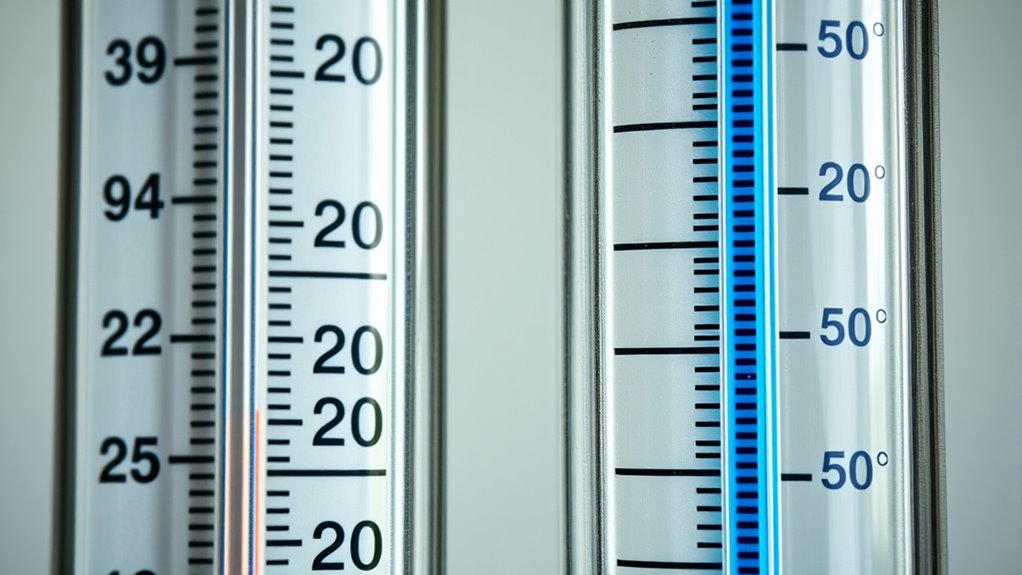
Fahrenheit and Celsius are two different temperature scales used worldwide, and understanding their basics helps you compare temperatures accurately. The temperature scale origins trace back to different historical contexts: Fahrenheit was created by Daniel Gabriel Fahrenheit in the early 18th century, based on fixed points like the freezing point of saltwater and human body temperature. Celsius, developed by Anders Celsius in the 18th century, initially used a reverse scale but was later standardized with 0°C as the freezing point of water and 100°C as its boiling point. The measurement unit history reflects these different approaches to defining temperature. Knowing these origins helps you grasp how each scale measures heat and why they are used in various regions today. Additionally, understanding the measurement units involved can prevent common errors when converting between Fahrenheit and Celsius. Recognizing these fundamental differences can also aid in temperature conversion and ensure accurate interpretation of climate data. Furthermore, being aware of the scale differences can improve your ability to interpret weather reports and scientific data more accurately. The application of each scale varies depending on regional standards and scientific disciplines, which can influence how temperature data is presented and understood.
How Do Fahrenheit and Celsius Differ?
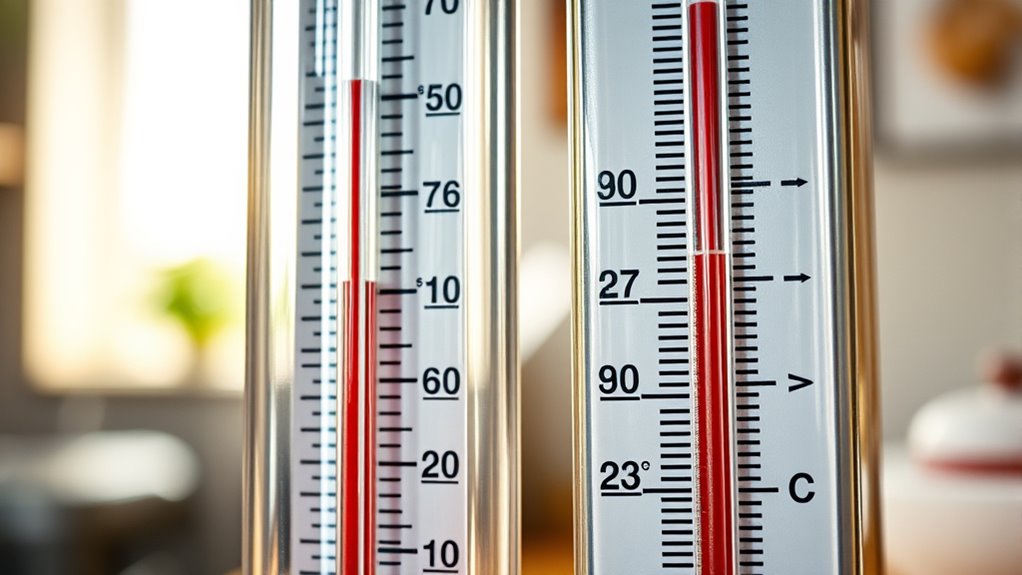
While both Fahrenheit and Celsius measure temperature, they do so using different scales and reference points. This affects your temperature perception and how you interpret weather or scientific data. The historic origins of each scale play a key role in their differences:
Both Fahrenheit and Celsius scales have unique origins shaping how we perceive and measure temperature.
- Fahrenheit was created based on human temperature perception, with 0°F as the temperature of a saltwater ice mixture and 96°F near average body temperature.
- Celsius was designed around the freezing and boiling points of water, set at 0°C and 100°C respectively.
- These differing origins cause variations in scale intervals, making Fahrenheit more detailed for everyday weather, while Celsius simplifies scientific measurement.
- Understanding the scale intervals helps clarify why temperature readings can seem inconsistent across different systems, emphasizing their unique historic backgrounds. Additionally, recognizing the measurement systems can help you better interpret temperature data depending on the context.
- Being aware of the temperature scales also enhances your ability to compare weather reports from different regions and avoid temperature traps that can lead to misconceptions.
What Are the Best Ways to Convert Temperatures?
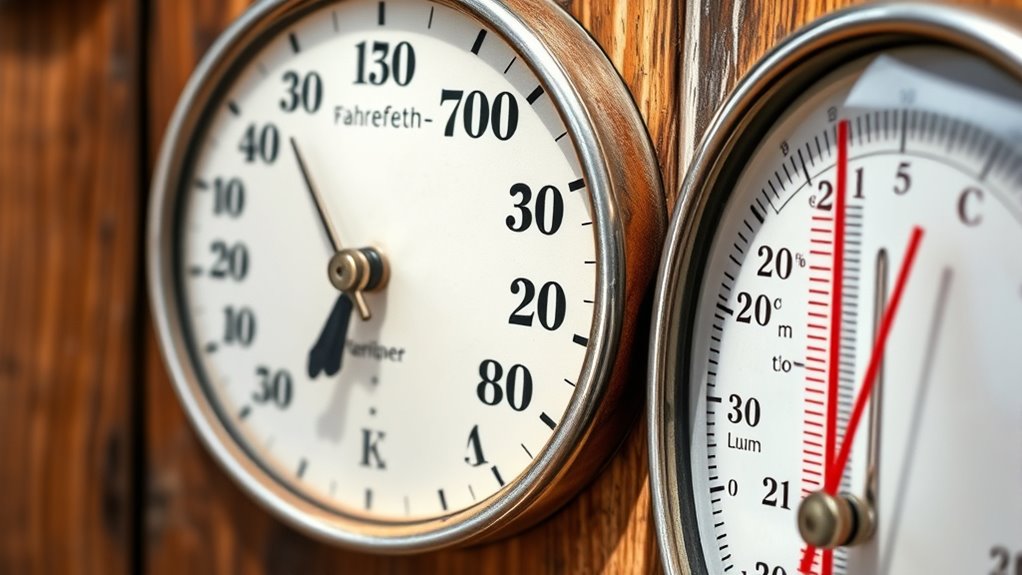
Converting temperatures between Fahrenheit and Celsius is straightforward once you know the right formulas. To switch between these temperature scales, you use simple conversion formulas. For Fahrenheit to Celsius, subtract 32 from the Fahrenheit temperature, then multiply by 5/9. For Celsius to Fahrenheit, multiply the Celsius temperature by 9/5, then add 32. Here’s a quick reference:
| From | To | Formula |
|---|---|---|
| Fahrenheit | Celsius | (F – 32) × 5/9 |
| Celsius | Fahrenheit | (C × 9/5) + 32 |
| Both scales | General tip | Remember the formulas for quick conversion |
Mastering these formulas helps you navigate different temperature scales quickly and accurately.
What Common Mistakes Should You Avoid When Converting?
When you start converting temperatures, it’s easy to make mistakes that can lead to inaccurate results. To guarantee measurement accuracy, avoid common errors like:
- Forgetting to double-check the formula for unit conversion, which can throw off your entire calculation.
- Mixing up Celsius and Fahrenheit scales, leading to incorrect temperature readings.
- Rounding too early or too late in the process, reducing the precision of your measurement.
- Overlooking the importance of measurement accuracy, which can cause errors to compound and affect your overall results.
- Ignoring the significance of unit consistency when performing multiple conversions, which can result in compounded inaccuracies.
- Being aware of conversion precision ensures that your measurements remain reliable throughout the process.
- Neglecting to account for measurement error margins, which can lead to overconfidence in your results if not properly considered.
- Always verify your calculations with a reliable reference chart to catch potential mistakes early.
Pay close attention to the details, especially when switching between scales. Double-check your formulas and calculations to maintain measurement accuracy. Remember, small mistakes in unit conversion can profoundly impact your results, so take your time to verify each step. Avoid rushing through conversions to prevent errors that could compromise your data or understanding.
How Confusing Temperature Scales Affect Your Daily Life
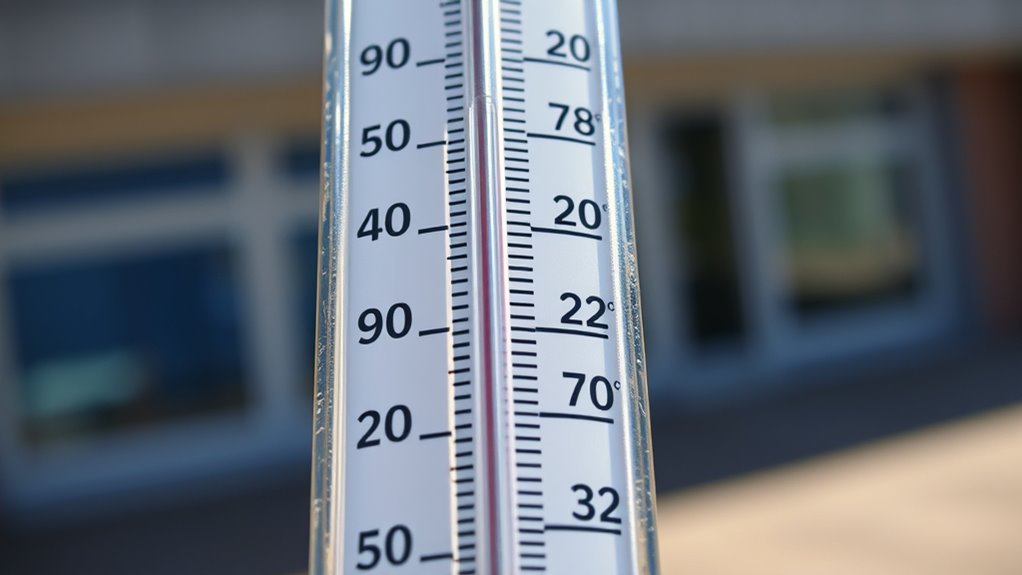
Confusing temperature scales can lead to misunderstandings and mistakes in your daily decisions. Throughout history, the temperature measurement history has shaped how different cultures perceive warmth and cold. For example, in some countries, a temperature that feels comfortable might be considered cold or hot elsewhere, affecting your clothing choices or activity plans. Cultural temperature perceptions influence how we interpret weather reports, dress appropriately, or plan outdoor events. When scales like Fahrenheit and Celsius aren’t understood or mixed up, it can cause confusion—making you misjudge whether to bundle up or cool down. This misunderstanding impacts daily life, from preparing meals to managing health. Recognizing these cultural differences helps you interpret temperatures more accurately and avoid unnecessary errors. Additionally, understanding the differences between temperature scales can improve communication and decision-making in international environments. Being aware of temperature perception differences can also help prevent miscommunications in global travel and trade, especially when temperature standards vary across regions. Furthermore, understanding these scales can aid in scientific measurements and ensure accuracy in data interpretation. Being familiar with how temperature scales are used worldwide can also enhance your ability to adapt to diverse environments and contexts.
How Can You Convert Temperatures Accurately?
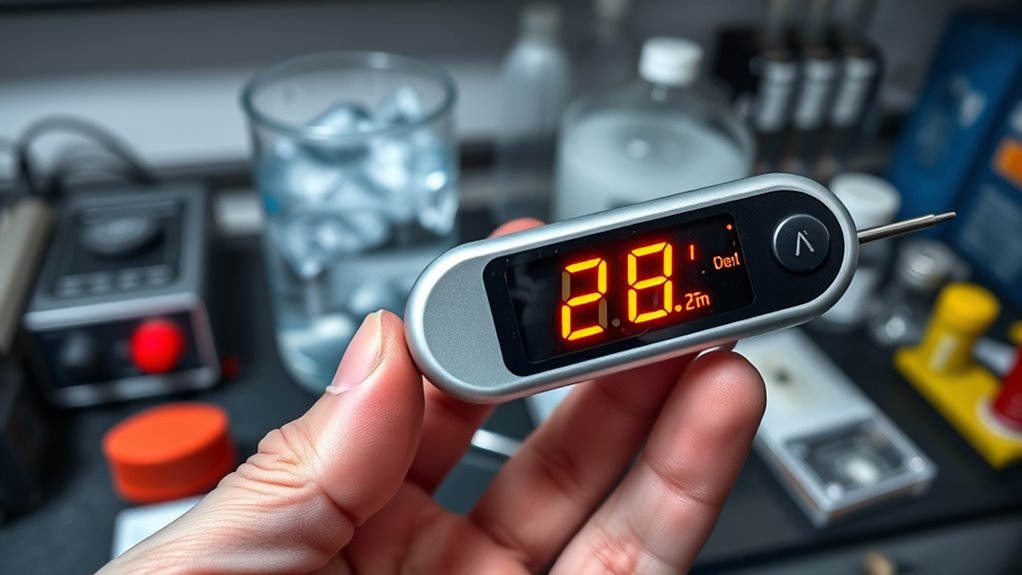
To convert temperatures accurately, you need to follow specific formulas that translate values from one scale to another. Understanding the temperature scale history helps you grasp why formulas differ. Keep in mind measurement device accuracy, as faulty tools can lead to errors. To guarantee precision:
- Use reliable thermometers calibrated for your specific temperature range
- Double-check your calculations with online converters or formulas
- Be aware of rounding errors that can occur during manual conversion
How Do You Recognize Temperature Units in Weather Reports and Recipes?
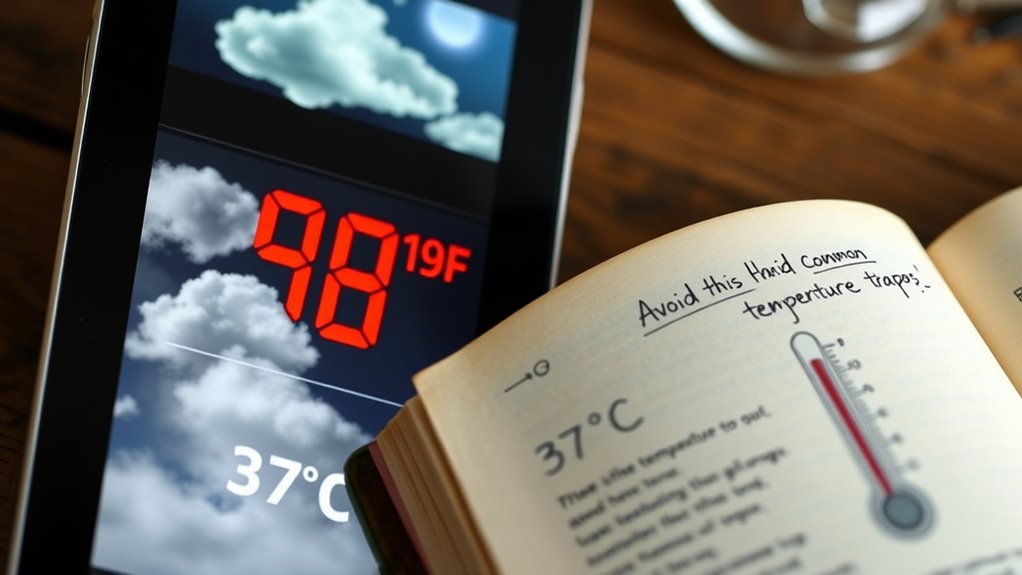
When you see temperatures in weather reports or recipes, look for symbols like °F or °C to identify the units. Regional standards often influence which measurement is used, so knowing your location helps. Context clues in the text can also reveal whether the temperature refers to weather conditions or cooking instructions. Understanding measurement units can prevent confusion and ensure accurate interpretation of temperatures. Additionally, recognizing vetted home theatre projectors can enhance your overall viewing experience, especially when adjusting for suitable room conditions. Being aware of temperature conversion methods can further help you switch between units effortlessly.
Temperature Unit Symbols
Have you ever wondered how to quickly identify temperature units in weather reports or recipes? Recognizing unit symbols is key to understanding the temperature notation. Typically, you’ll see these symbols:
- °F for Fahrenheit
- °C for Celsius
- K for Kelvin (less common in daily use)
Pay attention to the placement of these symbols, usually immediately following the number. The degree symbol (°) is used with Fahrenheit and Celsius but not with Kelvin. The unit symbols give you instant clarity on which temperature scale is being referenced, helping you avoid confusion. When reading a weather report, note the unit symbol to interpret the temperature correctly. In recipes, understanding the unit symbol ensures you follow instructions accurately, especially if conversions are needed for different measurement standards. Recognizing these symbols makes temperature understanding straightforward.
Regional Measurement Standards
Regional measurement standards influence how you recognize temperature units in weather reports and recipes. In some countries, temperatures are given in Fahrenheit, especially in the United States, while others use Celsius, common in Europe and most of the world. Understanding these differences helps you interpret cross country temperature comparisons accurately. For example, a weather forecast showing 75°F indicates a warm day in the U.S., but would be about 24°C elsewhere. Recipes from different regions might also specify temperatures in these units, affecting cooking times and results. Being aware of regional measurement standards guarantees you don’t confuse Fahrenheit with Celsius, especially when comparing temperatures across countries. Recognizing these standards helps you navigate weather and recipe details confidently, avoiding misinterpretations and ensuring proper understanding.
Context Clues in Text
How can you tell which temperature unit a weather report or recipe uses just by reading the text? Look for context clues and metaphorical language that hint at familiar standards. Recognizing these cues can help you interpret measurements quickly. For example:
- References to “freezing point” or “boiling point” often imply Celsius or Fahrenheit, depending on the historical context. Understanding temperature scales can clarify which system is being used.
- Phrases like “hot as a desert” or “chilly winter night” hint at temperature ranges associated with specific regions, providing additional context.
- The mention of “Fahrenheit” or “Celsius” directly confirms the unit used, especially in modern texts.
- Being aware of different temperature scales helps in understanding the context, as they developed differently across regions.
- Recognizing the measurement conventions used in various countries can help prevent misinterpretations.
When Should You Use Celsius or Fahrenheit?
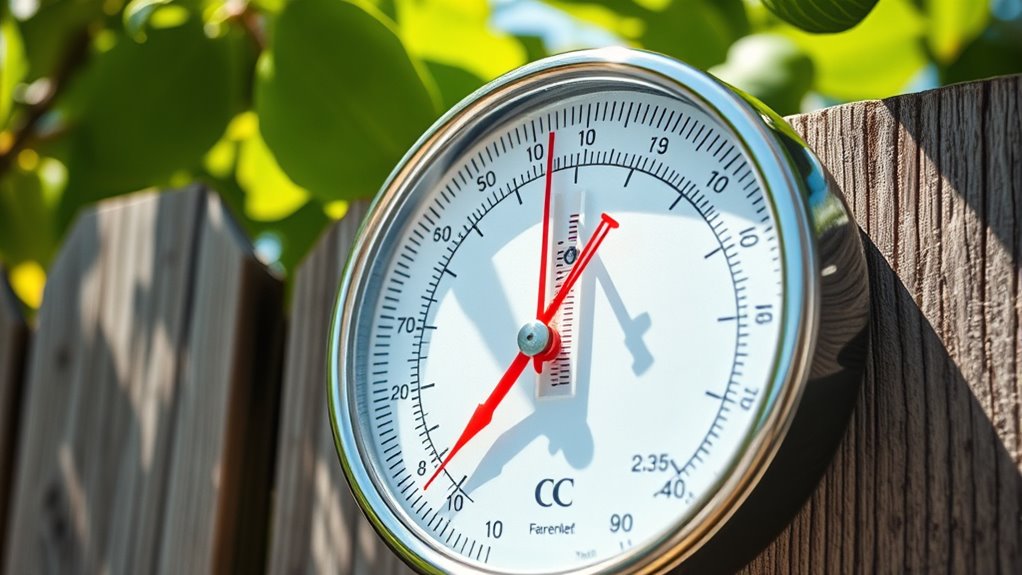
Choosing whether to use Celsius or Fahrenheit depends largely on where you are and who you’re communicating with. If you’re in the United States, Fahrenheit is the standard, and you’ll find it easier due to unit familiarity. Conversely, in most of the world, Celsius is the norm, especially in scientific and international contexts. Cultural differences also influence your choice; using the local temperature scale shows respect and helps avoid confusion. When discussing weather with locals, stick to their customary units to ensure clarity. For scientific or technical purposes, Celsius is often preferred worldwide. Ultimately, your decision hinges on your audience and setting—use the familiar units to communicate effectively and avoid misunderstandings.
What Tools Make Temperature Conversion Easier?
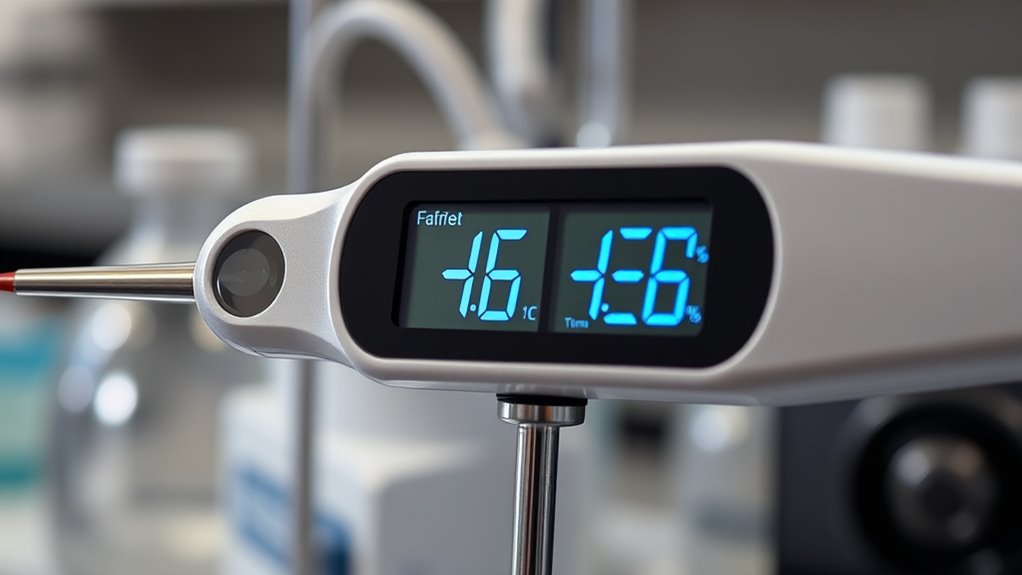
You can make temperature conversions more efficient with digital thermometers, conversion apps, and websites. Scientific calculators also simplify the process, especially for complex calculations. These tools save you time and reduce errors whenever you need quick, accurate results.
Digital Thermometers
Digital thermometers have revolutionized temperature measurement by making conversions between Fahrenheit and Celsius quick and effortless. With these devices, you don’t need manual calculations or conversion charts. Instead, you get instant readings with reliable digital display accuracy, simplifying your understanding of temperatures. To guarantee consistent performance, pay attention to digital thermometer calibration, which keeps readings precise over time. Features to look for include:
- Easy digital thermometer calibration options for ongoing accuracy
- Clear, crisp digital display for quick reading interpretation
- Reliable digital display accuracy to avoid misjudging temperatures
These tools are especially useful if you frequently switch between temperature scales or require precise measurements in cooking, health, or scientific work. Digital thermometers reduce guesswork, saving time and ensuring you get accurate temperature readings every time.
Conversion Apps and Websites
Have you ever needed to quickly convert temperatures between Fahrenheit and Celsius without doing manual math? Conversion apps and websites make temperature conversion simple and accurate, helping you avoid mistakes with measurement standards. These tools save time and reduce frustration, especially when traveling or cooking. With a few taps or clicks, you get instant results, making temperature conversions seamless. Consider this emotional impact:
| Stressful Guesswork | Accurate Conversion |
|---|---|
| Confusion in measurement standards | Confidence in precise results |
| Wasting time on calculations | Effortless temperature checks |
| Frustration over errors | Trustworthy, instant answers |
Using these digital tools ensures you won’t misinterpret temperatures, no matter the context. They’re your reliable companions for quick, accurate temperature conversion every time.
Scientific Calculators
Scientific calculators equipped with temperature conversion functions streamline the process, allowing you to switch between Fahrenheit and Celsius with just a few keystrokes. They guarantee accurate results by maintaining unit consistency and simplifying temperature calibration. These calculators are especially helpful when working with technical data or recipes needing precise temperature adjustments. Key features include:
- Quick conversion between units, saving time
- Built-in formulas for accurate temperature calibration
- Ensuring unit consistency across calculations
Using a scientific calculator makes temperature conversions less error-prone, helping you avoid common mistakes like mixing units or misreading values. They’re ideal for students, engineers, or anyone needing reliable, fast conversions without relying solely on apps or websites. With these tools, you can confidently handle temperature data, ensuring accuracy and efficiency in your work.
Frequently Asked Questions
Why Do Some Countries Use Fahrenheit Instead of Celsius?
You might wonder why some countries use Fahrenheit instead of Celsius. It’s mainly due to cultural preferences and historical legacy, especially in the United States. When you travel or communicate internationally, you’ll notice these differences because they’re deeply rooted in tradition and history. Countries stick with Fahrenheit because it’s familiar and has been part of their everyday life for generations, even though Celsius is more widely used globally.
How Does the Temperature Scale Impact Scientific Measurements?
You might think the temperature scale doesn’t matter, but it impacts scientific measurements profoundly. The scale’s precision and measurement consistency are vital for accurate data, especially across different fields. Celsius’s decimal system offers clearer, more consistent readings, making collaboration easier globally. Fahrenheit’s less precise scale can introduce errors. Choosing the right scale ensures scientists communicate effectively, maintain measurement integrity, and advance research without misunderstandings or inaccuracies.
Can Temperature Conversions Affect Cooking or Medical Procedures?
Yes, temperature conversions can affect cooking and medical procedures if you make unit conversion errors or overlook measurement precision. For example, converting Fahrenheit to Celsius incorrectly might lead to undercooked food or improper medication dosages. Always double-check your conversions and consider measurement precision to guarantee safety and accuracy. Small errors in unit conversion can have significant consequences, especially in precise contexts like cooking or healthcare.
Are There Historical Reasons for the Different Temperature Scales?
Did you know that the different temperature scales have intriguing historical roots? The Fahrenheit and Celsius scales emerged from distinct measurement standards developed centuries ago, driven by scientists aiming for precise, practical methods. This historical development reflects their unique origins—Fahrenheit’s based on freezing water and human body temperature, Celsius inspired by the decimal system. These choices shaped how we measure temperature today, creating the fascinating divergence you see in everyday life.
How Do Temperature Scales Influence Climate Data Reporting?
Temperature scales influence climate data reporting because scale conversion errors can lead to misunderstandings or inaccuracies. If you don’t carefully convert between Fahrenheit and Celsius, your data might misrepresent actual conditions, affecting climate analysis. Using consistent scales improves data accuracy, ensuring reliable comparisons over time and regions. Always double-check your conversions to avoid mistakes, and recognize that different scales can impact how climate trends are interpreted and communicated.
Conclusion
Just as Alice navigated Wonderland’s confusing twists, mastering temperature scales helps you avoid pitfalls in daily life. By understanding the differences and using the right tools, you stay in control—no more guessing or mishaps. Remember, precision isn’t just for scientists; it’s your secret weapon against the chaos of miscommunication. With a little practice, you’ll confidently read weather reports and recipes, turning confusion into clarity—making every temperature a straightforward part of your journey.