Boiling water isn’t enough to guarantee your candy thermometer is accurate, as it only verifies its precision at one temperature point. Variations in altitude, pressure, and sensor drift can affect readings over time. To get reliable results, you need to regularly calibrate using ice water baths or other methods, and choose the right thermometer type. Keep calibrating and maintaining your tools to prevent surprises in your candy’s texture—if you want to see how, keep going.
Key Takeaways
- Boiling water calibration confirms temperature accuracy at one point but doesn’t ensure precision across the entire candy-making temperature range.
- Regular calibration with ice baths and other methods helps detect sensor drift and improve long-term measurement reliability.
- Different thermometer types (digital, dial, infrared) vary in accuracy; understanding their limitations enhances measurement precision.
- Proper thermometer placement and avoiding contact with pan sides or bottom are crucial for accurate readings during candy cooking.
- Environmental factors like humidity and altitude affect temperature readings; adjusting calibration accordingly ensures consistent results.
The Limits of Using Boiling Water as Your Candy Thermometer Benchmark
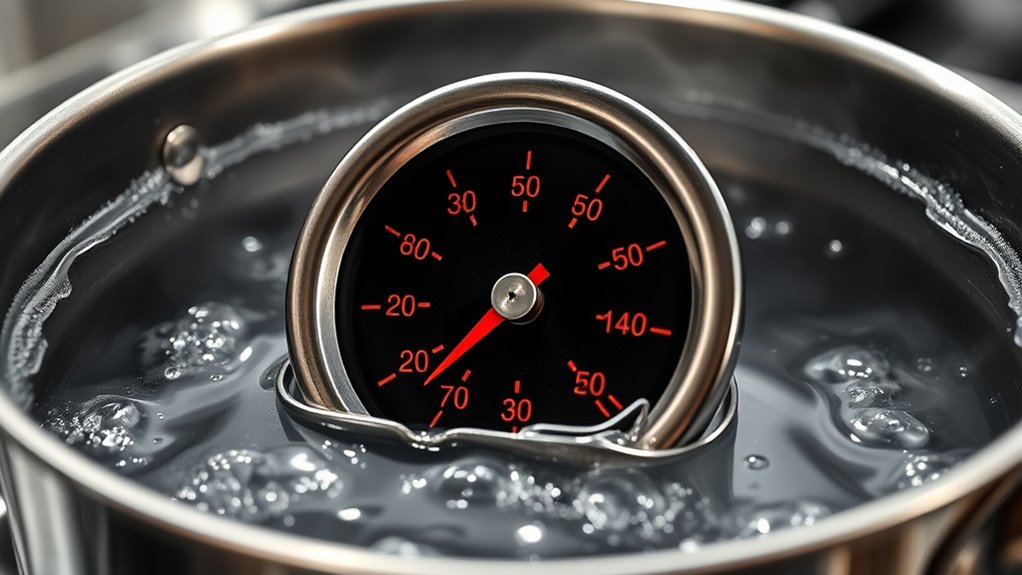
While boiling water is often used as a reference point for thermometer calibration, it has limitations when it comes to candy making. Boiling water provides a simple temperature benchmark—100°C or 212°F at sea level—that’s easy to verify. However, relying solely on boiling water for calibration can be misleading because it doesn’t account for altitude or atmospheric pressure variations. These factors affect the boiling point, making it an inaccurate standard across different locations. Additionally, boiling water only confirms that your thermometer reads the correct temperature at one point. For candy making, where precise temperature control is crucial, calibration should involve multiple benchmarks. This ensures your thermometer provides accurate readings across the entire temperature range needed for different candy stages. Furthermore, understanding how pressure variations impact temperature calibration can help you achieve more consistent results in candy making. Adjusting for altitude effects ensures that your calibration remains accurate regardless of your geographic location. Recognizing the limitations of simple calibration methods can lead to better precision and more successful candy results.
Incorporating temperature stability checks can also improve calibration reliability over time.
Why Specific Candy Temperatures Matter and How They Impact Your Results
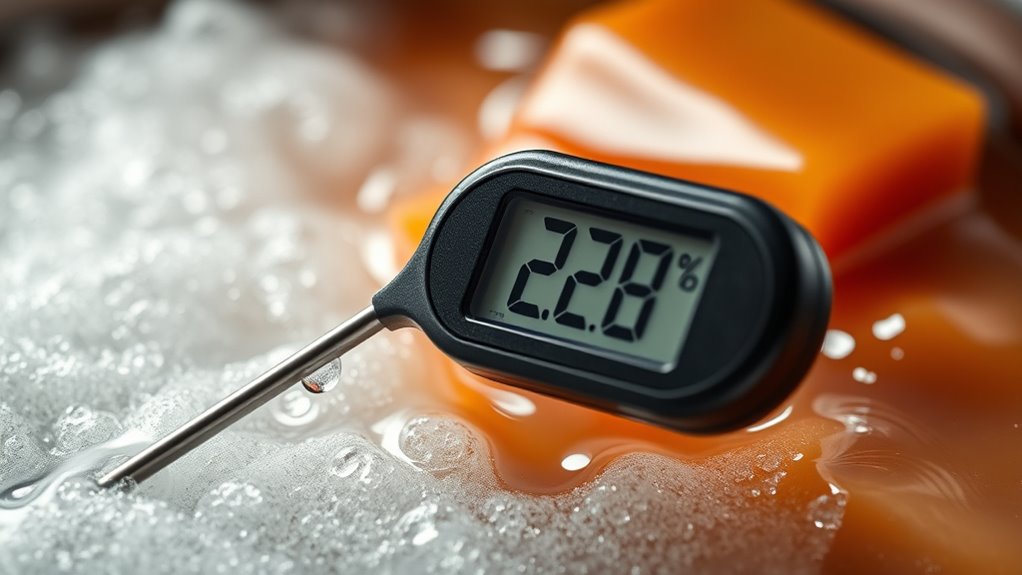
Understanding the importance of hitting precise candy temperatures is essential because each stage of candy making requires specific heat levels to achieve the desired texture and consistency. If you don’t reach the right temperature, sugar crystallization can occur prematurely, leading to grainy or rough textures. For example, making caramel or fudge depends on precise temperature control to develop smooth, creamy results. Humidity effects also play a role; high humidity can cause sugar to seize or crystallize unexpectedly, ruining your batch. By knowing and maintaining the correct temperatures, you ensure proper sugar bonding and prevent unwanted crystallization. Proper thermometer calibration is crucial in this process, as even small errors can compromise the final product. This accuracy in temperature helps you consistently produce professional-quality candies with the right texture, shine, and mouthfeel.
Choosing the Right Candy Thermometer: Digital, Dial, or Infrared?
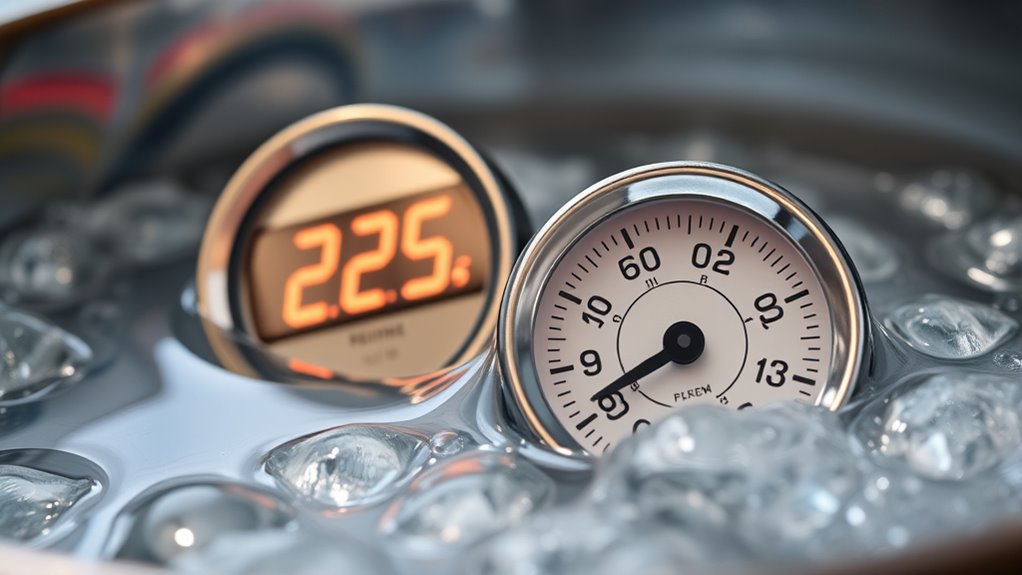
Choosing the right candy thermometer depends on your specific needs and preferences, as each type offers distinct advantages. Your digital choice provides quick readings and easy temperature tracking, making it ideal for precise candy making. Dial thermometers are durable and simple to use, offering a traditional feel with reliable accuracy. Infrared thermometers boast infrared advantages, allowing you to measure surface temperatures without contact, which is useful for quick checks or hot surfaces. Consider these points:
- Digital thermometers deliver instant, accurate readings.
- Dial thermometers are sturdy and straightforward.
- Infrared thermometers prevent contamination and allow non-contact measurement.
- Your choice depends on factors like convenience, durability, and how you prefer to monitor temperatures.
- Understanding thermometer accuracy is essential to achieve perfect candy results, regardless of the type you choose.
- Additionally, being aware of temperature calibration ensures that your thermometer remains precise over time, which is crucial for successful candy making.
- Proper calibration can help maintain measurement reliability, ensuring consistent results every time.
- Regularly checking and adjusting your thermometer can further improve your candy-making precision. You might also consider thermometer calibration techniques to keep your tools in top condition.
Select the thermometer that best fits your kitchen setup and candy-making style for suitable results.
How to Calibrate Your Candy Thermometer for Reliable Readings
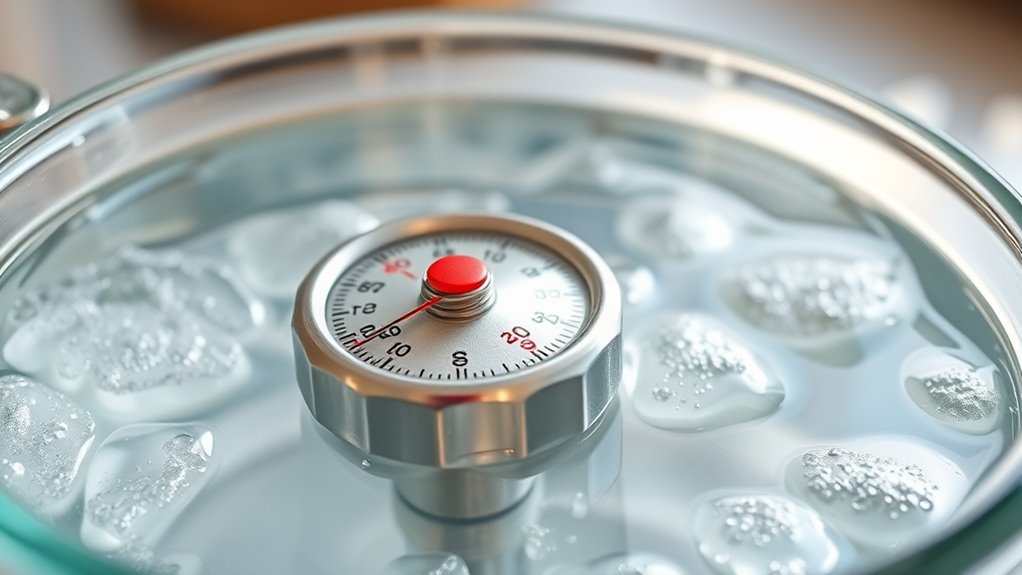
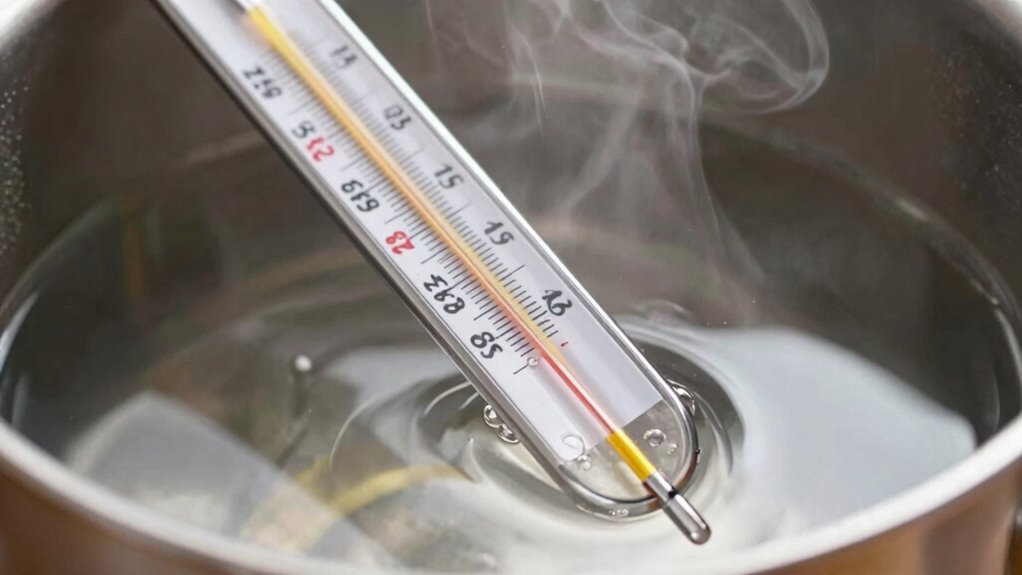
Calibrating your candy thermometer guarantees that every reading is accurate, which is essential for achieving perfect candy every time. To do this, use a pot of boiling water, which should be around 212°F at sea level. Place your thermometer in the boiling water without touching the sides or bottom, and wait for the reading to stabilize. If it doesn’t read 212°F, adjust the calibration if your thermometer permits, or note the discrepancy. This process helps account for thermometer lag, which can cause delayed temperature readings, and prevents sugar crystallization errors caused by inaccurate measurements. Regular calibration ensures your thermometer tracks the true temperature, giving you confidence during critical stages of candy making. Additionally, considering the integration of smart kitchen appliances can assist in maintaining precise temperature control for even better outcomes. Being aware of ambient temperature can also influence your calibration process, ensuring more consistent results. Furthermore, understanding thermodynamic principles can improve your ability to interpret temperature readings accurately during candy production.
Mastering the Proper Use of a Candy Thermometer for Perfect Results
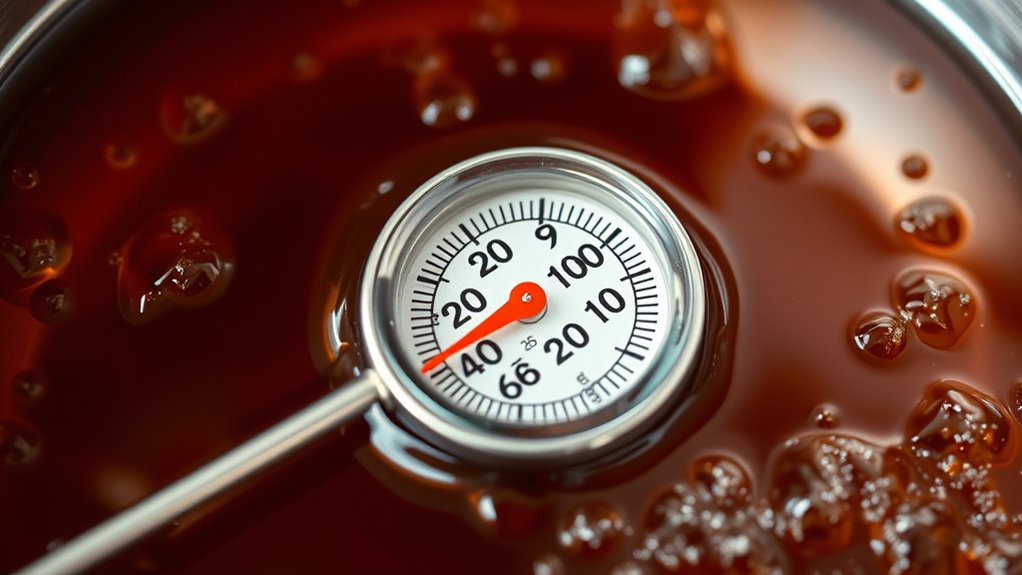
To get perfect candy every time, you need to place your thermometer correctly in the mixture. Make certain the tip is fully submerged but doesn’t touch the bottom of the pan. Also, verify your thermometer’s accuracy regularly to ensure consistent, reliable readings. Vetting of tools helps maintain confidence in your measurements.
Proper Thermometer Placement
Ensuring your thermometer is properly placed is essential for accurate readings. Correct thermometer placement guarantees temperature consistency, which is vital when cooking candy. Position the thermometer so that the sensing tip rests in the thickest part of the mixture, avoiding contact with the sides or bottom of the pan. This prevents false readings caused by hot spots or uneven heat. Keep the thermometer steady and avoid jostling it during cooking. Use a clip or holder to secure it in place if needed. Proper placement minimizes errors and helps you monitor the precise stage of your candy. Remember, consistent thermometer placement leads to reliable temperature readings, giving you confidence in your results and ensuring perfectly cooked candy every time.
- Position the sensing tip in the center of the mixture
- Avoid contact with pan sides or bottom
- Use a clip to secure the thermometer
- Keep the thermometer steady during cooking
Calibrating for Accuracy
Accurate readings depend on more than proper placement; your thermometer must be correctly calibrated before each use. Humidity effects can influence thermometer accuracy, especially if moisture causes corrosion or buildup. To guarantee precision, use calibration tools like boiling water or ice water baths. Start by placing your thermometer in boiling water at sea level; it should read 212°F (100°C). If it doesn’t, adjust the calibration screw or note the discrepancy. For more accuracy, check with an ice water bath, which should read 32°F (0°C). Regular calibration accounts for humidity effects and sensor drift, ensuring consistent results. Remember, even small deviations can affect candy texture, so make calibration a routine part of your candy-making process. Proper calibration keeps your thermometer reliable and your confections perfect. Additionally, understanding sensor drift helps maintain long-term accuracy. To further enhance your calibration process, consider environmental factors that might influence readings over time. Monitoring sensor performance can also help identify when calibration adjustments are needed to maintain precision.
Common Mistakes That Can Throw Off Your Candy Temperature Readings
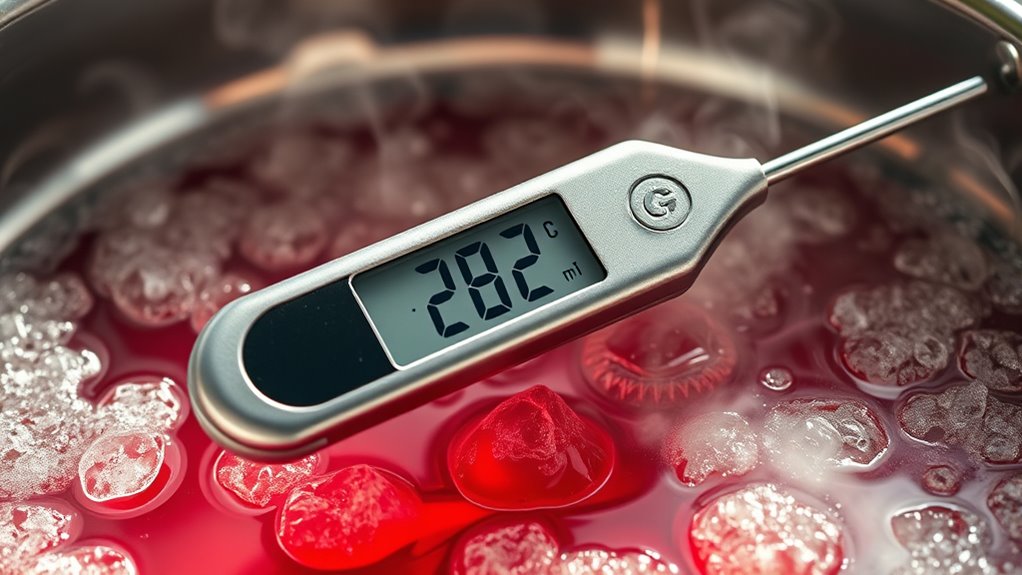
One common mistake that can throw off your candy temperature readings is using a thermometer that isn’t calibrated properly or is damaged. An inaccurate thermometer can lead to incorrect readings, impacting your candy’s texture and success. Additionally, overlooking factors like sugar crystallization and ambient humidity can skew your results. High humidity can cause moisture absorption, lowering the apparent temperature, while sugar crystallization can insulate the thermometer, giving false readings. To avoid these pitfalls, verify your thermometer is well-maintained and calibrated regularly. Keep your workspace dry and avoid drastic humidity changes during cooking. Also, always insert the thermometer tip correctly and wait for the reading to stabilize before recording. Proper equipment calibration and understanding environmental influences are crucial for accurate temperature measurements. Ensuring your thermometer accuracy by checking it against boiling water can help prevent misleading readings and ensure your candies turn out perfectly. Being aware of ambient conditions can help prevent misleading readings and ensure your candies turn out perfectly. Incorporating consistent measurement techniques enhances reliability and precision in your candy-making process. These precautions help keep your temperature measurements precise and your candies perfect.
How to Care for and Maintain Your Candy Thermometer for Longevity
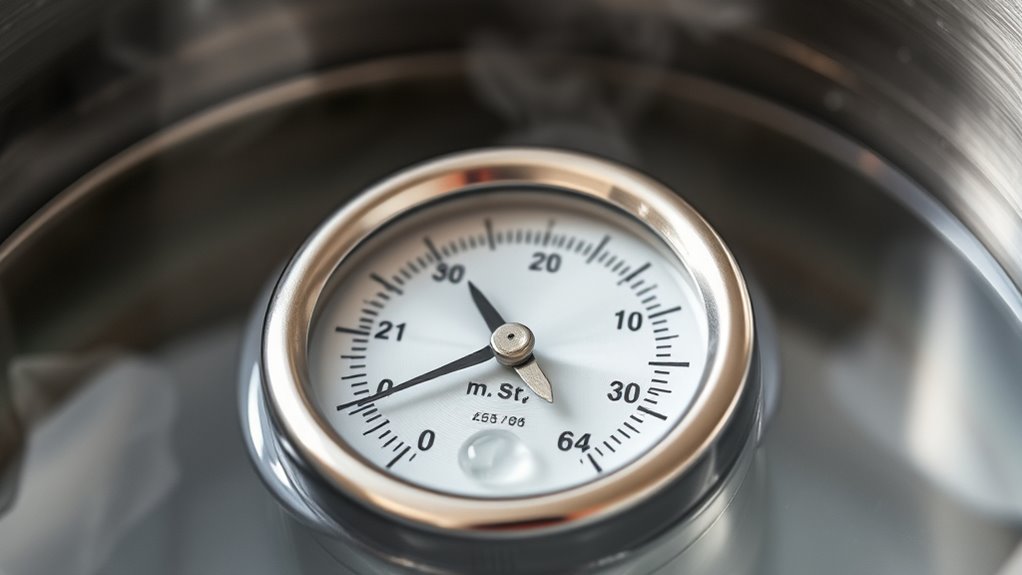
Proper care and maintenance of your candy thermometer extend its lifespan and keep your readings reliable. Regularly check your thermometer’s calibration by testing it in boiling water or an ice bath—accurate readings are essential for successful candy making. If you notice discrepancies, recalibrate or replace it. Store your thermometer properly by keeping it in a protective case or a designated drawer, avoiding contact with other sharp or heavy objects that could damage it. Clean your thermometer after each use with warm water and a gentle detergent, especially if it’s a glass model, to prevent residue buildup. Avoid exposing your thermometer to extreme temperature changes or direct sunlight, which can affect accuracy. Proper storage and calibration help guarantee your thermometer stays precise, making your candy creations consistently perfect.
When and Why to Consider Alternative Temperature Measurement Methods
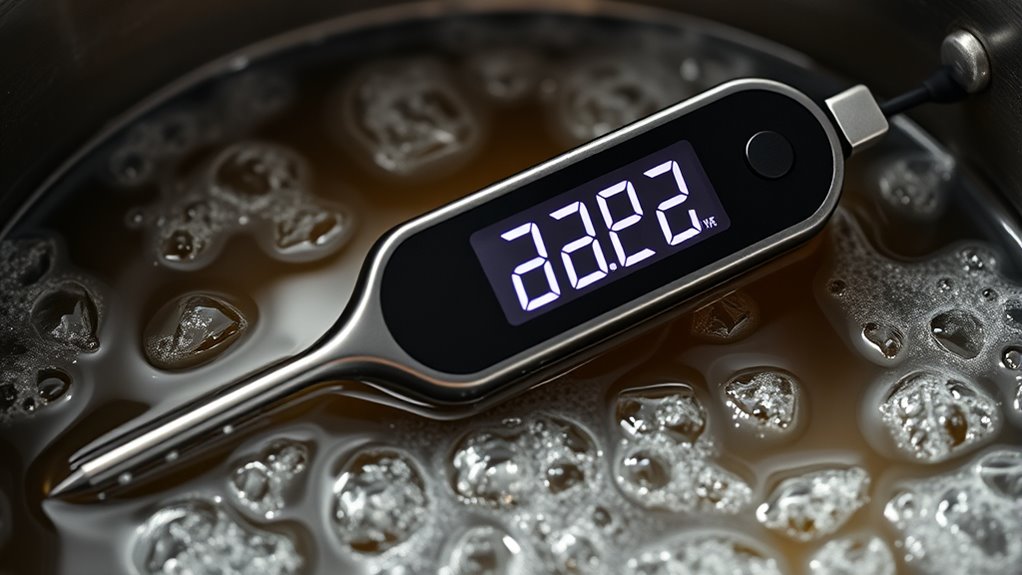
While a traditional candy thermometer works well for most recipes, there are times when you should consider alternative temperature measurement methods. You might need these methods if you’re working with fragile or small batches, or when precise readings are critical. Alternative methods, like infrared or non contact measurement, can offer quick, hygienic, and accurate readings without direct contact with hot syrup.
Traditional thermometers aren’t always ideal; try infrared or non-contact methods for quick, hygienic, and precise candy temperature readings.
Consider these situations:
- When measuring moving or hard-to-reach containers
- For avoiding contamination or mess
- When needing rapid temperature checks
- To improve safety during hot sugar handling
Using non contact measurement tools provides a level of convenience and accuracy that traditional thermometers can’t always match, especially in complex candy-making processes. These alternative methods can enhance your precision and safety, ensuring better results.
Frequently Asked Questions
Can I Use a Meat Thermometer to Measure Candy Temperatures?
You can use a meat thermometer for candy, but you need to make certain it’s properly calibrated first. Meat thermometers aren’t designed for high sugar temperatures, so regular candy thermometer maintenance is essential. Check its accuracy with boiling water or ice water, and adjust if needed. Keep in mind that a dedicated candy thermometer provides more precise readings, especially for high-temperature stages like caramel or fudge.
How Does Altitude Affect Candy Temperature Readings?
Did you know that at higher altitudes, water boils at lower temperatures? This means you need to make altitude adjustments when measuring candy temperatures because boiling point variations affect your readings. Without these adjustments, your candy might not reach the correct stage, leading to failed recipes. Always calibrate your thermometer for altitude, or use a specialized candy thermometer designed for higher elevations to guarantee precise results.
Are There Specific Brands Recommended for Candy Thermometers?
You should consider recommended brands like ThermoWorks, CDN, and Taylor for candy thermometers, as they’re known for accuracy and durability. Reading thermometer reviews helps you find models with precise readings and quick response times. Opt for digital or analog options based on your preference. Reliable brands guarantee your candy reaches the right temperature, preventing overcooking or undercooking, especially at high altitudes where accuracy is essential.
What Is the Ideal Storage Temperature for Candy Thermometers?
You should store your candy thermometer in a cool, dry place away from direct sunlight to maintain accurate calibration. Proper storage guarantees the thermometer stays precise over time. When using it, place the thermometer correctly in your candy mixture, avoiding contact with the pot’s bottom or sides. Regularly check its calibration to ensure accurate readings, especially if it’s been dropped or exposed to temperature fluctuations.
Can I Rely on Smartphone Temperature Apps for Candy Making?
You shouldn’t rely on smartphone temperature apps for candy making because their digital calibration and sensor response are often inaccurate for precise cooking. These apps lack the specialized sensors needed to measure high temperatures accurately, which are vital in candy making. Instead, invest in a reliable candy thermometer with proper calibration and fast sensor response. This ensures your temperatures are precise, helping you achieve perfect candy textures every time.
Conclusion
Think of your candy thermometer as the compass guiding your sweet journey. While boiling water isn’t enough to ensure perfect results, understanding its limits and maintaining your tool helps you stay on course. With careful calibration and proper use, you’ll master precise temperatures just like a skilled navigator. Don’t let small mistakes derail your candy-making adventure—trust your thermometer, keep it in top shape, and enjoy the delicious rewards of your efforts.