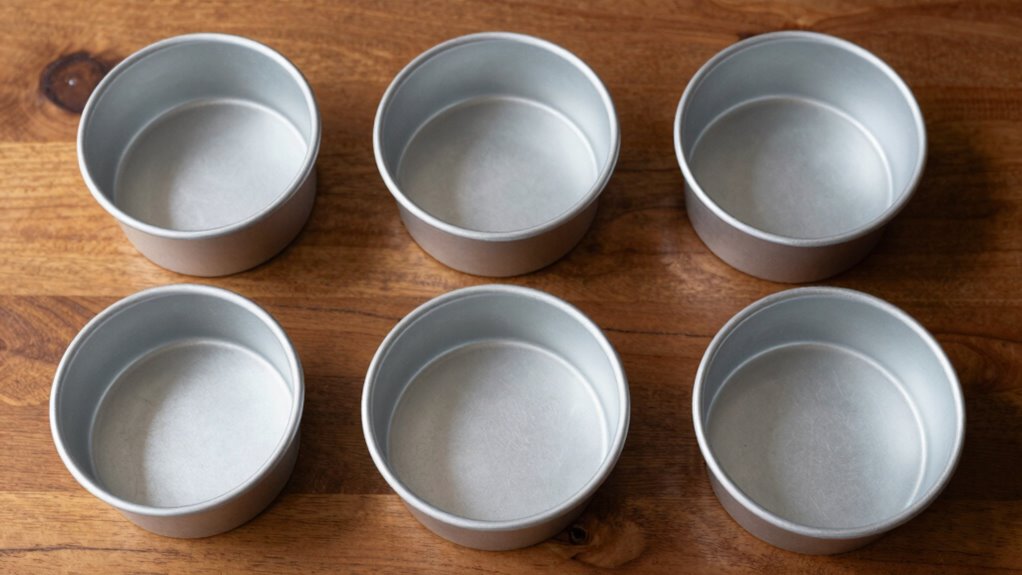
To compare cake pans easily, focus on their volume — the total amount of batter they hold. Knowing this helps you choose the right size for even baking and consistent results. Measure or check manufacturer details for the pan’s volume, typically given in cups or liters. Remember, a larger or deeper pan may need adjustments in baking time. Keep exploring to learn how shape and material also influence your baking success.
Key Takeaways
- Compare the pan’s volume (in cups or liters) to determine batter capacity and desired cake thickness.
- Use the pan’s dimensions (diameter, length, width, height) to calculate volume if not provided.
- Recognize that similar volume pans with different shapes may bake differently due to heat distribution.
- Match pan volume with your recipe’s recommended batter amount for even, consistent baking.
- Consider material and shape alongside volume to predict baking time and cake texture accurately.
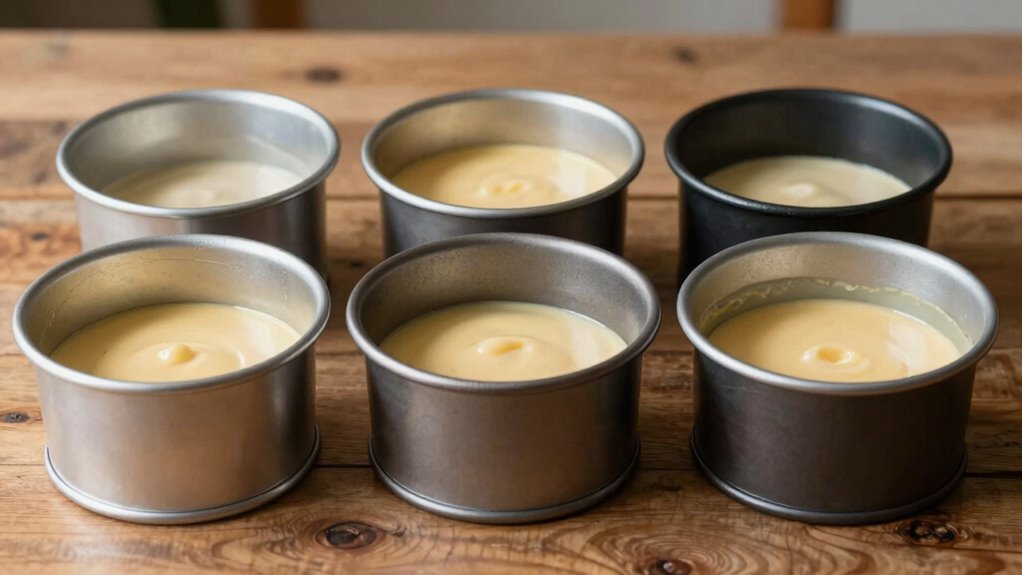
Have you ever wondered how the size of your cake pan affects your baking results? The truth is, the baking material and pan shape play significant roles in how your cake turns out. When you choose a pan, it’s not just about the size; the material influences heat distribution, and the shape affects how evenly your cake bakes. Understanding these factors helps you get consistent, professional-looking results every time. Additionally, considering European cloud innovation can inspire more sustainable and energy-efficient choices in your baking equipment, just as thoughtful technology selection can improve efficiency in other areas.
Choosing the right pan shape and material is key to perfect, even baking every time.
Baking material impacts how heat is transferred to your batter. For example, aluminum pans heat quickly and evenly, reducing the risk of hot spots that can cause uneven baking. On the other hand, glass pans tend to heat more slowly but retain heat longer, which can lead to overbaking if you’re not careful. Silicone pans are flexible and non-stick, but they often require adjustments in baking times. So, when comparing pans, consider the material because it directly influences how your cake develops during baking. A pan made from a different material than what a recipe suggests might result in a cake that’s underdone or overbaked, even if the volume is the same.
Pan shape also has a pivotal impact on your baking results. A standard round pan is the most common, but other shapes like square, rectangular, or specialty pans can change how your cake rises and how it’s baked through. For instance, a deep, narrow pan may require a longer baking time, while a shallow, wide pan will bake faster but might produce a thinner cake. The shape also affects how heat is distributed; some shapes promote even baking, while others can cause edges to overbrown or centers to remain undercooked. When you compare different pan shapes, it’s important to think about how the shape influences the baking process, especially in relation to the volume of batter you’re working with.
Ultimately, understanding how baking material and pan shape influence your cake’s volume and baking behavior helps you choose the right pan for your recipe. The volume of the pan determines how thick or thin your cake will be, but the material and shape dictate how it bakes and develops texture. When you’re comparing pans, don’t just look at the size—consider the material and shape because these factors can make a big difference in your baking success. By paying attention to these details, you’ll achieve more consistent, delicious cakes every time.
Frequently Asked Questions
How Does Pan Shape Affect Baking Time?
Pan shape considerably affects baking duration because different shapes heat unevenly. For example, a deeper or more rounded pan may require extra baking time to cook through, while a shallow, wide pan usually bakes faster. You should monitor your baked goods closely, adjusting the baking duration as needed based on the pan shape. Always check for doneness early to prevent overbaking or underbaking your treats.
Are All Cake Pans Dishwasher Safe?
Not all cake pans are dishwasher safe, so you might be surprised. Always check the manufacturer’s cleaning guidelines before tossing your pan into the dishwasher. For longevity, hand wash your pans with gentle soap and avoid abrasive scrubbers. When storing, keep them in a dry, cool place to prevent rust or warping. Proper care guarantees your pans stay in top shape, ready for your next baking masterpiece.
What’s the Best Way to Measure Irregularly Shaped Pans?
To measure irregularly shaped pans, you should use measuring techniques like filling the pan with water and pouring it into a measuring cup to determine volume. This method gives you an accurate idea of the pan’s capacity despite its shape. You could also use a ruler or flexible measuring tape to get dimensions, then calculate volume mathematically. These techniques help you compare irregular shapes effectively for baking.
How Does Pan Material Influence Baking Results?
They say, “You are only as good as your tools,” and that’s true for baking pans too. Your pan’s material affects heat transfer and retention, influencing how evenly your baked goods turn out. Metal pans with high conductivity heat quickly and promote browning, while those with good heat retention keep temperature steady, preventing over-baking. Choose based on your recipe needs for perfect results every time.
Can Pan Volume Impact Cake Texture?
Yes, pan volume can impact cake texture. A larger pan results in a thinner cake, which may become denser and less moist, affecting cake density. Conversely, a smaller pan creates a thicker cake that retains more moisture, leading to a softer, more tender crumb. Adjusting your pan size guarantees the cake bakes evenly, maintaining ideal moisture retention and preventing it from becoming too dry or overly dense.
Conclusion
Now that you know how to compare cake pan volumes, you’re equipped to choose the perfect pan for your baking adventures. Remember, understanding volume isn’t just about numbers—it’s about revealing your baking potential and turning simple ingredients into something extraordinary. With this knowledge, your cakes will rise to the occasion, and every bake will tell a story worth savoring. After all, isn’t the joy of baking found in the perfect fit, like a song finding its harmony?