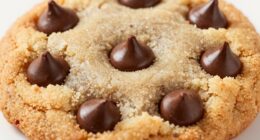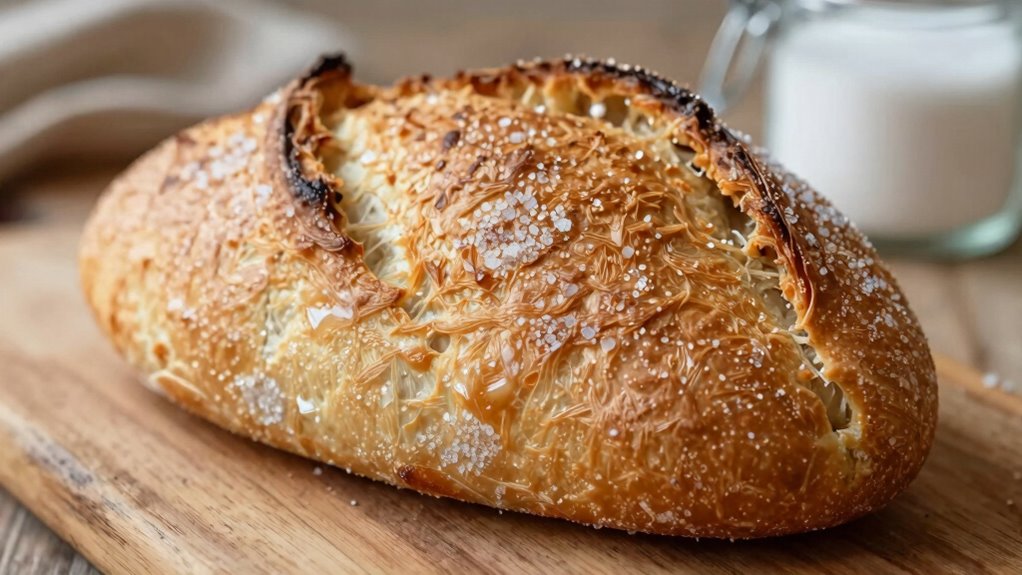
Sugar helps prevent staling by acting as a natural moisture lock, attracting water and keeping baked goods soft and fresh longer. It also inhibits starch recrystallization, which causes bread to become crumbly and firm. By competing for water during baking, sugar slows moisture loss and delays staling processes. If you want to discover more about how sugar keeps baked goods tender and extend their freshness, keep exploring this fascinating topic.
Key Takeaways
- Sugar’s hygroscopic nature binds water, reducing free moisture that contributes to staling.
- It slows starch retrogradation by inhibiting recrystallization of starch molecules in baked goods.
- Sugar limits gluten development, maintaining a tender, soft crumb that resists becoming stale.
- It acts as a barrier, trapping moisture inside baked items and preventing moisture loss over time.
- Higher sugar levels enhance moisture retention, extending freshness and delaying the staling process.
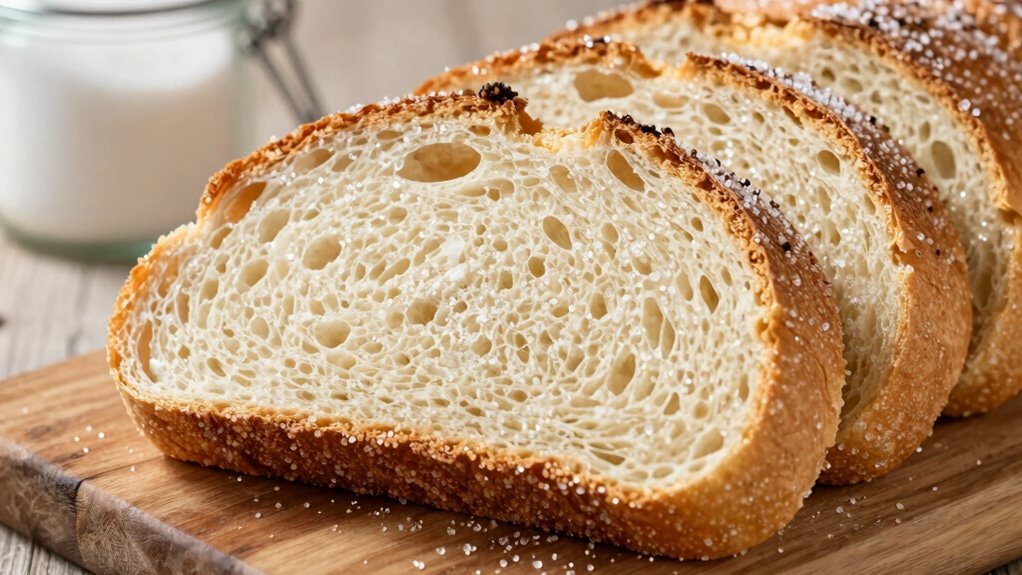
Sugar plays a surprising role in keeping baked goods fresh longer by preventing staling. When you bake, moisture loss is one of the main reasons bread and pastries go stale. Sugar’s hygroscopic properties mean it attracts and holds onto water molecules, which helps maintain moisture levels in baked items. By drawing moisture from the environment or retaining it within the product, sugar slows down the dehydration process that causes staling. This moisture retention keeps your baked goods softer and more tender over time, extending their freshness.
Sugar helps baked goods stay moist and fresh longer by attracting water molecules.
Additionally, sugar influences the structure of baked goods through its role in gluten development. When you mix flour and water, gluten proteins form a network that gives bread its structure. Sugar affects this process by competing for water molecules, which limits gluten formation to some extent. This controlled gluten development results in a finer crumb and softer texture, both of which contribute to a longer-lasting freshness. Without enough sugar, the gluten network can become overly developed or too dry, leading to a denser, crumblier product that stales faster.
Moreover, sugar’s hygroscopic nature doesn’t just prevent moisture loss; it also creates a barrier that slows down the staling process. By binding water within the baked good, sugar reduces the amount of free moisture available for starch molecules to retrograde. Retrogradation is a key factor in staling because it causes starch molecules to recrystallize, resulting in a firm or crumbly texture. When sugar keeps water available, it hampers this recrystallization, keeping the product softer for longer.
It’s important to note that the type and amount of sugar used can influence how effectively it prevents staling. More sugar generally means more moisture retention and better inhibition of starch retrogradation, but too much can make baked goods overly sweet or change their texture undesirably. Balancing sugar levels is essential for ideal freshness without compromising flavor or structure.
Frequently Asked Questions
Does Sugar Affect the Shelf Life of All Baked Goods Equally?
No, sugar doesn’t affect the shelf life of all baked goods equally. It influences moisture retention and prevents sugar crystallization differently depending on the recipe. In items like cookies and bread, sugar helps keep them soft and fresh longer. However, in cakes or pastries, the impact varies based on sugar content and moisture levels. So, sugar’s role in shelf life depends on the specific baked good and its formulation.
Can Sugar Prevent Staling in Gluten-Free Bread?
Yes, sugar can help prevent staling in gluten-free bread by acting like a moisture magnet. It slows sugar crystallization and retains moisture, keeping the bread soft and fresh longer. Think of sugar as a sponge, holding onto water and preventing it from escaping. This moisture retention is especially essential in gluten-free baked goods, which tend to stale faster without the structure gluten provides.
How Does Sugar Compare to Artificial Preservatives for Staling?
Sugar acts as a natural preservative by reducing sugar crystallization, which helps prevent staling in baked goods. Compared to artificial preservatives, sugar is often safer and more accessible, but it might not last as long or be as effective in all cases. You’ll find that preservative comparison shows sugar offers a gentle, natural way to extend freshness, though some products may still benefit from artificial options for longer shelf life.
Is the Anti-Staling Effect of Sugar Affected by Humidity?
Humidity impact can influence sugar’s anti-staling effect. When humidity rises, sugar absorbs moisture, which can reduce its ability to prevent staling effectively. Studies show that high moisture levels can cause baked goods to become soggy or stale faster, despite the presence of sugar. So, keeping products in dry environments helps sugar maintain its moisture absorption properties, ensuring it continues to inhibit staling and keeps baked goods fresher longer.
Does the Type of Sugar (White, Brown, Raw) Influence Its Anti-Staling Properties?
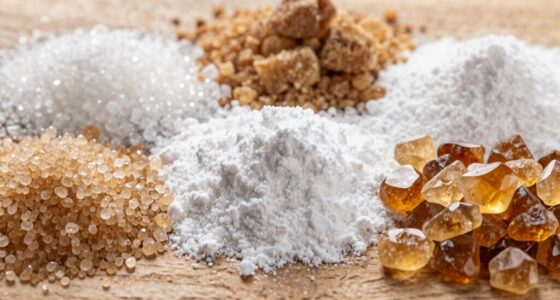
Yes, the type of sugar affects its anti-staling properties. White sugar, with its fine crystals, promotes sugar crystallization and moisture retention more effectively, helping keep baked goods soft longer. Brown and raw sugars contain molasses, which can interfere with crystallization and moisture retention, leading to quicker staling. Consequently, choosing white sugar can enhance the anti-staling effect due to better control over moisture and crystallization processes.
Conclusion
So, next time you’re baking or storing bread, remember that sugar acts like a shield, keeping moisture locked in and preventing staling. It’s like a gentle guardian, preserving freshness just like a cozy blanket warding off the cold. By adding a touch of sugar, you help your baked goodies stay soft and delicious longer, turning everyday bread into a treat that stays fresh like a spring morning. Keep it in mind and enjoy your baked delights even longer!