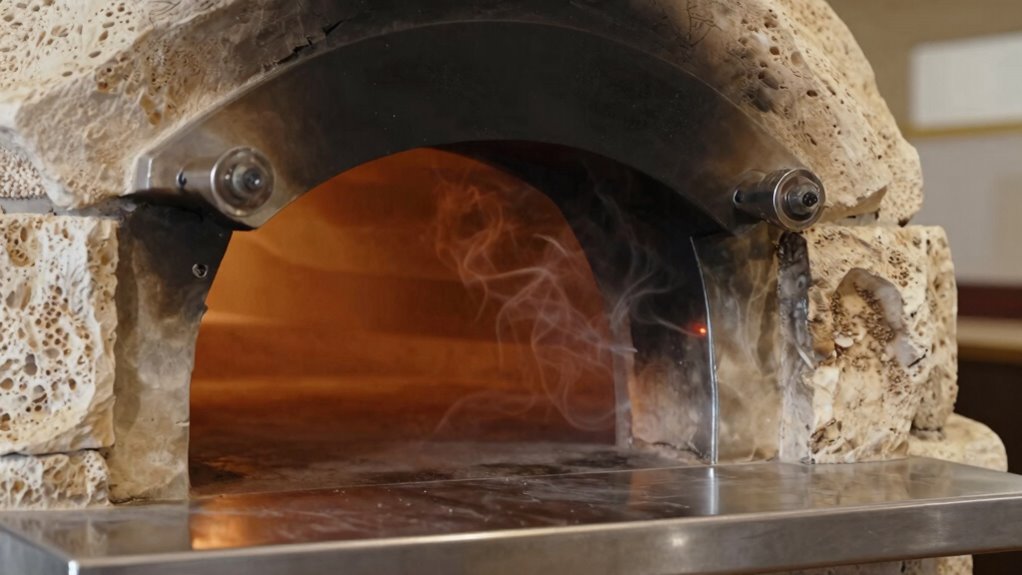

In a pizza oven, steel heats up quickly and transfers heat rapidly, resulting in faster cooking and crispier crusts, but it cools down faster too. Stone heats more slowly but distributes heat evenly, creating a consistent bake and traditional crust. Your choice affects baking speed, crust texture, and oven efficiency. Want to understand the thermal traits of each better? Keep exploring how these materials influence your perfect pizza.
Key Takeaways
- Steel heats quickly and transfers heat rapidly, enabling faster baking and crispier crusts.
- Stone heats slowly but distributes heat evenly, promoting traditional, consistent pizza results.
- Steel cools faster and requires continuous heat input, while stone retains heat longer for sustained baking.
- Steel offers durability and easy maintenance, whereas stone resists cracking and provides steady heat retention.
- Choice depends on baking style: steel for quick, high-temperature pizzas; stone for even, traditional crusts.
What’s the Deal With Heat Transfer in Pizza Ovens?
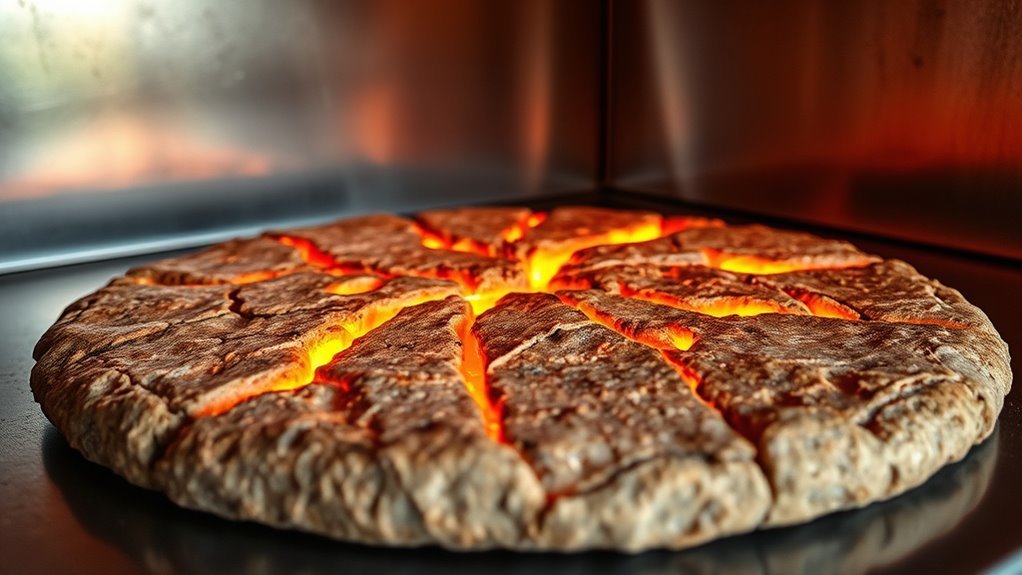
Understanding how heat moves within a pizza oven is key to achieving that perfect crust. The way heat transfers influences not only cooking performance but also your oven’s aesthetics and cleaning maintenance. A well-designed oven ensures even heat distribution, preventing hot spots that can ruin your pizza. Proper heat flow keeps the oven looking pristine longer by reducing smoke and residue buildup, making cleaning easier. Maintaining the right temperature helps preserve the oven’s appearance, avoiding scorch marks or discoloration. Regular cleaning maintains both the aesthetic appeal and efficient heat transfer. When you understand how heat moves, you can optimize your oven’s operation, ensuring consistent results while keeping it attractive and easy to maintain. Efficient heat transfer is crucial for energy conservation and optimal performance in modern pizza ovens. This knowledge helps you enjoy better pizzas and a cleaner, more appealing oven. Additionally, understanding the heat transfer methods can guide you in choosing the right oven material, such as stone or steel, to enhance heat retention and distribution. Recognizing the role of material properties in heat transfer can help you select the best oven for your needs, improving overall cooking results and maintenance practices.
How Does Stone Conduct and Keep Heat for Perfect Pizzas?
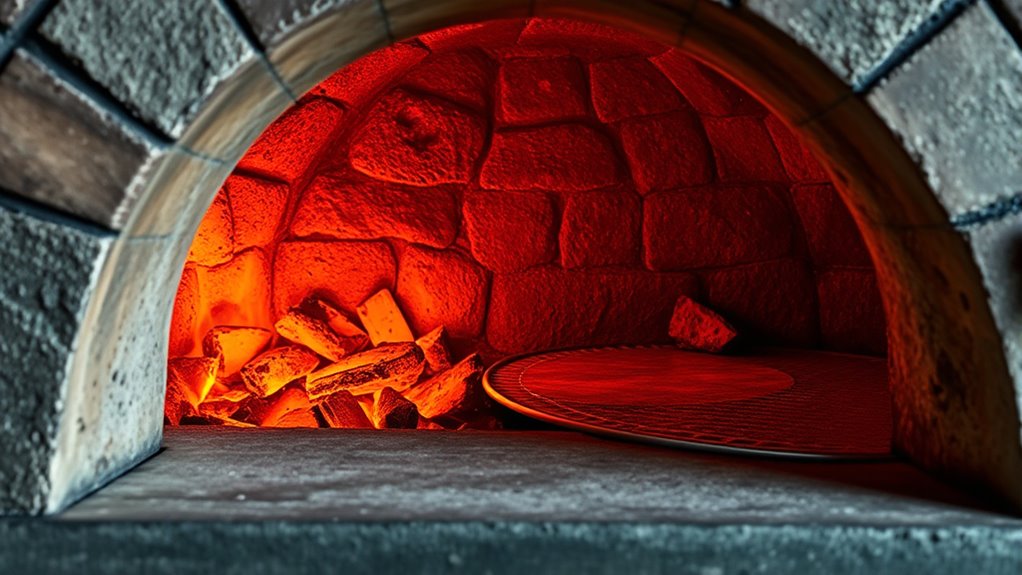
You’ll notice that stone heats up slowly but retains heat longer, thanks to its high thermal mass. Its thermal conductivity allows it to distribute heat evenly across the surface, giving you a consistent cooking environment. This heat retention and conductivity are key to creating perfectly cooked, restaurant-quality pizzas at home. Additionally, easy cleanup with stone is an advantage, as residues are less likely to stick, simplifying maintenance and ensuring better performance over time. The thermal properties of stone make it an ideal material for achieving a crisp crust and evenly cooked toppings. Understanding the heat transfer process helps in selecting the right oven setup for optimal cooking results. Recognizing the importance of auditory feedback can also assist in fine-tuning your cooking techniques for better results. Moreover, the thermal conductivity of stone plays a crucial role in controlling cooking times and heat distribution, ensuring your pizza is perfectly baked.
Thermal Conductivity of Stone
Stone’s ability to conduct and retain heat is key to achieving perfect pizzas. Its thermal conductivity allows heat to transfer efficiently from the oven to the dough, ensuring a crispy crust and evenly cooked toppings. Unlike metals, stone has lower thermal conductivity, meaning it heats more gradually but holds that heat longer, which is essential for consistent baking. Its material durability guarantees it withstands high temperatures without cracking or degrading over time. Additionally, stone provides some thermal insulation, helping keep the heat steady and preventing temperature drops during baking. This balance of heat conduction and insulation makes stone an excellent choice for pizza ovens, allowing you to achieve professional-level results with a reliable, long-lasting baking surface. Understanding thermal properties is crucial for selecting the right material to optimize heat transfer and retention. Proper heat retention is vital for maintaining consistent cooking conditions during multiple pizzas or extended baking sessions. Recognizing the heat transfer characteristics of different materials can significantly improve baking outcomes and efficiency. Moreover, the energy efficiency of stone contributes to more uniform cooking, reducing the need for frequent temperature adjustments during baking.
Heat Retention Properties
While stone’s thermal conductivity allows it to transfer heat efficiently to pizza dough, its true strength lies in how well it retains that heat during the baking process. A stone’s dense structure provides excellent oven insulation, preventing heat from escaping and maintaining consistent temperatures. This helps guarantee even cooking and a crispy crust. Additionally, stone’s moisture retention capabilities keep the surface dry, promoting proper browning without sogginess. The ability to hold onto heat means you can bake multiple pizzas without significant temperature drops, making it ideal for home and professional ovens. Properly seasoned or treated stones enhance this heat retention, giving you more control over your baking environment. Overall, stone’s heat retention properties are vital for achieving that perfect, evenly baked pizza.
What Are Steel’s Thermal Traits, and How Do They Affect Baking?
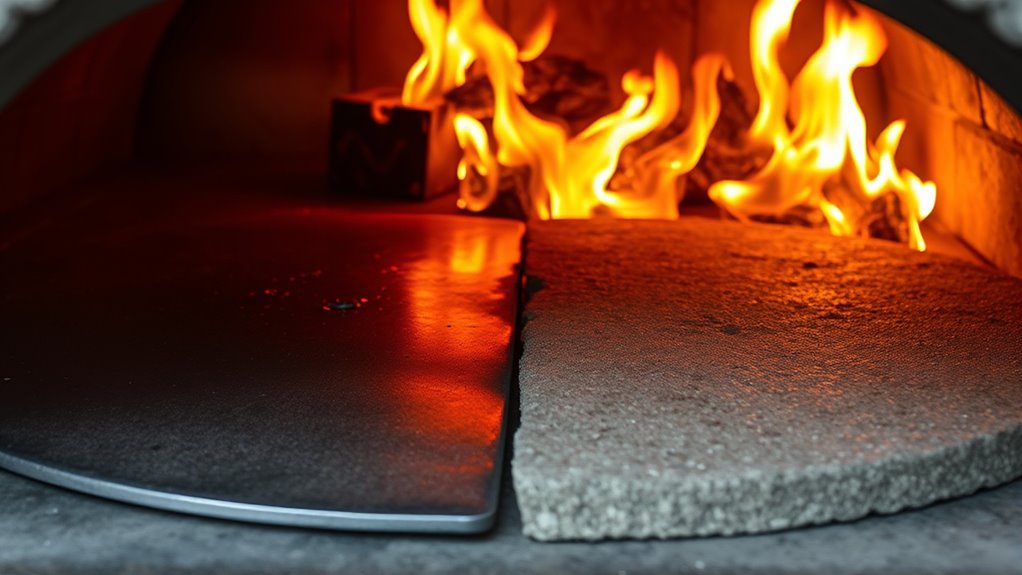
Steel’s high thermal conductivity means it transfers heat quickly to your pizza, reducing baking time. This efficient heat transfer can give you a crisp crust faster than other materials. Understanding these traits helps you optimize your baking process for perfect results. Master your smartphone and accessories to better understand and control your oven’s temperature settings for optimal baking. Additionally, knowing about thermal properties allows you to select the right material for specific baking needs.
Steel’s Conductivity and Heat Transfer
Steel conducts heat more efficiently than many other materials, which means it rapidly transfers heat from the oven to your pizza. This high thermal conductivity allows steel to deliver quick, even heat transfer, resulting in a well-cooked crust. Its metal’s durability ensures it withstands high temperatures without warping or cracking, making it a reliable choice for frequent use. While steel may have a higher initial cost considerations, its ability to quickly reach and maintain temperature can save you time and energy. This excellent heat transfer helps prevent hot spots, leading to a more consistent bake every time. Understanding thermal conductivity is crucial for selecting the best baking material. Additionally, steel’s thermal traits enable it to respond swiftly to temperature changes, providing better control during baking. Its quick heat response can improve baking precision, making it a preferred choice for many home bakers. Overall, steel’s thermal traits make it a prime material for achieving a fast and even bake, enhancing your pizza-making experience.
Impact on Baking Time
Because of its exceptional thermal conductivity, steel heats up quickly and transfers that heat efficiently to your pizza. This rapid heat transfer shortens baking times, making your pizza cook faster. However, dough hydration also influences baking; wetter dough retains more moisture, requiring slightly longer cook times despite the steel’s efficiency. Additionally, oven insulation plays a role—well-insulated ovens keep heat concentrated, further reducing baking time. Here’s how steel impacts baking time:
| Factors | Effect on Baking Time |
|---|---|
| Steel’s thermal traits | Speeds up heat transfer, reduces baking time |
| Dough hydration | Higher hydration can slightly extend baking time |
| Oven insulation | Better insulation decreases baking duration |
| Oven temperature | Higher temps shorten baking, but need control |
| Pizza thickness | Thinner pizzas bake faster on steel |
Steel’s traits, combined with dough hydration and insulation, considerably influence how quickly your pizza is ready. Understanding thermal properties can help optimize your baking process for perfect results. Additionally, thermal conductivity plays a crucial role in how quickly heat is transferred from the steel to the pizza. Enhancing your knowledge of heat transfer mechanisms can lead to more consistent baking outcomes. For example, heat retention in the oven also impacts overall baking efficiency. Recognizing the thermal traits of different materials can help you choose the best oven setup for your specific baking needs.
How Efficient Are Stone and Steel at Transferring Heat?
When it comes to heat transfer in a pizza oven, both stone and steel perform differently due to their unique properties. Steel is highly efficient because it has a low heat capacity, allowing it to heat quickly and transfer heat rapidly to your pizza. Its low thermal mass means it responds swiftly to changes in temperature. In contrast, stone has a high thermal mass and heat capacity, absorbing and retaining heat more slowly but steadily. This makes stone excellent for even baking over time. To understand their efficiency better:
Steel heats quickly for rapid, intense baking, while stone provides steady, even heat for consistent results.
- Steel heats up faster, providing quick, intense heat transfer.
- Stone offers consistent heat release thanks to its thermal mass.
- Steel’s rapid response is ideal for high-temperature, quick cooks; stone’s steady heat supports even baking.
- Recognizing the different thermal properties of these materials can help you choose the best option for your baking style.
How Do Heat Retention and Release Impact Your Pizza’s Cook Time?
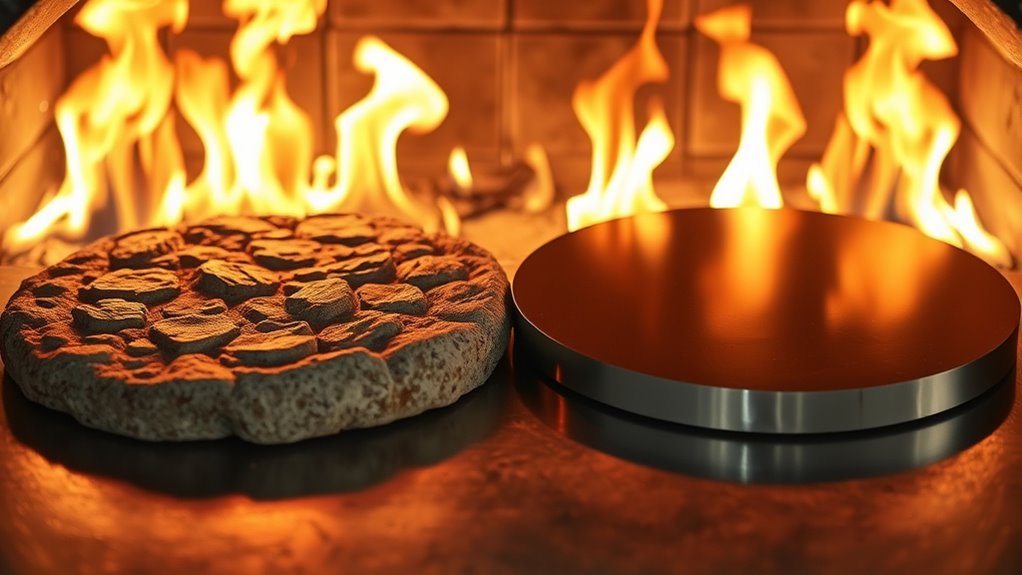
The way heat is retained and released by your oven’s surface directly influences how long it takes your pizza to cook. This depends on the thermal mass and heat capacity of the material. A high thermal mass, like stone, absorbs and stores large amounts of heat, releasing it slowly over time. This steady release helps maintain consistent oven temperatures, reducing cook time variability. Steel, with its lower heat capacity, heats up quickly but also cools down faster when exposed to cooler air or food. This means steel ovens might need more frequent reheating to keep temperatures stable. Understanding how these properties affect heat retention and release can help you optimize your oven’s performance and achieve that perfect, evenly cooked pizza every time.
Which Material Should You Pick for Your Pizza Oven?
Choosing the right material for your pizza oven depends on your cooking style and priorities. If durability and insulation matter most, your options narrow. Consider:
Selecting the ideal pizza oven material depends on your priorities—durability, insulation, or heat retention.
- Stone – Offers excellent heat retention and enhances oven insulation, but can crack under thermal shock, affecting durability.
- Steel – Provides superior material durability and quick heat transfer, though it may require additional insulation to maintain consistent temperatures.
- Combination – Some ovens blend stone and steel to balance heat retention, durability, and insulation efficiency.
Your choice impacts how well the oven maintains temperature and withstands frequent use. If you want a long-lasting setup with good insulation, steel with proper insulation might be best. For traditional heat retention and flavor, stone is a solid pick.
Which Material Is Best for Achieving Perfect Pizzas?
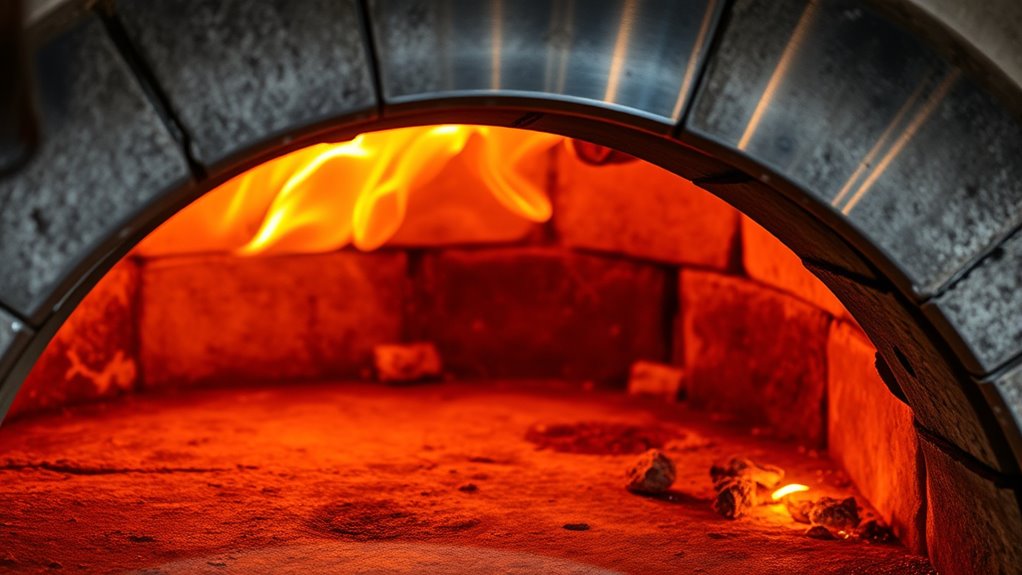
Selecting the right material directly influences your pizza’s crust, toppings, and overall quality. Both stone and steel have unique benefits, but the best choice depends on your oven design and how well it retains heat. Good pizza oven insulation is vital, regardless of material, to maintain consistent high temperatures. Stones excel at absorbing and radiating heat slowly, producing a crispy crust, but they may take longer to heat up. Steel heats quickly and maintains high temperatures efficiently, enabling faster cooking with a well-designed oven. If you prefer a quick, crisp crust, steel might be better. For a more traditional, evenly cooked pizza, stone could be your top pick. Ultimately, the best material aligns with your oven’s design and your baking style.
Frequently Asked Questions
How Does Ambient Temperature Influence Stone and Steel Oven Performance?
Ambient temperature impacts your stone or steel oven by affecting thermal insulation and heat retention. Higher temperatures reduce heat loss, helping your oven reach and maintain desired cooking temps more efficiently. Conversely, low ambient humidity can cause quicker heat dissipation, making it harder to sustain consistent heat. You should consider these factors to optimize your oven’s performance, ensuring even cooking and better heat transfer during pizza making.
Can Stone or Steel Cause Uneven Heat Distribution in a Pizza Oven?
Yes, stone or steel can cause uneven heat distribution in your pizza oven. This happens because of their differing thermal mass and surface conductivity. Stone’s high thermal mass retains heat longer, creating hotspots, while steel’s higher surface conductivity distributes heat quickly but may lead to uneven zones if not managed properly. To achieve even cooking, monitor how each material responds to heat and adjust your oven’s temperature accordingly.
How Does Thickness Affect Heat Transfer in Stone Versus Steel Surfaces?
Thicker stone or steel surfaces slow down heat transfer because of increased thermal conductivity resistance and higher material density. You’ll notice that a thicker stone takes longer to heat evenly, leading to potential hot spots, while steel’s high thermal conductivity allows it to transfer heat quickly but can also cause uneven temperature distribution if too thick. Adjusting thickness helps balance heat transfer, ensuring consistent oven temperatures for perfect pizza baking.
Are There Maintenance Differences Between Stone and Steel Pizza Ovens?
Think of your pizza oven as a garden—stone ovens are like a slow-growing tree needing gentle pruning, while steel ovens are a sleek car requiring regular oil changes. You’ll find that stone ovens need more careful cleaning routines to prevent cracking and may eventually need replacement parts like firebricks. Steel ovens, on the other hand, are easier to wipe down and often only need minor maintenance, making them more straightforward to care for over time.
Which Material Is More Resistant to Cracking or Warping Over Time?
Steel is more resistant to cracking or warping over time because of its better thermal expansion management and overall material durability. Unlike stone, which can crack under rapid temperature changes, steel withstands thermal stress more effectively. You’ll find steel ovens maintain their integrity longer, making them a more durable choice for consistent performance. So, if longevity and resistance to warping matter, steel clearly outperforms stone in a pizza oven.
Conclusion
Choosing between stone and steel depends on what you’re after. If you want that crispy crust and quick cook, steel’s your buddy. But if you prefer a more traditional, even bake, stone can be your best friend. Remember, it’s not just about the material, but how you use it. Sometimes, you’ve got to think outside the box and roll with what works best for you—after all, a good pizza is worth its weight in gold.