To verify if your expired baking powder still works, perform a quick reaction test: add about half a teaspoon to a small bowl, then pour in a few drops of hot water or vinegar. If it bubbles vigorously, your baking powder is active and ready to use. If there’s little to no fizz, it’s best to substitute it. Want to know other ways to ensure your baked goods turn out perfect? Keep going for helpful tips.
Key Takeaways
- Perform a quick bubbling test with hot water or vinegar to check if your baking powder is still active.
- Store baking powder in an airtight, cool, dry place to preserve its effectiveness longer.
- Even if within expiration date, test baking powder to ensure it still reacts properly.
- Little to no bubbling during the test indicates it’s time to replace your baking powder.
- Regularly verifying baking powder prevents flat baked goods and ensures better rise and texture.
Have you ever wondered what happens when baking powder expires? It’s a common question, especially when you’re in the middle of preparing a recipe and realize you’ve had that canister on the shelf for months. The key is understanding whether your baking powder is still active and how to determine its freshness. Performing a simple freshness check can save you from ending up with flat, dense baked goods.
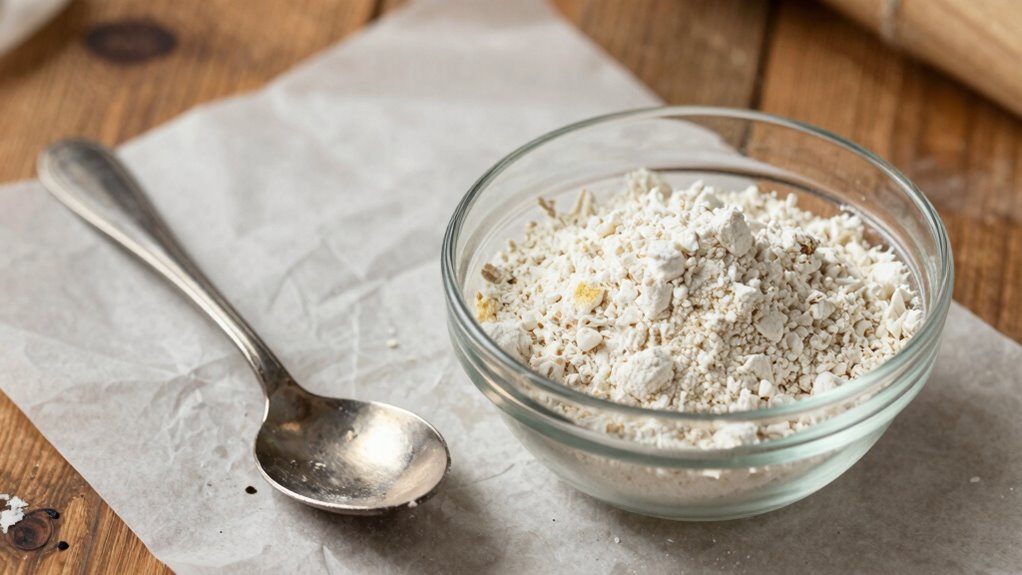
To check if your baking powder is still good, start by testing it with a quick reaction test. Place about half a teaspoon in a small bowl and add a few drops of hot water or vinegar. If it bubbles vigorously, your baking powder is still active and ready to use. If there’s little to no fizz, it’s time to replace it. This simple test is the most reliable way to confirm whether your baking powder will help your cakes rise or if it’s long past its prime.
Storing your baking powder properly plays an essential role in maintaining its potency. Keep it in an airtight container, ideally in a cool, dry place away from humidity, heat, and direct sunlight. Moisture is the enemy here, as it can cause the baking powder to lose its effectiveness even before the expiration date. Avoid storing it near the stove or in the bathroom where temperature fluctuations and humidity are common. By following these storage tips, you can extend the shelf life of your baking powder and guarantee it remains fresh for as long as possible.
While many bakers toss expired baking powder without checking, it’s always better to perform that quick freshness check first. Sometimes, even if the expiration date has passed, your baking powder can still be active if stored properly and not exposed to moisture. Conversely, it’s worth noting that baking powder can lose its potency gradually over time, so even if it’s not completely expired, it may not work as effectively. This is why a simple test is invaluable—it provides peace of mind and helps you avoid disappointing results.
Additionally, proper storage and handling are critical to preserving the effectiveness of baking powder over time. Knowing how to check your baking powder’s freshness and storing it correctly can save your baked goods from turning out flat or dense. It’s a small step that makes a big difference, ensuring your cakes, muffins, and pancakes rise perfectly every time. So next time you reach for that canister, take a moment to perform the test. It’s quick, easy, and can save you from wasting ingredients or ending up with less-than-perfect treats.
Frequently Asked Questions
Can Expired Baking Powder Cause Food Poisoning?
Expired baking powder doesn’t usually cause food poisoning because it’s mainly a leavening agent, not a harmful bacteria source. However, its chemical stability decreases over time, so your baked goods might not rise properly. For food safety, always check expiration dates and test your baking powder before use. While it’s unlikely to cause illness, old baking powder can affect your cake’s texture and quality.
How Long Does Baking Powder Last Past Its Expiration Date?
Baking powder typically lasts about 6 to 12 months past its expiration date if stored properly in a cool, dry place. Over time, its leavening power diminishes, so even if it’s within the shelf life, it might not work effectively. Always check storage conditions, and perform a simple test to confirm your baking powder is still active before baking, preventing flat cakes or failed recipes.
Does Expired Baking Powder Affect the Taste of Baked Goods?
Expired baking powder can cause taste alteration in your baked goods because it loses its leavening effectiveness. When it’s past its prime, your cake might turn out denser, and you may notice a metallic or bitter flavor. To avoid this, always test your baking powder before use. If it’s expired, it’s best to substitute it to ensure your baked treats rise properly and taste fresh.
Is There a Way to Refresh Expired Baking Powder?
You can’t really refresh expired baking powder, but you can test its effectiveness by using fresh baking powder testing methods—mix a teaspoon with hot water. If it bubbles vigorously, it’s still good. If not, consider baking powder alternatives like baking soda combined with an acid, such as vinegar or lemon juice, to achieve the leavening effect. Always check freshness before baking to guarantee your cake rises perfectly.
How Should I Store Baking Powder to Extend Its Shelf Life?
To extend your baking powder’s shelf life, store it in an airtight container and keep it in a cool, dry place away from humidity. Avoid storing it near the stove or in a warm area, as heat and moisture can cause it to lose potency. Proper storage helps maintain its leavening power, ensuring your baked goods rise perfectly every time.
Conclusion
Now that you know how to test your baking powder, there’s no excuse to serve flat cakes. Remember, an ounce of prevention is worth a pound of cure—so don’t let expired baking powder spoil your baking efforts. With this simple trick, you can confidently whip up fluffy, delicious treats every time. Keep your pantry stocked with fresh leavening, and you’ll never be caught with your cake down. Happy baking!