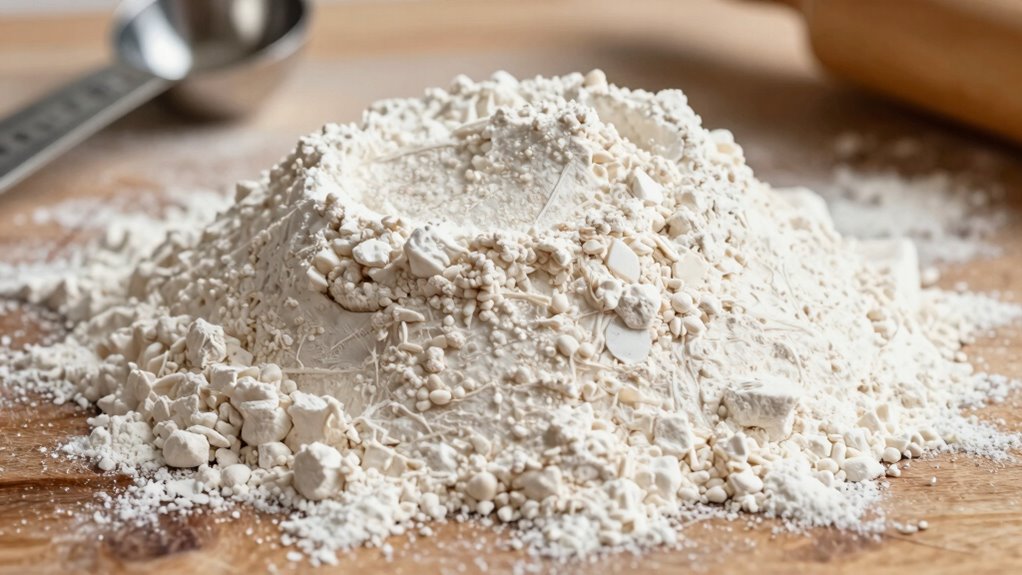
Flour protein levels determine how gluten forms during mixing, which in turn affects your baked good’s texture and rise. Higher protein flours create stronger gluten networks, making breads chewy and elastic, while lower protein flours produce tender, soft cakes. Choosing the right flour based on its protein content helps you get better results every time. To improve your baking, understanding these differences is key—more details ahead will help you master the art.
Key Takeaways
- Flour protein content determines gluten strength, directly impacting dough elasticity and the final baked texture.
- Higher protein flours (e.g., bread flour) create chewier, more structured baked goods, while lower protein flours yield tender results.
- Proper gluten development through mixing and kneading enhances dough rise and final texture quality.
- Selecting the right flour type based on protein level simplifies achieving your desired baked product texture.
- Adjusting hydration and mixing techniques according to flour protein ensures better control over baked goods’ softness or chewiness.
What Is Flour Protein and Why Does It Matter?
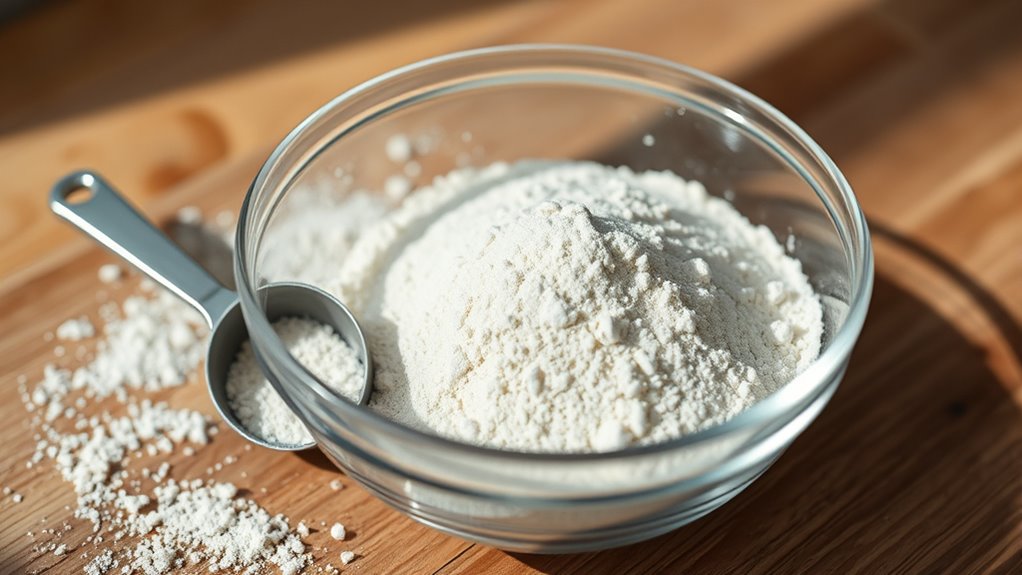
Have you ever wondered why some flours produce better baked goods than others? It all comes down to flour protein, which influences gluten development. Higher protein flours, like bread flour, create stronger gluten networks, giving bread its chewy texture and rise. Lower protein options, such as cake flour, result in tender, soft baked goods. Proper flour storage is vital to maintain its protein quality; keep it in a cool, airtight container to prevent moisture and pests from degrading it. When flour is stored correctly, its protein remains stable, ensuring consistent results. Understanding flour protein helps you choose the right flour for your recipe, leading to better texture and structure in your baked creations. So, pay attention to the protein content and storage to access the best baking performance. Maintaining optimal flour quality is essential for achieving the desired dough elasticity and final product texture, especially since artistic expression in baking can be enhanced by selecting the appropriate flour type. Additionally, controlling storage conditions helps preserve the protein integrity, which is crucial for consistent baking outcomes. Proper storage techniques prevent moisture absorption that can negatively affect gluten development and overall dough behavior, and being aware of flour protein content allows bakers to tailor recipes for specific textures and appearances.
How Does Gluten Form and Why Is It Key in Baking?

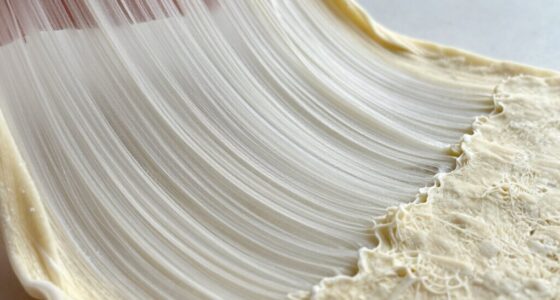
When flour is mixed with water, gluten begins to form through a process called gluten development. This involves the hydration of glutenin and gliadin proteins, which then bond to create a network of gluten. This gluten formation is fundamental to baking chemistry because it gives dough elasticity and strength. As you knead or mix, you encourage the proteins to align and cross-link, trapping air and moisture. This structure is what provides the chewy texture and rise in baked goods like bread and pizza. Without proper gluten development, your baked products can turn out dense or crumbly. Understanding how gluten forms helps you control texture, ensuring your baked goods have the perfect balance of structure and tenderness.
What Are the Different Types of Flour Based on Protein Content?
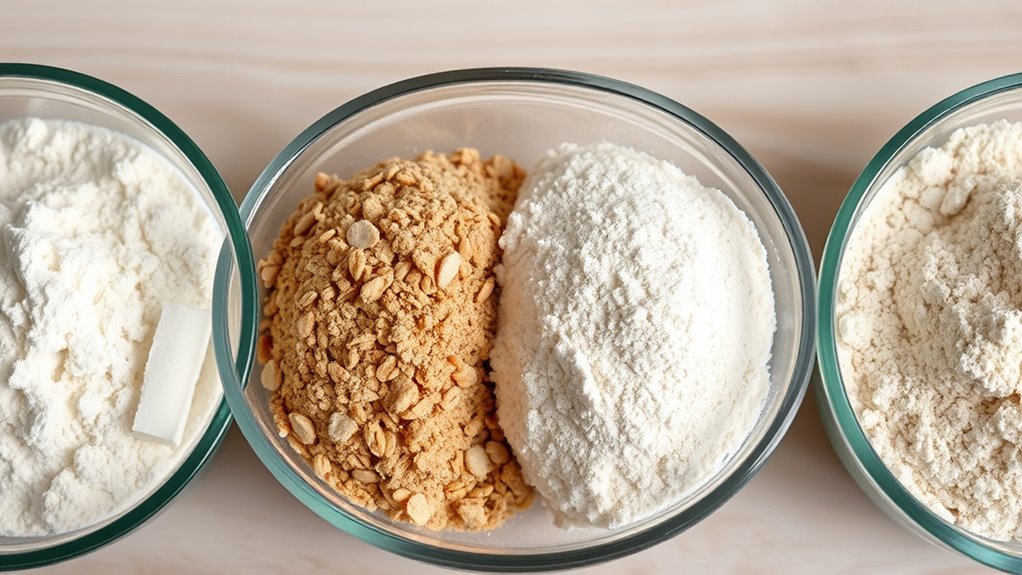
Flours vary in protein content, affecting how they perform in baking. You’ll find low-protein flours ideal for tender pastries, while high-protein flours are better suited for bread with structure. Understanding these types helps you choose the right flour for your recipes. Understanding these types can also help prevent common baking issues and improve overall results. When selecting flour, it’s important to verify if it contains halal certification to ensure compliance with Islamic dietary laws. Recognizing the biography of key figures in baking can also offer insights into traditional techniques and innovations. Additionally, knowing the protein content of flour can guide you in achieving the desired texture and consistency in your baked goods.
Low-Protein Flours
Low-protein flours are commonly used in baking when a softer, more delicate texture is desired. These flours have a lower protein measurement, typically around 8-10%, which limits gluten formation. Because gluten is responsible for structure and elasticity, reducing its development results in tender baked goods like cakes, pastries, and cookies. Common types include cake flour, pastry flour, and soft wheat flours. They absorb less water and produce less dough elasticity, making them ideal for recipes where a light, crumbly texture is preferred. When choosing a low-protein flour, pay attention to its protein measurement to ensure it aligns with your baking goals. Using the right type of flour helps you achieve the perfect texture without excess chewiness or density.
High-Protein Flours
High-protein flours contain a greater amount of gluten-forming proteins, typically ranging from 12% to 14% or higher, making them ideal for baked goods that require strength and structure. These flours come from grains with specific characteristics, such as hard wheat, which naturally has higher protein levels. The milling processes used for high-protein flours focus on preserving these protein-rich parts of the grain, resulting in a flour that provides excellent elasticity and dough strength. Types like bread flour and essential wheat gluten are common examples, suited for bread, pizza, and other yeast-leavened baked goods. Understanding the grain characteristics and milling methods helps you choose the right high-protein flour to achieve the desired texture and rise in your baking.
How Does Flour Protein Level Affect Your Baked Goods’ Texture?

The protein content in flour directly influences the texture of your baked goods, shaping how they rise, feel, and hold together. Higher protein levels create more dough elasticity, giving your baked items a chewy, sturdy structure. This also enhances flavor development, as stronger gluten networks develop richer tastes. Conversely, lower protein flours produce softer, tender results. To understand the impact better:
- Dough elasticity increases with higher protein, making shaping easier. Regular practice improves skill development and mastery in handling different flour types are essential for consistent results.
- Chewiness is more pronounced in high-protein baked goods.
- Tenderness improves with lower protein levels, ideal for delicate treats.
- Flavor development is boosted by stronger gluten networks in high-protein flours, adding depth. A balanced protein level can help you achieve the perfect baking texture for your specific recipe.
- Incorporating natural ingredients can also influence the final texture and flavor of your baked goods. Understanding how flour protein levels interact with other ingredients allows you to fine‑tune your recipes for optimal results.
How Do You Pick the Best Flour for Different Recipes?

Choosing the right flour for your recipe depends on understanding the specific qualities each type offers. Gluten strength is key, as it determines the dough’s elasticity and structure, impacting the final texture. For breads requiring a chewy, hearty crumb, opt for high-gluten flours like bread flour, which provide the necessary baking precision. Cakes and pastries benefit from low-gluten options like cake or pastry flour, creating tender, delicate textures. All-purpose flour offers versatility, suitable for a wide range of baked goods, but knowing its gluten content helps you adjust for better results. Additionally, understanding the specific heritage of flours can guide you in selecting the most suitable type for your baking needs. By selecting flour based on gluten strength, you can tailor your baking to achieve the desired texture and structure, ensuring your recipes turn out perfect every time. The grain milling process also influences flour quality and performance in recipes. Moreover, exploring different grain types can further refine your choice for specialized baked goods and influence the flour’s flavor profile, enhancing your baking outcomes.
How Can You Adjust Recipes Based on Flour Protein Levels?
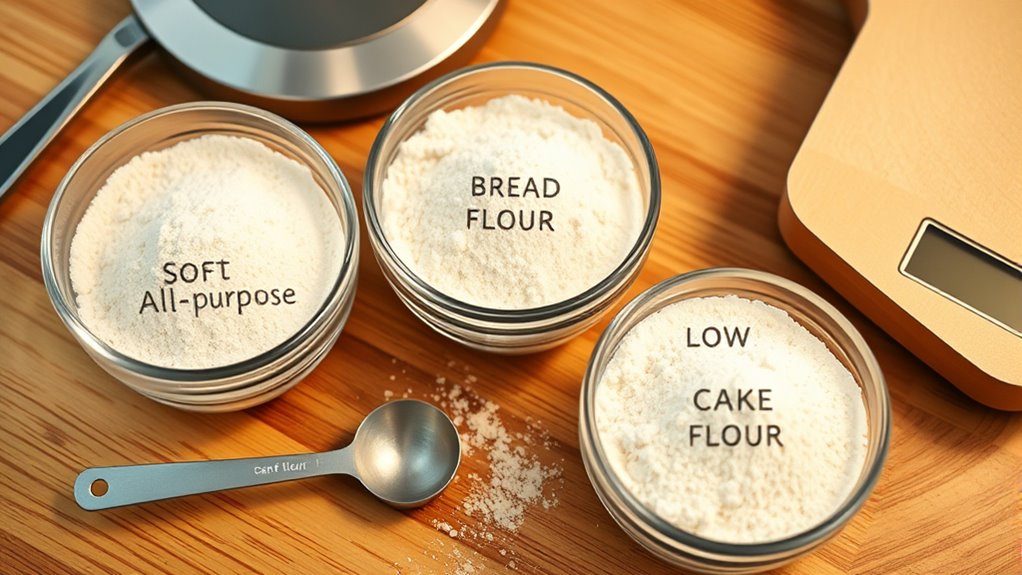
When working with different flour protein levels, you can adjust your recipe by choosing the right flour type for your desired outcome. You might need to modify liquid ratios or tweak mixing times to get the best texture and rise. These small changes help you achieve consistent results regardless of the flour’s protein content. Incorporating industry trends can also guide you in selecting the appropriate flour for various baking projects, and understanding the best-rated pinball machines of 2024 can inspire creative ways to incorporate themed or decorative elements into your baked goods.
Adjust Flour Types
Adjusting recipes based on flour protein levels is essential to achieve the desired texture and structure in your baked goods. Different flour types impact grain textures and overall dough behavior. To adapt, consider these tips:
- Use high-protein flour for chewier, more elastic textures, ideal for bread and pizza dough.
- Opt for low-protein flour when a tender, delicate crumb is your goal, like in cakes or pastries.
- Blend flours to achieve a balanced protein content, aiding in flour fortification for specific recipes.
- Recognize that flour fortification with additional protein can enhance gluten development, improving structure without sacrificing tenderness. Understanding flour types can help you select the best options for your baking needs.
- Keep in mind that flour protein levels directly influence gluten formation, which is crucial for the final texture of your baked goods. Additionally, selecting the appropriate flour based on its protein content can significantly impact your baking results. Knowing how flour protein content interacts with other ingredients can further refine your baking techniques.
Modify Liquid Ratios
Since flour protein content influences gluten strength and water absorption, you may need to modify your liquid ratios to achieve ideal dough consistency. Higher-protein flours require more liquid because they absorb more water, making hydration adjustment essential. If your dough feels stiff or crumbly, add a small amount of liquid gradually, ensuring you don’t overhydrate. Conversely, lower-protein flours need less water to prevent a sticky, overly soft dough. Keep a close eye on the dough’s texture as you mix, adjusting liquid ratios accordingly. By fine-tuning hydration, you help develop the right gluten structure, resulting in better texture and handling. Remember, small changes in liquid content can considerably impact dough performance, so adapt your recipe based on the flour’s protein level for best results.
Tweak Mixing Times
Because flour protein levels affect gluten development, tweaking your mixing times is essential to achieve the desired dough structure. Higher-protein flours need longer mixing durations to develop enough gluten, resulting in a stronger dough. Conversely, lower-protein flours require shorter mixing to prevent overworking the dough, which can make it tough. To adjust your recipe based on flour protein:
- Increase mixing time for high-protein flour to improve dough consistency.
- Shorten mixing for low-protein flour to avoid over-glutenization.
- Observe the dough’s texture—look for smoothness and elasticity.
- Test by gently stretching the dough; it should stretch without tearing.
These adjustments help you control the dough’s strength and elasticity, ensuring the right texture for your baked goods.
How Does Flour Protein Impact Kneading and Mixing?

Flour protein content plays a crucial role in how dough responds during kneading and mixing. Higher protein levels create more gluten, leading to increased dough elasticity. This means your dough will stretch more without tearing, making it easier to develop structure. When working with high-protein flours, you’ll want to adjust your kneading techniques—be patient and give the dough enough time to fully develop gluten. Conversely, lower protein flours produce less elastic dough, which may require gentler mixing to prevent overworking. Proper kneading ensures the dough reaches the right consistency, regardless of protein content. Understanding how flour protein impacts elasticity helps you tailor your kneading style, resulting in better dough texture and improved final baked products.
What Mistakes Should You Avoid With the Wrong Flour Protein?

Using the wrong flour protein can lead to baking failures, so don’t overestimate gluten content or assume all flours are the same. Always consider the specific type of flour you’re working with and avoid substituting one for another without adjustments. Mistakes in these areas can compromise your results, so pay close attention to flour labels and recipes.
Overestimating Gluten Content
Many bakers mistakenly overestimate the gluten content in certain flours, which can lead to disappointing results. This gluten overestimation often results in dense or tough baked goods because you expect more elasticity than the flour can deliver. To avoid this flour misjudgment, keep these points in mind:
- Don’t assume high-protein flours always produce gluten-rich doughs.
- Read labels carefully—protein content varies by brand and type.
- Test new flours with small batches before large-scale baking.
- Recognize that softer flours can still develop enough gluten for certain recipes.
Ignoring Flour Type Variations
When you choose the wrong type of flour for a recipe, assuming all flours with similar protein levels are interchangeable can lead to poor results. Different flour types vary in gluten development, affecting texture and structure. Relying solely on protein measurement ignores how flour interacts during mixing. For example, bread flour promotes strong gluten networks, ideal for chewy loaves, while cake flour’s lower protein results in tender baked goods.
| Flour Type | Typical Protein Level | Best Use |
|---|---|---|
| Bread Flour | 12-14% | Yeast breads, pizza dough |
| All-Purpose Flour | 10-12% | Versatile baking |
| Cake Flour | 7-9% | Light cakes, pastries |
| Pastry Flour | 8-9% | Pastries, tender cookies |
| Whole Wheat Flour | 13-15% | Nutritious breads, muffins |
Using Incorrect Flour Substitutes
Choosing the wrong flour substitute can quickly undermine your baking efforts. Using incorrect alternative flour options or gluten free substitutes may lead to poor texture, density, or failure to rise. To avoid mistakes:
- Don’t assume all gluten free substitutes behave like wheat flour—they often need added binders.
- Avoid replacing high-protein flour with low-protein options in recipes requiring structure.
- Be cautious when substituting with alternative flours that have different absorption rates; adjust liquids accordingly.
- Never assume a 1:1 substitution works for all recipes; each flour type has unique properties.
Understanding these differences helps you select the right flour and maintain the desired texture, preventing baking setbacks caused by incompatible flour choices.
How Can You Improve Your Baking by Choosing the Right Flour?

Selecting the right flour can considerably improve your baking results, as different types of flour contain varying levels of protein that affect gluten development. Higher protein flours, like bread flour, create stronger dough elasticity, giving your baked goods better structure and chewiness. Conversely, lower protein flours, such as cake flour, produce softer textures. Choosing the appropriate flour also influences flavor profiles; for example, whole wheat adds nuttiness, while pastry flour offers a delicate, tender crumb. By matching your flour to your recipe’s needs, you can enhance both texture and taste. This targeted approach helps you achieve consistent, professional-quality results, making your baked goods more enjoyable and visually appealing. Selecting the right flour is a simple step toward elevating your baking game.
How to Tell If Your Flour Has the Right Protein Content?
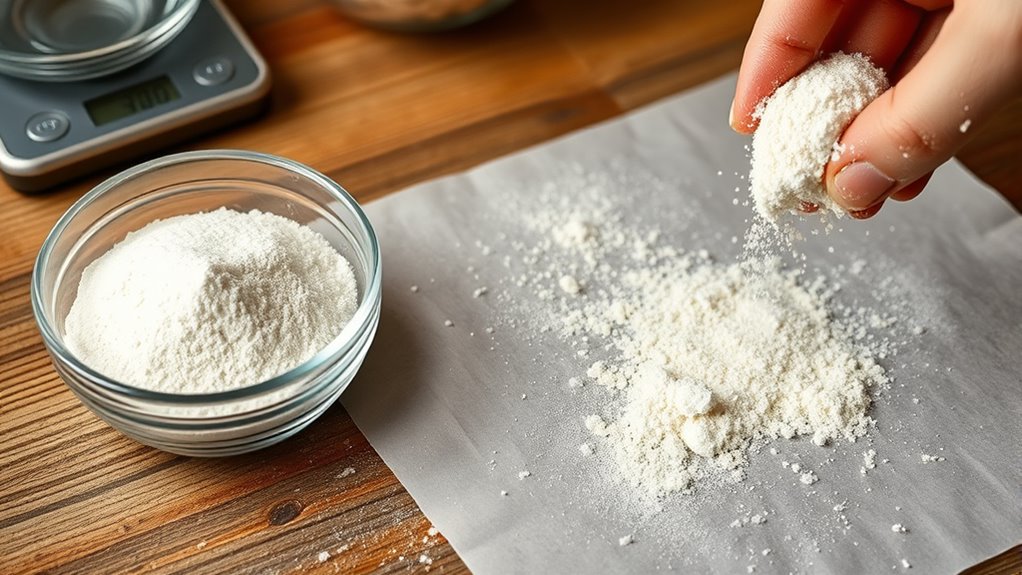
Determining if your flour has the right protein content is essential for achieving the desired baking results. To assess this, consider these factors:
- Check the label – Look for protein percentage, typically 8-12% for most baked goods.
- Inspect grain quality – High-quality grains usually produce consistent protein levels.
- Examine storage methods – Proper storage in a cool, dry place prevents moisture from degrading the protein content.
- Perform a test – Sift a small amount of flour, then stretch a dough to see if it forms strong gluten strands, indicating adequate protein.
Frequently Asked Questions
Can You Substitute Flours With Different Protein Contents in Recipes?
Yes, you can substitute flours with different protein contents in recipes, but you should consider the protein content differences. For lighter baked goods, use lower-protein flours like cake flour, while for sturdier items, opt for higher-protein options like bread flour. Flour substitution tips include adjusting liquids and mixing times, and testing small batches first to achieve the best texture. Always match the flour type to your desired result.
How Does Storage Affect Flour Protein Quality?
Storage conditions markedly impact flour protein quality by affecting grain preservation. When you store flour in a cool, dry, airtight container, you help prevent moisture and pests that can degrade protein quality. Poor storage can lead to protein breakdown, resulting in less ideal baking results. To maintain ideal flour protein, always keep it in a controlled environment, avoiding heat and humidity, and check it regularly for freshness.
Are There Health Benefits Linked to Higher or Lower Flour Protein?
Think of flour protein levels as a health compass—higher protein can boost your dietary impact by supporting muscle growth, but it might not suit gluten sensitivity. Lower protein flours are gentler on digestion and may reduce inflammation. So, choose wisely to match your health goals. Whether you’re fueling workouts or easing sensitivities, understanding flour protein helps you make smarter, healthier baking choices tailored to your needs.
What Are Common Signs of Using the Wrong Flour Protein in Baking?
If you’re using the wrong flour protein, you’ll notice issues with gluten strength and crumb texture. For bread, too little protein makes it dense and flat, while too much results in a tough, chewy crumb. For cakes, low protein causes a coarse crumb, and high protein yields a heavier feel. Pay attention to texture and rise; these signs guide you to select the right flour protein for your baking needs.
Does Organic or Non-Gmo Flour Have Different Protein Levels?
Think of organic and non-GMO flours as siblings with different personalities. Their protein levels usually stay similar, but organic differences and GMO impact can influence quality. Organic flours often have slightly more natural variability, which might affect your baking, while GMO impact is minimal regarding protein content. So, your choice won’t drastically change protein levels but can subtly influence texture and flavor, making baking a more nuanced adventure.
Conclusion
Next time you reach for flour, remember that its protein content can make all the difference—like how a chance encounter with the perfect ingredient can transform your baking. When you choose the right flour, your bread rises just right, your cookies hold their shape, and every bite feels just right. It’s amazing how a simple switch can turn a good bake into your best yet. So, trust your instincts and enjoy the delicious results.