
If your bread tastes bland, it’s likely because the fermentation didn’t develop enough flavor compounds like organic acids and aromatic compounds. Insufficient fermentation results in less sourness and a simpler taste, while over-fermentation can make your bread too acidic and dense. To get richer flavor, you need proper timing, allowing the dough to ferment until it’s bubbly, sour-smelling, and slightly risen. Keep exploring to discover how mastering fermentation can transform your bread’s taste.
Key Takeaways
- Insufficient fermentation time results in underdeveloped flavor and a bland taste in bread.
- Overly rushed fermentation prevents complex flavor compounds from forming properly.
- Proper fermentation duration allows organic acids and aromatic compounds to enhance flavor richness.
- Signs of good fermentation include a sour aroma, bubbly surface, and slight dough expansion.
- Monitoring fermentation signs ensures optimal flavor development and prevents bland or overly sour bread.
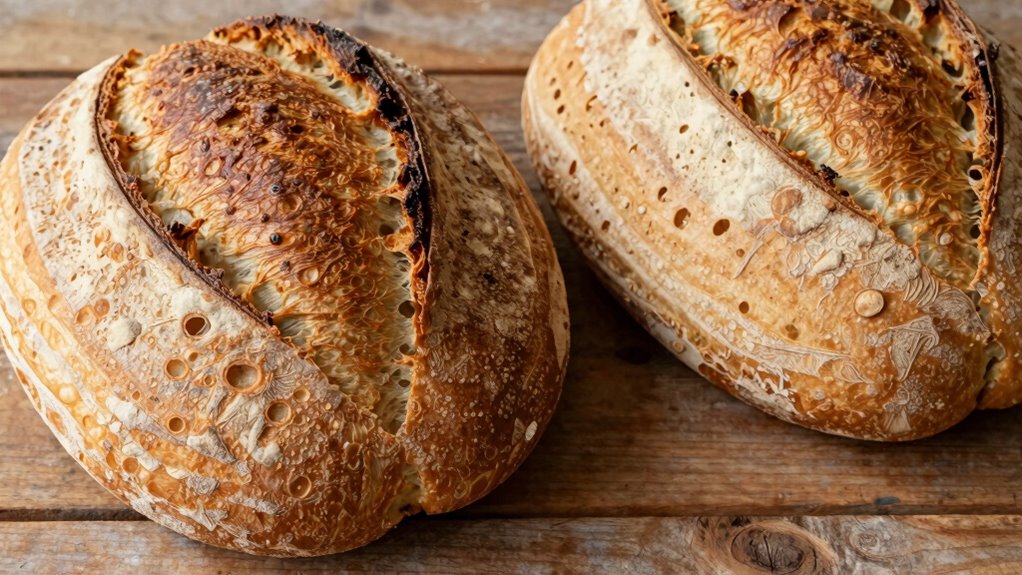
Bread fermentation might seem like a simple step in baking, but it actually plays a essential role in shaping the flavor, texture, and digestibility of your bread. One of the key aspects influencing this process is sourdough complexity. When you allow the natural fermentation to develop fully, the dough’s flavors deepen through a complex interplay of organic acids, alcohols, and aromatic compounds produced by wild yeasts and lactic acid bacteria. This complexity is what gives sourdough bread its signature tang and rich, layered taste, setting it apart from breads made with quick-rise yeasts. If fermentation is rushed or incomplete, you miss out on these nuanced flavors, resulting in a blander, less interesting loaf.
Fermentation timing directly impacts the development of sourdough complexity. If you cut the fermentation process short, the dough won’t have enough time to fully ferment, and the flavor won’t have a chance to mature. Conversely, over-fermentation can lead to a tangy, overly sour taste, and even compromise the bread’s structure. Striking the right balance requires paying close attention to how long you let your dough ferment. The duration depends on factors like room temperature, dough hydration, and the strength of your starter, but generally, longer fermentation yields more complex flavors. When you give the dough sufficient time, the natural fermentation produces a broader spectrum of flavors that make your bread more interesting and satisfying. Additionally, professional bakers often utilize advanced knowledge of fermentation timing to optimize flavor development and bread quality.
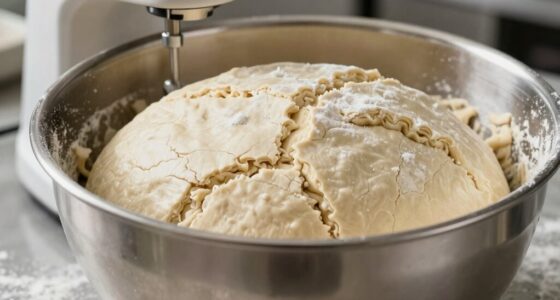
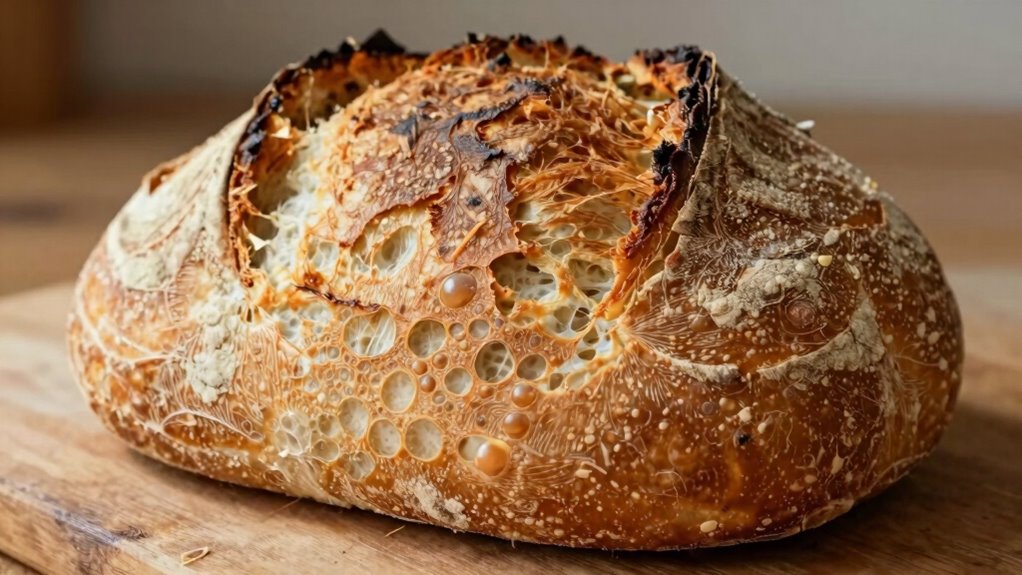
Timing is especially critical because it influences the fermentation’s flavor drivers. If you ferment too briefly, you only get a faint hint of sourness and a bland profile. If you wait too long, the dough may become overly acidic and lose its elasticity, resulting in a dense, less appealing crumb. To master this, you should observe your dough closely, noting how it looks, feels, and smells. A well-fermented dough will have a pleasantly sour aroma, a bubbly surface, and a slight increase in volume. These signs indicate that the fermentation has reached its ideal point for flavor complexity.
Frequently Asked Questions
How Does Fermentation Influence Bread Aroma?
Fermentation considerably influences bread aroma by producing a rich fermentation aroma that enhances its overall scent. As the yeast and bacteria break down sugars, they create complex flavor compounds that boost flavor complexity. This process releases aromatic esters and organic acids, making your bread smell inviting and layered. Without proper fermentation, your bread might lack these appealing aromas, resulting in a dull, bland scent that doesn’t excite your senses.
Can Fermentation Time Affect Bread Texture?
Yes, fermentation time considerably affects bread texture. Longer fermentation, especially in sourdough, enhances complexity and develops a softer, chewier crumb. As fermentation duration increases, gluten structure improves, creating a more elastic dough that retains gas better. You’ll notice the crust becomes more flavorful and the interior more airy. By adjusting fermentation time, you control the bread’s texture, making it either more rustic or refined, depending on your preference.
What Role Do Wild Yeasts Play in Flavor Development?
Wild yeasts considerably enhance flavor development in bread. They contribute to natural fermentation, introducing complex, tangy notes that commercial yeasts can’t replicate. Studies show that bread made with wild yeasts has up to 30% more microbial diversity, which deepens flavor. By relying on wild yeasts, you allow a broader range of microorganisms to interact, creating richer, more nuanced flavors and elevating your bread beyond blandness.
Does Fermentation Temperature Impact Bread Taste?
Yes, fermentation temperature impacts bread taste by affecting flavor complexity. When you control fermentation temperature, you influence yeast activity and the development of organic acids and esters, which add depth and nuance to your bread’s flavor. Cooler temperatures slow fermentation, producing a more subtle flavor, while warmer temperatures quicken fermentation and can enhance complexity. Adjusting fermentation temperature allows you to craft bread with richer, more interesting flavors that suit your preferences.
How Do Different Flour Types Alter Fermentation Flavor?
Different flour types markedly influence fermentation flavors by providing varied grain varieties, which contribute unique tastes and aromas. You might worry that switching flours complicates baking, but focus on how each flour’s gluten development impacts fermentation. Strong gluten develops better flavor complexity, while softer flours yield milder tastes. Experimenting with different grains helps you discover richer, more nuanced bread, turning simple baking into a flavorful journey.
Conclusion
In the world of bread, fermentation is your secret weapon to unlock incredible flavor. Skip it, and your bread might taste as bland as plain toast on a rainy day. When you embrace proper fermentation, you’re turning simple ingredients into a masterpiece that can rival the most complex wines or chocolates. So don’t settle for boring bread—let fermentation work its magic and elevate your baking to legendary status. Your taste buds will thank you!