When you overmix bread dough, you introduce too much oxygen, speeding up oxidation that dulls flavors and aromas. This process weakens the gluten network, causing your bread to be flatter, denser, and less flavorful. Excessive mixing breaks down gluten, reducing dough elasticity and gas retention, which harms the rise and final texture. If you want to understand how to perfect your mix time without sacrificing flavor, there’s more to discover.
Key Takeaways
- Overmixing exposes dough to excess oxygen, accelerating oxidation of flavor compounds and dulling aromatic qualities.
- Excessive mix time weakens gluten, reducing dough elasticity and gas retention, resulting in denser, flatter bread.
- Overmixing damages gluten networks, impairing the dough’s ability to trap gases and causing poor rise and flat texture.
- Increased oxidation from overmixing leads to flavor degradation, making bread taste dull and less flavorful.
- Properly timed mixing minimizes oxygen exposure, preserving flavor, aroma, and optimal bread texture.
What Does Gluten Development Do in Bread?
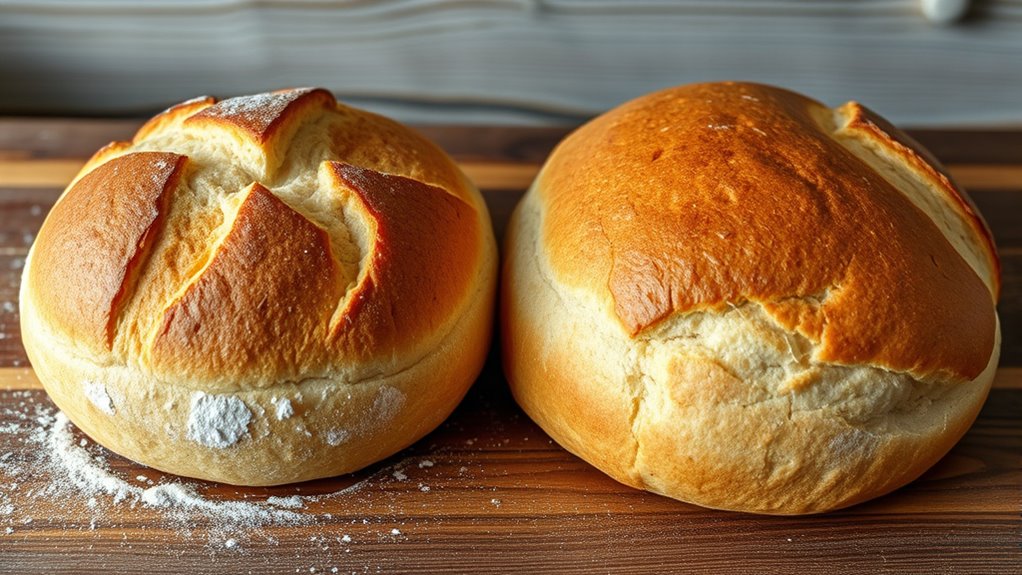
Gluten development is essential for shaping the structure and texture of bread. When you knead the dough properly, gluten proteins form a strong, elastic network that gives your bread its dough elasticity. This network traps carbon dioxide produced during fermentation, helping the bread rise evenly and maintain its shape. Proper gluten development also plays a role in flavor preservation, as it ensures even ingredient distribution and prevents the dough from becoming dense or crumbly. If you under-knead, the gluten network remains weak, leading to flat, dense bread. Overmixing can damage the gluten structure, making it too tight or fragile. Achieving just the right gluten development results in bread with a light, airy texture and well-preserved flavors. Additionally, understanding sound vibrations can help bakers optimize fermentation conditions and improve bread quality. Recognizing the importance of gluten formation can guide bakers in adjusting their kneading techniques for optimal results, especially considering how material strength influences the dough’s elasticity and resilience. Moreover, precise control over kneading time is crucial to prevent overworking the dough and compromising its texture. Properly managing resting periods also allows the gluten network to strengthen without becoming overworked.
How Oxidation Affects Your Flour and Dough

Oxidation plays a crucial role in strengthening the proteins in your flour and dough, which can considerably influence the final bread‘s texture and appearance. The oxidation effects cause chemical changes that can improve gluten structure, making your dough more elastic and easier to shape. However, flour freshness also impacts how quickly oxidation occurs; fresh flour contains more natural antioxidants, slowing down oxidation, while older flour oxidizes faster, leading to potential flavor and textural changes. Over time, excessive oxidation can diminish color, weaken gluten, and reduce overall quality. To maintain ideal dough strength and flavor, it’s important to contemplate how oxidation impacts your ingredients, especially as flour ages. Proper handling and storage help control oxidation, ensuring your bread retains its desired texture and taste. Additionally, understanding the differences between products like pomade, putty, and styling cream can help you choose the right styling products to achieve your desired look without compromising hair health. Recognizing oxidation processes in baking can help you better control the fermentation and proofing stages for optimal results, as well as ingredient quality, which plays a crucial role in how oxidation influences your final product. Being aware of flour storage practices can further help prevent unwanted oxidation and preserve your flour’s freshness for better baking outcomes. Moreover, controlling the degree of oxidation during mixing can significantly impact your bread’s overall flavor profile and texture.
Why Overmixing Accelerates Oxidation and Flat Flavors

When you overmix, you expose your dough to more oxygen, speeding up oxidation. This process breaks down the gluten structure and alters flavor compounds, leading to flatter, less vibrant flavors. Understanding how overmixing affects these elements helps you avoid compromising your baked goods.
Increased Oxygen Exposure
Overmixing your dough or batter introduces excess oxygen into the mixture, which speeds up the oxidation process. This increased oxygen exposure accelerates dough oxidation, breaking down sensitive flavors and fats. When you overmix, you trap more air and oxygen within the mixture, exposing more surface area to oxygen molecules. As a result, the natural components that give bread its flavor and aroma start to degrade faster. The oxidative reactions diminish the dough’s freshness and can lead to a flat, dull taste. The more you overmix, the greater the oxygen exposure, and the quicker these undesirable changes occur. Keeping mixing times ideal helps limit oxygen contact, preserving the dough’s flavor integrity and preventing flatness caused by oxidation. Additionally, understanding the Gold IRA Markets can be beneficial for diversifying your investment portfolio, much like managing ingredients carefully in baking. Proper mixing techniques can also help maintain the nutritional quality of your bread by reducing unnecessary oxidation of nutrients.
Gluten Structure Breakdown
As you continue mixing your dough, the process begins to break down its gluten network. Overmixing weakens dough elasticity, making the structure less able to hold gases during fermentation. This breakdown accelerates fermentation effects, causing the dough to lose its stretchiness and develop a flatter, denser crumb. When gluten strands degrade, the dough can’t trap carbon dioxide effectively, resulting in a less risen loaf and a flatter texture. Additionally, weakened gluten makes the dough more susceptible to oxidation, which can dull flavors and contribute to a bland taste. Oxidation also impacts flavor development, further diminishing the bread’s overall taste. The more you overmix, the more you risk damaging the gluten structure, which is essential for a good rise. Overmixing short-circuits the delicate balance needed for ideal fermentation, ultimately leading to a bread that feels flat and lacks the desired chewy structure. Maintaining proper mixing stops this gluten breakdown and preserves the dough’s elasticity. Proper gluten development is essential to achieve the perfect rise and texture in your bread. Overmixing can also lead to dough toughness, making the bread less tender and enjoyable.
Flavor Compound Oxidation
Excessive mixing exposes the dough’s surface to oxygen more rapidly, speeding up the oxidation of flavor compounds. When you overmix, you increase oxygen exposure, which accelerates flavor compound oxidation, leading to flatter, less vibrant bread. This process diminishes aromatic qualities, making your bread taste dull. The table below shows how oxygen exposure affects flavor compounds over time:
| Mixing Level | Oxygen Exposure | Flavor Impact |
|---|---|---|
| Light | Minimal | Rich, fresh flavors |
| Moderate | Moderate | Slight flavor loss |
| Heavy | High | Flat, muted flavors |
| Overmixed | Very high | Significant flavor deterioration |
Understanding this relationship helps you control mixing, reducing flavor compound oxidation and preserving bread’s aromatic complexity.
How Mix Time Changes Your Dough’s Structure
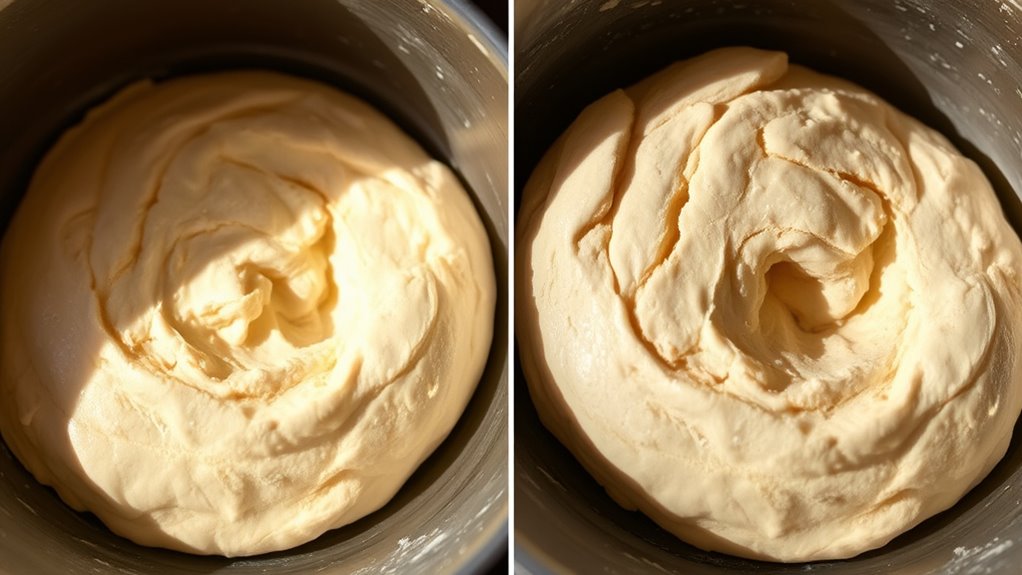
The amount of mix time you use directly influences the structure of your dough. Longer mixing develops gluten, increasing dough elasticity and creating a stronger network that traps gas better. This gluten development significantly impacts the dough’s ability to rise and its final texture. Properly developed gluten also enhances the dough’s fermentation process, allowing for better flavor and rise. This affects fermentation speed, as well-developed gluten can rise more efficiently. Shorter mix times result in weaker gluten, leading to a softer, less elastic dough that may not hold its shape well. Additionally, overmixing can cause the dough to become too tight, hindering rising. Proper mix timing balances elasticity and fermentation for ideal texture. Using the appropriate oil and additives during mixing can further improve gluten formation and dough quality, ensuring a better bake. Furthermore, understanding how affiliates and cookies influence your browsing experience can help bakers optimize their online research for better techniques and tips.
Signs Your Dough Is Overmixed—and How to Fix It
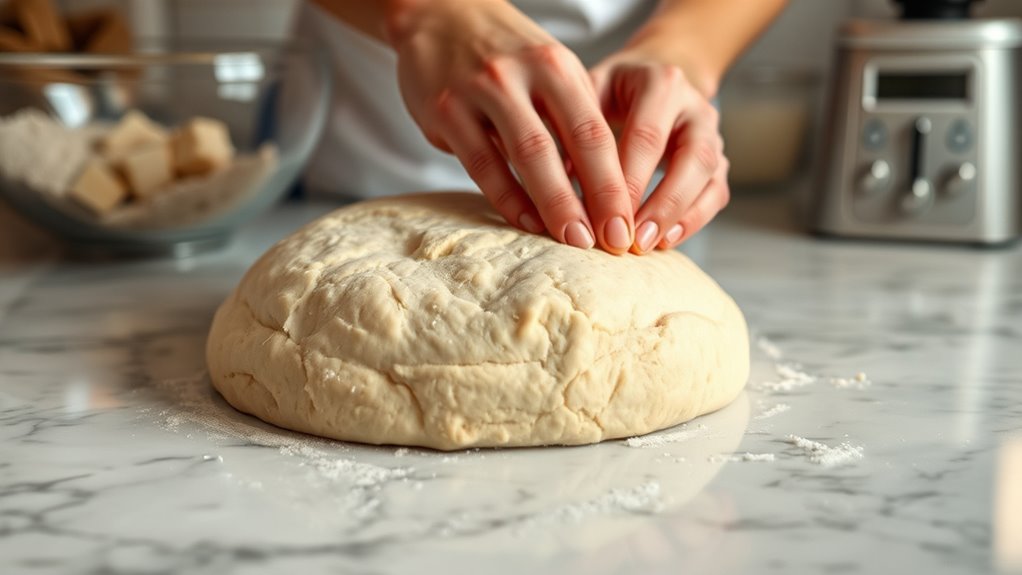
When your dough becomes sticky and tough, it’s a clear sign you’ve overmixed. You’ll also notice a loss of elasticity and a reduced oven rise, which can ruin your bread. Knowing how to fix these issues helps guarantee your final product turns out perfect. Additionally, understanding mix time can help prevent overmixing in the first place and ensure a better bread texture. Paying attention to free floating principles during mixing can help you achieve the ideal dough consistency. Being mindful of gluten development can further assist in avoiding overmixing and improving overall bread quality. Incorporating techniques to monitor auditory cues, such as listening for changes in dough sound, can also aid in preventing overmixing.
Sticky, Tough Dough
Overmixing your dough can lead to a sticky, tough texture that’s hard to work with. When you overmix, the gluten develops excessively, creating a dough that feels sticky or tough dough. This makes shaping and kneading difficult, and your bread may turn out dense. Watch for these signs:
- The dough becomes overly sticky and sticks to your hands or surface.
- It feels tough and resists stretching or shaping.
- Bubbles or air pockets diminish, making the dough dense.
- It loses its smooth, elastic feel, instead feeling stiff or rubbery.
To fix sticky, tough dough, try resting it longer or adding small amounts of flour gradually. Avoid overmixing early on to keep the dough manageable and ensure a light, airy loaf.
Loss of Elasticity
Loss of elasticity is a key sign that your dough has been overmixed. When this happens, your dough becomes less stretchy and more rigid, making it difficult to shape. Overmixing damages the gluten network, which is responsible for dough elasticity. Instead of forming a strong, cohesive structure, the gluten begins to break down, causing the dough to lose its ability to spring back when pressed. You might notice that it feels stiff and won’t respond to gentle stretching. To fix this, give your dough a short rest to allow the gluten to relax. In future batches, mix just until the ingredients are combined and avoid overdoing it to maintain ideal dough elasticity for a better rise.
Reduced Oven Rise
A reduced oven rise is a clear sign that your dough has been overmixed, disrupting the gluten structure needed for proper expansion during baking. Overmixing weakens the dough’s ability to trap gas, resulting in less rise. To fix this, consider the following:
- Check your fermentation timing; overfermented dough can be more prone to overmixing issues.
- Use fresh ingredients, especially flour and yeast, to ensure proper gluten development.
- Avoid overmixing during kneading; stop once the dough is just elastic.
- Allow the dough to rest if you suspect overmixing has occurred, helping gluten relax.
Monitoring these factors helps maintain the right gluten network, leading to a better oven rise and lighter bread.
Why Overmixing Makes Your Bread Taste Flat
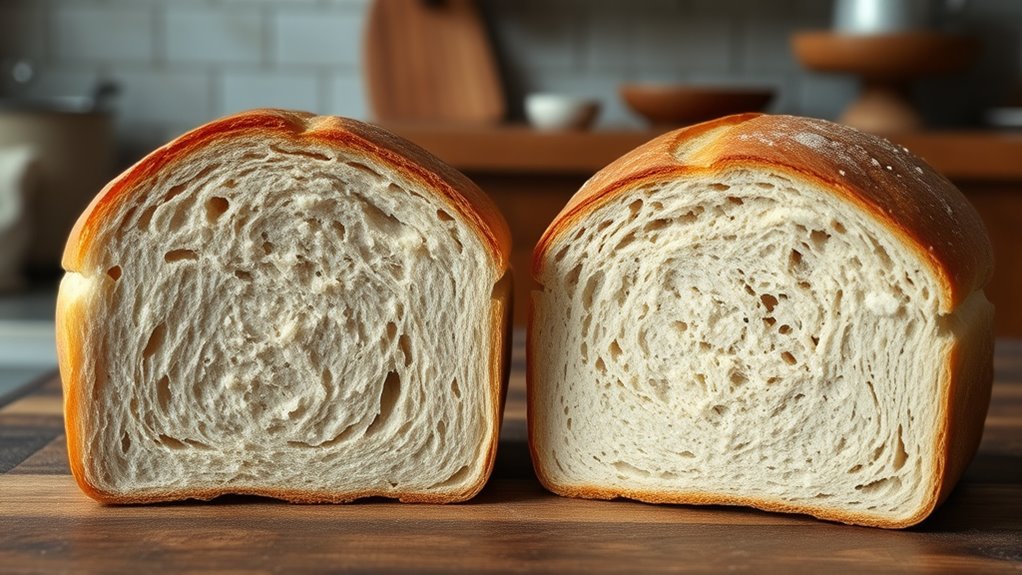
When you mix your bread dough excessively, the gluten structure becomes overdeveloped, which can prevent it from rising properly. Overmixing impacts fermentation effects by disrupting the delicate balance of yeast activity, leading to less flavor development. As the dough is overly worked, it can push out gases formed during fermentation, resulting in a denser crumb and a flatter taste. Additionally, overmixing can cause oxidation, which diminishes flavor preservation by breaking down aromatic compounds. This process strips the dough of its natural richness, making the bread taste flat and dull. Instead of enhancing flavor, overmixing weakens the dough’s ability to retain its nuanced taste. To preserve flavor and achieve proper rise, keep mixing times in check and avoid overworking your dough.
Finding the Perfect Mix Time for Great Texture and Flavor
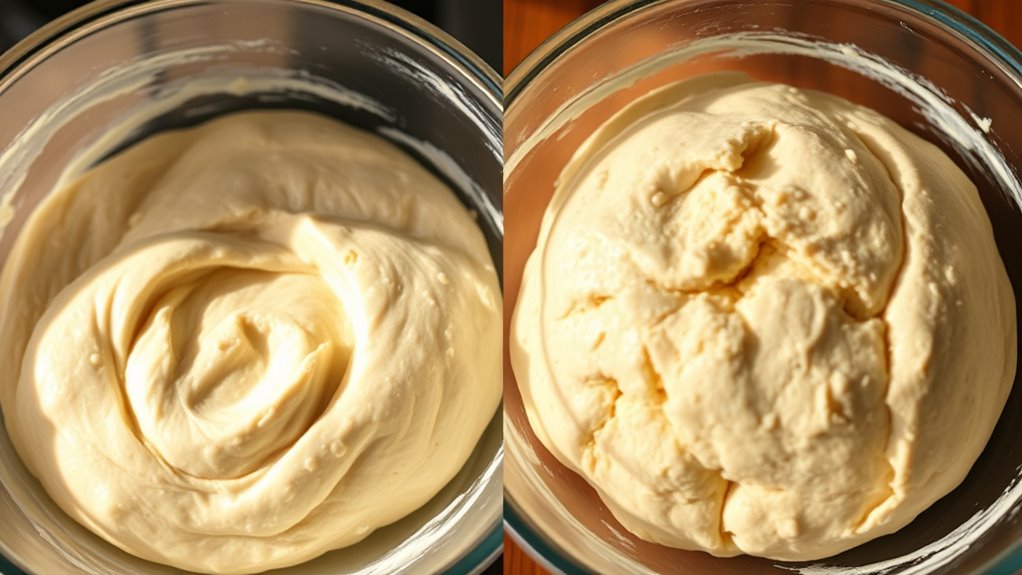
Finding the perfect mix time is essential for achieving bread with ideal texture and flavor. Proper mixing techniques guarantee the ingredients combine evenly without overworking the dough, which can lead to flat taste and poor structure. To find that sweet spot, consider these tips:
Achieve perfect bread consistency by mixing just enough to blend ingredients without overworking the dough.
- Monitor consistency: Mix until ingredients are just incorporated and the dough is smooth.
- Avoid overmixing: Stop once gluten development begins, preserving delicate flavors.
- Adjust based on flour type: Different flours need different mixing times for superior results.
- Taste test: Slightly undermix to maintain flavor complexity; overmixing can dull it.
How to Achieve Good Gluten Development Without Overdoing It
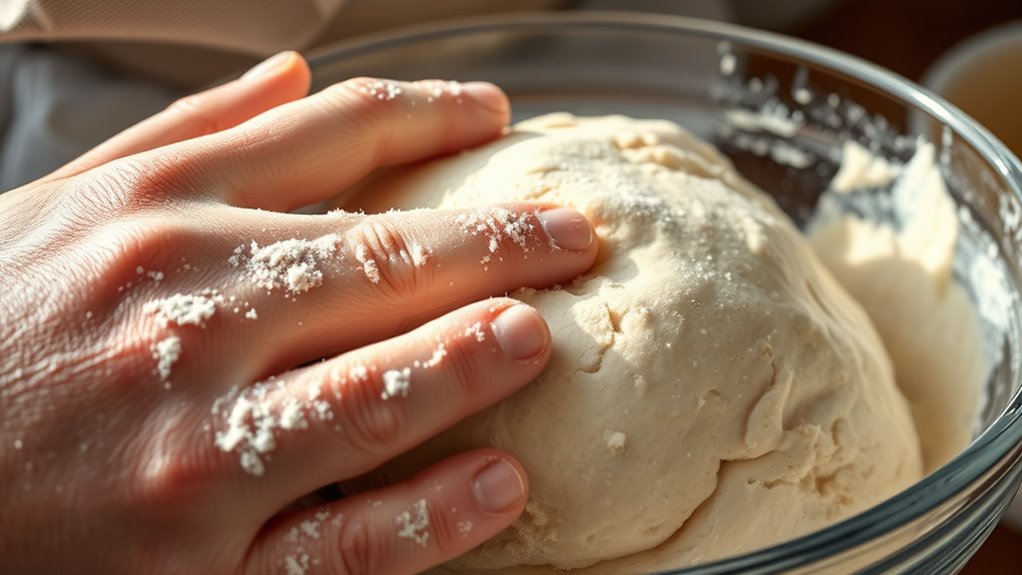
Achieving good gluten development without overdoing it requires paying close attention to the dough’s texture and mixing process. Use proper kneading techniques, such as folding and gentle pressing, to develop gluten gradually. Avoid aggressive kneading that can break down the gluten structure. Focus on flour hydration; adding just enough water helps create a cohesive, elastic dough that develops gluten efficiently. Keep an eye on the dough’s feel—should be slightly tacky but not sticky—and adjust kneading accordingly. Be patient, as overworking the dough can lead to a dense, flat loaf. By balancing kneading techniques with appropriate flour hydration, you’ll develop strong gluten networks without risking overmixing, resulting in bread with good rise, texture, and flavor.
Avoid These Mistakes That Make Bread Flat
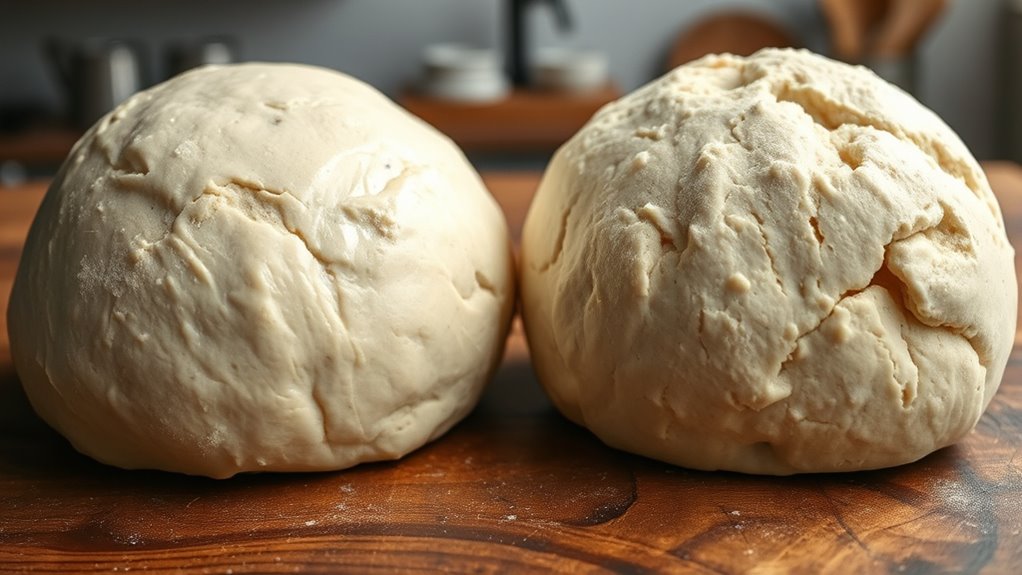
Even if you’ve developed strong gluten, improper handling or mistakes during shaping and proofing can still lead to flat bread. To prevent this, avoid common errors that compromise gluten strength and flavor preservation.
- Overproofing: Letting the dough rise too long weakens gluten structure, causing flatness.
- Underproofing: Insufficient rising time prevents dough from expanding properly.
- Rough shaping: Handling dough too aggressively deflates it, reducing volume.
- Poor scoring: Failing to score correctly limits oven spring and causes flatness.
Frequently Asked Questions
How Does Temperature Influence Oxidation During Bread Mixing?
Temperature influences oxidation during bread mixing by affecting the oxidation rate. When temperatures are higher, enzymes and other chemical reactions accelerate, speeding up oxidation. That’s why maintaining temperature control is essential; too warm, and you risk over-oxidation, which can dull flavor and weaken dough structure. Keeping mixing temperatures consistent ensures the oxidation process stays balanced, helping your bread develop ideal flavor and texture without becoming flat or over-processed.
Can Different Types of Flour Affect Oxidation and Gluten Development?
Different types of flour, with varying protein levels, directly affect oxidation and gluten development. Higher protein flours, like bread flour, develop stronger gluten, which enhances structure and elasticity. Lower protein flours, like cake flour, produce weaker gluten networks, making oxidation less effective. Choosing the right flour based on protein content helps control gluten strength, ensuring your bread develops good texture and flavor without overmixing, which can lead to a flat taste.
What Role Does Kneading Technique Play in Avoiding Overmixing?
Your kneading technique is essential for avoiding overmixing and ensuring proper gluten development. Focus on kneading with precision, paying attention to the dough’s texture rather than the clock. Gentle, consistent kneading helps develop gluten without overworking it, which can cause a flat taste. By mastering kneading precision, you control gluten formation, resulting in a well-structured loaf with better flavor and texture.
Are There Natural Ingredients That Can Prevent Oxidation in Bread Dough?
Yes, you can incorporate natural antioxidants like honey, lemon juice, or vinegar into your bread dough. These ingredients provide preservative effects, helping prevent oxidation and maintaining dough’s freshness. By adding a splash of citrus or a touch of honey, you enhance flavor while protecting against spoilage. This simple, natural solution supports better baking results, balancing beauty and benefits without relying on artificial preservatives.
How Does Initial Dough Hydration Impact Oxidation and Flavor?
Your dough’s hydration levels directly influence oxidation and flavor. Higher hydration creates a wetter, more extensible dough, which can slow oxidation, preserving delicate flavors. Conversely, lower hydration results in a firmer dough that oxidizes faster, dulling taste. Achieving the right dough consistency helps control oxidation, ensuring your bread develops rich flavor without becoming flat. Adjust hydration carefully, balancing moisture and structure to optimize both dough handling and flavor development.
Conclusion
To craft perfect bread, think of your dough as a delicate dance—too much mixing, and you risk knocking the rhythm off balance. Overmixing accelerates oxidation, dulling flavors and flattening your loaf’s personality. Keep an eye on your dough’s cues, and find that sweet spot of gluten development without going overboard. When you do, you’ll have a loaf that rises beautifully and tastes vibrant—like a symphony, not a static note.