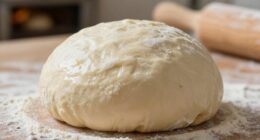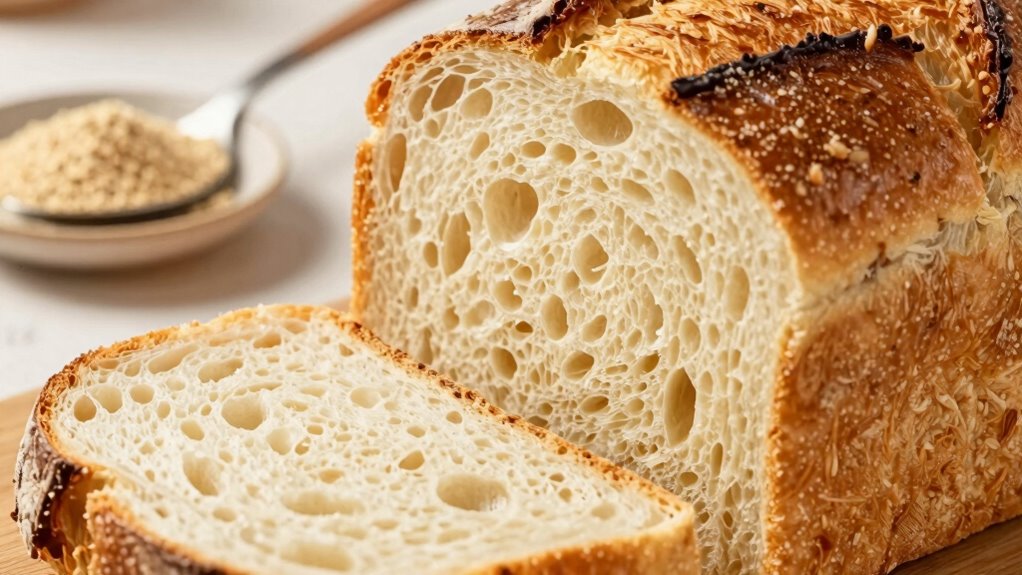

Diastatic malt is a natural ingredient made from sprouted barley that contains enzymes to help break down starches into sugars. When added to bread dough, it boosts fermentation, enhances dough rise, and creates a better crumb structure. It also promotes a deep, golden crust by increasing sugar availability for browning. If you want to learn more about how diastatic malt can improve your bread, keep exploring the details.
Key Takeaways
- Diastatic malt is a naturally enzyme-rich substance derived from malted barley that aids in bread fermentation.
- It breaks down starches into simpler sugars, fueling yeast activity for better dough rise.
- Enhances crust browning and flavor through increased caramelization and Maillard reactions during baking.
- Used at about one teaspoon per loaf to improve fermentation, texture, and crust development.
- Acts as a natural bread enhancer, resulting in improved volume, structure, and an attractive, flavorful crust.
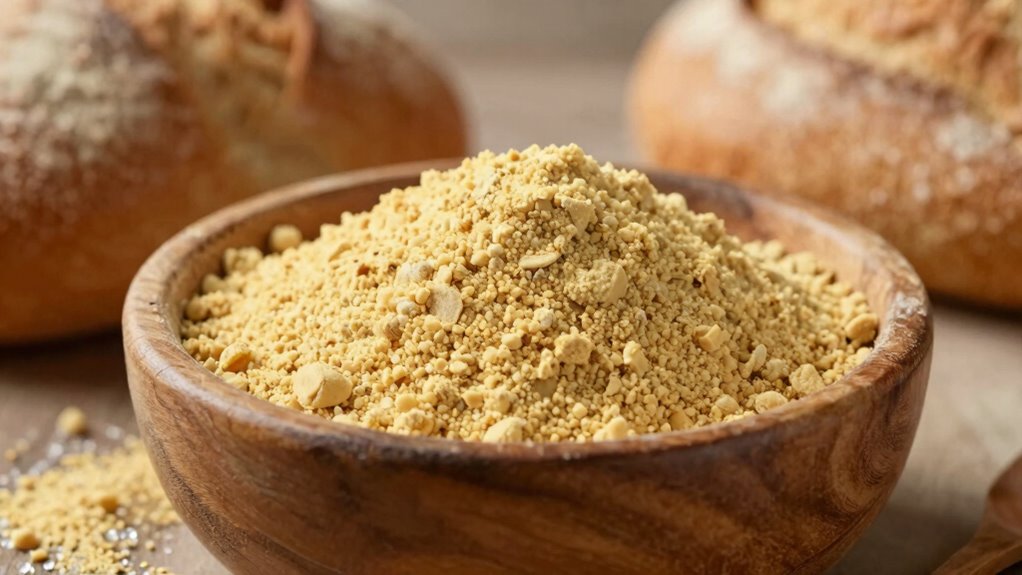
Have you ever wondered how bakers achieve that perfect rise and chewy texture in bread? The secret often lies in the ingredients they use, and one powerful but sometimes overlooked addition is diastatic malt. This natural enzyme-rich substance plays a vital role in fermentation enhancement, helping your dough develop better flavor, structure, and overall quality. When you add diastatic malt to your bread, you’re giving the yeast a boost, making fermentation more active and efficient. This means the dough ferments more thoroughly, producing a richer, more complex flavor profile while also improving the bread’s texture. The enzymes in diastatic malt break down starches into simpler sugars, providing extra fuel for the yeast. As a result, your dough rises higher and more evenly, creating that desirable open crumb and airy structure that bread enthusiasts love.
But diastatic malt’s benefits go beyond fermentation. It also markedly contributes to crust development. When baked, the sugars released during fermentation react with heat through caramelization and Maillard reactions, forming a beautifully browned, flavorful crust. Since diastatic malt increases the amount of available sugars, it helps achieve that deep, golden color and adds a slight sweetness to the crust. This not only enhances visual appeal but also improves the overall eating experience. Plus, the enzymes in diastatic malt continue to work during baking, ensuring the crust develops a satisfying crunch while maintaining a tender crumb inside. Understanding enzymatic activity is key to optimizing its benefits in baking.
Using diastatic malt effectively requires understanding its purpose. Too much can lead to overly dark crusts or a gummy texture, so it’s important to measure precisely. Typically, a small amount—generally a teaspoon per loaf—is enough to set free its benefits. When incorporated into your flour mixture, it harmonizes with other ingredients, boosting fermentation and setting the stage for perfect crust development. It’s especially beneficial in recipes that use whole grains or other flours with less natural sugar, as it compensates for their lower enzymatic activity.
In essence, diastatic malt acts as a natural bread enhancer. It streamlines fermentation, ensuring your dough rises beautifully with an open, chewy crumb. Simultaneously, it promotes crust development by increasing surface sugars that caramelize during baking, giving your bread that irresistible color and texture. When used properly, this humble ingredient can elevate your baking, helping you produce bakery-quality bread with a perfect rise, enriching flavor, and a mouthwatering crust every time.
Top picks for "diastatic malt bread"
Open Amazon search results for this keyword.
As an affiliate, we earn on qualifying purchases.
Frequently Asked Questions
Can Diastatic Malt Be Used in Gluten-Free Bread Recipes?
Diastatic malt isn’t typically used in gluten-free bread recipes because it contains enzymes that help gluten development, which gluten-free recipes lack. Instead, you can try gluten-free alternatives like xanthan gum or guar gum to improve texture. For malt substitution options, consider using non-diastatic malt or honey, but keep in mind they don’t offer the same enzyme benefits. Always adjust your recipe accordingly for the best results.
How Does Diastatic Malt Affect Bread Shelf Life?
You might think diastatic malt extends bread’s freshness, and studies suggest it does offer preservation benefits by strengthening the crumb and moisture retention. This, in turn, can enhance mold resistance and slow staling. By promoting enzyme activity, diastatic malt helps bread stay soft longer, giving you a better shelf life. So, incorporating it could be a smart way to keep your bread fresher, longer.
Is Diastatic Malt Suitable for Vegan Baking?
Yes, diastatic malt is suitable for vegan baking because it’s a plant-based ingredient. It’s made from malted barley, which aligns with vegan ingredient compatibility. If you want to avoid it, you can use plant-based alternatives like non-diastatic malt or other natural sweeteners. Diastatic malt helps improve dough fermentation and texture without compromising your vegan principles, making it a great addition to your vegan bread recipes.
What Are the Potential Health Benefits of Diastatic Malt?
You might think diastatic malt offers only baking benefits, but it can also support your health. Its enzymes help break down starches into simpler sugars, aiding digestion and promoting digestive health. Plus, diastatic malt may enhance fiber content in baked goods, contributing to better gut health. Incorporating it into your diet can be a tasty way to boost fiber intake and support overall digestive wellness naturally.
How Should Diastatic Malt Be Stored to Maintain Freshness?
To keep diastatic malt fresh, store it in an airtight container in a cool, dark place away from heat and humidity. Proper storage conditions are essential for freshness preservation, preventing it from clumping or losing potency. Avoid exposure to direct sunlight or moisture, as these can degrade the enzymes. Regularly check the container for any signs of spoilage, and reseal tightly after each use to maintain its quality.
Conclusion
Think of diastatic malt as a gentle whisper guiding your bread to rise beautifully, turning simple ingredients into a warm, golden embrace. It’s like a quiet magician working behind the scenes, softening and sweetening your dough with tender care. When you bake with it, you invite a subtle magic that makes every bite feel like a cozy hug. Embrace this humble helper, and watch your bread transform into a comforting masterpiece.