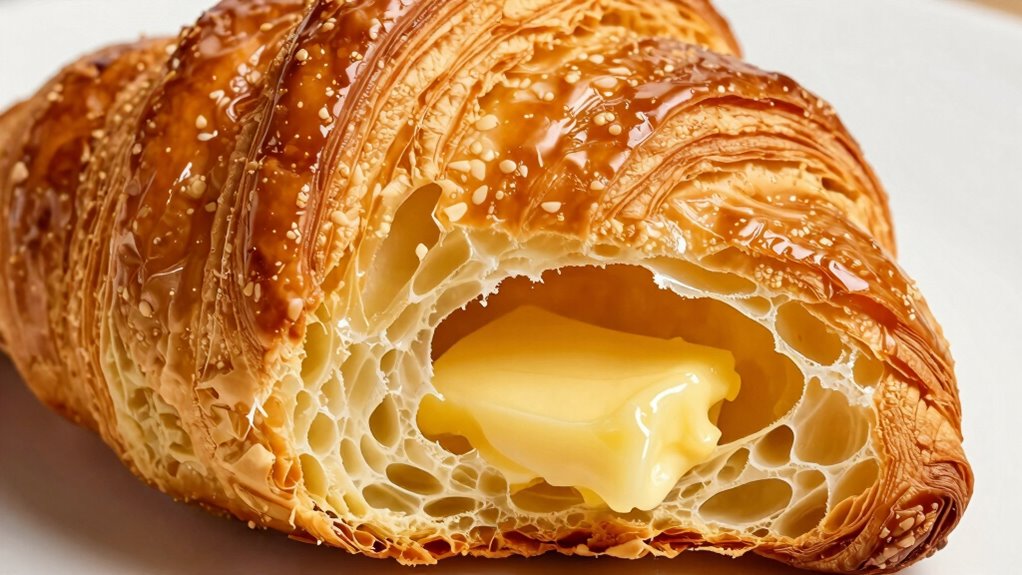

Butter plasticity for croissants depends on keeping it within a specific temperature window, ideally between 60-65°F (15-18°C). If it’s too cold, it resists spreading and causes uneven layers; too warm, and it becomes greasy and hard to work with. Managing butter’s temperature guarantees flaky, tender layers with ideal flavor. To master this delicate balance, more tips and techniques await if you continue exploring.
Key Takeaways
- Maintain butter temperature between 60-65°F (15-18°C) for optimal plasticity during lamination.
- Proper temperature ensures butter remains pliable without becoming greasy or too firm.
- Near melting point, butter softens for easy layering but should not liquefy to avoid tearing.
- Use thermometers and controlled warming techniques to achieve and sustain the ideal temperature window.
- Correct butter plasticity enhances croissant flakiness, tenderness, and consistent quality.
Breville BOV845BSS Smart Oven Pro Countertop Oven, Brushed Stainless Steel
The Breville Smart Convection Oven Pro with Element iQ System is a high performance countertop oven; Home cooks...
As an affiliate, we earn on qualifying purchases.
What Does Butter Plasticity Mean for Your Croissants?
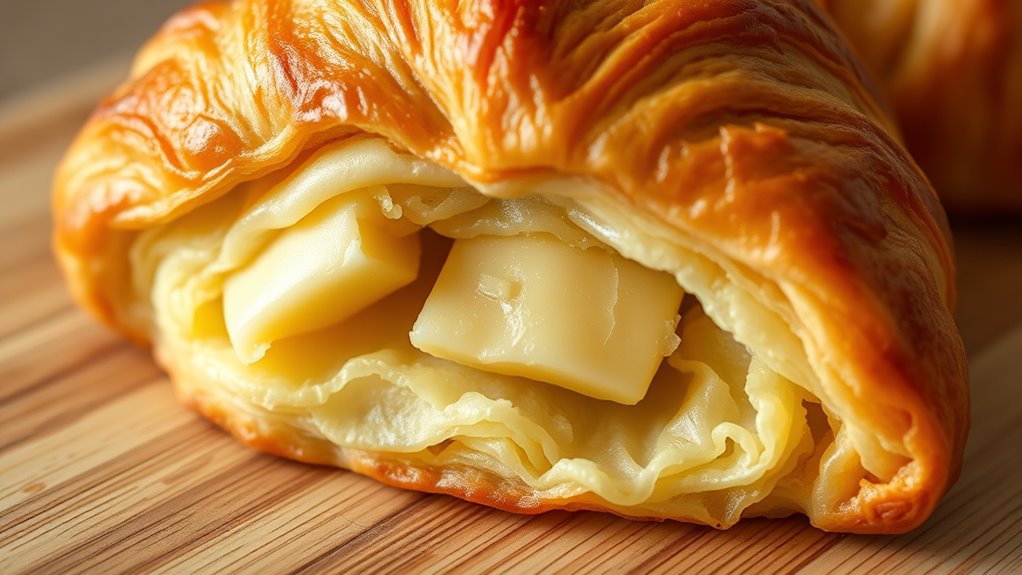
Have you ever wondered why some croissants turn out flaky and tender while others feel dense or greasy? It all comes down to butter’s plasticity, which relates to its composition and how it responds to temperature. Butter with the right plasticity allows you to layer it smoothly into the dough, creating those delicate, crisp layers you crave. If the butter is too cold, it won’t spread well, leading to uneven layers; too warm, and it becomes greasy, compromising texture. Additionally, butter’s composition influences flavor development during baking, enriching your croissants with a buttery aroma and taste. Proper butter plasticity ensures each fold incorporates just enough fat, delivering the perfect balance between flakiness, tenderness, and flavor complexity in your finished pastry. Understanding temperature control when working with butter is essential for consistent results. Achieving the ideal butter plasticity involves precise temperature management, which is crucial for professional-quality pastries. Maintaining optimal butter consistency during preparation helps ensure uniform layering and superior texture.

Dough Mixer 7L Large Capacity Electric Dough Maker with Ferment Function for Baking Bread Dough&Pizza Dough - Dough whisk 304 Stainless Steel Blender Add water/seasoning with Top Small Window
[Style Meets Easy Cleaning]:This dough mixer not only features a sleek and sophisticated design but also offers easy...
As an affiliate, we earn on qualifying purchases.
How Butter’s Melting Point Affects Its Plasticity
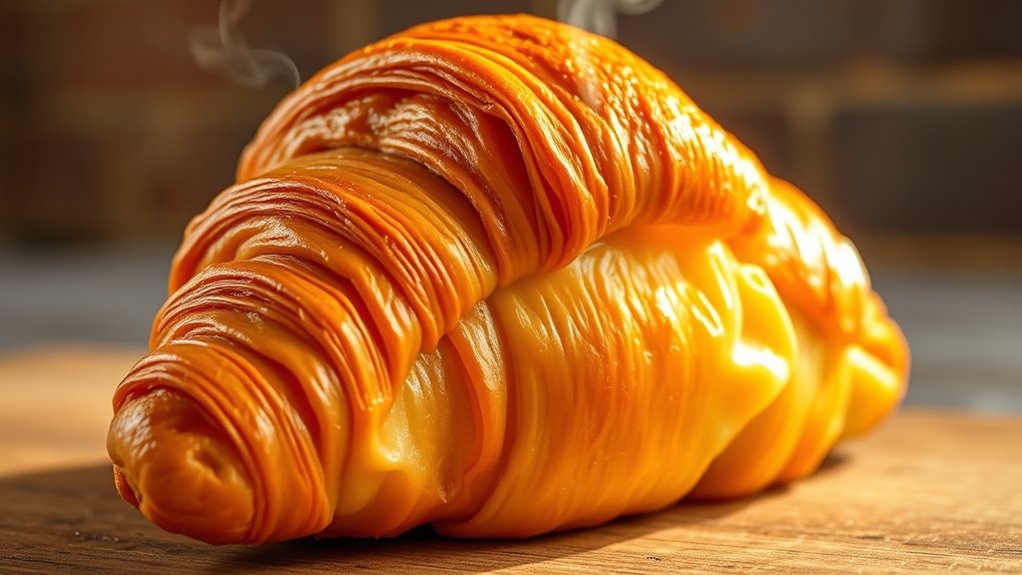
Your butter’s melting point sets clear thresholds that influence its plasticity during baking. When the temperature approaches these points, butter shifts ions from solid to semi-liquid, changing how it behaves in recipes. Understanding these temperature-dependent shifts helps you control texture and consistency in your baked goods. Embracing the science behind ingredient behavior and artistic expression can lead to more successful culinary creations. Recognizing the melting point of butter allows bakers to optimize their techniques for ideal results. Additionally, managing temperature control is crucial for achieving the perfect butter texture during preparation, ensuring consistent results in your baked goods.
Melting Point Thresholds
How does butter’s melting point influence its plasticity? The key lies in butter’s butter crystallization and fat phase transitions. When butter reaches its melting point, fat crystals begin to melt, transforming the solid into a softer, more pliable state. If the temperature is below this threshold, butter remains firm due to stable crystalline structures, limiting its plasticity. As temperature approaches the melting point, these crystals break down, allowing the fat to shift phases and increase malleability. However, if you go too high, butter becomes overly fluid, losing its shape. Understanding these melting point thresholds helps you control butter’s plasticity, ensuring it’s soft enough for lamination without becoming greasy or losing structure during baking. Additionally, temperature control is essential to optimize butter’s performance based on its melting properties. Recognizing phase transitions in fats enhances your ability to manipulate dough textures effectively, and being aware of butter crystallization can help in achieving the perfect flaky layers in your croissants. Furthermore, understanding AI technologies can assist bakers in developing advanced tools for precise temperature regulation during baking processes.
Temperature-Dependent Plasticity
Because butter’s melting point marks the shift from solid to semi-fluid, it directly influences its plasticity in response to temperature changes. When butter reaches this critical point, its composition—mainly fats and water—dictates how it softens and stretches during lamination. Understanding these plasticity mechanisms helps you control croissant layers, ensuring perfect flakiness. At just below melting, butter remains firm enough to hold shape but soft enough to blend seamlessly. When warmed beyond its melting point, butter becomes too fluid, losing structure and risking tears. This delicate balance evokes feelings of anticipation and satisfaction as you manipulate butter precisely. Proper temperature management is essential for maintaining the butter’s structural integrity, preventing over-melting and ensuring optimal lamination. Additionally, awareness of the melting temperature can help in selecting the right butter for various baking conditions. Recognizing the butter’s melting behavior enables bakers to better predict how it will respond during the lamination process. A key aspect of this is understanding the temperature-dependent plasticity, which guides bakers in achieving the perfect texture. Feel the satisfying resistance as you fold laminated dough – Experience the thrill of perfect, even layers – Savor the moment of butter’s ideal softness – Avoid the heartbreak of melted, unusable butter – Master butter’s temperature window for flawless croissants
Amazon Product B09BVDKSTN
As an affiliate, we earn on qualifying purchases.
What Is the Ideal Butter Temperature for Croissant Lamination?
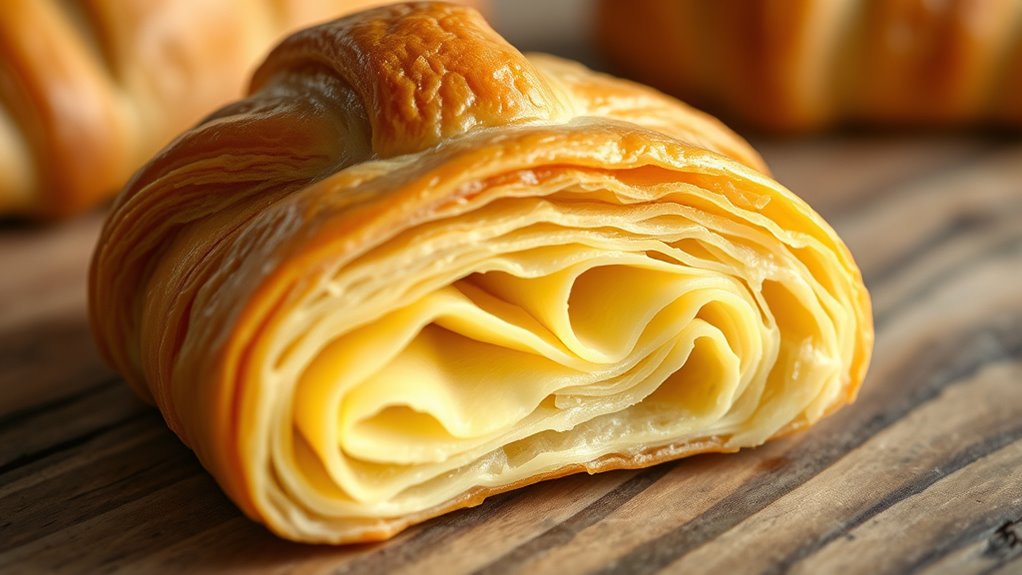
The ideal butter temperature for croissant lamination typically falls between 54°F and 60°F (12°C to 15°C). Maintaining this range ensures ideal butter composition, balancing plasticity and firmness. If butter is too cold, it becomes stiff and resists layering; too warm, and it melts into the dough, impairing structure. Proper temperature preserves flavor development, giving your croissants a rich, buttery taste. Use the table below to understand how temperature affects butter:
| Temperature | Butter Consistency | Impact on Lamination |
|---|---|---|
| 54°F – 58°F | Firm but pliable | Ideal for layering |
| 58°F – 60°F | Slightly softer, more pliable | Enhances flavor, easier to fold |
| Above 60°F | Melty, greasy | Hampers structure |
Controlling temperature is crucial for achieving consistent results and perfect lamination and flavor. Additionally, maintaining the correct butter temperature can influence the overall quality of your baked croissants, ensuring a professional finish. Properly managing butter plasticity is also essential for achieving uniform layers, which directly impacts the texture and appearance of your final product.

Blingco Enameled Cast Iron Dutch Oven with Lid -6.5 QT, incl. Sourdough Bread-Baking Supplies like Banneton Proofing Basket, Heavy Duty Cookware Bread-Oven for Baking, Stews, and Roasting, Cream White
【For Effortless Cooking & Easy Cleaning 】Featuring a seven-layer design, this Dutch oven ensures even heat distribution and...
As an affiliate, we earn on qualifying purchases.
How Temperature Changes Butter Layers and Flakiness
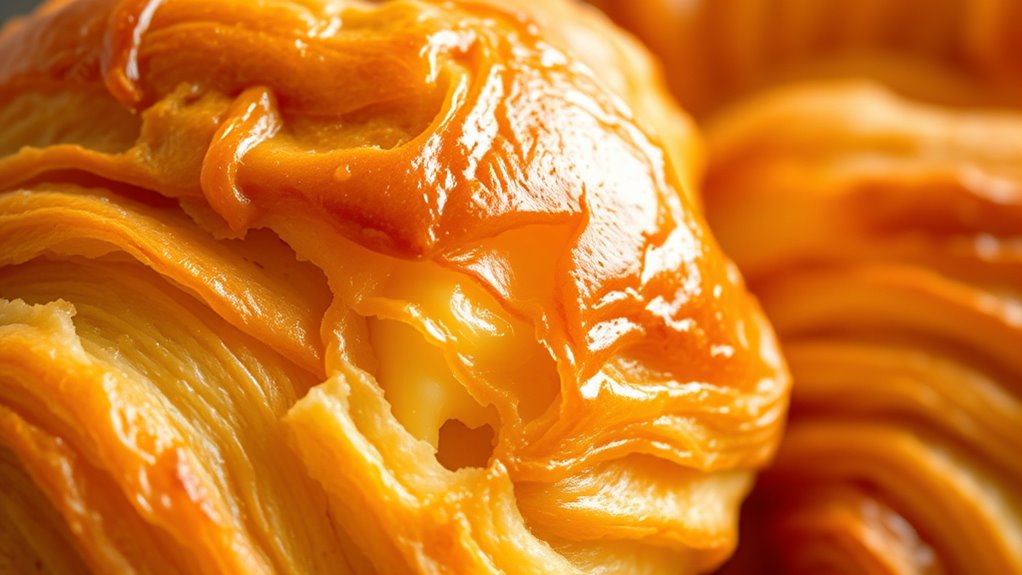
Temperature plays a vital role in shaping the structure of butter layers within your dough. When butter is too cold, butter layering becomes dense, hindering flakiness development. If it’s too warm, butter melts into the dough, causing uneven layers and a greasy texture. Maintaining the right temperature guarantees the delicate balance needed for perfect lamination. Properly managing modern kitchen technology can help you monitor and control these precise temperatures with ease. Feel the difference:
- Achieve crisp, airy layers that melt in your mouth
- Experience the satisfying crunch of golden croissants
- Enjoy uniform, flaky textures every time
- Prevent butter from oozing out during baking
- Master the art of consistent flakiness development
Controlling temperature lets you unleash the full potential of butter layering, resulting in irresistibly flaky croissants every time.
Tools and Techniques to Keep Butter at the Right Temperature

To maintain butter at the ideal temperature, you need the right tools and techniques. Proper storage methods, like keeping butter in a cool, consistent environment, help prevent temperature fluctuations. Monitoring devices, such as digital thermometers, guarantee you stay within the perfect range for maximum plasticity. Utilizing seasonal checklists can also help ensure your storage conditions remain optimal throughout the year.
Ideal Butter Temperature
Maintaining the perfect butter temperature is essential for achieving ideal butter plasticity, especially when precision matters in baking or pastry work. When your butter is at the right temperature, it preserves the butter flavor and ensures smooth incorporation into your dough. Properly sourced butter, ideally fresh and high-quality, makes a noticeable difference in your final product. To hit that perfect range, keep your butter chilled but pliable—around 60-65°F (15-18°C). Using tools like a thermometer or placing butter in a warm water bath helps control temperature precisely. temperature control techniques, such as using a reliable kitchen thermometer or gentle warming methods—like a water bath—are key to consistent results. Additionally, understanding butter plasticity allows bakers to manipulate texture and workability effectively. Knowing how butter temperature affects plasticity enables bakers to adapt techniques for different recipes and desired outcomes.
Proper Storage Methods
Proper storage techniques are essential for keeping butter at the ideal temperature and preserving its quality. Understanding butter composition helps you choose the right storage environment—preferably a cool, consistent temperature between 16-18°C (60-65°F). Use airtight containers or wrapping to prevent exposure to light, air, and moisture, which can alter butter’s texture and flavor. Keep butter away from strong-smelling foods, as its composition allows it to absorb odors easily. Store it in the refrigerator’s butter compartment or a dedicated butter dish with a lid. Avoid temperature fluctuations that can cause butter to soften or spoil prematurely. Proper storage guarantees butter maintains its plasticity, making it easier to work with when baking croissants or other pastries.
Temperature Monitoring Tools
Accurately monitoring butter’s temperature is essential to preserving its plasticity and preventing spoilage. Understanding butter composition and ideal storage conditions helps you maintain the ideal temperature window. Using reliable tools ensures your butter stays within that range, avoiding melting or hardening.
Consider these temperature monitoring tools:
- Digital kitchen thermometers for quick, precise readings
- Infrared thermometers to measure surface temperature without contact
- Data loggers for continuous temperature tracking over time
- Fridge thermometers to ensure storage conditions stay consistent
- Thermocouple probes for detailed temperature control during handling
These tools make it easier to keep butter at its perfect temperature, ensuring perfect texture for croissants and extending freshness. Proper monitoring protects your ingredients and elevates your baking results.
How to Recognize When Butter Is Too Soft or Hard During Prep
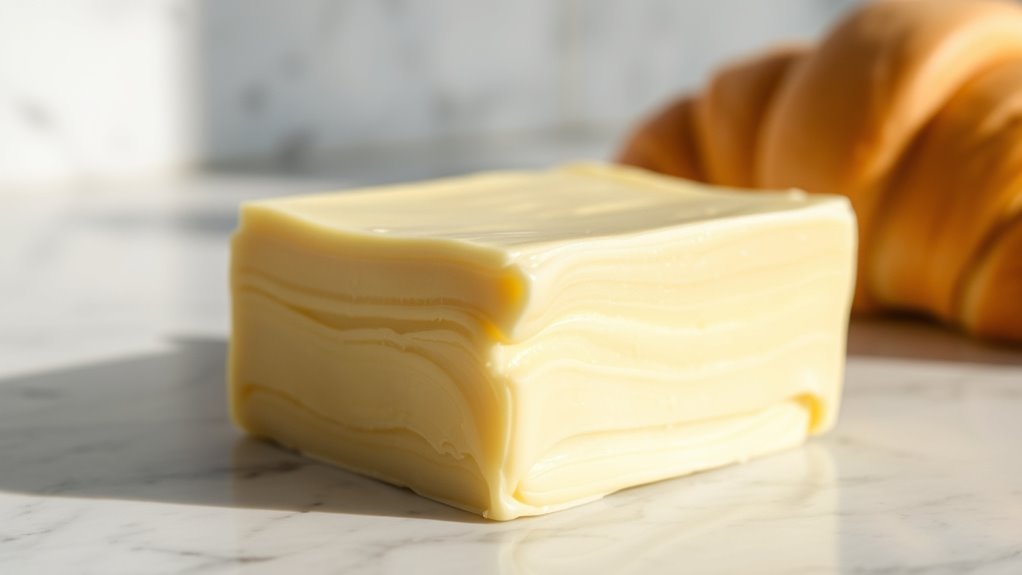
Knowing whether your butter is too soft or too hard during prep is essential for achieving the best results. The butter texture reveals a lot about its temperature control. If your butter feels excessively soft or greasy to the touch, it’s likely too warm, making it difficult to layer without melting. On the other hand, if it’s stiff or crumbly, it’s probably too cold, which hampers pliability and layering. To test, gently press the butter with your finger; it should yield slightly without sticking or cracking. Properly tempered butter should be pliable but still hold its shape. Recognizing these cues helps you adjust your environment or resting time, ensuring your butter stays within the ideal temperature window for perfect lamination and flaky croissants.
Tips to Maintain Butter Temperature During Baking
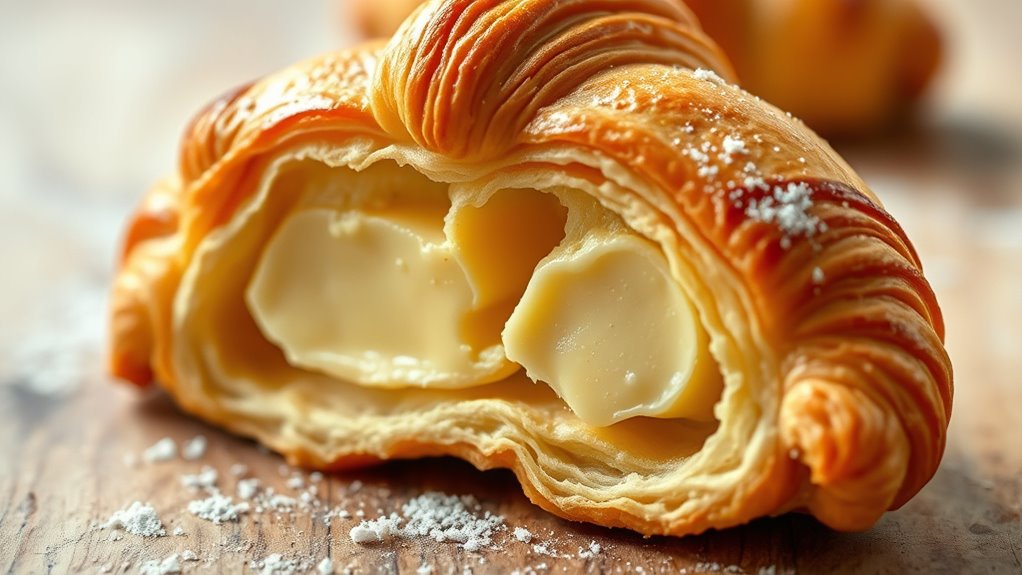
Maintaining the right butter temperature during baking requires careful attention and quick adjustments. Consistent butter temperature preserves the butter flavor, ensuring your croissants develop that rich, flaky texture. To keep butter at suitable temperature:
- Chill your butter before layering to prevent melting and preserve shelf life.
- Work in a cool, draft-free environment to avoid unwanted softening.
- Use a thermometer to monitor butter’s temperature, aiming for just firm enough to handle.
- Keep butter cool between steps by briefly refrigerating if it warms too much.
- Handle butter gently to avoid warming it with your hands, maintaining its plasticity.
These tips help you control butter’s temperature, ensuring perfect lamination and flavor. Staying within the ideal temperature window prevents butter from becoming greasy, extending its shelf life and elevating your croissants’ quality.
Common Butter Temperature Mistakes When Making Croissants

One of the most common pitfalls when making croissants is mishandling butter temperature, which can compromise lamination and texture. If the butter is too cold, it resists shaping, reducing dough elasticity and making layers difficult to create. Cold butter also dulls the butter flavor, resulting in a bland croissant. Conversely, if the butter is too warm, it becomes greasy and leaks out during rolling, ruining the lamination process. This affects not only the structure but also the overall butter flavor, making the croissant greasy rather than flaky. Proper butter temperature guarantees ideal dough elasticity and maintains the delicate balance needed for perfect lamination. Paying close attention to butter temperature is vital for achieving the desired texture, flavor, and flaky layers in your croissants.
How Temperature and Humidity Affect Butter Plasticity

Temperature and humidity play a crucial role in determining butter’s plasticity, directly affecting how easily it can be incorporated into dough. When butter is too cold, butter crystallization makes it stiff and difficult to work with. If it’s too warm, it melts, losing its structure and causing greasy layers. Humidity impact also matters: high humidity can introduce moisture, softening butter and promoting uneven layers. Conversely, low humidity can dry out butter, making it brittle. Maintaining ideal temperature and humidity ensures butter stays within its perfect plasticity window, resulting in perfect lamination.
- Feel the difference in butter’s texture as you work with it
- Avoid frustrating cracks and tears during lamination
- Achieve that beautifully flaky, airy croissant
- Prevent butter from becoming too greasy or too stiff
- Master butter crystallization for pastry perfection
Frequently Asked Questions
Can Different Butter Types Influence Plasticity Temperature Range?
Yes, different butter types influence the plasticity temperature range. You’ll notice that butter composition, such as fat content and moisture levels, varies among brands, affecting how it behaves when chilled or heated. Storage conditions also play a role, since improper storage can alter butter’s consistency. By choosing the right butter and maintaining proper storage, you can guarantee it reaches the ideal temperature window for making flaky croissants.
How Does Butter Color Indicate Its Temperature Status?
You’ll find that butter color acts as a quick melting indicator, revealing its temperature status. A pale or creamy hue suggests it’s cool and firm, while a slightly yellow or translucent tone indicates it’s nearing melting point. Studies show that butter’s color change occurs within a 2-3°C temperature range, making it a dependable visual cue for bakers to guarantee ideal plasticity for perfect croissants.
What Impact Does Butter Thickness Have on Its Plasticity?
You’ll find that thicker butter has higher resistance to deformation, meaning it’s less plastic and harder to work with. Thinner butter, on the other hand, offers more plasticity, making it easier to manipulate during pastry layering. To achieve ideal plasticity control, adjust butter thickness according to your recipe’s needs, ensuring your butter maintains the right consistency for perfect croissants. Proper butter thickness helps you manage its plasticity effectively.
Does the Age of Butter Affect Its Melting Point?
Think of your butter like a fine wine—it develops character over time. As butter ages, its melting point can shift, influenced by storage conditions. Properly stored butter, kept cool and airtight, maintains a consistent melting point, but if exposed to warmth or air, it can soften or spoil sooner. So, yes, the age of butter affects its melting point, making freshness and storage key for perfect baking.
How Do Seasonal Temperature Variations Influence Butter Handling?
Seasonal temperature variations affect butter handling by requiring you to adapt your butter storage and temperature control. When it’s warmer, keep butter chilled to prevent melting and maintain its plasticity for easy lamination. In colder weather, you might need to slightly warm the butter to achieve the right consistency. Always monitor ambient temperatures and store butter properly to ensure consistent results in your baking, especially for delicate tasks like croissant preparation.
Conclusion
Mastering butter’s beautiful balance boosts your bakery’s brilliance. By maintaining the perfect plasticity, you’ll craft croissants with crisp, flaky layers that captivate and charm. Pay close attention to temperature tricks, tweak techniques, and tame tricky humidity. With mindful management, your buttery brilliance blossoms, bringing bakery-quality perfection to every batch. Elevate your skills, embrace the art, and enjoy the delicious dance of dough and temperature—delivering delectable, dreamy croissants every time.