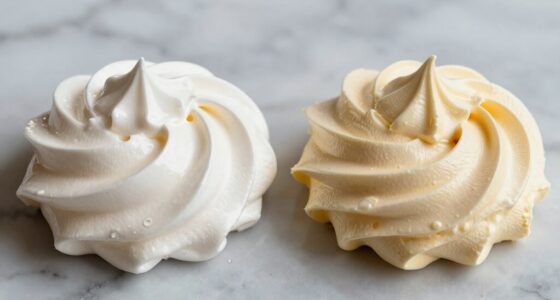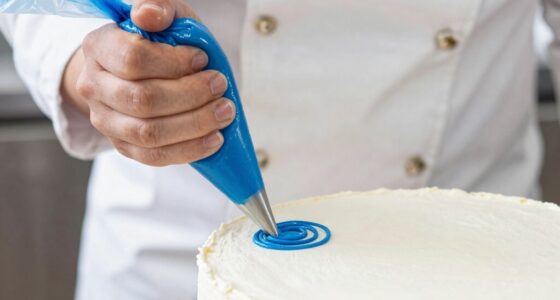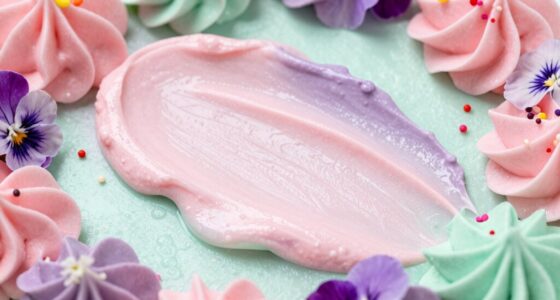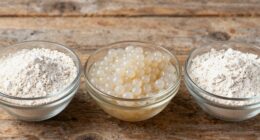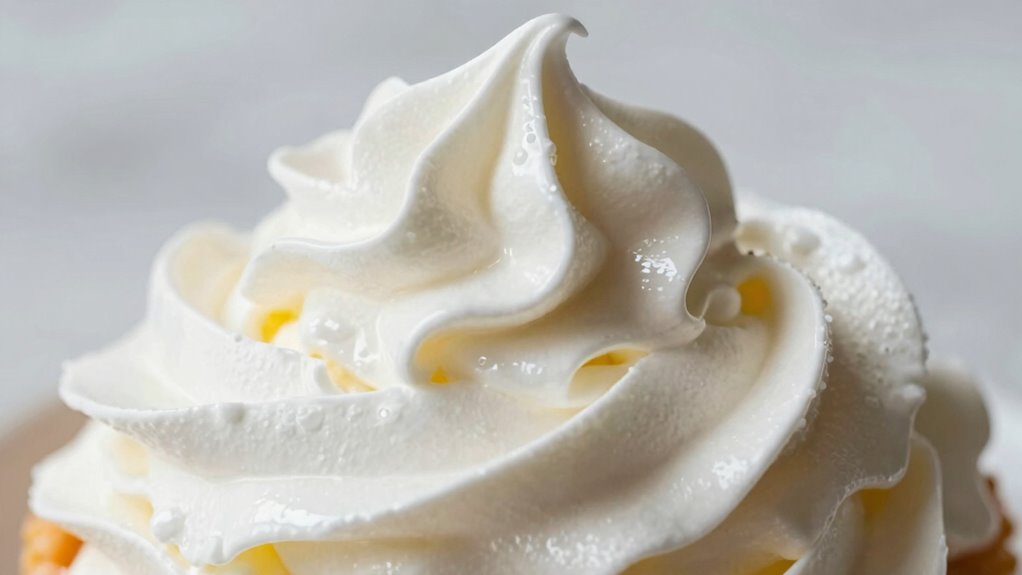

To keep your whipped cream from deflating, use high-fat cream (around 36%) and add stabilizers like gelatin or cream of tartar to strengthen the foam. Chill your bowls and ingredients beforehand, whip until soft peaks form, then gradually incorporate stabilizers for lasting firmness. Avoid overbeating and temperature fluctuations, which cause collapse. By mastering these techniques, you’ll guarantee your whipped cream stays fluffy and perfect for hours—discover more tips to perfect your technique.
Key Takeaways
- Use high-fat heavy cream (around 36%) and add stabilizers like gelatin or cream of tartar for better firmness.
- Chill bowls, beaters, and ingredients thoroughly before whipping to maintain temperature and stability.
- Incorporate stabilizers gradually after soft peaks form to enhance peak retention without deflation.
- Avoid overbeating and handle whipped cream gently to prevent air bubble breakdown.
- Store whipped cream in an airtight container in the fridge over ice packs for extended freshness.
Why Does Whipped Cream Deflate?

Have you ever noticed how whipped cream quickly loses its fluffiness and starts to collapse? That’s because air bubbles trapped inside begin to break down over time, causing the cream to deflate. When you focus on flavor combinations and presentation techniques, it’s tempting to add toppings or sauces that can weigh down the whipped cream. These additions can disturb the delicate foam, making it less stable. Also, if your whipped cream isn’t cold enough or you don’t whip it properly, it won’t hold its structure. To keep it from deflating, consider how your flavor choices and presentation methods might impact stability. Properly incorporating flavors or decorations can be beautiful, but they shouldn’t compromise the whipped cream’s airy texture.
What Ingredients Keep Whipped Cream Stable?
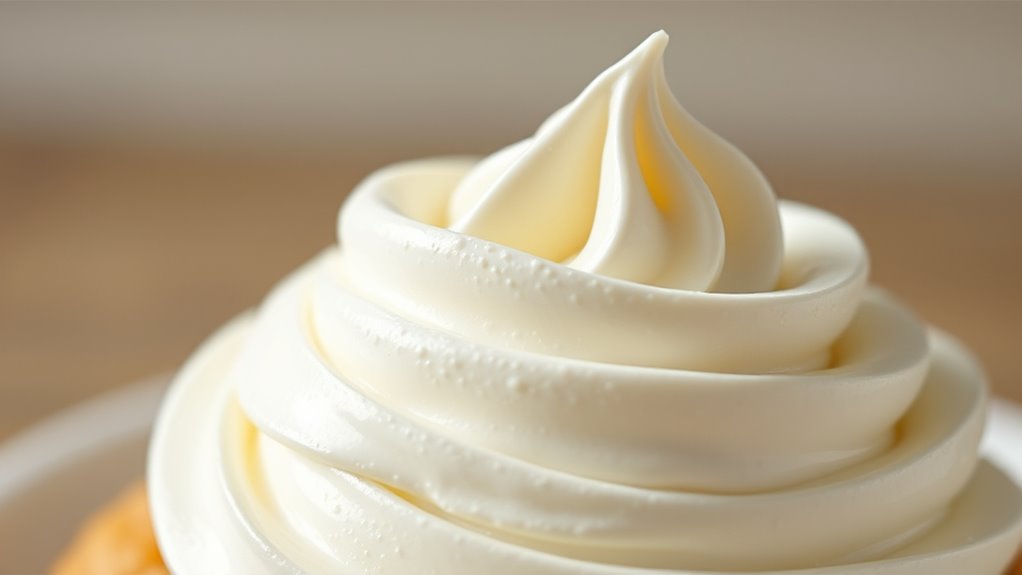
To keep whipped cream stable, you should consider adding stabilizing agents that give it structure and prevent collapse. Fat content also plays a key role, with higher fat levels helping the cream hold its shape longer. Additionally, proper chilling before and during whipping guarantees the ingredients stay firm and the whipped cream remains durable.
Stabilizing Agents Add Structure
Stabilizing agents are essential ingredients that help whipped cream hold its shape and maintain a light, airy texture. They provide the structure needed for the cream to stand tall without collapsing. When considering stabilizers, you also want to think about sweetening techniques and flavor enhancements that complement the texture. Here are four key stabilizing agents:
- Gelatin – adds firmness and supports volume.
- Cream of tartar – stabilizes egg whites for whipped toppings.
- Cornstarch – thickens and prevents weepage.
- Powdered sugar – stabilizes while enhancing sweetness and flavor.
Each of these ingredients contributes to a more resilient whipped cream, allowing you to serve it confidently without fear of deflation. Proper stabilization elevates the overall quality and presentation.
Fat Content Matters Significantly
The fat content in whipped cream plays a vital role in how well it holds its shape and maintains a smooth, airy texture. Higher fat levels, typically around 36%, create a richer flavor and better stability, making it easier to achieve lasting peaks. If you want flavor variations, using cream with different fat contents can enhance or soften tastes, adding versatility to your desserts. When it comes to presentation techniques, stable whipped cream ensures your toppings stay beautiful and structured, whether piped into rosettes or dolloped atop a pie. Additionally, understanding whipped cream stability helps you select the right cream for both flavor and presentation. Low-fat options often struggle with stability, so choosing high-fat cream is key if you want a luscious, durable finish.
Proper Chilling Ensures Durability
Ever wondered how proper chilling makes your whipped cream last longer and stay firm? When you chill your mixing bowl and ingredients, you prevent melting and separation, guaranteeing durability. This step also helps maintain the perfect dessert presentation. To maximize stability, consider these key ingredients:
- Gelatin or Agar-Agar – Adds structure, preventing deflation.
- Powdered Sugar – Contains cornstarch that stabilizes and enhances flavor.
- Cream Cheese or Mascarpone – Adds firmness and richness.
- Cold Fat Content – Ensures a silky texture and better volume retention. Proper chilling also helps maintain optimal temperature, which is crucial for consistent whipping and stability.
Chilling these components is essential for a consistent, long-lasting whipped cream that looks stunning and tastes even better. Proper chilling not only boosts stability but also amplifies flavor, making your dessert irresistible.
How to Choose the Best Heavy Cream and Additives
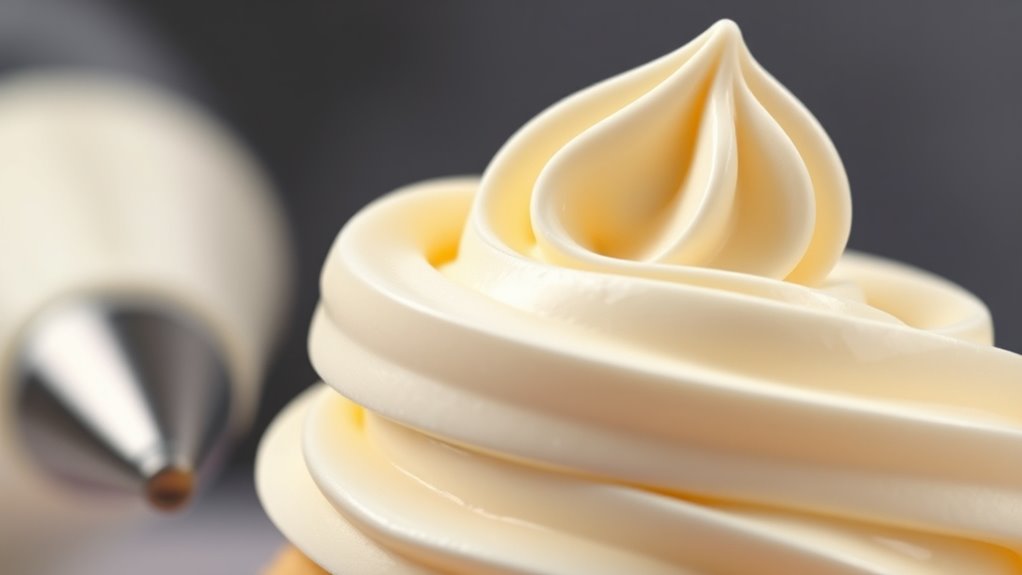
When selecting heavy cream, check for at least 36% fat content to make certain it whips well and holds its shape. Effective additives like gelatin or cream of tartar can improve stability, so choose ones suited for your recipe. By paying attention to these points, you’ll create a perfectly stable, fluffy whipped cream every time. For an added boost, some bakers incorporate stabilizing ingredients to ensure the whipped cream maintains its texture longer. Additionally, understanding how contrast ratio affects image quality can help in choosing the right projector for a home cinema setup. Proper air purifier maintenance can also ensure your kitchen stays fresh, especially when working with dairy products. Being aware of recovery devices can further enhance your kitchen or baking practices by keeping tools and environments clean and optimal for food safety. Regularly monitoring temperature control in your kitchen can prevent dairy spoilage and maintain ingredient freshness.
Cream Fat Content
Choosing the right heavy cream for whipped stabilizing starts with paying attention to its fat content. Higher fat levels create a richer, more stable whip that holds shape longer. Look for cream with at least 36% fat, ideal for achieving firm peaks. Consider these factors:
- Fat percentage: Higher fat ensures better stability and gloss.
- Freshness: Fresher cream whips better and maintains texture.
- Processing: Non-ultra-pasteurized cream preserves natural fats and flavors.
- Usage: For dessert toppings or coffee accompaniments, richer cream prevents deflation and maintains a luxurious texture. Choosing cream with the proper fat content is essential for optimal stability and appearance in whipped toppings. Additionally, understanding how processing methods affect the cream’s ability to whip can help in selecting the best product.
Balancing fat content helps create whipped cream perfect for decorating desserts or enhancing beverages, ensuring it stays fluffy and appealing without collapsing.
Effective Additive Choices
Selecting the right heavy cream and additives is essential for achieving stable, fluffy whipped cream. Look for cream with at least 36% fat content for best stability. To enhance flavor, consider adding vanilla extract, almond extract, or a touch of liqueur—these flavor enhancements elevate your whipped cream’s taste without compromising stability. Incorporate stabilizers like gelatin, cornstarch, or commercial stabilizing agents if you want longer-lasting peaks. Presentation tips include piping the whipped cream for an elegant look or swirling it atop desserts for visual appeal. Choosing high-quality cream and appropriate additives ensures your whipped cream remains firm and luscious throughout your event. Experiment with flavors and presentation techniques to create a stunning, stable finishing touch that impresses every time. Additionally, selecting energy-efficient equipment can help maintain freshness and stability while reducing your environmental footprint.
How to Perfectly Stabilize Whipped Cream
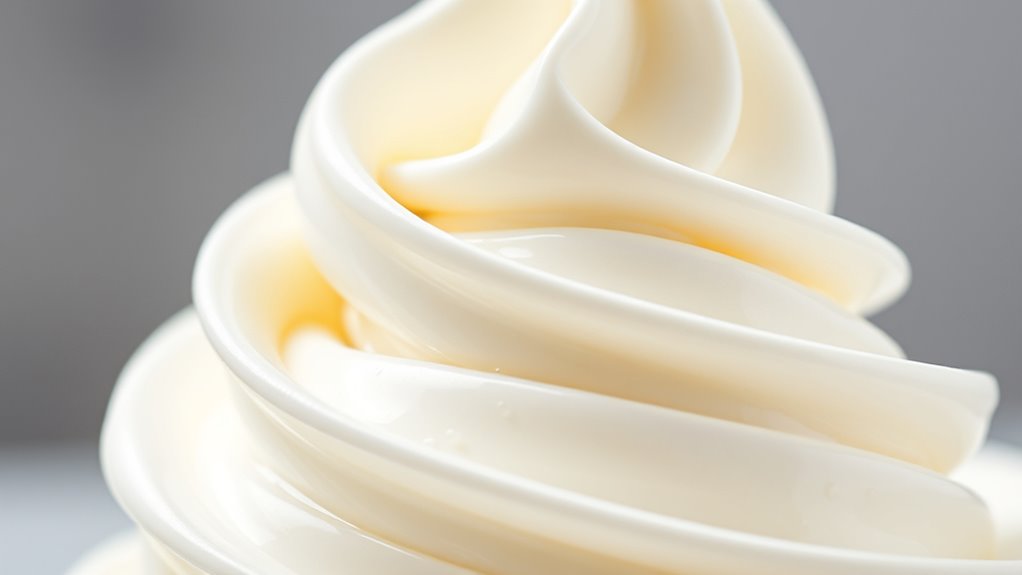
To achieve perfectly stabilized whipped cream, you need to incorporate the right stabilizing agent during the whipping process. This assures your cream holds its shape and texture longer. Focus on these key steps:
- Choose a stabilizer like gelatin, cream of tartar, or cornstarch for reliable results.
- Add the stabilizer gradually once soft peaks form, mixing thoroughly.
- Incorporate flavor variations, such as vanilla or almond extract, to enhance taste.
- Use presentation tips, like piping or spreading, to showcase the whipped cream elegantly.
Proper stabilization not only prolongs the texture but also allows your creativity in flavor choices and presentation. With these techniques, your whipped cream stays luscious and visually appealing, perfect for any dessert or celebration.
How to Use Stabilizers Like Gelatin and Tartar
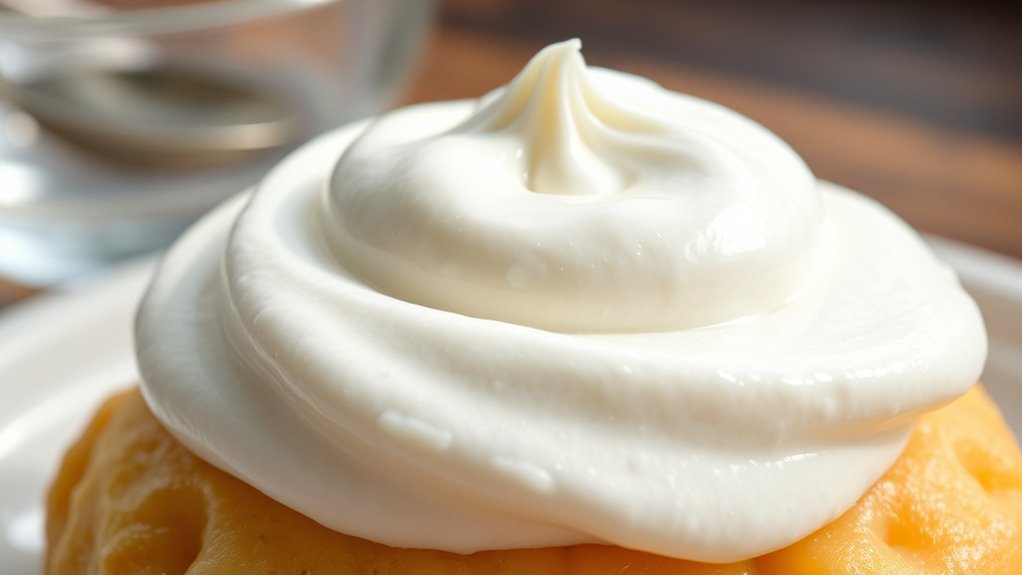
Once you’ve mastered the basics of stabilizing whipped cream, the next step is understanding how to effectively use gelatin and cream of tartar. To incorporate gelatin, dissolve a small amount in warm water, then gently fold it into your whipped cream before it firms up. Cream of tartar, added during whipping, helps create a stable structure by increasing acidity. These stabilizers work well for flavored variations, ensuring the whipped cream holds its shape even with added ingredients like fruit or chocolate. For presentation tips, use stabilized whipped cream to pipe elegant rosettes or layered desserts without worry of collapse. Both gelatin and cream of tartar are versatile tools that improve texture and appearance, making your whipped cream perfect for any occasion. Additionally, understanding the styling products you choose can influence how well your whipped cream maintains its structure during serving, as the stability of your whipped cream depends on proper stabilization techniques. Incorporating stabilization techniques such as these ensures your whipped cream remains fluffy and visually appealing for longer periods.
How to Keep Your Whipped Cream Firm Longer
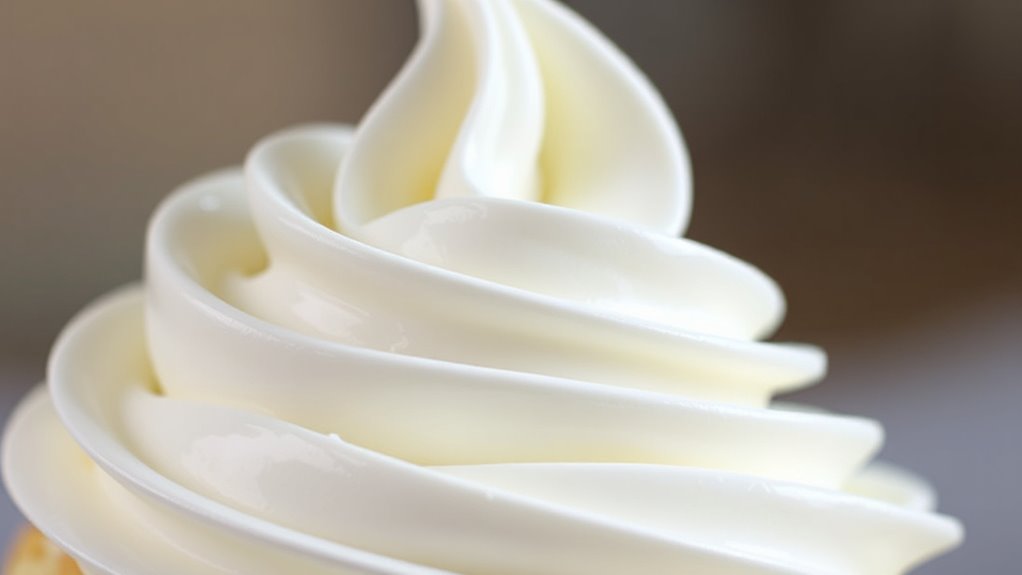
If you want your whipped cream to stay firm longer, paying attention to preparation and storage techniques can make a big difference. First, chill your mixing bowl and beaters beforehand to guarantee maximum stability. Second, use high-fat heavy cream, which naturally holds shape better. Third, incorporate stabilizers like gelatin or commercial options to extend firmness. Fourth, store your whipped cream in an airtight container in the fridge, ideally over ice packs for extra coolness. For flavor variations, add extracts or zest after whipping to avoid deflation. When presenting, pipe or spoon the whipped cream just before serving to maintain its structure. Additionally, understanding the Free Floating concept can help you better manage the environment in which your whipped cream is prepared and stored, reducing the risk of deflation. Ensuring proper air quality in your kitchen environment can also help maintain the whipped cream’s texture by minimizing airborne contaminants that might cause instability. Incorporating proper whipping techniques can significantly impact the final firmness and appearance of your whipped cream. Being aware of passive voice usage in your recipes and instructions can improve clarity and precision in your communication. Moreover, selecting the right stabilizer and techniques can greatly enhance the whipped cream’s ability to hold its form longer. These steps help your whipped cream stay fluffy and firm longer, making your desserts not only delicious but visually appealing.
Troubleshooting Common Stabilization Problems
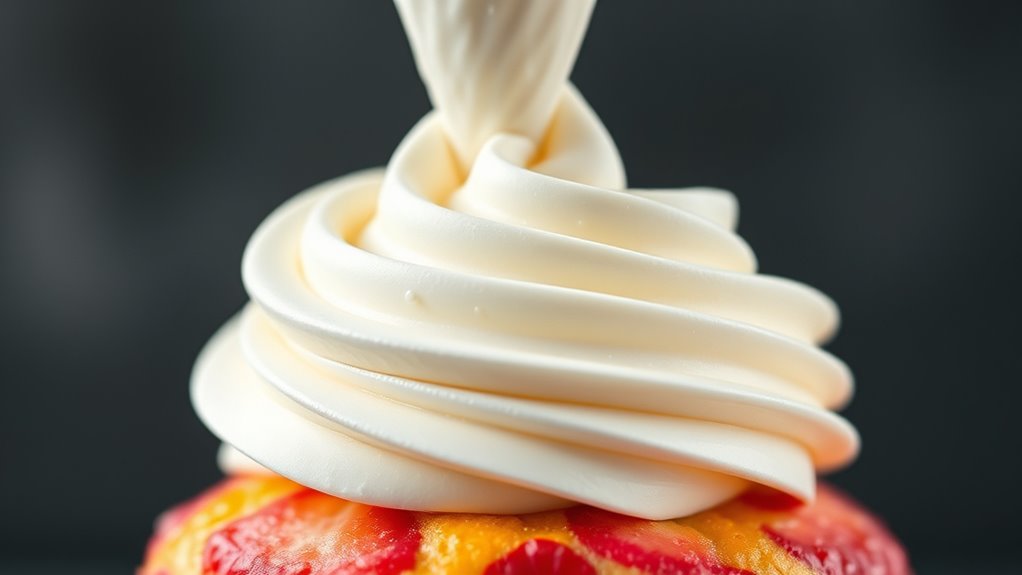
Stabilizing whipped cream can sometimes be tricky, especially when it deflates or becomes grainy despite following proper techniques. Common problems include a loss of volume, undesirable texture, or compromised presentation aesthetics. To troubleshoot, consider the cause: overbeating, incorrect temperature, or insufficient stabilizer. For a sweet flavor enhancement, use powdered sugar or vanilla, but avoid excess liquid. If your cream deflates, gently fold in a small amount of stabilized gelatin or cornstarch. For graininess, beat at medium speed and ensure ingredients are chilled. Proper temperature control is essential for achieving perfect whipped cream texture. Additionally, temperature management can help prevent issues like graininess and deflation, ensuring a stable and smooth final product. Understanding the science of stabilization can help you troubleshoot and perfect your whipped cream every time. Maintaining a consistent whipping speed helps create a stable foam structure. Using the right stabilizer techniques can significantly improve the longevity and quality of your whipped cream. Here’s a quick guide:
| Issue | Cause | Solution |
|---|---|---|
| Deflation | Overbeating | Stop early, add stabilizer |
| Grainy texture | Insufficient chilling | Chill ingredients thoroughly |
| Weak structure | Lack of stabilizer | Add gelatin or cornstarch |
| Poor presentation aesthetics | Uneven spreading | Smooth with spatula |
Frequently Asked Questions
Can Homemade Stabilizers Be as Effective as Commercial Products?
Homemade stabilizers can be quite effective if you use natural thickeners like gelatin, cornstarch, or egg whites. They work well to keep whipped cream firm and prevent deflation, often comparable to commercial products. You just need to follow proper techniques and measurements. While commercial stabilizers are convenient, homemade options give you control over ingredients and can be just as reliable when prepared correctly.
How Does Temperature Affect Whipped Cream Stability?
Think of whipped cream as a delicate dance, where temperature fluctuation and storage conditions are the music that keeps it graceful. When it gets too warm, the dance falters, and the whipped cream deflates. Keep it cold, ideally just above freezing, to maintain its stability. Store it in a chilled environment, and avoid sudden temperature changes, so your whipped topping stays fluffy and perfect until served.
Are There Flavorings That Interfere With Stabilization?
Some flavorings can interfere with stabilization, especially if they contain high water content or acidity, which weakens the foam structure. For example, fruit purees or citrus extracts may cause flavor interference, making it harder for stabilizers to work effectively. To guarantee stabilizer compatibility, choose flavorings that are less acidic and mix them carefully, testing small batches first. This helps maintain your whipped cream’s firmness and smooth texture.
What Is the Ideal Serving Time for Stabilized Whipped Cream?
You should serve stabilized whipped cream within 24 hours for the best texture and flavor. To maintain its stability, keep it refrigerated using proper storage methods, like an airtight container. Incorporate your preferred sweetening techniques, such as powdered sugar or honey, before whipping to enhance flavor. Avoid adding liquids that could weaken the stability, and always re-whip gently if you notice any deflation before serving.
Can Stabilized Whipped Cream Be Frozen Without Deflating?
Coincidentally, stabilized whipped cream can be frozen without deflating if you use proper freezing techniques. To preserve its texture, transfer it to an airtight container and smooth the surface to prevent ice crystals. While freezing may alter its texture slightly, proper techniques help maintain its structure. Just remember, for best results, consume within a few months and thaw it slowly in the fridge to keep that stable, fluffy consistency.
Conclusion
With the right stabilizers, your whipped cream can stand tall like a mountain peak, resisting the gentle melt of time. Imagine a fluffy cloud holding its shape through a gentle breeze—that’s what stabilized whipped cream does. By choosing quality ingredients and mastering simple techniques, you’ll create a perfect, resilient topping that stays beautiful from first dollop to last bite. So, embrace these tips, and enjoy your whipped cream’s unwavering, luscious perfection every time.