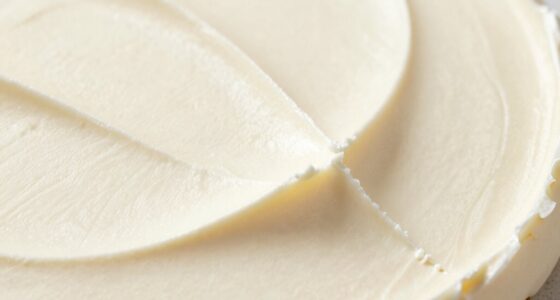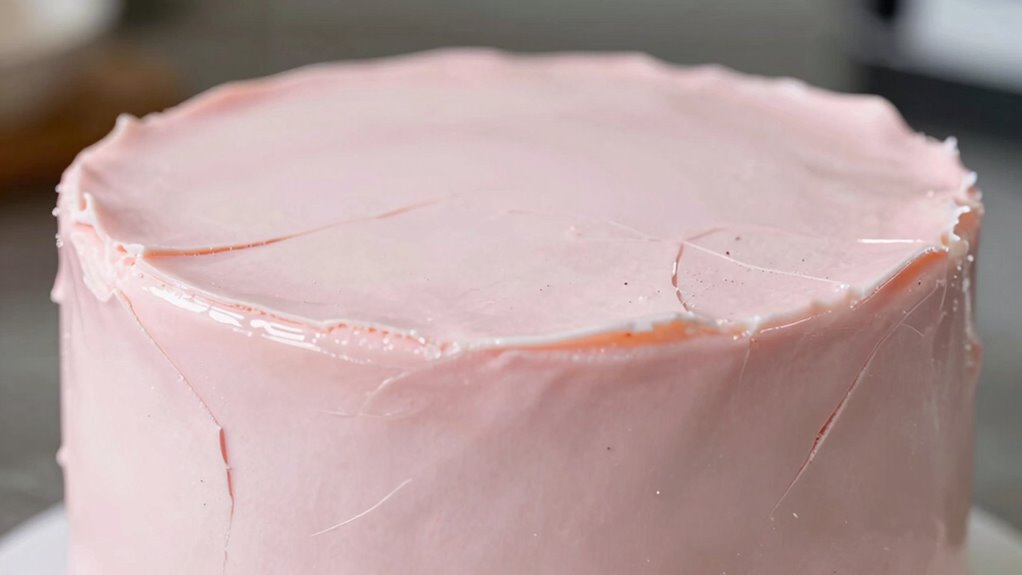

If your fondant’s cracking, the mistake many make is ignoring moisture balance. Often, it’s too dry or too sticky, caused by environmental factors or improper storage. To fix this, knead in a tiny bit of water or shortening to restore flexibility, and make certain your workspace stays consistently humid and cool. Managing moisture levels is key to prevention. Keep going and you’ll uncover simple tactics to keep your fondant smooth and crack-free every time.
Key Takeaways
- Ensure fondant has the right moisture level by kneading in small amounts of water or glycerin.
- Store fondant properly in airtight containers to prevent drying and maintain flexibility.
- Avoid working in dry, air-conditioned environments that accelerate moisture loss.
- Use a damp cloth or gentle mist to lightly rehydrate fondant if cracks appear.
- Check environmental conditions regularly and maintain consistent temperature and humidity during work.
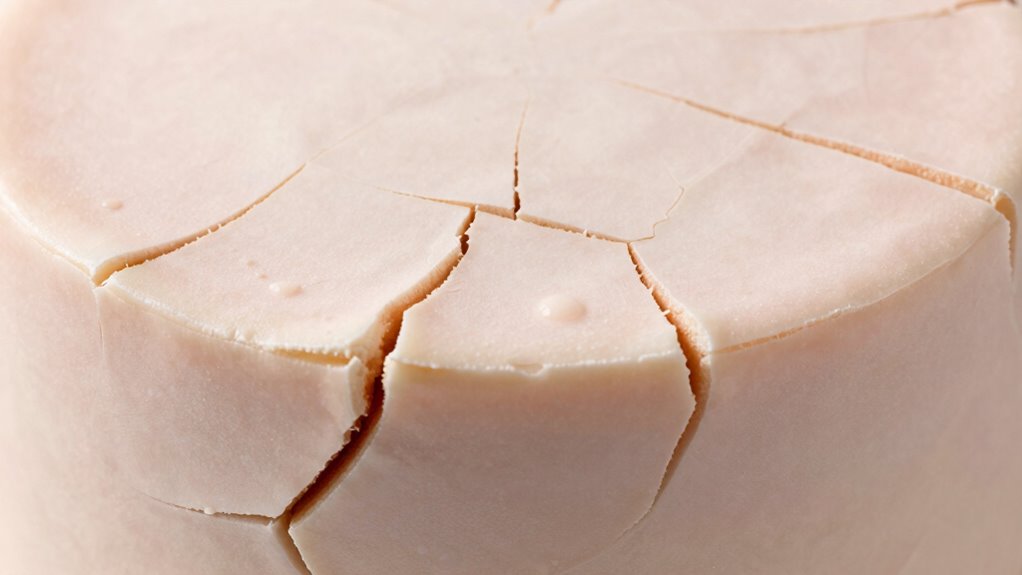
Have you ever noticed cracks forming on your fondant-covered cake? It’s a common frustration, and often, the root cause traces back to the sugar consistency and environmental factors. When you’re working with fondant, maintaining the right sugar consistency is vital. If the fondant is too dry, it becomes brittle and prone to cracking once it’s stretched over your cake. Conversely, if it’s too sticky, it won’t smooth out properly, leading to unsightly lines and fissures. Achieving that perfect, pliable texture requires paying close attention to the amount of water and sugar you incorporate during your mixing process. Sometimes, even a small tweak—like adding a few drops of water or kneading in a bit more powdered sugar—can restore the ideal consistency. Remember, fondant should feel soft but not sticky; it should hold its shape without cracking apart. Additionally, proper storage techniques can help prevent moisture imbalance that causes cracking. Environmental factors play an equally important role. Humidity, temperature, and air circulation all influence how fondant behaves. If you work in a dry, air-conditioned room, your fondant might dry out faster, making it more susceptible to cracking. On the other hand, high humidity can cause the fondant to become overly moist and sticky, which can also lead to cracks once it dries. Temperature swings are equally problematic, causing the fondant to expand and contract, which stresses the sugar structure and results in surface cracks. To counteract these issues, try working in a consistent environment, ideally with controlled humidity. Cover your fondant with plastic wrap or store it in airtight containers when not in use to prevent it from drying out prematurely. When working with fondant on a hot or dry day, keep your workspace cool and consider using a fan with caution to avoid rapid drying. Understanding these environmental factors and how they impact sugar consistency can save you a lot of frustration. Always check your fondant’s texture before applying it to your cake, especially if you notice cracks appearing after smoothing. A quick knead with a tiny bit of water or shortening can help restore flexibility. Additionally, working in a stable environment minimizes the risk of sudden changes in moisture levels that lead to cracks. If you’re consistently battling cracks, it might be worth adjusting your storage or work environment. Ultimately, paying attention to both the sugar consistency and environmental conditions ensures your fondant stays smooth and crack-free, giving your cake the professional finish it deserves.

Dash 3.5QT Tilt-Head Stand Mixer - Electric Stand Mixer with Stainless Steel Bowl and Splash Guard For Baking - Cream, 3.5-Quart
Tilt-Head Design: Dash 3.5QT Tilt-Head Stand Mixer features a 3.5-quart Bowl and tilt-head design for easy ingredient access...
As an affiliate, we earn on qualifying purchases.
Frequently Asked Questions
Can Humidity Levels Affect Fondant Cracking?
Yes, humidity levels directly impact fondant cracking. When humidity is too high, it causes excess moisture, making the fondant sticky and prone to cracking. Conversely, low humidity dries out the fondant, leading to cracks and brittleness. To prevent this, focus on moisture control by storing your fondant in a sealed container and working in a controlled environment. Monitoring humidity helps you achieve smooth, crack-free fondant surfaces every time.
What’s the Best Way to Store Fondant to Prevent Cracking?
You might think storing fondant is simple, but it’s a delicate dance of moisture control. Wrap your fondant tightly in plastic, then store it in an airtight container at room temperature—no surprises, no dryness. Avoid refrigerating or exposing it to drastic temperature changes, which can cause cracks. Think of proper fondant storage as a moisture fortress—protecting your creation from the silent, sneaky cracks that come from moisture mishaps.
Are There Specific Brands of Fondant Less Prone to Cracking?
Some fondant brands are less prone to cracking, making your decorating easier. Popular options like Wilton, Satin Ice, and Fondarific often outperform others in flexibility and moisture retention. When comparing products, look for those with smooth textures and good elasticity. Product comparisons show that Satin Ice and Fondarific tend to be more forgiving, especially in humid conditions. Choosing these brands can help you achieve a smooth, crack-free finish effortlessly.
How Does Temperature Influence Fondant’s Moisture Content?
Think of fondant as a delicate sponge, absorbing and releasing moisture like a changing tide. When you control fondant temperature, you help it retain moisture better, preventing cracks. Warm temperatures cause moisture to escape, making it dry and brittle. Cool environments keep the fondant moist and pliable. By maintaining ideal fondant temperature, you enhance moisture retention, ensuring your decorations stay smooth, flexible, and crack-free for longer.
Can Adding Glycerin Help Fix Cracked Fondant?
Yes, adding glycerin can help fix cracked fondant. Glycerin benefits include enhancing fondant hydration, making it more pliable and less prone to cracking. When you incorporate a small amount into your fondant, it retains moisture better, keeping it smooth and flexible. Just knead in glycerin gradually until you achieve the desired consistency. This simple step boosts moisture retention, helping your fondant stay perfect and crack-free longer.
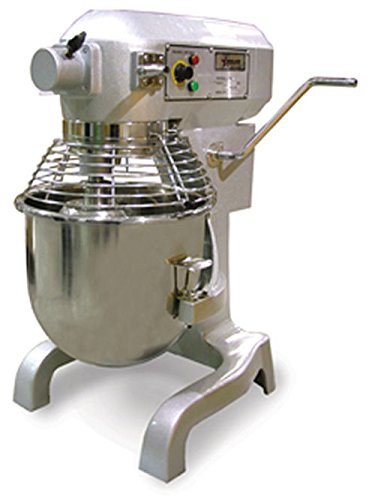
Omcan SP200AT 20 Qt Planetary Dough Mixer With Timer and Guard plus 3 Attachments
✓ Manufacturer's WARRANTY- 1 year parts and labor
As an affiliate, we earn on qualifying purchases.
Conclusion
Think of fondant as a delicate dance partner—you need to keep it hydrated and in sync with its environment. When you skip the moisture fix, cracks appear like cracks in a fragile ice sheet, threatening to break apart your masterpiece. But with proper care, you can keep your fondant smooth and beautiful, like a polished mirror. Don’t let neglect be the crack in your creation—embrace the moisture fix and let your cake shine flawlessly.
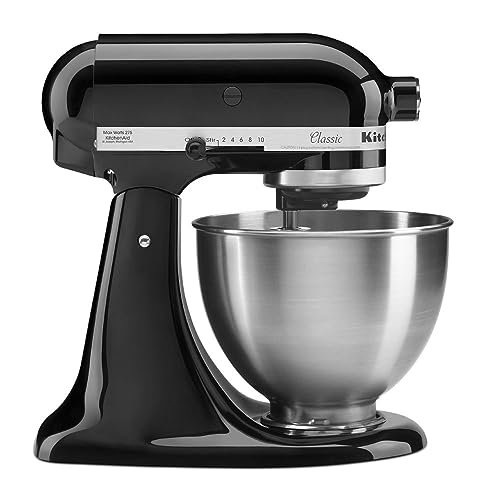
KitchenAid Classic Series 4.5 Quart Tilt-Head Stand Mixer K45SS, Onyx Black
Built to take it all on with the durable and built-to-last metal construction, and 59 touchpoints around the...
As an affiliate, we earn on qualifying purchases.

8.4QT Commercial Stand Mixer 800W with Aluminum Die Casting Meets the Standard of NSF/ANSI 8-2023, Mixers Kitchen Electric Stand Mixer with Stainless Steel 8L Bowl, Dough Hook, Whisk and Beater
High Capacity & High Efficiency: The maximum amount of dough is 3 kg/6.6 lbs/105.8 oz. Compared with other...
As an affiliate, we earn on qualifying purchases.