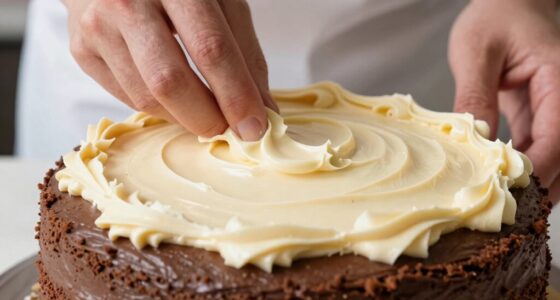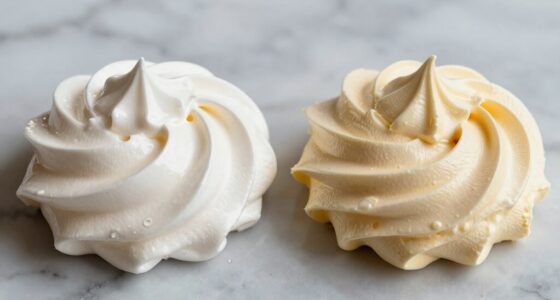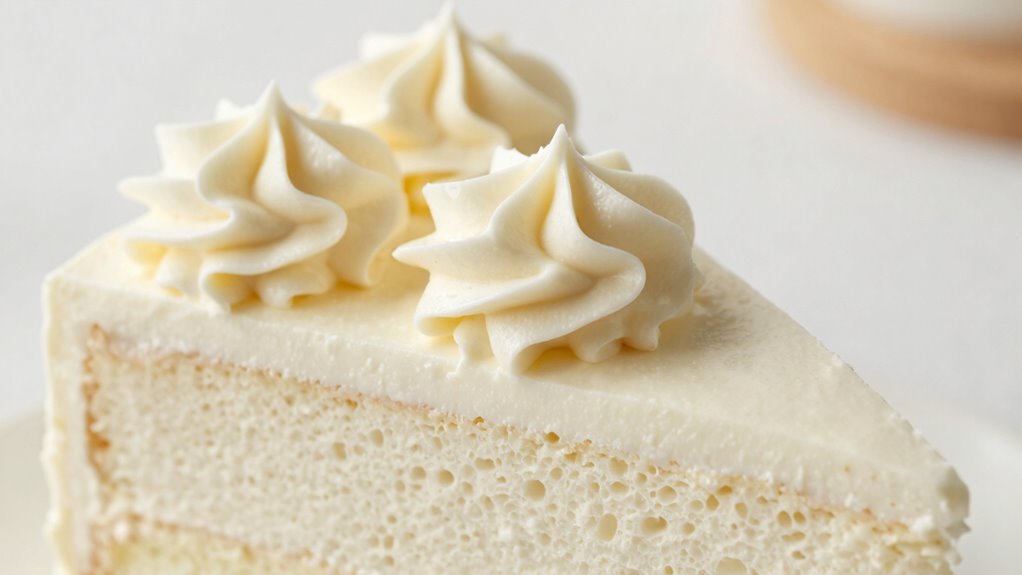

Ermine frosting is a vintage, less-sweet icing that offers a silky, airy texture perfect for your cakes. It combines a cooked mixture of flour, milk, sugar, and egg yolks, which is then whipped with butter to create a smooth, fluffy finish. This frosting isn’t overly sweet, allowing your cake flavors to shine through. Its nostalgic appeal and versatile nature make it a great choice for special occasions. If you want to learn more about its origins and how to make it, keep exploring.
Key Takeaways
- Ermine frosting is a vintage, less-sweet frosting made by whipping cooked flour, milk, sugar, egg yolks, and butter.
- It has a silky, fluffy texture and offers a subtle sweetness that complements cakes without overpowering flavors.
- The frosting is traditionally cooked to create a stable base, then whipped with butter for a light, airy finish.
- Modern versions may include flavorings like vanilla or citrus, and some adapt for dietary preferences.
- Its nostalgic appeal and balance of sweetness make it a timeless choice for classic cakes and desserts.

Ermine frosting, also known as cooked frosting or English buttercream, is a classic, fluffy icing that adds a light, airy touch to cakes and pastries. Its origins trace back to the early 20th century, when bakers sought a frosting that was less sweet and more stable than traditional buttercream. The historical origins of ermine frosting connect to traditional European confectionery, where cooks combined sugar, egg yolks, and butter to create a smooth, whipped topping. This method allowed bakers to craft a frosting that was not overly sugary but still rich and flavorful. Over time, it gained popularity in American bakeries, especially during the Great Depression era, because it was economical and easy to make with pantry staples. Its unique texture and less-sweet profile made it a favorite for those looking for a more balanced sweetness to complement their cakes.
In modern baking, ermine frosting has evolved into several variations, adapting to contemporary tastes and dietary needs. Today, some bakers prefer to incorporate additional flavorings—like vanilla, citrus zest, or almond extract—to enhance its subtle sweetness. Others have experimented with alternative sweeteners or plant-based ingredients to create vegan or lower-sugar versions, all while maintaining the frosting’s trademark silky texture. Despite these variations, the core of ermine frosting remains rooted in its traditional method: cooking a mixture of flour, milk, sugar, and egg yolks to create a stable, fluffy base that’s then whipped with butter for a creamy finish. This technique guarantees the frosting is not only light and airy but also resilient enough to hold its shape on layer cakes.
You’ll find that modern recipes often streamline the process without sacrificing authenticity, making it easier for home bakers to recreate this vintage favorite. The frosting’s versatility means you can adapt it for different flavors or use it as a filling for tarts and cupcakes. Its less-sweet profile makes it particularly appealing if you prefer a subtle sweetness that lets the flavors of the cake shine through. As a result, ermine frosting has maintained its status as a timeless choice, bridging tradition and innovation. Whether you’re making a classic red velvet cake or a simple sponge, this frosting offers a nostalgic, yet fresh alternative to heavier, overly sweet options. Its enduring appeal proves that simple, well-crafted ingredients can create a frosting that’s both delicious and uniquely elegant.
Frequently Asked Questions
Can Ermine Frosting Be Used for Piping Decorations?
Yes, you can use ermine frosting for piping decorations. Its smooth texture makes it ideal for various piping techniques, allowing you to create intricate designs and decorative styles on cakes and cupcakes. Because it’s not too sweet, it’s a popular choice for elegant, classic looks. Just make sure to use a piping bag with a suitable tip, and you’ll achieve beautiful, refined decorations with ease.
How Long Does Ermine Frosting Stay Fresh?
Like a well-kept secret from the past, ermine frosting stays fresh for about 2 to 3 days when stored properly. You should refrigerate it in an airtight container to maintain its texture and flavor. For the best results, keep it cool and avoid exposure to air and sunlight. Follow these refrigeration tips, and your frosting will remain delicious and safe to use within that storage duration.
Is Ermine Frosting Suitable for People With Allergies?
Ermine frosting isn’t suitable for people with dairy or nut allergies because it traditionally contains butter and milk. If you have dairy or nut allergies, look for dairy-free alternatives like plant-based butter and milk. Always read ingredient labels carefully, as some recipes might include nuts or dairy derivatives. Making adjustments guarantees you can enjoy this classic frosting safely without risking allergic reactions.
Can Ermine Frosting Be Flavored or Colored?
Yes, you can flavor and color ermine frosting easily. You might add alternative flavorings like vanilla, lemon, or almond extract to customize its taste. For vibrant color options, mix in gel food coloring until you achieve your desired shade. Since ermine frosting is made with simple ingredients, it’s versatile and perfect for creating visually appealing and uniquely flavored cakes or cupcakes.
What Are Common Substitutions for Traditional Ingredients?
Did you know that over 25% of bakers now prefer substitutions to cater to dietary needs? You can swap traditional milk with milk alternatives like almond or soy milk, and use gluten-free flour if needed. For a dairy-free or gluten-free ermine frosting, these substitutions keep the texture smooth and delicious without sacrificing flavor. Feel free to experiment with these options to make your frosting suitable for any dietary preference.
Conclusion
Think of ermine frosting as a gentle sunrise—soft, understated, and quietly comforting. It symbolizes the timeless elegance of tradition, reminding you that sometimes, less is more. As you spread this frosting, you’re embracing a classic that stands the test of time, much like the first light breaking through the darkness. Let it symbolize your appreciation for simple pleasures and the beauty of restraint, turning your baking into a warm, nostalgic embrace.