
Room-temperature ingredients are those warmed to about 68-72°F, which helps guarantee smoother mixing and better flavor in your baking. To fix cold ingredients fast, use warm water baths, microwave short bursts, or grate butter to soften quicker. For eggs and milk, soak in warm water or microwave in brief intervals. When ingredients resist warming, try substitutions or adjust your process. Want tips on perfecting your technique? Keep exploring for expert advice.
Key Takeaways
- Room-temperature ingredients are typically stored at 68-72°F (20-22°C) for optimal blending and flavor.
- To quickly bring ingredients to room temperature, use warm water baths, microwave in short bursts, or grate butter.
- Softening butter involves cutting into small pieces or microwaving briefly, avoiding melting.
- Eggs and dairy can be warmed by soaking in warm water or microwaving in short intervals, stirring between.
- Properly tempered ingredients ensure better mixing, texture, and flavor in recipes, preventing lumps or uneven batter.
What Are Room-Temperature Ingredients and Why Do They Matter?
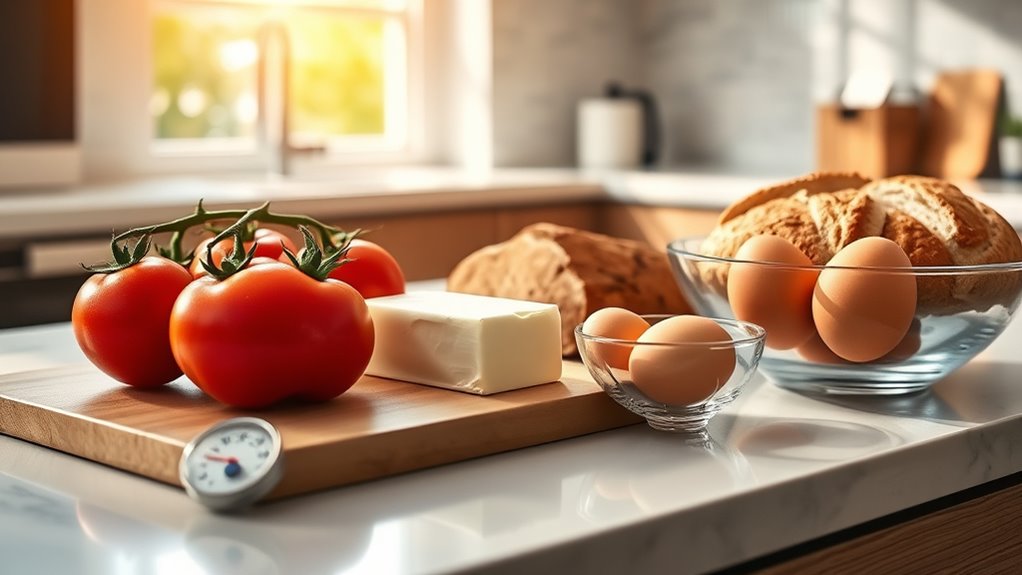
Room-temperature ingredients are foods that are stored or used at normal indoor temperatures, typically between 68°F and 72°F (20°C to 22°C). When ingredients are at this temperature, they’re easier to work with and blend more seamlessly, which enhances ingredient pairing and overall flavor profiles. Cold ingredients can be stiff or difficult to mix, leading to uneven textures and muted flavors. Conversely, warm ingredients often release more aroma and taste, making your dishes more vibrant. Knowing how temperature affects your ingredients helps you achieve the desired consistency and flavor balance. Using room-temperature ingredients helps you maximize the potential of your recipes, creating harmonious ingredient pairing and richer flavor profiles that elevate your cooking.
Which Ingredients Benefit Most From Being at Room Temperature?
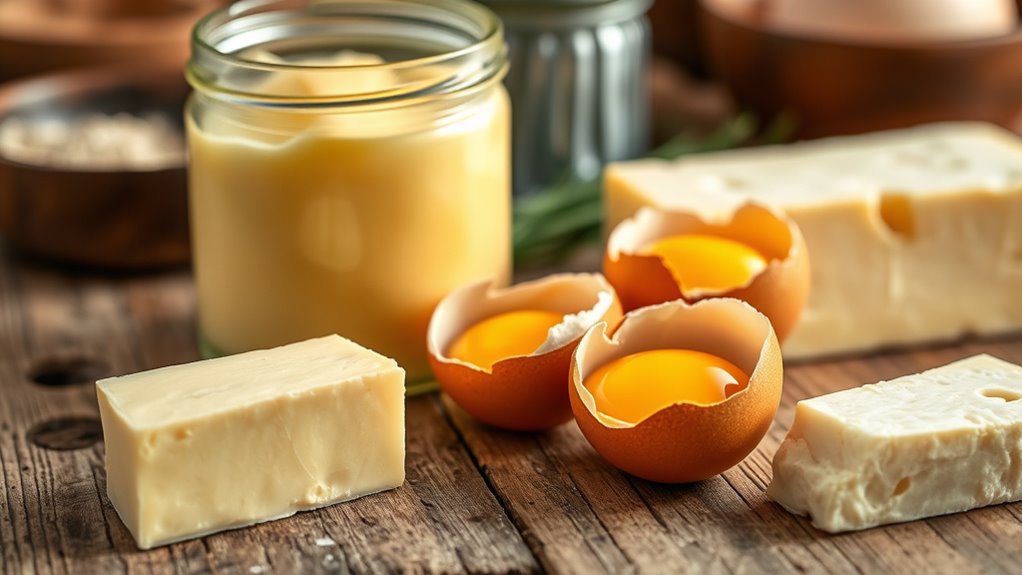
Certain ingredients respond markedly better when they’re at room temperature, making them easier to incorporate into your recipes. Butter, eggs, and cream are prime examples, blending smoothly for better ingredient pairing and consistent textures. Softened butter spreads evenly, creating a more uniform batter or dough, which enhances flavor and texture. Eggs at room temperature mix more fully, improving emulsification and resulting in a richer taste. Cream warmed to room temperature whips better, adding volume and lightness. These ingredients also boost flavor enhancements by allowing spices and sweeteners to meld seamlessly. Using ingredients at the right temperature guarantees your recipes turn out as intended, with better consistency and taste. It’s a simple step that makes a noticeable difference in baking and cooking results.
How Can You Tell If Your Ingredients Are at the Right Temperature?

How can you quickly determine if your ingredients have reached the right temperature? Start by inspecting ingredient storage: soft butter should be slightly malleable, not hard or greasy. Eggs should feel cool but not cold to the touch, indicating they’re at room temperature. For dairy, gently press cheese or cream; they should feel soft and consistent. Temperature safety is vital—avoid ingredients that are too warm, as they can spoil or affect the recipe. Use your senses: feel, smell, and sometimes even gently touch the ingredient to assess. When in doubt, a quick test with a thermometer can confirm if items like butter or dairy are at the ideal temperature. Additionally, understanding the body jewelry measurements of your ingredients can help ensure they are fresh and suitable for your recipe. Properly gauging ingredient temperature ensures the best results and maintains food safety. Regularly checking storage conditions can prevent temperature fluctuations that compromise ingredient quality. For precision, using a kitchen thermometer can help you monitor temperatures accurately, especially when working with delicate ingredients. A visual inspection can also help identify signs of spoilage or improper storage that might affect your dish.
How Do You Quickly Bring Butter to Room Temperature?

Ever wondered how to soften butter quickly without sacrificing quality? The key is to gently warm it without melting it entirely. To do this, cut the butter into small, evenly-sized pieces. This increases the surface area, allowing for faster ingredient warming. Place the pieces on a plate and leave them at room temperature for about 10 to 15 minutes. If you’re in a hurry, you can soften butter faster by using a microwave in short bursts—10 seconds at a time—checking frequently to prevent butter melting. Alternatively, you can use warm water to gently warm the butter packaging, but be careful not to get it too hot. These methods help bring butter to room temperature efficiently, making it suitable for baking without compromising its texture. Understanding energy-efficient solutions can also help in maintaining optimal kitchen practices. For example, using personalized methods like the right temperature adjustments can ensure better results and save energy.
How Can You Warm Eggs and Milk Fast?
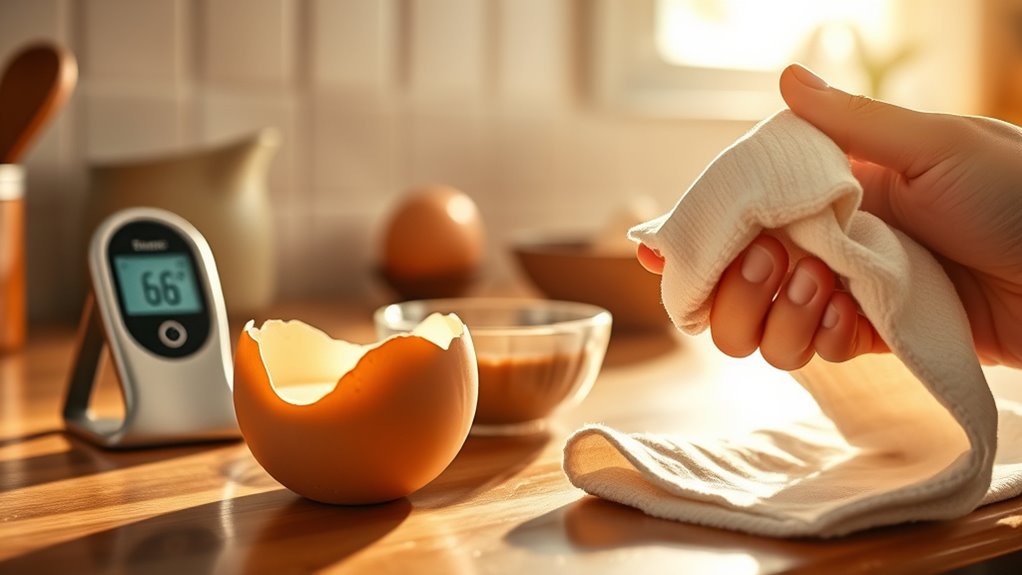
To warm eggs and milk quickly, you can soak them in warm water for a few minutes. Using short bursts in the microwave works well, but be sure to stir or rotate to avoid overheating. Alternatively, letting them sit at room temperature for a bit can also do the trick if you’re in a hurry. To ensure safety and maintain quality, it’s helpful to know about essential oils for temperature regulation, which can aid in gently warming ingredients. Additionally, utilizing smart kitchen appliances that monitor and control temperature precisely can streamline this process and prevent overheating. Incorporating digital asset management strategies can also help ensure your kitchen gadgets are maintained securely and efficiently. Understanding ventilation considerations in your kitchen can also help regulate temperature and prevent spoilage or bacterial growth.
Use Warm Water Soak
Looking for a quick way to warm eggs and milk without cooking them? A warm water soak is an effective method. First, verify your ingredient storage has eggs and milk at room temperature, or around the kitchen temperature. Then, fill a bowl with warm (not hot) water—about 100°F to 110°F. Here’s how to do it:
- Place eggs or milk in a sealed plastic bag.
- Submerge the bag in the warm water.
- Let it sit for 5-10 minutes.
- Check if the ingredients feel comfortably warm, not hot.
This method uses the gentle transfer of heat via water, making it quick and safe. It’s perfect when you need to adjust ingredients to room temperature efficiently without risking overheat or cooking. Temperature control is essential to prevent unintended cooking or spoilage during this process. To ensure consistent results, avoid overheating the water, which could lead to cooking the ingredients instead of warming them. Additionally, understanding food safety can help you avoid contamination or spoilage during the warming process.
Microwave in Short Bursts
Using the microwave in short bursts offers a quick and controlled way to warm eggs and milk without overdoing it. To do this, set your microwave to a low or medium power level, and heat in 15-20 second intervals. Pause between each burst to check the temperature and prevent overheating. This method allows for precise control, reducing the risk of cooking or curdling your ingredients. Microwave bursts ensure quick warming while maintaining the integrity of delicate items like eggs and milk. Be attentive during the process, stirring or mixing as needed to distribute heat evenly. Proper maintenance of your microwave, including regular cleaning and filter checks, can help ensure consistent performance and safety. With this approach, you get warm ingredients fast without sacrificing quality, making it perfect when you’re in a hurry but still want to preserve texture and freshness.
Room Temperature Method
Warming eggs and milk to room temperature can be done quickly by placing them in a bowl of warm water. This method improves ingredient storage and guarantees better temperature control during baking. To do it efficiently:
- Fill a bowl with warm (not hot) water—about 100°F.
- Submerge the eggs and milk, fully covered.
- Let them sit for 5-10 minutes, checking periodically.
- Remove, dry, and use immediately for ideal baking results.
This technique saves time compared to waiting, helps ingredients blend better, and maintains consistent temperature control. Using the room temperature method ensures your baked goods turn out perfectly, with ingredients at the right temperature, making your baking process smoother and more efficient. Temperature regulation is a key factor in achieving evenly baked treats.
What Are Some Tips for Managing Time When You Forget to Soften Ingredients?
When you forget to soften ingredients, quick softening methods like microwaving or using warm water can save you time. Managing your schedule by prepping ingredients ahead helps avoid last-minute rushes. Combining these strategies guarantees your baking stays on track even when time slips away. Additionally, having a well-organized storage system for kitchen tools can serve as a helpful analogy for efficiently managing your ingredients and kitchen tools during busy times. Recognizing passive voice detection as a useful writing technique can further improve your clarity and style. Implementing time management techniques and utilizing smart home automation features, such as scheduled routines or reminders, can also help you stay ahead and prevent such oversights in the future.
Quick Softening Methods
If you forget to soften ingredients in advance, there are quick methods to get them ready in a pinch. First, use microwave softening: place the ingredient in a microwave-safe dish and heat in 10-15 second bursts, stirring between each. Second, try warm water baths—submerge the container in hot water for a few minutes to soften butter or cream cheese. Third, for butter, grate it to increase surface area, speeding up softening. Fourth, consider ingredient substitutions; for example, melted butter can replace softened butter, and warm milk can enhance flavor and texture. These methods save time while maintaining flavor enhancements and ensuring your recipes turn out perfect without delays. Additionally, air fryer techniques can be employed to quickly reheat or soften certain ingredients, making your cooking process even more efficient.
Time Management Strategies
Sometimes, you realize too late that your ingredients aren’t softened, but you can still manage your time effectively by staying organized and prioritizing tasks. Quickly assess which ingredients need softening and consider ingredient substitutions that don’t require softening, like canned or pre-softened options. Keep track of storage tips to prevent future issues—store ingredients at room temperature when appropriate or plan ahead for softening if needed. When time is tight, focus on efficient techniques such as microwaving or using warm water baths to speed up softening. Staying organized helps you adapt your recipe on the fly, avoiding delays. Prioritizing your tasks ensures you make smart substitutions and use alternative methods without sacrificing quality or flavor. Additionally, understanding the proper storage of ingredients can help you prevent softening issues before they occur.
How Can You Safely Soften Ingredients Using a Microwave or Oven?
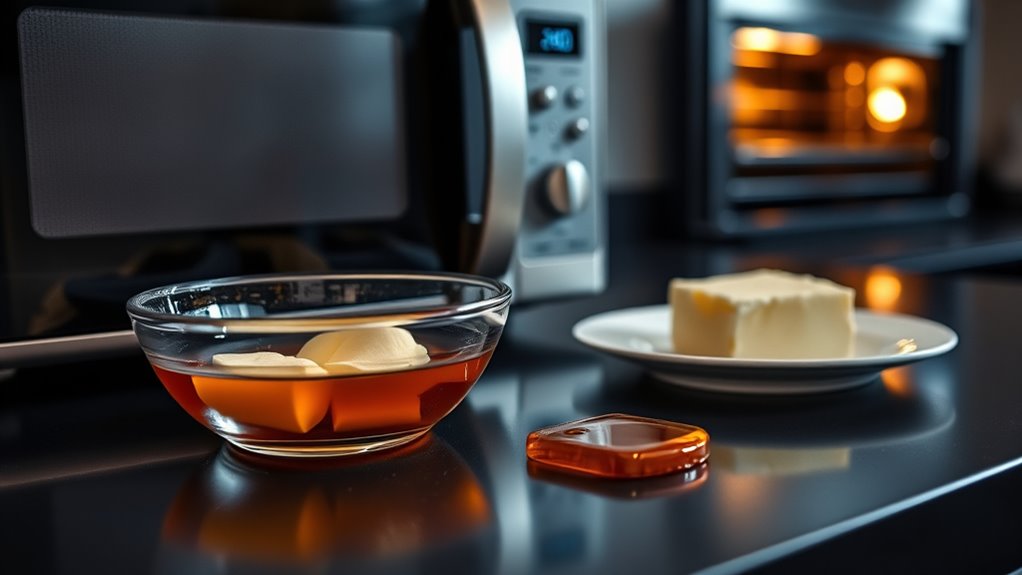
To safely soften ingredients using a microwave or oven, it’s essential to follow specific guidelines to prevent overcooking or uneven heating. Proper ingredient storage helps maintain freshness and reduces the risk of spoilage during warming. Always prioritize kitchen safety by using microwave-safe containers or oven-safe dishes.
Here are four tips to help you:
- Use short, timed intervals, checking frequently to avoid overheating.
- Cover ingredients with a damp paper towel or lid to promote even moisture.
- Stir or flip ingredients halfway through to ensure uniform softening.
- Let ingredients rest briefly after heating to distribute heat evenly.
What Are Other Ways to Quickly Bring Ingredients to Room Temperature?
Are you in a hurry to bring ingredients to room temperature? If so, you can try placing sealed items in warm water for a few minutes, which speeds up warming without affecting their quality. For butter or dairy, this method works well and is faster than waiting naturally. Keep in mind, if ingredients can’t reach room temperature quickly, consider an ingredient substitution—using cold ingredients intentionally or adjusting the baking temperature can compensate. For example, baking with slightly colder ingredients might require a small increase in oven temperature or extended baking time. Always monitor your bake closely to avoid under- or over-cooking. These quick techniques help maintain recipe consistency while saving you time, ensuring your baked goods turn out just right.
What Should You Do When Ingredients Won’t Warm Up?
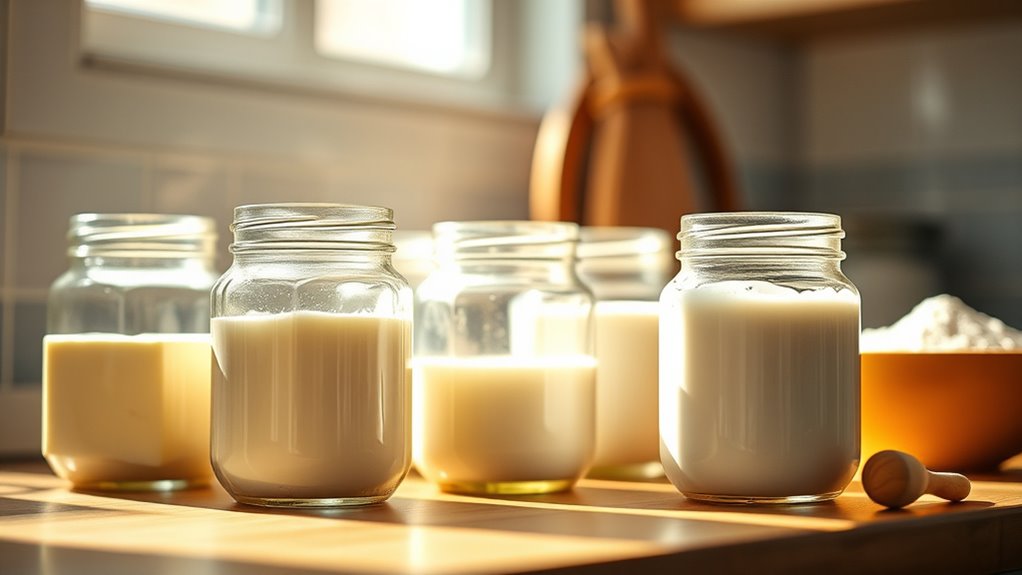
When ingredients refuse to warm up despite quick methods, you need to adapt your approach to keep your baking on track. If warming isn’t working, consider these steps:
- Use ingredient substitutions—replace cold butter with softened or melted butter to maintain texture.
- Incorporate flavor enhancements—add extra vanilla or spices to mask any taste differences caused by cold ingredients.
- Adjust your recipe slightly—reduce mixing time to prevent overworking cold ingredients and affecting consistency.
- Rely on temperature-insensitive ingredients—use eggs at room temperature if possible, or incorporate liquids at room temp to balance the coldness.
These strategies help preserve recipe integrity, ensuring your baked goods still turn out delicious even when ingredients won’t warm up.
How Do You Properly Incorporate Room-Temperature Ingredients Into Recipes?

To incorporate room-temperature ingredients correctly, you need to focus on achieving the right texture and consistency. Using proper mixing techniques ensures that ingredients blend smoothly without overworking them. This careful approach helps your recipes turn out with the desired structure and mouthfeel.
Achieving Proper Texture
Incorporating room-temperature ingredients properly is essential for achieving the right texture in your baked goods. Proper ingredient integration guarantees consistency in texture, preventing a dense or greasy outcome. To do this effectively:
- Mix ingredients just enough to combine, avoiding overmixing, which can develop gluten and alter texture.
- Pay attention to the order of addition—adding fats and liquids gradually helps maintain texture consistency.
- Use a gentle folding technique when incorporating delicate ingredients like whipped cream or egg whites.
- Ensure all ingredients are at room temperature before mixing to promote even blending and uniformity.
These steps help you achieve smooth, cohesive batter or dough, resulting in baked goods with the ideal texture. Proper ingredient integration is key to consistent, professional results.
Using Correct Mixing Techniques
Proper mixing techniques are essential for seamlessly integrating room-temperature ingredients into your recipes. When you use the right mixing methods, you guarantee even ingredient integration, preventing lumps or uneven textures. Start by gradually adding ingredients, especially fats or liquids, to promote smooth blending. Use a gentle folding motion for delicate ingredients like whipped cream or egg whites, preserving their airy texture. For thicker mixtures, mix at medium speed until smooth, avoiding overmixing, which can develop gluten or cause tough baked goods. Always scrape down the sides of your bowl to incorporate all ingredients evenly. Consistent, deliberate mixing techniques help achieve the desired batter or dough consistency, leading to better baking results. Mastering these techniques ensures your ingredients blend properly, enhancing your overall recipe success.
Frequently Asked Questions
Can Cold Ingredients Affect the Final Texture of My Baked Goods?
Yes, cold ingredients can affect your baked goods’ final texture by disrupting ingredient consistency and moisture retention. When ingredients aren’t at room temperature, they don’t blend smoothly, leading to uneven batter or dough. This can result in dense, crumbly, or chewy textures. To avoid this, let your ingredients sit out until they’re warm enough, ensuring better mixing, consistent structure, and ideal moisture retention for perfect baked goods.
How Does Ingredient Temperature Influence Baking Chemistry and Outcomes?
When your ingredients are at the right temperature, it improves ingredient absorption and promotes proper chemical reactions. Cold ingredients slow down these processes, leading to denser textures or uneven baking. Warm ingredients, however, help your batter mix smoothly and activate leavening agents correctly. By keeping ingredients at room temperature, you guarantee consistent chemical reactions, better rise, and a tender, well-textured final product.
Is It Safe to Microwave Ingredients for Quick Warming?
You can microwave ingredients for quick warming, but you should prioritize microwave safety. Always heat ingredients evenly to prevent hot spots that could cause burns or uneven cooking. Be cautious about ingredient spoilage — if food is already spoiled, microwaving won’t make it safe. Also, avoid overheating dairy or eggs, as they can curdle or explode. Use microwave-safe containers and stir frequently to guarantee safe, effective warming.
What Are the Signs That Ingredients Are Improperly Warmed or Spoiled?
You can spot improper warming or spoilage when ingredients develop an off smell, slimy texture, or discoloration. These signs indicate bacterial growth or ingredient spoilage. If you notice mold, sour odors, or a strange taste, discard the ingredient immediately. Proper warming shouldn’t cause changes in texture or smell. Always trust your senses—if something feels or smells wrong, it’s safest to avoid using that ingredient to prevent foodborne illness.
Can Ingredient Temperature Impact Flavor and Aroma in Recipes?
Yes, ingredient temperature critically impacts flavor and aroma. When you use ingredients at the right temperature, you preserve their freshness and maximize flavor. Cold ingredients can mute aromas, while warm ones release more volatile compounds, enhancing taste. Properly warming or cooling ingredients ensures flavor preservation, so you get the best aroma and taste in your dishes. Always pay attention to ingredient temperature to elevate your cooking results.
Conclusion
Getting your ingredients to the right temperature is quick, easy, and essential. Whether you’re softening butter, warming eggs, or warming milk, the goal is to guarantee smooth mixing, even baking, and perfect results. Stay patient, stay safe, and stay creative. When ingredients are at their best, your baked goods are at their best. So, warm them up, use the right techniques, and enjoy baking with confidence and consistency every time.